Springer Spaniels Working Under Falcons
It's easy to picture our beloved English Springer Spaniels today, whether they're bouncing through tall grass flushing pheasants for a hunter with a shotgun, or simply "springing" a rogue squirrel from the backyard oak. But did you know their ancestors had an equally important, albeit far less common today, job in the skies? Long before firearms became commonplace, these energetic and intelligent dogs partnered with majestic birds of prey. This guide will take you on a fascinating journey back in time, exploring the ancient bond between Springer Spaniels and falcons, a partnership built on instinct, trust, and shared purpose that shaped these dogs for generations.
The Historical Roots of the Springer Spaniel's Falconry Role
Before the crack of a shotgun became the familiar sound of a hunt, the fields and forests echoed with different calls – the rustle of game, the whistle of a falconer, and the eager panting of a working spaniel. The Springer Spaniel's very name, "springer," refers to their inherent ability to "spring" or flush game from cover, driving it out into the open. This wasn't just for a human hunter; it was often for a feathered hunter waiting overhead.
Early Hunting Practices and the Spaniel's Emergence
Centuries ago, hunting was a vital part of survival and sport, but the tools were different. Before firearms, hunters relied on methods like netting, bows, and, perhaps most spectacularly, falconry. Imagine a time when an entire day's meal could hinge on the precise coordination between man, dog, and bird. Dogs like the spaniel were invaluable. They weren't just pets; they were essential members of the hunting party, bred and trained for specific tasks. Their keen noses, tireless energy, and innate drive to push game from dense cover made them perfect for finding birds that would otherwise remain hidden. This was a sophisticated, multi-species collaboration.
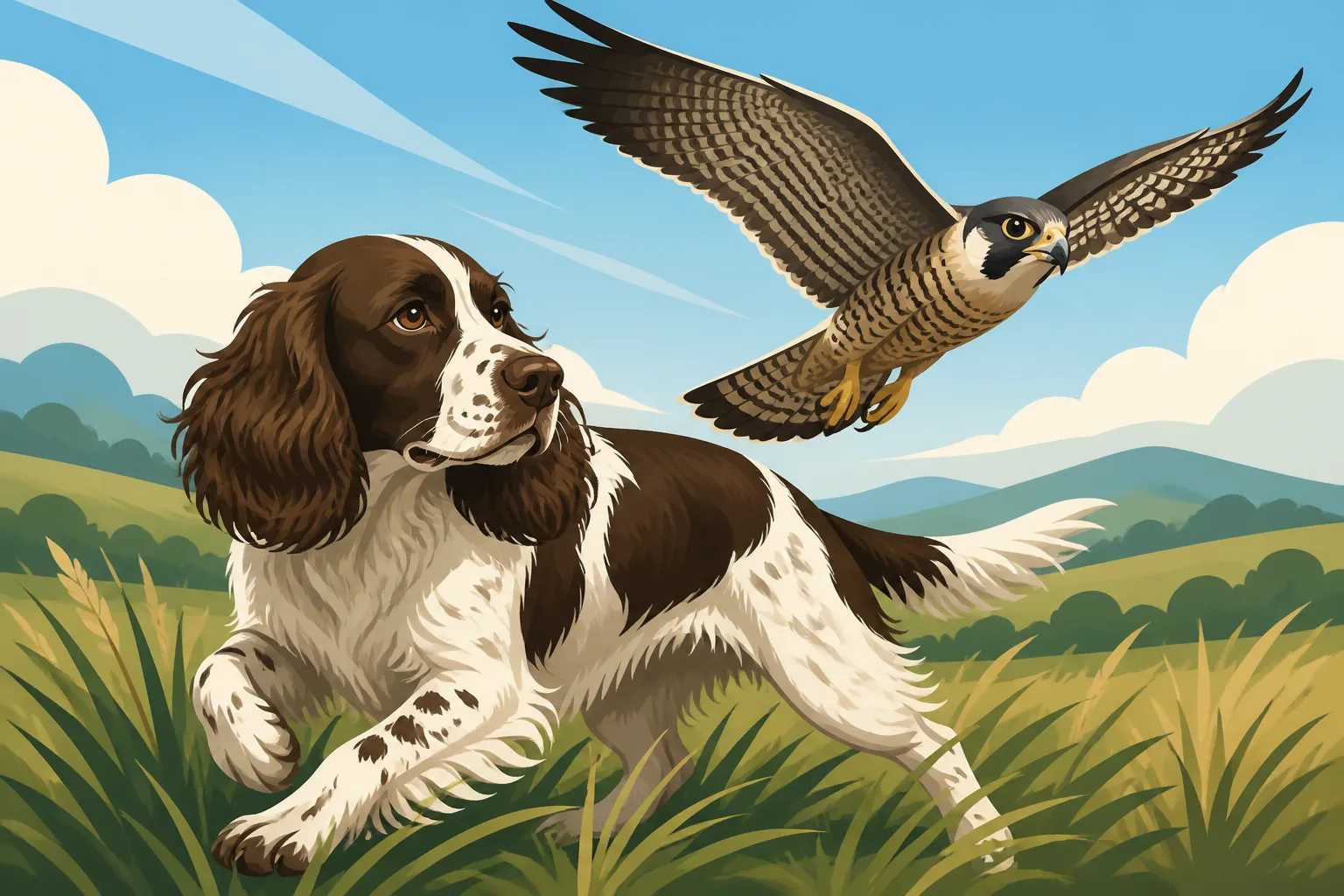
The spaniels of old, the ancestors of our modern Springers, were experts at this. They would systematically work through heavy cover, pushing game birds like partridge, pheasant, and grouse into the air. This action, this "springing" of game, provided the crucial opportunity for the falcon, circling high above, to swoop down and make its strike. The spaniel's job wasn't to retrieve the bird after the falcon's catch, but to ensure the bird was flushed at the right moment and in the right direction for the bird of prey. This historical role truly highlights How Old the Springer Spaniel Is as an English Gundog and demonstrates their deep roots in hunting culture.
The Synergy Between Spaniels and Birds of Prey
The partnership between a spaniel and a falcon was a marvel of cooperative hunting, a testament to understanding animal behavior and harnessing natural instincts. The spaniel's role was to be the "ground force," flushing game, while the falcon was the "air force," striking from above. This wasn't a random affair; it was a highly choreographed dance. The falconer would often follow the dog closely, ready to release their bird of prey once the spaniel indicated game was near or had flushed.
Consider a hypothetical scenario: a team working a hedgerow. The Springer Spaniel, with its nose to the ground, works diligently, quartering back and forth, sniffing out the scent of a pheasant. Once it locates the bird, it dives in, flushing the pheasant into the air. At that precise moment, the falconer releases their peregrine or goshawk. The falcon, already attuned to the spaniel's movements and the rise of game, launches into a lightning-fast pursuit. The spaniel, meanwhile, would be expected to "hup" or sit, staying steady and allowing the falcon to do its work without interference. It required incredible discipline from the dog, far beyond what many modern pet owners might imagine. This specialized role is a key part of How Springer Spaniels Worked Before Guns.
Training a Springer Spaniel for Falconry: A Lost Art
Training a Springer Spaniel for traditional falconry was, and remains for the few practitioners today, an incredibly demanding endeavor. It required a dog with an exceptional temperament, keen intelligence, and an unwavering desire to please, paired with a trainer of immense patience and skill. This was far from simply teaching a dog to fetch a tennis ball.
The Unique Demands of Falconry Training
The level of steadiness and control required for a falconry spaniel goes beyond typical gundog training. A gundog needs to be steady to flush and shot, often waiting for a command to retrieve. A falconry spaniel, however, needs to be steady not just to the flush, but to the entire dramatic aerial pursuit and eventual capture by the hawk. Imagine a highly driven dog, bred to chase, watching another creature chase and capture its quarry, and being expected to remain perfectly still. This is an immense test of impulse control and obedience.
The risk of interference was high. A spaniel that broke its "hup" (stay) command to try and retrieve the falcon's kill, or that became overly excited and spooked the falcon, could ruin the hunt or even put the bird of prey at risk. This meant countless hours of consistent, firm, but fair training. The dog had to understand its precise role in the partnership, respecting the falcon's domain. Such training also ensured the dog didn't accidentally get in the flight path of a swooping hawk. For anyone considering the intricate nature of canine communication, exploring Whistle Work: The Language a Springer Spaniel Learns provides a glimpse into the sophisticated command structure these dogs often understood.
Key Commands and Behaviors for a Falconry Spaniel
The foundational command for a falconry spaniel was "hup" – an immediate sit-stay command, no matter the distraction. This command had to be absolute, ingrained from puppyhood. When the dog flushed game, it would be expected to immediately "hup," freezing in place to allow the falcon to engage. This level of steadfastness is what truly separated a good falconry spaniel from an average gundog.
Other crucial behaviors included working within a very close range, often called "to hand" or "to voice," meaning they were always within earshot or visual contact of the falconer. Their natural tendency to quarter – systematically search an area – was honed to a precise pattern, ensuring no ground was missed and game was flushed predictably. Teaching a Springer Spaniel to Stay in Range was not merely for the gun, but to ensure the falconer always knew where their ground partner was and could respond to the flushing action. A dog that ranged too wide might flush game out of the falcon's effective hunting zone, or simply disappear from sight, wasting precious time. The stakes were considerably higher than a modern field trial where the worst outcome is usually a "no bird."
The Decline and Modern Resurgence of Falconry with Spaniels
Like many historical hunting practices, the widespread use of spaniels in falconry faded with technological advancements. The invention and proliferation of reliable firearms dramatically altered hunting landscapes and strategies.
The Rise of Firearms and Gundog Specialization
The advent of effective shotguns made it possible for a single hunter to accomplish tasks that previously required a team of human, dog, and bird. A hunter could now flush game and shoot it themselves, reducing the need for the aerial assistance of a falcon. This shift led to a specialization in gundog training, where spaniels were increasingly bred and trained to work solely for the gun. Their role became focused on flushing and, eventually, retrieving downed game.
The traditional falconry partnership, while beautiful and effective, was more labor-intensive and required greater skill from both the human and animal partners. It was simply more efficient for many to use a shotgun. This evolution gradually pushed the falconry-specific training of spaniels into obscurity, making it a niche pursuit. However, the foundational instincts and biddability that made them excellent falconry dogs remained, simply redirected towards working with a gun. The traits that define A Field Bred Springer Spaniel Is a Different Dog to Live With today, such as their intense drive and focus, were originally honed in these historical hunting roles.
Niche Practices Today and Historical Reenactments
While not a common sight, the art of falconry with spaniels is not entirely lost. A dedicated, albeit small, community of falconers and gundog enthusiasts still practices this ancient form of hunting. These individuals often cherish the tradition and the unique challenge it presents. They understand that while a gun may be more expedient, there's an unparalleled satisfaction in witnessing the coordinated efforts of a skilled spaniel and a magnificent bird of prey.
For these modern practitioners, the training principles remain largely the same. They seek out Springer Spaniels with strong natural instincts, good temperament, and high intelligence. The equipment, while modern, still supports the age-old practice. You might find them purchasing specialized leashes, protective vests for their dogs in thorny cover, or even high-energy performance food suitable for working dogs from retailers like Chewy, ensuring their canine partners are in peak condition. Historical reenactments and demonstrations also occasionally showcase this partnership, offering a glimpse into a bygone era and educating the public about the rich heritage of both breeds.
Characteristics That Made the Springer Ideal for Falconry
The English Springer Spaniel wasn't just used for falconry; it was exceptionally well-suited for it due to a combination of inherent traits that developed over centuries of selective breeding for hunting prowess.
Instinctive Flushing and Quartering
The Springer Spaniel's defining characteristic, the "spring," is its natural, vigorous flushing action. These dogs are built to dive into dense cover – briars, thickets, tall grass – and drive out game birds. This instinct is hardwired, and it’s precisely what a falconer needs: a reliable engine for flushing quarry. Without the dog, many game birds would simply sit tight and never present themselves to the airborne hunter.
Beyond just flushing, their natural quartering pattern makes them highly efficient hunters. Quartering is the systematic zigzagging search pattern a spaniel uses to cover ground thoroughly, ensuring no patch of cover is missed. This methodical approach meant fewer birds were overlooked, increasing the success rate for the falcon. Why a Springer Spaniel Quarters Your Yard Without Being Asked even today shows this deep-seated instinct; it's not just a cute habit, it's a centuries-old hunting strategy playing out. Their high energy, as well as their keen sense of smell, are essential to sustaining this effort over long periods in varied terrain.
Stamina, Intelligence, and Biddability
Falconry hunting can be physically demanding, covering miles of varied terrain. A dog bred for falconry needed immense stamina, and the Springer Spaniel has it in spades. They are energetic and robust dogs, capable of working all day without tiring. This physical resilience ensures they can keep up with a keen falconer and cover the necessary ground.
Their intelligence and biddability (their eagerness to please and willingness to be trained) were equally crucial. As discussed earlier, the demands of falconry training are rigorous, requiring a dog that can learn complex commands and exhibit extreme self-control under exciting circumstances. A Springer's natural intelligence allows them to grasp these intricate concepts, and their biddability ensures they are motivated to comply. The Soft Springer Spaniel That Shuts Down If You Shout underscores the importance of positive, consistent training methods for these sensitive yet intelligent dogs, a philosophy that would have been equally vital in the delicate dance of falconry training. A dog that constantly challenged its handler or was easily distracted simply wouldn't make the cut. These traits, combined with access to quality nutrition from trusted sources like Chewy, ensured these dogs could perform at their peak.
Comparing Modern Gundog Roles to Historical Falconry Roles
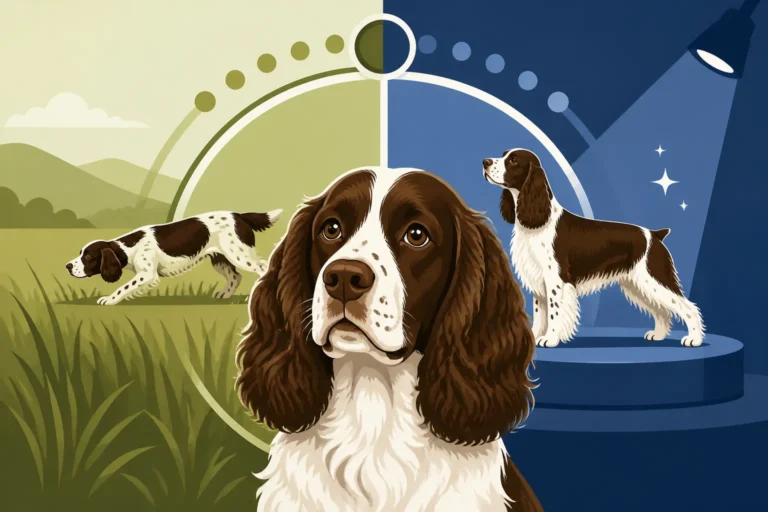
It's helpful to see how the role of the Springer Spaniel has evolved, even though the core instincts remain. While both historical falconry and modern gundog work demand high levels of training and dedication, the specific nuances of their jobs differ.
| Feature | Historical Falconry Spaniel Role | Modern Gundog Spaniel Role |
|---|---|---|
| Primary Goal | Flush game into the air for a bird of prey to catch. | Flush game into the air for a hunter to shoot. |
| Steadiness Needed | Absolute steadiness to flush, hawk's flight, and kill. | Steadiness to flush and gun shot; often awaits retrieve command. |
| Retrieval | Generally not involved in retrieving the falcon's kill. | Often expected to retrieve downed game to hand. |
| Focus | Coordinate with falconer and falcon, often staying close. | Coordinate with hunter, may range wider depending on style. |
| Sensory Demands | Keen nose for game, awareness of falcon's position/flight. | Keen nose for game, awareness of gun/fall. |
| End Result | Falcon makes the kill; spaniel allows it. | Hunter makes the kill; spaniel often retrieves. |
Even today, when many Springer Spaniels live as beloved family pets, their instincts to flush, quarter, and work tirelessly are clearly evident. Whether they're tracking a scent in the park, meticulously clearing the yard of "intruder" squirrels, or enthusiastically bringing back a toy, these behaviors are echoes of their rich working past. Ensuring a pet Springer Spaniel still has outlets for these natural drives, perhaps through activities like scent work or agility, is crucial for their well-being. Even if their "game" is just a tennis ball, providing mental stimulation is key. Products from Chewy, like durable retrieve toys or puzzle feeders, can help satisfy their innate drives in a domestic setting, especially for a dog that is otherwise a family companion rather than a working animal. For more on their learning capabilities, check out How Fast a Springer Spaniel Learns.
The journey of the English Springer Spaniel from ancient falconry partner to modern gundog and cherished family companion is a testament to their adaptability, intelligence, and enduring spirit. Their history is not just about hunting, but about the profound bond they form with humans, a bond that has evolved but never broken.
Disclaimer
This article is for general informational purposes only and does not constitute professional advice. Laws, prices and regulations vary by location and change over time. Consult a qualified professional for guidance on your specific situation.