Whether a Springer Spaniel’s Coat Holds Mud
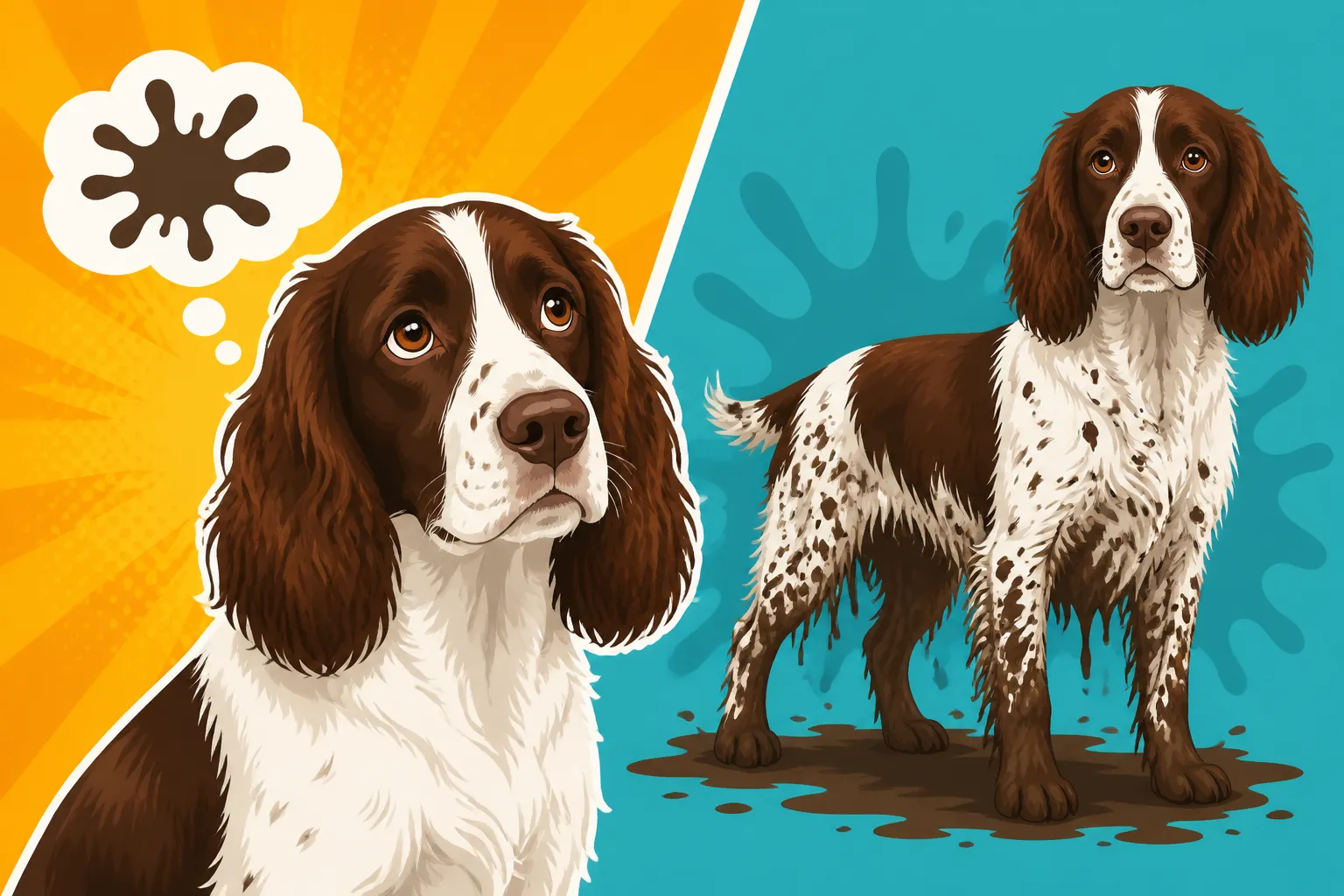
Ah, the sheer joy of a Springer Spaniel romping through a muddy field! It's a quintessential image, isn't it? But that beautiful, spirited sight often comes with a rather messy reality check when your beloved companion bounds back to you looking less like a dog and more like a walking mud sculpture. Many of us springer owners have faced the grim prospect of a mud-caked dog heading straight for the clean carpet, wondering if their gorgeous coat was specifically designed to hoard as much muck as possible. This guide is here to unravel the mystery of why your Springer Spaniel's coat seems to be a magnet for mud and, more importantly, to arm you with practical strategies to manage the inevitable mess.
The Springer Spaniel Coat: A Mud Magnet by Design
Let's be honest, those stunning coats are a huge part of what we adore about Springer Spaniels. But what makes them so beautiful, so resilient in the field, also makes them incredibly efficient at collecting every speck of dirt, every last bit of leaf litter, and, of course, every dollop of mud. It's not just bad luck; it's by design, rooted deeply in their purpose as working gundogs.
Double Coat Dynamics: Why it Traps More Than You Think
A Springer Spaniel's coat isn't just one layer of hair; it's a sophisticated, dual-layered system. You've got that lovely, weather-resistant outer coat – typically straight or slightly wavy, and quite dense. Underneath, there's a soft, thick undercoat that provides insulation, keeping them warm in cold water and cool in warmer weather. This combination is brilliant for protecting them from the elements and the rough-and-tumble of dense cover.
However, this very structure, while a marvel of natural engineering for a working dog, is also a nightmare for mud. The harsh outer coat can easily become caked, and the dense, woolly undercoat acts like a sponge, soaking up moisture and trapping mud particles deep within its fibers. Imagine trying to shake mud out of a thick wool sweater compared to a smooth raincoat – that's the difference we're talking about. The individual hairs themselves, with their slightly coarser texture, offer more surface area for mud to cling to, rather than letting it slide off.
Feathering: The Ultimate Mud Broom
Then there's the feathering. Oh, the glorious, flowing feathering! On their legs, chest, belly, and tail, these longer, softer hairs are truly magnificent when clean and waving in the breeze. But step into a muddy environment, and those graceful feathers transform into efficient, four-legged mud brooms.
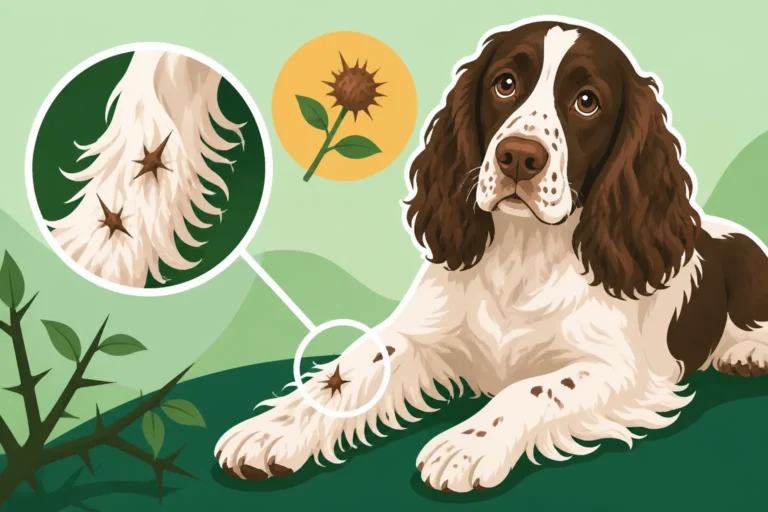
As your Springer Spaniel quarters a field or pushes through thick brambles, that feathering sweeps the ground, picking up everything in its path. Mud, wet leaves, burrs, twigs – it all gets entangled in those fine strands. And because the feathering is typically longer and often softer than the main body coat, it tends to hold onto mud with tenacious grip. When wet mud dries in these areas, it can form stiff, uncomfortable clumps that pull at the skin and, if not removed quickly, can lead to severe matting. This matting is not just unsightly; it can be painful for your dog and a breeding ground for skin issues. It's a constant battle, especially if you have a show-bred Springer with even more profuse feathering compared to their field-bred cousins. Understanding How a Show Springer Spaniel's Coat Differs in terms of length and density can really help set your expectations for grooming needs.
Factors Influencing Mud Retention and Cleanup
It’s not just that your Springer’s coat holds mud, but how much and what kind of mud it holds. You might notice that some days are easier to clean up than others, and there's usually a good reason for it. Different situations present different challenges.
Mud Consistency and Terrain Type
Think about the last time your dog got muddy. Was it after a light drizzle on a grassy path, or a full downpour in a freshly tilled garden bed? The consistency of the mud plays a huge role in how much sticks to the coat and how easy it is to remove.
Thick, sticky clay mud, often found in agricultural fields or certain construction areas, is notoriously difficult. It adheres tightly to the hair, clumping together and creating heavy, dense patches that are almost impossible to brush out when wet. This kind of mud often requires a full bath, especially if it gets embedded deep into the undercoat. On the other hand, thin, watery mud – like what you'd find splashing through shallow puddles on a paved path – might coat the surface but often rinses away more easily. Then there’s the sandy loam, common in many woodlands or sandy trails, which might not clump as much but can penetrate deep into the coat, leaving a gritty residue that feels like fine sandpaper.
The terrain itself also dictates the mud challenge. A walk through a boggy marsh or a freshly ploughed field after rain will undoubtedly result in a much muddier dog than a stroll through damp parkland. Even within your own yard, areas with poor drainage can become mud traps. It's wise to consider the conditions before embarking on an adventure, and perhaps choose alternative routes on particularly wet days if you want to save yourself some cleanup time later.
Coat Condition and Grooming Practices
Beyond the type of mud, the actual condition of your Springer Spaniel’s coat is a huge determinant in how much mud it retains. A coat that is well-maintained, brushed regularly, and free of tangles and mats will shed mud much more effectively than a neglected one.
When your dog's coat is matted, it creates a denser, more textured surface with many nooks and crannies for mud to cling to. Mats act like sponges, absorbing and holding onto moisture and dirt, turning a mild muddy encounter into a truly entrenched disaster. Once mud dries within a mat, it hardens, making it incredibly difficult and sometimes painful to remove without resorting to cutting the mat out or extensive bathing and conditioning. A clean, smooth, untangled coat offers fewer attachment points for mud. The hairs lie flatter, making it harder for debris to get deeply embedded. Therefore, consistent grooming is not just about aesthetics; it's a vital preventative measure against excessive mud accumulation and the complications that come with it. Regular brushing, even daily for dogs with heavier feathering, can make a world of difference. You can find excellent advice on Trimming a Springer Spaniel's Feathering to keep those areas manageable and less prone to mud collection.
Practical Strategies for Battling the Mud
Okay, so we know why the mud sticks. Now, let's talk about how to fight back. Dealing with a muddy Springer Spaniel doesn't have to be an ordeal if you have a game plan and the right tools.
Immediate Post-Walk Mud Management
The key to dealing with mud effectively is interception. You want to get as much off as possible before your dog sets paw inside your house. Creating a "mud station" near your entry point is a game-changer. This could be a designated spot in the garage, a utility room, or even just a covered porch.
First, invest in some heavy-duty towels, preferably older ones you don't mind getting filthy. As soon as you get home, before opening the door, guide your Springer to your mud station. If the mud is still wet and gooey, a quick rinse with a hose (lukewarm water, please!) can remove the worst of it. For particularly caked-on mud, a dog bathing station with a sprayer, often found at self-wash facilities or even a large utility sink at home, is invaluable. Some owners even use specialized dog wash boots or portable paw cleaners to tackle muddy paws specifically. After the initial rinse or wipe-down, towel-dry your dog thoroughly, paying close attention to the feathering and underbelly. Sometimes, if the mud isn't too severe and has started to dry, it's actually easier to let it dry completely and then brush it off. This isn't always practical when you have a bouncy Springer ready to redecorate your home, but it's a technique worth considering if the mud isn't soaking wet. I've often wondered Whether a Springer Spaniel Should Be Rinsed After Every Walk, and while it seems like a lot, a quick hose-down can really prevent a lot of indoor mess.
Grooming Tools and Techniques for Muddy Coats
Having the right arsenal of grooming tools can turn a daunting task into a manageable one. Here’s what I recommend having on hand:
| Tool | Purpose | How to Use for Mud |
|---|---|---|
| Slicker Brush | Removes loose hair, detangles. | Excellent for brushing out dry mud from the main body and feathering. |
| Wide-Tooth Comb | Detangles larger knots and feathering. | Essential for working through mud-clumped feathering, especially after a wash. |
| Detangling Spray | Helps loosen knots, adds slip to the coat. | Spray generously on matted, muddy areas before combing to minimize pulling and breakage. |
| High-Velocity Dryer | Dries coat quickly, blasts out loose dirt/mud. | Can effectively dislodge dry or even slightly damp mud before brushing, and speeds up drying after a bath. |
| Dog-Specific Shampoo | Cleanses coat, removes grime. | Choose a gentle, pH-balanced formula for full baths to remove stubborn mud and odors. |
| Microfiber Towels | Absorbent, fast-drying. | For initial towel-drying after rinsing or bathing. |
When dealing with a mud-caked coat, remember that patience is a virtue. Start with the least invasive methods. If the mud is mostly dry, try brushing it out with a slicker brush, working in sections. For damp, sticky mud, a rinse is almost always necessary. Follow up with a good dog shampoo, making sure to lather well into the feathering and undercoat. Rinse thoroughly until the water runs clear, as any leftover shampoo can irritate the skin. Afterwards, use your high-velocity dryer if you have one – it makes an incredible difference in drying time and can even blast out some lingering bits of dirt. If you’re in the market for grooming supplies, you can often find a great selection of brushes and shampoos on Chewy or Amazon. Remember, Which Brush Suits a Springer Spaniel can vary based on coat type, so do a little research.
Proactive Grooming to Minimize Mud Impact
Beyond reacting to the mud, you can proactively manage your Springer's coat to make mud less of a problem in the first place. This is where consistent grooming really shines.
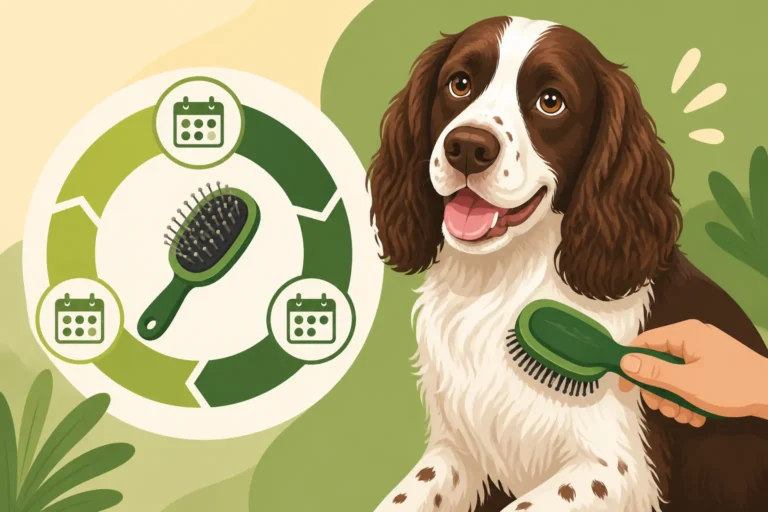
Regular, thorough brushing sessions are paramount. Aim for at least a few times a week, or even daily if your Springer spends a lot of time outdoors or has particularly thick feathering. This helps to prevent mats from forming, which, as we discussed, are prime real estate for mud. A well-brushed coat allows mud to dry and fall out more easily, rather than getting trapped in tangles. Consider trimming the feathering, especially on the underside, around the legs, and on the belly. A shorter trim in these areas significantly reduces the surface area available for mud to cling to. It doesn't mean sacrificing the breed's signature look; it's about strategic trimming for hygiene and ease of care. Many field-bred Springers naturally have less feathering, which makes them a bit easier to maintain in muddy conditions, but even show lines can benefit from some tidying up. Think about Whether a Working Springer Spaniel Should Be Trimmed for Cover – even if your dog isn't hunting, the principle applies to managing their coat in messy environments. Sometimes, a full "puppy cut" or a shorter clip can be a lifesaver during particularly wet seasons, even if Whether a Puppy Cut Suits a Springer Spaniel is a matter of personal preference and often raises some eyebrows in the show community. For many pet owners, comfort and practicality often win out.
Long-Term Coat Health and Mud Resistance
While immediate cleanup and proactive grooming are essential, the overall health and quality of your Springer Spaniel's coat can also play a role in how well it handles mud. A healthy coat is a resilient coat.
Nutrition's Role in Coat Quality
Just like with humans, what goes into your dog's body reflects on the outside. A well-balanced, nutritious diet is foundational for a healthy skin and coat. Essential fatty acids, particularly Omega-3s and Omega-6s, are crucial for maintaining skin integrity and a lustrous, strong coat that is less prone to dryness and breakage. When the coat is healthy, the hair follicles are stronger, and the hair shaft itself is smoother. This can mean less static, less breakage, and potentially, less adhesion for mud and debris.
Some owners find that a high-quality diet, perhaps one rich in beneficial fats, results in a silkier, more manageable coat that seems to repel dirt more effectively. You might explore different food options, from high-end kibble to fresh food diets. Brands like Ollie, which offer fresh, human-grade ingredients, are popular among owners seeking to improve their dog's overall health, including coat condition. Discussing Whether Fresh Food Changes a Springer Spaniel's Skin can often lead to interesting insights from other owners who have made the switch. Remember, any dietary change should be gradual and ideally discussed with your vet.
Understanding and Preventing Matting
We've touched on matting, but it bears repeating: matting is your number one enemy when it comes to mud. A matted coat is a magnet for mud, and once that mud dries in a mat, it creates a concrete-like clump that is incredibly difficult to remove without causing discomfort or damage to the skin. Mats can also pull on the skin, causing pain and even skin infections if moisture and debris get trapped underneath.
Preventing mats is far easier than dealing with them. Regular brushing is the most important step. Pay particular attention to areas where mats commonly form: behind the ears, in the armpits, on the insides of the legs, and, of course, throughout the feathering. These are high-friction areas where hair easily tangles. Using a detangling spray during brushing can also help to prevent knots from tightening. If you encounter small mats, work them out gently with your fingers and a comb, rather than pulling forcefully. For stubborn mats, a mat splitter or a quick trip to a professional groomer is a good idea. Knowing Whether a Springer Spaniel Mats Behind the Ears or in other specific spots can help you focus your grooming efforts where they are needed most. By keeping your Springer’s coat in top condition, you’re not only ensuring their comfort and beauty but also making your life much easier after those inevitable muddy adventures.
Disclaimer
This article is for general informational purposes only and does not constitute professional advice. Laws, prices and regulations vary by location and change over time. Consult a qualified professional for guidance on your specific situation.