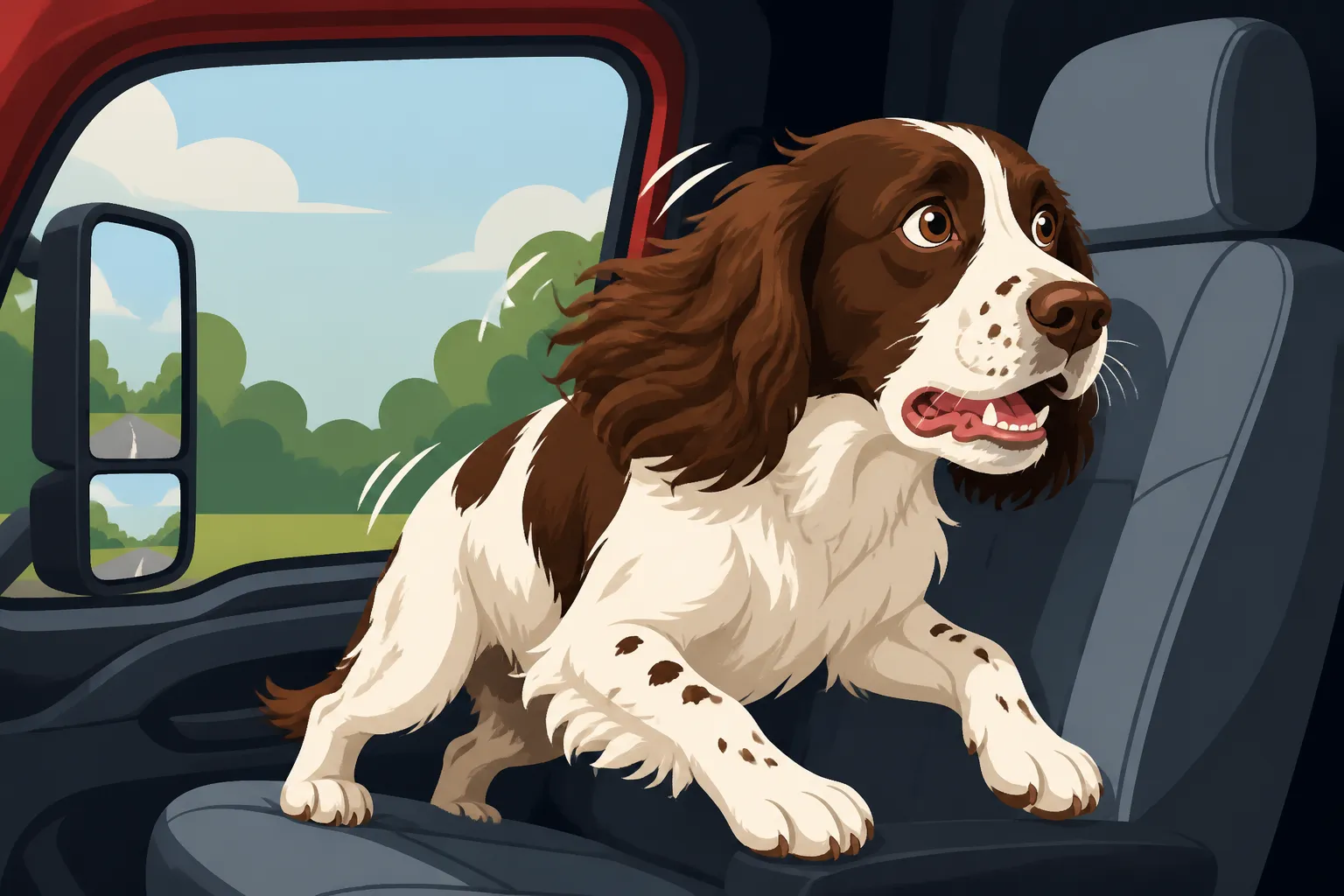
The Springer Spaniel That Cannot Settle in a Truck
It's a familiar scene for so many Springer Spaniel owners: you mention "car ride," and your dog transforms from a perfectly calm companion into a panting, pacing, anxious mess, or an overly excited projectile trying to launch itself into the front seat. Despite their love for adventure and the outdoors, many Springers find truck travel incredibly stressful or downright unmanageable. This guide will walk you through understanding why your beloved Springer might be struggling and provide practical, empathetic strategies to make car journeys a more peaceful and safe experience for everyone involved.
Understanding the Root Cause of Car Stress in Your Springer
Before you can tackle the problem, you need to understand why your Springer Spaniel is reacting the way they are. Is it pure unadulterated excitement, or is there a genuine underlying fear or discomfort? Often, it's a mix of things, and what looks like naughtiness might actually be deep-seated anxiety or even physical discomfort. Our Springers are sensitive souls, and a truck ride, no matter how short, can be an overwhelming sensory experience.
Motion Sickness and Physical Discomfort
Just like people, dogs can get car sick. This isn't just about throwing up; it can manifest as drooling, excessive licking of lips, panting, yawning, restlessness, and a general look of misery. Imagine being stuck in a constantly moving box, feeling queasy but unable to explain it. It's a truly horrible experience. If your Springer often looks unwell or uncomfortable, especially after a twisty drive or a long journey, motion sickness is a strong contender. Their internal equilibrium gets thrown off, leading to nausea. For a dog that absolutely lives for the outdoors, this can be a cruel twist, as the car is the gateway to all their favorite adventures.
Another physical discomfort might simply be the feeling of instability. Cars stop, start, and turn, and if your Springer doesn't have a secure footing, they can feel constantly off-balance. This can lead to bracing, muscle tension, and overall stress, making them dread the next trip. Imagine trying to stand on a rocking boat for an hour – it's exhausting and unsettling. The vibrations and sounds of the vehicle itself, which we tune out, can also be intense for a dog with such keen senses.
Anxiety and Negative Associations
Many Springers, particularly those who weren't gradually introduced to car travel as puppies, or those who associate the car only with trips to the vet or groomer, can develop significant anxiety. This isn't just a puppy thing; even an adult Springer Spaniel that has been rehomed might carry past negative experiences with them. Think about it: if every car ride ends with a poking and prodding session at the vet, or a stressful stay at a boarding kennel, why would they ever want to get in the truck? This anxiety can manifest as whining, barking, pacing, destructive chewing, or even frantic attempts to escape the vehicle.
It's crucial to differentiate this from simple over-excitement, though the behaviors can sometimes look similar. An anxious dog might be trying to cope with an overwhelming situation, whereas an over-excited dog is anticipating a thrilling event but hasn't learned to manage that anticipation. For a Springer Spaniel, who are often quite sensitive, a loud shout or harsh correction during a stressful car ride can actually set them back significantly, reinforcing negative feelings rather than improving behavior. The Soft Springer Spaniel That Shuts Down If You Shout is a good read if you've ever found yourself getting frustrated and raising your voice.
Over-Excitement and Lack of Impulse Control
Conversely, some Springer Spaniels are simply too excited about the prospect of a car ride, especially if it leads to a walk in the woods, a trip to the park, or a day of hunting. A Field Bred Springer Spaniel Is a Different Dog to Live With highlights their inherent drive and energy, which can make managing excitement a real challenge. They bounce, they bark, they whine, they try to climb into your lap while you're driving – all because they anticipate the fun that lies ahead.
This isn't necessarily fear, but rather a lack of impulse control and understanding of appropriate car behavior. They haven't learned that calm behavior leads to getting to their destination, while frantic behavior doesn't speed things up but rather makes the journey unpleasant for everyone. This can be especially true for younger, unseasoned Springers who are still figuring out the world. They might love the idea of the destination but hate the confinement of the journey, leading to a vocal protest.
Setting Up Your Truck for Springer Spaniel Success and Safety
Once you have an idea of why your Springer struggles, the next step is to optimize their travel environment. Safety is paramount, not just for your dog, but for you and other drivers on the road. An unrestrained dog can become a dangerous projectile in a sudden stop or accident, or a hazardous distraction to the driver. Plus, a secure space often helps reduce anxiety.
Secure Restraints: Crates, Carriers, and Harnesses
Choosing the right restraint is critical. For many Springers, a secure crate is the safest and most calming option. It provides a defined, den-like space that limits visual stimuli and prevents them from wandering around the vehicle. Make sure the crate is properly secured so it doesn't slide around. You can find a wide variety of durable travel crates on platforms like Chewy or Amazon, ranging from wire to plastic, depending on your needs. For very anxious dogs, a solid-sided crate might be better as it further reduces visual triggers.
If a crate isn't feasible, a sturdy, crash-tested car harness combined with a seatbelt attachment can be a good alternative. This keeps your dog safely tethered in the back seat, preventing them from jumping into the front or becoming a projectile. Always choose a harness designed for car safety, rather than just a walking harness, as these are built to distribute impact forces more effectively. Ensure the tether length allows them to sit or lie down comfortably but not roam freely.
| Restraint Type | Best For | Pros | Cons |
|---|---|---|---|
| Hard-Sided Crate | Containment, safety, den-seeking dogs, motion sickness | Excellent safety, restricts movement, easy to clean, can contain messes | Bulky, requires more space, dog must be crate trained |
| Soft-Sided Carrier | Smaller Springers, short trips, perceived den | Lighter, often foldable, comfortable for some dogs | Less impact protection than hard crates, not suitable for escape artists |
| Car Safety Harness + Seatbelt | Back seat travel, dogs who dislike crates, less bulk | Keeps dog secure in seat, allows some movement, less space-intensive | Does not prevent mess, dog can still see out, may not deter severe anxiety |
| Dog Seat/Booster Seat | Smaller Springers, seeing out the window, mild anxiety | Elevates dog for view, comfortable, often has tether | Not for larger Springers, less robust crash protection, can still allow movement |
Comfort and Sensory Management
Even with a secure restraint, comfort matters. A soft, familiar bed or blanket inside their crate or on the seat can make a huge difference. The scent of home can be very reassuring. For Springers prone to motion sickness, try to keep the car cool and well-ventilated. Cracking a window slightly can help with air circulation, but not so much that it creates excessive wind or noise.
Consider managing sensory input. For an over-stimulated Springer, partially covering their crate or using window shades can reduce the constant stream of passing cars and scenery, which can be overwhelming. Some dogs do better seeing out, while others are calmer when the visual input is minimized. Experiment to see what works best for your individual dog. If your Springer often has an upset stomach, providing a light meal a few hours before travel, or even offering a specialized diet designed for sensitive stomachs, might help. How Settled a Springer Spaniel's Stomach Is is a good resource for understanding their digestive sensitivities.
Practical Training Steps to Build Positive Car Associations
Once your truck is set up safely and comfortably, it’s time to work on changing your Springer’s emotional response to car rides. This isn't a quick fix; it requires patience, consistency, and a whole lot of positive reinforcement. Remember, the goal is to make the car a neutral or even positive space, not a source of dread or uncontrollable excitement.
Gradual Desensitization and Counter-Conditioning
The key here is small, manageable steps. Start by simply getting your Springer comfortable near the car. Sit in the driveway, open the door, and let them explore at their own pace. Offer high-value treats and praise. Don't even ask them to get in yet. Once they're relaxed near the car, move to getting them into the car, still parked. Lure them in with treats, let them settle in their designated spot (crate or harness), give them a special chew toy or a full chew, and then immediately take them out again. The goal is to create positive associations without the stress of actual movement.
Repeat these short, positive sessions frequently. Gradually increase the duration they spend in the parked car, then introduce the engine running, and finally, very short drives. The first actual drive should be literally down the driveway and back, or just around the block, and end with something incredibly rewarding, like a favorite treat or a quick game of fetch in the yard. This process is called counter-conditioning – changing a negative emotional response into a positive one. Over time, your Springer will learn that the car isn't scary or a prelude to a bad experience, but rather a place where good things happen, sometimes followed by exciting adventures. This approach is fundamental to making progress, especially if your Springer has Separation Anxiety in a Springer Spaniel that might extend to car rides alone.
Positive Reinforcement and Engaging Activities
Always use positive reinforcement. Reward calm behavior generously. If your Springer whines or barks, do not reward it, but wait for a moment of quiet, even a second, and then praise and treat. For dogs that struggle with over-excitement, consider using a calming chew or a puzzle toy filled with a delicious treat to keep them occupied during the initial part of the journey. A long-lasting chew, like a stuffed Kong from Chewy or a healthy chew from Ollie, can distract them during travel.
For working lines or highly driven Springers, incorporating mental stimulation can also help. Scent games in the car (before moving) or specific whistle commands once settled can give them a job to do, helping to channel their energy. Whistle Work: The Language a Springer Spaniel Learns isn't just for the field; it can be incredibly useful for focus and direction in other situations too. Make sure your Springer has had adequate exercise before a car trip, especially if it’s a longer one. A tired Springer is often a calmer Springer. How Much Exercise a Field Bred Springer Spaniel Needs will give you an idea of their requirements. Incorporating car rides into The Daily Routine a Springer Spaniel Actually Needs by making them consistently lead to fun places can solidify the positive association.
When to Seek Help: Addressing Severe Motion Sickness or Anxiety
Sometimes, despite your best efforts, your Springer Spaniel's struggles in the truck go beyond what basic training can resolve. This is when it's important to recognize the signs that professional intervention might be needed. You're not failing as an owner; you're being a responsible advocate for your dog's well-being.
Consulting Your Veterinarian for Medical Solutions
If your Springer Spaniel exhibits severe drooling, vomiting, excessive panting, or extreme restlessness every time they get in the car, even for short distances, it's highly probable they suffer from motion sickness. A trip to the vet is crucial. Your veterinarian can assess your dog's health and rule out any other underlying medical conditions. They can also prescribe medications specifically designed to prevent motion sickness in dogs. These medications can make a dramatic difference, turning a miserable experience into a tolerable one, or even a pleasant one.
Beyond prescription medications, your vet might suggest other options, such as anti-nausea supplements or even certain types of calming treats. Always discuss any over-the-counter remedies with your vet first to ensure they are safe and appropriate for your dog. For some Springers, simply eliminating the physical discomfort of nausea can open the door for behavioral training to finally be effective.
Working With a Certified Professional Dog Trainer or Behaviorist
For deep-seated anxiety or severe behavioral issues in the car that don't seem to be purely motion-sickness related, a certified professional dog trainer or a veterinary behaviorist can provide invaluable guidance. These experts have specialized knowledge and tools to diagnose the specific type of anxiety (e.g., generalized anxiety, separation anxiety, noise phobia) and develop a tailored behavior modification plan. They can help identify triggers you might be missing and teach you advanced counter-conditioning and desensitization techniques.
A behaviorist might also discuss environmental enrichment or even medication to help manage severe anxiety, especially if it's impacting your Springer's quality of life beyond just car rides. Behavior-modifying drugs, when used in conjunction with a training plan, can help bring your dog's anxiety down to a level where they are capable of learning and responding to positive reinforcement. Don't be afraid to reach out for help; sometimes, an outside perspective and expert knowledge are exactly what's needed to unlock a breakthrough. After all, the first year with a Springer Spaniel puppy can be challenging, and some issues require more than basic training. The First Year With a Springer Spaniel Puppy outlines many of these considerations.
Every Springer Spaniel is an individual, and what works for one might not work for another. The journey to a calm car traveler might be long, but with patience, persistence, and a willingness to seek help when needed, you can help your beloved companion conquer their car fears and enjoy the ride to all your shared adventures.
Disclaimer
This article is for general informational purposes only and does not constitute professional advice. Laws, prices and regulations vary by location and change over time. Consult a qualified professional for guidance on your specific situation.