Whether Fresh Food Changes a Springer Spaniel’s Skin
It's a common frustration for Springer Spaniel owners: flaky skin, persistent itching, dull fur, or even persistent hotspots, despite all your efforts with grooming and topical treatments. You've tried different shampoos, endless brushing, and maybe even allergy medications, but sometimes the answer feels like it must come from within. This guide delves into whether switching your beloved Springer Spaniel to a fresh food diet can truly make a difference for their skin health, exploring the nuances and practicalities involved.
The Itchy Reality: Understanding Springer Spaniel Skin Woes
Before we jump into fresh food, let's acknowledge the uphill battle many Springer Spaniel parents face when it comes to skin health. Our Springers are generally robust, but their beautiful coats and often floppy ears can mask underlying sensitivities or predispositions. Skin issues aren't just cosmetic; they can be incredibly uncomfortable for your dog and frustrating for you, often leading to a cycle of scratching, licking, and secondary infections.
Common Skin Issues in Springer Spaniels
Springer Spaniels, with their dense coats and penchant for exploring, are no strangers to skin problems. You might notice your dog constantly scratching behind their ears, chewing at their paws, or developing red, inflamed patches. These aren't just minor irritations; they can be symptoms of deeper issues.
One of the most frequent culprits is allergies. Just like people, dogs can suffer from environmental allergies (pollen, dust mites) or food allergies. For many Springer Spaniels, persistent ear infections are actually a symptom of underlying allergies, manifesting as red, itchy, smelly ears. You might be focused on the ears, but the root cause is often systemic. How Often Allergies Drive a Springer Spaniel's Ear Disease delves into this connection. Beyond allergies, some Springers can be prone to conditions that affect their skin's oil production, leading to issues like greasy skin or a dull, unhealthy coat. Finding the exact cause can feel like a detective mission, requiring close observation and often veterinary guidance.
The Diet Connection to Skin Health
It's natural to wonder if diet plays a role when you're dealing with a persistently itchy or flaky Springer Spaniel. After all, skin is the body's largest organ, and what goes into your dog's body fundamentally impacts its health, including the quality of its coat and the integrity of its skin barrier. A diet lacking in essential fatty acids, for instance, can lead to dry, flaky skin and a dull coat. Conversely, certain ingredients in commercial kibble might trigger allergic reactions or sensitivities in some dogs.
Think of it this way: if your Springer is constantly licking their paws raw, it could be a behavioral issue, but it's far more likely to be an itch they can't relieve. Why a Springer Spaniel Licks Its Paws Raw provides more insight. When the skin is inflamed or irritated from within, no amount of external treatment will fully solve the problem. This is where many owners start looking at their dog's bowl, hoping a change in nutrition might offer some relief and address the problem at its source.
Defining "Fresh Food" for Your Canine Companion
The term "fresh food" can mean a few different things in the pet world, and it's important to understand the distinctions. It's not a one-size-fits-all category, and each approach comes with its own considerations regarding preparation, nutritional balance, and cost.
Commercial Fresh-Cooked Diets
These are increasingly popular, offering the convenience of pre-prepared meals delivered to your door, often frozen or refrigerated. Companies like Ollie specialize in creating human-grade, gently cooked meals using whole ingredients like real meat, vegetables, and grains. The appeal here is obvious: you get the benefits of fresh, recognizable ingredients without the hassle of cooking and balancing recipes yourself.
These diets are typically formulated by veterinary nutritionists to be complete and balanced for all life stages, which is a huge peace of mind for owners. They cut out many of the artificial preservatives, fillers, and highly processed components often found in traditional kibble. For a Springer Spaniel owner struggling with skin issues, switching to a commercial fresh-cooked diet can be a convenient way to introduce a potentially less allergenic or more digestible food source. You can usually find a wide range of proteins and ingredient combinations, which can be helpful if you're trying to avoid specific allergens for your dog.
Raw Feeding (BARF or Prey Model)
Raw feeding involves giving your dog uncooked meat, bones, and organs (Prey Model Raw) or a combination of raw meat, bones, organs, and vegetables/fruits (Biologically Appropriate Raw Food or BARF). Proponents often argue that this mirrors the ancestral diet of canids and offers superior nutrition, leading to improved coat health, cleaner teeth, and better digestion. Whether Raw Feeding Suits a Working Springer Spaniel explores this in more detail.
However, raw feeding requires significant research and commitment to ensure nutritional completeness and safety. It's not as simple as just feeding raw chicken from the grocery store. Improperly balanced raw diets can lead to serious deficiencies or excesses, and there are inherent risks of bacterial contamination (e.g., Salmonella) that require careful handling and hygiene. While some owners swear by the skin and coat benefits, it's a path that demands thorough understanding and often consultation with a veterinary nutritionist experienced in raw feeding to ensure your Springer Spaniel is getting everything they need safely.
Home-Cooked Diets
Preparing home-cooked meals for your Springer Spaniel can be the ultimate in fresh food control. You choose every single ingredient, ensuring quality and avoiding any known allergens or sensitivities. This is particularly appealing if your Springer has very specific dietary needs or multiple allergies, as it allows for a highly customized approach. You can easily source ingredients from your local grocery store or even online retailers like Amazon or Chewy, depending on what you're looking for.
The challenge, once again, is nutritional balance. Simply cooking chicken and rice won't provide a complete diet long-term. Dogs have very specific nutritional requirements, and deficiencies can lead to severe health problems over time. It's absolutely critical to work with a board-certified veterinary nutritionist to develop recipes that are complete and balanced for your Springer Spaniel's age, activity level, and any health conditions. Without expert guidance, you risk doing more harm than good, even with the best intentions.
Potential Skin Benefits: Why Fresh Food Might Help
So, with these different categories in mind, how might a switch to fresh food actually improve your Springer Spaniel's skin? The benefits often stem from the quality of ingredients, increased digestibility, and the absence of common irritants.
Improved Nutrient Absorption and Bioavailability
One of the core arguments for fresh food is that the nutrients are more bioavailable, meaning the dog's body can more easily absorb and utilize them. Traditional kibble, while fortified, undergoes high-heat processing which can degrade some nutrients, especially vitamins and beneficial enzymes. Fresh, gently cooked ingredients retain more of their natural nutritional integrity.
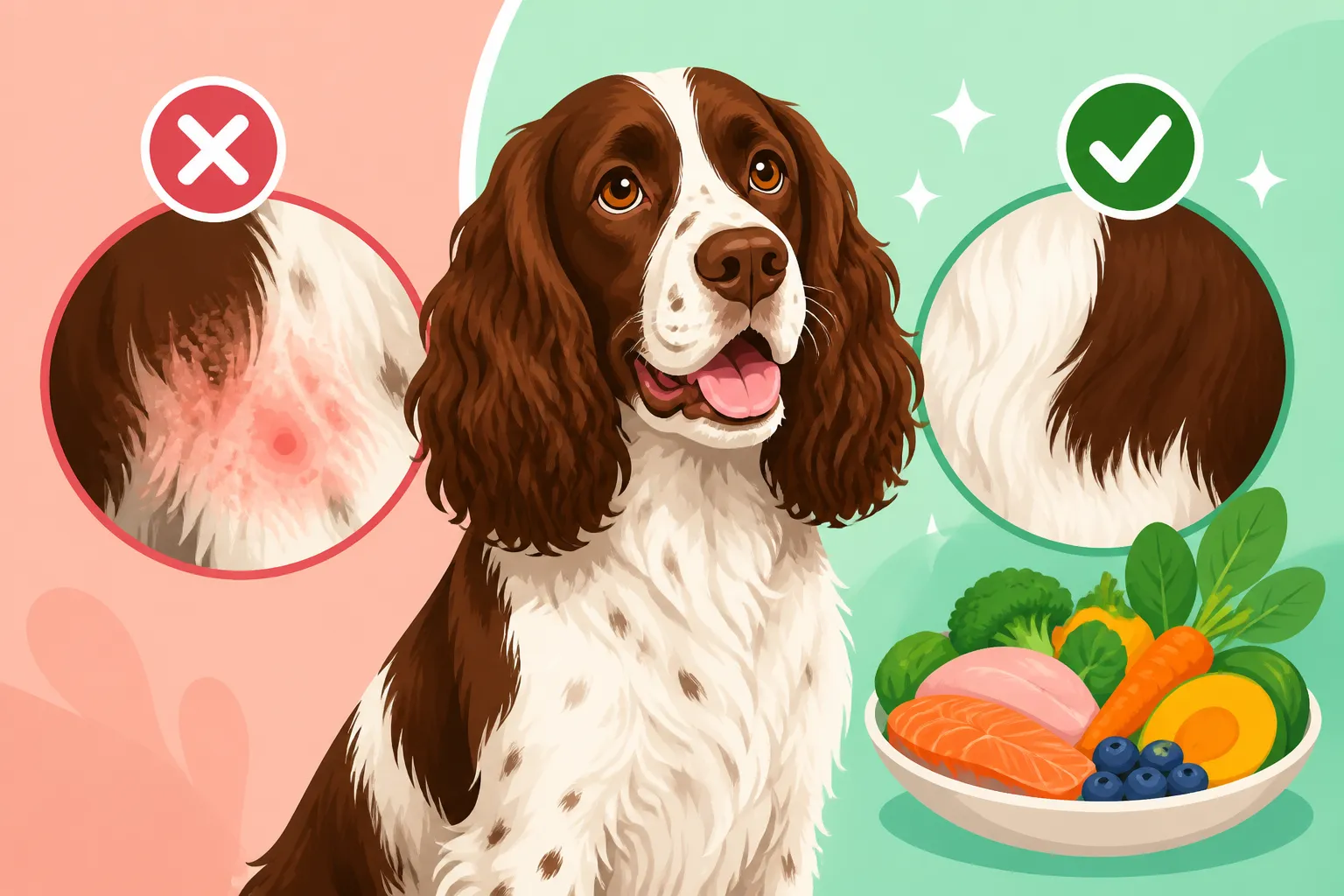
For skin health, this can translate to a better supply of essential fatty acids (like Omega-3 and Omega-6), antioxidants, and vitamins (A, E, B complex) crucial for maintaining a healthy skin barrier and promoting cell regeneration. A stronger, healthier skin barrier is more resilient against environmental irritants and less prone to dryness, flakiness, and inflammation. When your Springer's body is getting all the building blocks it needs efficiently, it shows in their coat and skin. You might notice a softer, shinier coat and less shedding as a result. Whether Fish Oil Calms a Springer Spaniel's Skin further explains the role of fatty acids.
Reduction of Allergens and Inflammatory Ingredients
Many commercial kibbles contain common allergens or ingredients that some dogs are sensitive to, even if they're not overtly allergic. These can include certain proteins (like chicken or beef in highly processed forms), grains (corn, wheat, soy), or artificial colors, flavors, and preservatives. For a Springer Spaniel prone to The Allergens Behind a Springer Spaniel's Itch, switching to a fresh food diet allows for a careful selection of novel proteins and easily digestible carbohydrates, often eliminating potential triggers.
An owner might notice their Springer's chronic paw licking or persistent hot spots finally start to resolve. Hot Spots Under a Springer Spaniel's Feathering are often exacerbated by underlying irritation. By removing these irritating ingredients, the body's inflammatory response can calm down, leading to less itching, less redness, and overall healthier skin. This is essentially performing an elimination diet, but with a more palatable and nutrient-rich base. When you run an elimination diet on a Springer Spaniel, fresh food can be a very controlled way to do it.
Better Hydration and Digestive Health
Fresh foods generally have a much higher moisture content than dry kibble. This increased hydration contributes to overall body health, including skin hydration. Well-hydrated skin is more supple, less prone to flaking, and forms a better barrier against external irritants. For a Springer Spaniel, who might be prone to dry skin under their thick coat, this can be a subtle but significant benefit.
Furthermore, a healthy gut is intimately linked to healthy skin. A balanced fresh food diet, often rich in natural fibers and easily digestible proteins, can promote a healthier gut microbiome. A thriving gut environment can reduce systemic inflammation and support the immune system, which in turn can lead to improvements in skin conditions that are often rooted in immune responses, such as certain allergies. Adding a probiotic can also aid in gut health. Whether a Springer Spaniel Needs a Probiotic is worth considering if you're exploring dietary changes.
Making the Switch: Practicalities and Considerations
While the potential benefits of fresh food for your Springer Spaniel's skin are compelling, the reality of making such a switch involves practical considerations. It's not a decision to be taken lightly, and there are both advantages and disadvantages to weigh.
Cost and Convenience
Let's be realistic: fresh food diets, whether commercial pre-made or home-cooked, are generally more expensive than traditional kibble. The cost of human-grade ingredients, coupled with the preparation or delivery services, adds up. For a medium-sized, active Springer Spaniel, this can become a significant part of your monthly budget. If you're on a tight budget, it might not be a sustainable option in the long run.
Convenience also varies. Commercial fresh food services offer high convenience, but you're tied to deliveries and freezer space. Home-cooking, while offering maximum control, is a substantial time commitment. It involves grocery shopping, measuring, cooking, and portioning, often for several days' worth of meals at once. You need to consider your lifestyle and how much time and money you can realistically dedicate to your Springer's diet. For some, the improvements in skin health and overall vitality make the investment completely worthwhile.
Nutritional Balance and Transitioning
The importance of nutritional balance cannot be overstated. As mentioned, home-cooked diets must be formulated by a veterinary nutritionist. Even with commercial fresh food, it's wise to discuss the change with your vet, especially if your Springer Spaniel has existing health conditions. A truly complete and balanced diet is vital for your dog's long-term health. Whether a Limited Ingredient Diet Costs a Springer Spaniel Owner More highlights the need for specialized knowledge when managing specific dietary needs.
Transitioning your Springer Spaniel to a new diet, especially a drastically different one like fresh food, needs to be done gradually. A sudden switch can upset their stomach, leading to digestive issues like diarrhea or vomiting. Start by mixing a small amount of the new food with their old food, slowly increasing the proportion of fresh food over a period of 7-10 days. Observe your Springer closely for any signs of discomfort or worsening skin issues during this time. Patience is key, as their digestive system adjusts to the new ingredients and nutrient profile.
Observing Results and Long-Term Commitment
When you make the switch to fresh food, it's crucial to manage your expectations. While some dogs show rapid improvement, for others, changes can be gradual, taking weeks or even months to become noticeable. Keep a journal of your Springer's skin condition, itching frequency, coat quality, and energy levels. Take photos to help you track progress.
Remember that skin issues can have multiple causes, and diet is just one piece of the puzzle. Even with a perfect diet, environmental allergies might still require management. Telling a Food Itch From a Pollen Itch in a Springer Spaniel is an important distinction to make. If you switch to fresh food and don't see the desired improvement after a reasonable period (say, 8-12 weeks), it might be time to revisit your vet. They can help you explore other avenues, such as specific allergy testing, topical treatments, or even a referral to a veterinary dermatologist. A fresh food diet is a commitment, and it's most effective as part of a holistic approach to your Springer Spaniel's health.
| Aspect | Traditional Kibble | Commercial Fresh-Cooked Diet | Home-Cooked Fresh Diet |
|---|---|---|---|
| Ingredient Quality | Often rendered meats, fillers, by-products | Human-grade meats, whole vegetables | Human-grade ingredients, chosen by owner |
| Processing | High-heat extrusion | Gently cooked | Cooked by owner |
| Moisture Content | Low (5-10%) | High (60-80%) | High (varies by recipe) |
| Nutrient Retention | Potentially reduced by processing | Higher retention | High retention, if cooked gently |
| Allergen Control | Limited, common allergens often present | Better, novel protein options available | Max control, tailored to sensitivity |
| Digestibility | Variable, depends on ingredients | Generally high | Variable, depends on ingredients |
| Cost | Lowest | Moderate to High | Moderate to High (ingredients + time) |
| Convenience | Highest | High (delivery) | Lowest (time-consuming) |
| Nutritional Balance | Pre-formulated (generally balanced) | Pre-formulated (generally balanced) | Requires veterinary nutritionist guidance |
Ultimately, the decision to switch your Springer Spaniel to a fresh food diet is a personal one, weighing the potential health benefits against the practical considerations of cost, time, and commitment. For many owners dealing with persistent skin issues, the visible improvements in coat luster, reduced itching, and overall vitality make it a journey worth taking.
Disclaimer
This article is for general informational purposes only and does not constitute professional advice. Laws, prices and regulations vary by location and change over time. Consult a qualified professional for guidance on your specific situation.