Submissive Urination in a Springer Spaniel
It's incredibly frustrating, and honestly, a bit embarrassing, when your beloved Springer Spaniel greets you or a guest with a puddle on the floor. You might feel like you've failed at house training, or that your dog is deliberately trying to defy you, but the truth is often much more complex, stemming from emotions like fear, anxiety, or even overwhelming excitement. This comprehensive guide is here to unravel the mysteries of submissive urination in Springer Spaniels, offering clear explanations, practical strategies, and a path to a drier, more confident companion.
Understanding What Submissive Urination Truly Is (and Isn't)
When your Springer Spaniel suddenly pees during an interaction, it's easy to jump to conclusions. Is it spite? A lack of house training? The truth is, submissive urination is a specific behavior with distinct roots, and understanding it is the first step toward helping your dog. It’s not about defiance; it’s about communication and emotional response.
The Difference Between Submissive Urination and Excitement Urination
Many people confuse submissive urination with excitement urination, and while both involve peeing inappropriately during an interaction, their underlying motivations are different. Excitement urination, often seen in puppies and young dogs, happens when your Springer Spaniel is simply overcome with joy or arousal, leading to a temporary loss of bladder control. Think of it as a happy accident, often accompanied by bouncy, wiggly body language, a rapidly wagging tail, and an eager desire to interact. It’s usually seen during enthusiastic greetings, playtime, or when anticipating a walk or meal.
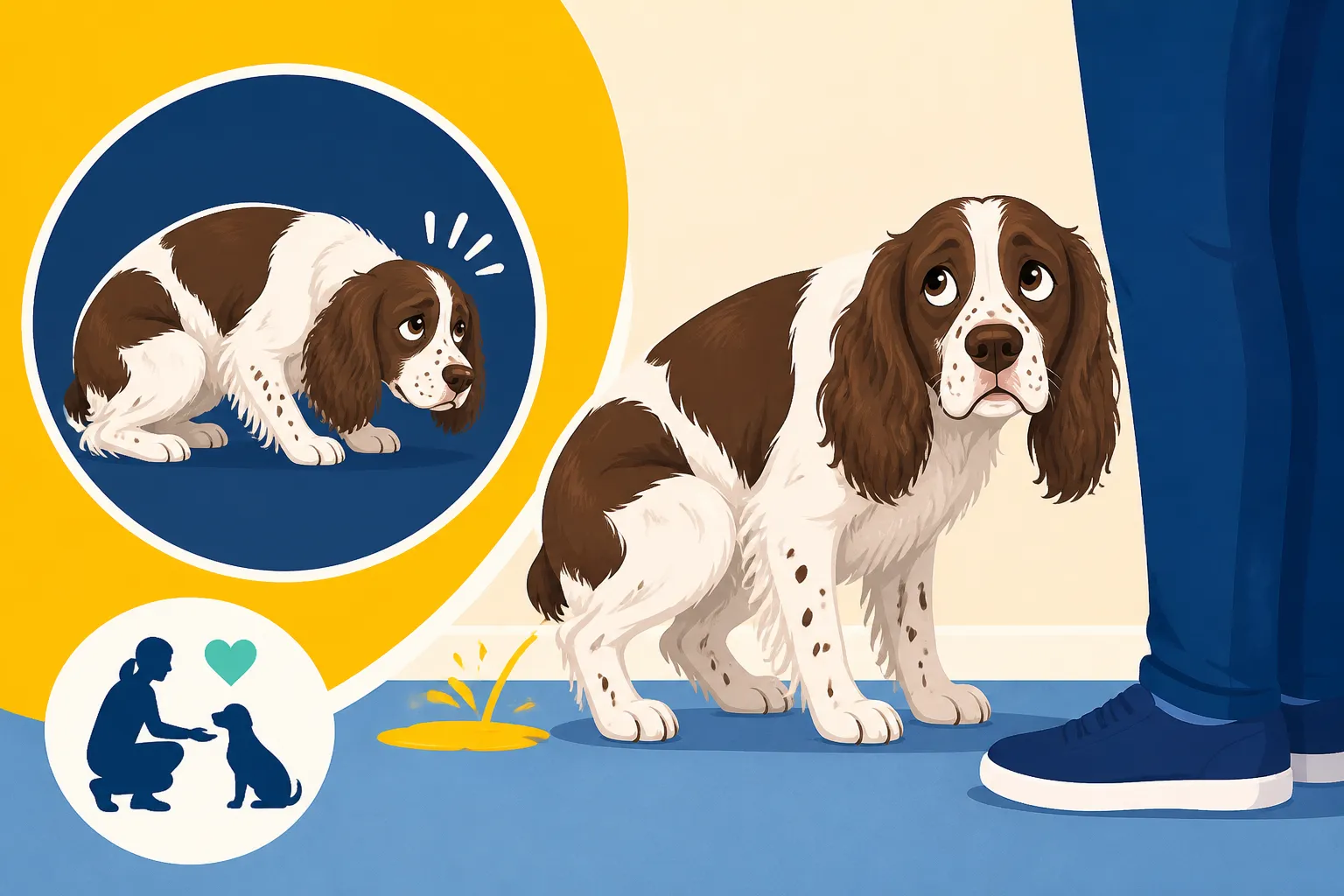
Submissive urination, on the other hand, is generally a response to feeling threatened, overwhelmed, or intimidated, even if unintentionally. Your dog isn't trying to be "bad"; they are trying to communicate their deference and pacify a perceived threat, essentially saying, "Please don't hurt me; I mean no harm." This behavior is typically accompanied by a very different set of body language cues, which are crucial to recognize. The dog might crouch low, avoid eye contact, tuck their tail tightly between their legs, flatten their ears, or even roll onto their back to expose their belly.
While both can result in a wet floor, differentiating between the two is key to choosing the right approach for management and training. If your Springer is greeting you like a long-lost friend with a frantic tail wag and then lets out a little trickle, that's likely excitement. If they cower, avert their gaze, and then release urine, that’s classic submissive behavior. Sometimes, a dog can exhibit both, especially if they are generally anxious but also prone to being overstimulated. Why a Springer Spaniel Pees When Greeted delves deeper into these nuanced distinctions.
Why a Springer Spaniel Displays Submissive Behavior
Submissive urination is a hardwired, instinctual behavior found in many canine species. It's a relic from their wild ancestors, where lower-ranking individuals would use this display to appease higher-ranking, more dominant pack members, preventing potential conflict or aggression. It's a survival mechanism, a way to say, "I'm no threat, please don't hurt me." When your Springer Spaniel displays this behavior towards you, it’s not because they think you're going to harm them, but because they perceive you as a high-status individual whose presence can be overwhelming or intimidating.
Often, Springers are particularly sensitive souls, and their natural desire to please combined with a touch of anxiety can make them more prone to this. They might interpret even subtle human cues—a direct gaze, a loud voice, reaching over them, or even just standing over them—as signs of dominance or potential confrontation. Their instinct kicks in, and they respond with a primal gesture of deference: urination. It's their way of trying to de-escalate a situation that they perceive as tense, even if you, as the owner, had no such intention.
This behavior can be exacerbated by past experiences, even minor ones. A puppy that was startled by a sudden movement while being petted, or an adult dog from a shelter who experienced rough handling, might be more predisposed to feeling overwhelmed during interactions. It's a complex interplay of genetics, individual temperament, and learned associations. Remember, they are not acting out; they are reacting from a place of deep-seated instinct and emotion.
Dispelling Common Myths About Dominance and Punishment
One of the biggest pitfalls when dealing with submissive urination is falling prey to outdated ideas about canine behavior. The myth of "dominance theory," which suggests you must constantly assert your alpha status over your dog, has done more harm than good. Punishing a dog for submissive urination, whether by shouting, scolding, or physically correcting them, is counterproductive and harmful. Your dog is already feeling vulnerable and anxious; punishment only serves to confirm their fears and intensify the very behavior you're trying to stop. It reinforces their belief that human interactions are indeed intimidating, escalating their anxiety and increasing the likelihood of future accidents.
Instead of seeing it as a challenge to your authority, view submissive urination as a plea for understanding and reassurance. Your Springer Spaniel isn't trying to be "dominant" or "stubborn"; they are signaling their discomfort. A truly dominant dog wouldn't be urinating submissively; they would be exhibiting confident, assertive behaviors. The concept that you need to be a "pack leader" in an aggressive, confrontational way has been largely debunked by modern animal behaviorists. Dogs thrive on clear, consistent leadership that is calm, fair, and uses positive reinforcement, not intimidation.
Focusing on building trust and confidence, rather than imposing dominance, is the most effective approach. This means re-evaluating your own actions and interactions to ensure you're not inadvertently triggering your dog's submissive responses. Your goal is to make your Springer Spaniel feel safe and secure in your presence, not fearful or intimidated. Trying to yell at them or rub their nose in it will simply confirm their worst fears and solidify the behavior. The Soft Springer Spaniel That Shuts Down If You Shout explains why harsh corrections are especially detrimental to sensitive breeds like Springers.
Recognizing the Signs and Triggers of Submissive Urination
Identifying when and why your Springer Spaniel urinates submissively is paramount to addressing the behavior. It's not always obvious, and sometimes the triggers can be subtle, almost invisible to the untrained human eye. Becoming a keen observer of your dog's body language and the context of the accidents will provide invaluable clues.
Common Situations Where Your Springer Might Urinate Submissively
Submissive urination typically occurs during interactions that your Springer Spaniel perceives as high-pressure or intimidating. One of the most common scenarios is during greetings, especially when a person (you or a guest) approaches your dog directly, makes eye contact, or leans over them. Imagine coming home from work; your Springer rushes to greet you, you lean down, say a cheerful "Hello!" and splash. This seemingly innocuous interaction can be overwhelming. The sudden approach, the direct gaze, and the loud voice can all be perceived as threatening.
Another frequent trigger is when your dog is being petted, especially by strangers or people they aren't fully comfortable with. A well-meaning visitor might reach out quickly, or try to pet them on the head, which can feel intimidating to a sensitive dog. Even scolding, regardless of the reason, can trigger this response. If you raise your voice, even if it's not directed at the dog, or make a sudden movement, your Springer might respond by squatting and peeing. Think about moments when your dog might feel cornered, such as during vet visits, nail trims, or when someone looms over them.
Any situation where your dog feels vulnerable or lacks an escape route can be a potential trigger. For instance, being physically restrained, being picked up, or being scolded for an unrelated behavior can all lead to this response. The key is to pay close attention to the circumstances surrounding the puddles, as they almost always coincide with a social interaction or perceived threat.
Body Language Cues That Precede the Accident
Before the urination actually happens, your Springer Spaniel will almost always display a series of subtle (or not-so-subtle) body language signals that indicate they are feeling uneasy, anxious, or overtly submissive. Learning to read these cues is your superpower in preventing accidents and understanding your dog's emotional state. Look for a lowered body posture – your dog might crouch down, flatten themselves to the ground, or even crawl on their belly. Their tail will likely be tucked tightly between their legs, perhaps wagging very slightly in a low, almost vibrating motion, which is different from a happy, confident wag.
Eye contact is another crucial indicator. A dog exhibiting submissive urination will often avoid direct eye contact, looking away, or even trying to turn their head away from you. Their ears might be flattened against their head, or pulled back, rather than relaxed or forward. They might yawn excessively, lick their lips (even when no food is present), or even try to roll onto their back, exposing their belly, which is a classic appeasement gesture. Sometimes, they might even freeze in place, looking stiff and uncomfortable.
If you see these cues, it's a clear signal that your Springer is feeling stressed or overwhelmed by the current interaction. The urination is just the physical manifestation of that emotional state. By learning to identify these early warning signs, you can proactively change your approach or remove your dog from the stressful situation before an accident occurs. This awareness allows you to intervene with reassurance rather than reacting to the mess.
Identifying Specific Triggers in Your Home
Every Springer Spaniel is an individual, and while common triggers exist, your dog might have unique sensitivities. It's important to play detective in your own home to pinpoint the exact circumstances that lead to submissive urination. Start by keeping a journal for a week or two, noting down every instance of submissive urination. For each entry, record:
- The time of day
- Who was involved (you, a family member, a guest)
- What happened immediately before (greeting, scolding, someone leaning over them, reaching for them, putting on a leash)
- Your dog's body language leading up to the accident
- Where the accident occurred
You might discover a pattern you hadn't noticed before. Perhaps it only happens when your enthusiastic Uncle Bob comes over, or when your teenage son leans down to scratch their head in a certain way. Maybe it's specific to when you put on their harness for a walk, or when you come home after a long absence. Understanding these precise triggers allows you to create a targeted management plan. For instance, if guests are a problem, you can instruct them on appropriate ways to interact with your Springer.
Sometimes, the trigger might not even be a direct interaction. It could be a loud noise, a sudden movement in the environment, or even just feeling trapped in a small space when someone approaches. Consider how your home environment contributes to your dog's sense of security. Are there busy doorways where greetings always happen? Is there a quiet retreat your dog can go to? Analyzing these details will illuminate the specific stressors your Springer is reacting to. Whether an EEG Diagnoses Springer Spaniel Rage touches on how understanding triggers is vital for different behavioral challenges, including those involving anxiety.
| Trigger Type | Common Scenarios | Springer's Body Language | Human Response (Typical) | Impact on Springer |
|---|---|---|---|---|
| High-Pressure Greeting | Owner returns, visitor arrives, direct approach | Crouching, tail tucked, averted gaze, flattened ears | Leaning, direct eye contact, loud voice | Overwhelmed, anxious |
| Physical Restraint | Leash application, picking up, nail trimming | Tense body, struggling, lip licking, yawning | Forceful handling, sudden movements | Trapped, fearful |
| Verbal Scolding | Raised voice, harsh tone, even if not directed at dog | Cowering, shaking, hiding, tucked tail | Angry tone, pointing | Intimidated, confirmed fears |
| Dominant Posture | Human leaning over dog, standing directly over dog | Lowered head, submissive grin, rolling on back | Standing tall, direct gaze | Perceived threat |
| Sudden Movement | Quick hand gesture, abrupt standing up | Startle, flinch, immediate lowering of body | Unintentional quick actions | Frightened, surprised |
The Role of Genetics and Early Experiences in Springer Spaniels
While submissive urination is a universal canine behavior, some breeds, and indeed individual dogs, can be more predisposed to it due to their inherent temperament and what they experience during their formative weeks and months. Springer Spaniels, with their generally sensitive nature, often fall into this category.
Is Submissive Urination More Common in Springer Spaniels?
Springer Spaniels are renowned for their enthusiastic, friendly, and often "people-pleasing" personalities. They bond deeply with their families and thrive on interaction. However, this very sensitivity and intense desire to connect can, paradoxically, make them more prone to behaviors like submissive urination. They often wear their emotions on their sleeves, and if those emotions lean towards anxiety or feeling overwhelmed, a puddle can quickly follow. Their keen intelligence means they are highly attuned to human cues, sometimes over-interpreting signals that other, more robust breeds might shrug off.
While there's no definitive scientific study stating "Springer Spaniels are the most common breed for submissive urination," anecdotal evidence from owners, trainers, and veterinarians suggests they are certainly among the breeds that frequently exhibit it. Their "soft" nature, which makes them incredibly biddable and responsive to positive training, also means they can be easily crushed by harsh words or perceived threats. They want to avoid conflict at all costs, and submissive urination is their way of signalling, "I'm no threat, please like me!"
This doesn't mean every Springer will develop the habit, or that it's an unavoidable trait. Rather, it highlights the importance of proactive, gentle handling and careful socialization from puppyhood, tailored to their specific temperament. Understanding this inherent sensitivity can help owners be more empathetic and adjust their approach, rather than becoming frustrated with what might feel like a personal affront. It’s a part of who they are, and something we, as their guardians, need to respect and manage with care.
Impact of Puppy Mill Backgrounds or Traumatic Early Life
The early weeks and months of a puppy's life are critical for their emotional and social development. Puppies raised in environments like puppy mills, or those who have experienced trauma, neglect, or insufficient socialization, are significantly more likely to develop behavioral issues, including severe anxiety and submissive urination. These puppies often lack consistent, positive human interaction during their crucial fear periods, leading them to view humans and new situations with suspicion or fear. They miss out on the vital learning experiences that teach them how to cope with stress and uncertainty.
Imagine a Springer Spaniel puppy spending its first eight weeks in a cramped, noisy, unsanitary kennel with minimal human touch or exposure to novel sights and sounds. This lack of appropriate early life experiences can leave them emotionally scarred, highly sensitive to stimuli, and lacking coping mechanisms. When introduced to a typical home environment, or faced with an unfamiliar person, their instinctual fear response can be amplified, manifesting as submissive urination. Their little brains are wired for survival in a harsh environment, not for confident interaction in a loving home.
Even well-meaning but inexperienced breeders who don't prioritize early socialization can inadvertently contribute to this. A puppy that isn't gradually exposed to different types of people, sounds, and gentle handling might develop anxieties that later express themselves as submissive urination. Therefore, understanding a dog's background, if adopting a rescue, or choosing a responsible breeder who prioritizes early enrichment, is crucial. For any dog with a shaky start, extra patience and a systematic confidence-building approach are essential to help them overcome their past. The First Year With a Springer Spaniel Puppy discusses the critical developmental stages in detail.
The "Soft" Nature of Many Springer Spaniels
The term "soft" in dog training isn't a judgment of character; it describes a dog's sensitivity to correction and their propensity to become easily disheartened or shut down. Many Springer Spaniels are inherently "soft" dogs. This means they are incredibly eager to please and respond beautifully to praise and positive reinforcement, but they can be deeply affected by harsh words, loud voices, or even strong body language from their owners. A firm "no" that might barely register with a more resilient breed could send a sensitive Springer into a spiral of anxiety, leading to a submissive puddle.
This "softness" is often part of their charm – they are loyal, responsive, and want to be your best friend. But it also means you, as their owner, need to adjust your communication style. Shouting at a soft Springer isn't just ineffective; it can actively damage your relationship and exacerbate anxiety-driven behaviors like submissive urination. They don't learn from being intimidated; they recoil from it. Instead, they learn from clear, calm instructions, consistent rewards, and an atmosphere of trust and security.
Recognizing your Springer's soft nature means embracing a training philosophy that emphasizes gentle guidance and encouragement. It means being mindful of your tone of voice, your posture, and even your facial expressions. If your Springer consistently pees when you raise your voice or make a sudden movement, it's not defiance; it's their sensitive nature reacting to what they perceive as a threat. Building their confidence is far more effective than trying to "toughen them up" with corrections. The Soft Springer Spaniel That Shuts Down If You Shout provides practical tips for working with a sensitive dog.
Creating a Safe Environment to Reduce Anxiety and Submissive Behavior
Managing submissive urination is less about punishing the symptom and more about addressing the underlying anxiety and discomfort your Springer Spaniel feels. A crucial part of this involves carefully structuring their environment and your interactions to foster a sense of safety and predictability.
Minimizing High-Pressure Greetings and Interactions
If greetings are a common trigger for your Springer Spaniel's submissive urination, the simplest and most effective strategy is to change the way greetings happen. The goal is to lower the perceived pressure on your dog. This means no big, boisterous welcomes when you come home or when guests arrive. Instead, try to be as low-key as possible. Ignore your dog for the first few minutes, walking calmly into the house and settling yourself before acknowledging them. This reduces the overwhelming excitement and intensity that can lead to an accident.
When you do acknowledge them, do so calmly. Avoid direct eye contact, which can be seen as confrontational. Instead of leaning over them, squat down to their level, or even better, sit on the floor. Offer a gentle scratch under the chin or on the chest rather than a pat on the head, which can be intimidating. Keep your voice soft and calm. For visitors, instruct them on how to interact. Ask them to ignore your dog initially, perhaps tossing a treat on the floor rather than approaching directly. Suggest they allow your Springer to approach them on their own terms, at their own pace.
Consider managing the environment during greetings. If your dog tends to pee right at the front door, try having them crated or behind a baby gate (you can find various options on Amazon) in another room when you first arrive. This allows the initial burst of excitement to pass before they are released for a calm greeting. This subtle shift in interaction style can make a huge difference in your Springer's anxiety levels and, consequently, their bladder control.
Structured Routines and Predictability for Security
Dogs, and especially sensitive breeds like Springer Spaniels, thrive on routine and predictability. A consistent schedule provides a sense of security, reduces anxiety, and helps them feel more in control of their world. When their day is predictable, they know what to expect, which can significantly lessen feelings of stress that might otherwise trigger submissive urination. This means sticking to regular times for feeding, walks, potty breaks, and playtime.
Sudden changes, inconsistent schedules, or a chaotic household can be unsettling for a sensitive dog. If your Springer never knows when their next potty break will be, or if their walks are sporadic, they might experience underlying anxiety that makes them more prone to submissive accidents. A predictable routine also makes house training easier to reinforce, as your dog learns the rhythm of when and where they are expected to eliminate. For instance, always taking them out immediately after waking up, after meals, and before bedtime reinforces appropriate potty habits.
By establishing a clear, consistent daily rhythm, you are essentially telling your Springer, "I've got this. You can relax." This reduces their overall stress load, making them less likely to resort to appeasement behaviors. It also makes it easier for you to anticipate their needs, reducing any accidental triggers you might inadvertently create. Even small routines, like a consistent morning ritual or a regular evening wind-down, can contribute significantly to your dog's emotional stability. The Daily Routine a Springer Spaniel Actually Needs emphasizes the importance of routine for overall well-being.
Providing a "Safe Zone" for Your Springer Spaniel
Every dog, especially one prone to anxiety, needs a designated "safe zone" – a place where they can retreat, feel secure, and not be bothered. For a Springer Spaniel struggling with submissive urination, this safe zone is indispensable. It could be a crate, a cozy dog bed in a quiet corner, or even a small room away from the hustle and bustle of family life. The key is that this space is entirely theirs, and they should never be disturbed or punished while in it.
The safe zone serves multiple purposes. During high-traffic times, like when guests are over or when children are particularly boisterous, your Springer can choose to go to their safe space. This allows them to self-regulate their exposure to perceived stressors. It also provides a management tool for you: if you know a situation might be overwhelming for your dog, you can proactively guide them to their safe zone beforehand, giving them a chew toy or a favorite treat to associate the space with positive experiences. Crate training, for example, can be incredibly beneficial, as a well-introduced crate becomes a den, a secure retreat.
Teaching children and guests to respect this space is vital. When your Springer is in their safe zone, they should be left alone. This reinforces the idea that it's a sanctuary. Over time, knowing they have a reliable place to escape and decompress can significantly reduce their overall anxiety, building confidence and reducing the need for appeasement behaviors like submissive urination. A comfortable bed and perhaps a calming pheromone diffuser (available on Amazon) can enhance the sanctuary feel.
Effective Training and Management Strategies
Addressing submissive urination requires a multi-faceted approach, focusing on positive reinforcement, careful management of interactions, and building your Springer Spaniel's confidence. Remember, you're not training out a bad habit; you're nurturing a more confident emotional state.
Modifying Your Own Behavior to Reduce Triggers
You are the most significant factor in your Springer Spaniel's environment, and modifying your own behavior is often the most impactful step in reducing submissive urination. The core principle is to reduce perceived pressure and avoid direct, intimidating gestures. Start with your greetings: instead of calling your dog to you or making direct eye contact, try entering the room, turning your side to them (avoiding a head-on posture), and perhaps tossing a treat away from you. Let them approach you.
When you interact, keep your voice low, soft, and calm. Avoid leaning over them; instead, squat or sit down. Pet them gently on the chest or side, rather than reaching over their head or back, which can feel threatening. If your dog rolls onto their back, resist the urge to immediately rub their belly, as this can sometimes intensify the submissive display. Instead, calmly acknowledge them, maybe offer a treat, and let them return to their feet at their own pace. Whether Ignoring a Springer Spaniel Stops the Puddles suggests that a calm, less direct approach can indeed be very effective.
Crucially, never punish your Springer for an accident. If they urinate, clean it up calmly with an enzymatic cleaner (also readily available on Amazon) and simply move on. Any negative reaction from you will only escalate their anxiety and make the problem worse. Focus on creating an atmosphere where your dog feels safe, respected, and understood. This consistent, gentle approach will gradually build their trust and confidence in your interactions.
Building Confidence Through Positive Reinforcement
A dog that feels confident is less likely to resort to submissive behaviors. Therefore, a cornerstone of addressing submissive urination is to actively build your Springer Spaniel's self-assurance through positive reinforcement training and enriching activities. Start with basic obedience commands like "sit," "stay," "come," and "down," using high-value treats and enthusiastic praise. Success in these simple tasks, where they clearly understand what's expected and are rewarded for it, boosts their self-esteem.
Beyond obedience, engage your Springer in activities that build their confidence without high pressure. Scent work, for example, is fantastic for Springers, as it taps into their natural instincts and allows them to succeed using their incredible noses. Scent Games Tire a Springer Spaniel by giving them a job. Agility, in a fun, non-competitive way, can also build physical and mental confidence. Enroll in a positive reinforcement puppy class or adult dog class. Organizations like BAXTER & Bella offer online programs that emphasize confidence-building and clear communication, which can be incredibly helpful for sensitive dogs. These environments provide controlled exposure to new people and dogs, always in a positive context.
The goal is to provide your Springer with plenty of opportunities to feel successful, competent, and safe. Every positive interaction, every successful training session, and every happy exploration contributes to a more confident and less anxious dog. Over time, as their overall confidence grows, their need to display extreme submissive behaviors will diminish. Whether Confidence Training Helps a Springer Spaniel directly supports this approach.
House Training Refreshers and Management Tools
Even if your Springer Spaniel is otherwise house-trained, submissive urination means that their bladder control is temporarily overridden by emotion. While focusing on the emotional triggers, it's also wise to reinforce good house-training habits and use management tools to prevent accidents. This involves going back to basics:
- Frequent Potty Breaks: Take your Springer out more often than you think they need, especially after waking, eating, drinking, and before and after any potentially triggering interactions.
- Reward Success: Lavishly praise and reward your dog every single time they eliminate outside in the appropriate spot. Make it a huge party!
- Clean Accidents Thoroughly: Use enzymatic cleaners (like those found on Amazon) to completely neutralize the odor of accidents indoors. If residual scent remains, your dog might be more inclined to use that spot again.
- Supervision and Confinement: When you can't actively supervise your Springer, confine them to a crate or a small, puppy-proofed area. This prevents them from having accidents in the house and forces them to hold it until they are let out. This is a management strategy, not a punishment.
Consider using waterproof mats or puppy pads (though be careful not to encourage indoor urination) in areas where accidents are most likely, especially during periods of high visitors or stress. For dogs prone to excitement urination during greetings, having them relieve themselves immediately before a greeting can sometimes prevent a subsequent accident. Remember, this isn't about retraining them not to pee; it's about managing the environment and their routine to reduce the chances of emotional accidents while you work on building their confidence.
When to Consider Medical Causes and Professional Help
While submissive urination is primarily a behavioral issue, it's always prudent to rule out any underlying medical conditions, and to know when it's time to bring in professional assistance to support your Springer Spaniel. Sometimes, what looks like a behavioral problem can have a physical root.
Differentiating Behavioral from Medical Issues
Before diving deep into behavioral modification, your very first step should always be a visit to your veterinarian. They need to confirm that there isn't a medical reason for your Springer Spaniel's urination. Conditions like urinary tract infections (UTIs), bladder stones, hormonal imbalances, kidney disease, or even certain neurological problems can cause a dog to lose bladder control or urinate inappropriately. A dog with a UTI, for example, might have increased urgency or pain, leading to accidents that mimic behavioral issues.
Your vet will likely perform a thorough physical exam, collect a urine sample for analysis (urinalysis), and possibly recommend blood work. Be prepared to describe the circumstances of the urination in detail: does it only happen during specific interactions, or are there also random accidents when the dog is relaxed? Is there any straining, unusual odor, or changes in thirst or appetite? These details will help your vet differentiate between a purely behavioral issue and one with a medical component.
If your vet gives your Springer Spaniel a clean bill of health, then you can proceed with confidence, knowing you are dealing with a behavioral issue. However, if a medical condition is found, treating that condition might resolve or significantly improve the urination problem. Never assume it's "just" behavior without ruling out medical causes first. Whether a Springer Spaniel's Submissive Urination Is Medical emphasizes this critical step.
Consulting Your Veterinarian for a Diagnosis
Your veterinarian is your primary partner in your Springer Spaniel's health, and their expertise is invaluable in diagnosing the cause of inappropriate urination. When you call to make an appointment, mention that your dog is experiencing inappropriate urination, so they can allocate enough time for a thorough assessment. Be ready to provide a fresh urine sample (your vet can provide sterile cups) if possible, as this saves time and ensures the best quality sample.
During the consultation, be open and honest about everything you've observed, even if it feels embarrassing. Your vet isn't there to judge you or your dog; they are there to help. They'll ask about frequency, volume, triggers, and any other symptoms. They might gently palpate your dog's abdomen, check for discomfort, and assess their overall demeanor. If initial tests are inconclusive, they might suggest further diagnostics, such as X-rays or ultrasound, especially if bladder stones or structural abnormalities are suspected.
Beyond physical health, your vet can also be a valuable resource for behavioral advice. They understand the nuances of canine behavior and can offer initial management strategies or, more importantly, refer you to qualified professionals if the issue requires specialized behavioral intervention. They might also discuss calming supplements or, in some severe cases of anxiety, prescription medication as part of a comprehensive behavior modification plan, particularly when anxiety is profoundly impacting your dog's quality of life.
Seeking Guidance from a Certified Professional Dog Trainer or Behaviorist
If your veterinarian rules out medical causes and the submissive urination persists despite your best efforts at environmental management and confidence-building, it's time to seek help from a certified professional dog trainer or a veterinary behaviorist. These experts have specialized knowledge and experience in diagnosing and treating complex behavioral issues. It's important to choose a professional who uses positive reinforcement methods and is well-versed in fear-free approaches. Avoid anyone who suggests harsh corrections, "alpha rolls," or other outdated, dominance-based techniques, as these will only worsen the problem in a sensitive Springer Spaniel.
A certified professional dog trainer (CPDT) can help you fine-tune your communication, teach you advanced positive reinforcement techniques, and design a tailored training plan to build your Springer's confidence and reduce anxiety. They can observe your interactions and point out subtle cues you might be missing. For more severe or deeply ingrained cases, a veterinary behaviorist (DACVB) is the highest level of expertise. They are veterinarians who have gone on to specialize in animal behavior, meaning they can prescribe medication if necessary, and integrate pharmacological support with behavior modification.
Don't be afraid to reach out for help. Submissive urination can be challenging to resolve, and a skilled professional can provide invaluable guidance, support, and a fresh perspective. They can help you create a systematic plan to desensitize your Springer to triggers, counter-condition their emotional responses, and empower them to feel more secure in their interactions. This investment in professional help can dramatically improve your dog's quality of life and your relationship with them. Whether a Springer Spaniel Needs a Private Trainer provides further insights into when professional intervention is beneficial.
Living with and Loving a Springer Spaniel Prone to Submissive Urination
Dealing with submissive urination can test your patience, but remember that your Springer Spaniel isn't choosing this behavior. With understanding, consistent effort, and a whole lot of love, you can help them become a more confident and dry companion. This journey is about building a stronger bond, not just stopping a puddle.
Managing Expectations and Patience
One of the hardest parts of addressing submissive urination is managing your own expectations and cultivating immense patience. This isn't a problem that disappears overnight. It's a deeply ingrained, instinctual response rooted in your dog's emotional state, and changing emotions takes time, consistency, and a gradual rebuilding of confidence. There will be good days and bad days. You might feel like you've made huge progress, only for a new, unexpected trigger to cause a setback.
It's crucial to understand that relapses are a normal part of the process. Don't get discouraged, and certainly don't get angry with your Springer. Each accident, while frustrating, is an opportunity to learn more about your dog's triggers and refine your approach. If you react with frustration or anger, you'll simply confirm your dog's fears and undermine all the hard work you've put into building their confidence. Instead, view each setback as data, reminding yourself that progress isn't linear.
Celebrate the small victories: a greeting without an accident, a calm interaction with a guest, or your Springer choosing to approach you confidently. Focus on the overall trend of improvement rather than dwelling on individual mishaps. Your Springer Spaniel needs your calm, reassuring leadership and unwavering support, especially when they are struggling. Patience isn't just a virtue here; it's a fundamental tool for success.
Preventing Relapses and Long-Term Success
Long-term success in managing submissive urination hinges on ongoing vigilance and consistent application of the strategies you've learned. Once your Springer Spaniel starts showing significant improvement, it can be tempting to relax your management strategies, but this is often when relapses occur. Continue to practice low-pressure greetings, maintain a predictable routine, and ensure your dog always has a safe zone. These aren't temporary fixes; they are core components of a healthy, confident life for your sensitive Springer.
Keep building your dog's confidence through positive reinforcement training and enrichment activities. The more opportunities they have to feel successful and secure, the less likely they are to resort to submissive displays. If you introduce new people or experiences, do so gradually and always with an emphasis on positive associations. For example, if a new friend comes over, have them toss treats rather than immediately trying to pet your Springer. You might even consider signing up for advanced obedience or fun dog sports like scent work with BAXTER & Bella to continue reinforcing their confidence and your bond.
It's also important to be aware of life changes that might temporarily increase your Springer's anxiety, such as moving to a new home, the arrival of a new family member, or changes in your own schedule. During these times, be extra mindful of your management strategies and offer additional reassurance and structure. Consistency, patience, and a deep understanding of your Springer Spaniel's unique needs are the cornerstones of preventing relapses and ensuring long-term success.
The Unbreakable Bond Despite the Puddles
Perhaps the most important thing to remember is that submissive urination, while inconvenient, does not diminish the incredible bond you share with your Springer Spaniel. These dogs are intelligent, affectionate, and deeply loyal companions. Their sensitive nature, which can sometimes manifest as submissive urination, is also what makes them so attuned to your emotions and so eager to please. The puddles are not a reflection of their love or your failure; they are a cry for help from a dog who is feeling overwhelmed.
By addressing this behavior with empathy, understanding, and positive training methods, you are not just solving a problem; you are deepening your relationship with your Springer Spaniel. You are teaching them that the world is a safe place, that human interactions can be gentle and rewarding, and that they can trust you to protect them from perceived threats. This journey strengthens the trust between you and fosters a more confident, emotionally secure dog. Whether a Springer Spaniel Remembers a Rage Episode highlights how dogs often respond to emotional states rather than explicit memory, reinforcing the need for positive interactions.
Embrace the journey with love and patience. The sight of a dry, confident Springer Spaniel, greeting you with a happy, non-submissive wag, will be a testament to your dedication and the unbreakable bond you've forged. Your Springer wants to be your best friend, and by helping them overcome this challenge, you're becoming theirs too.
Disclaimer
This article is for general informational purposes only and does not constitute professional advice. Laws, prices and regulations vary by location and change over time. Consult a qualified professional for guidance on your specific situation.