Whether a Field Springer Spaniel Suits a Runner
It's a fantastic thought, isn't it? Imagining your energetic field-bred English Springer Spaniel bounding alongside you, a perfect running companion through trails or neighborhood streets. Many of us runners dream of a canine partner who can keep pace, match our endurance, and add that extra spark to our daily miles. But the reality of a field Springer, with their incredible drive, nose-led instincts, and boundless energy, can make this dream a little more complicated than just clipping on a leash and heading out the door. This guide is here to explore whether a field Springer Spaniel truly suits a runner, digging into the unique traits that make them both exceptional athletes and, at times, challenging running buddies.
Understanding the Field Springer Spaniel's Drive and Energy
When you think of a field-bred Springer Spaniel, you're looking at centuries of selective breeding aimed at creating the ultimate working gundog. These aren't just pretty faces; they're canine athletes built for a specific, demanding job. Understanding this deep-seated drive is the first step in knowing if they'll be the running partner you envision.
The Unrelenting Engine of a Field Springer
A field Springer Spaniel isn't just "energetic" in the way many breeds are. They possess an almost ceaseless drive that manifests as an intense desire to be doing something, always. Their ancestors were bred to cover vast amounts of ground in varying terrain, flushing game, and retrieving fallen birds with enthusiasm that never wavered. This isn't a dog designed for a leisurely trot around the block. They're built for speed, agility, and stamina.
Imagine a little furry engine that's always idling, ready to burst into action at a moment's notice. When you take them for a run, they're not just moving; they're working. Their mind is constantly scanning, their nose is processing every scent, and their body is poised for the next exciting discovery. This means that while they absolutely have the physical capacity for running long distances, their mental approach to a run is very different from, say, a Lab who might just enjoy the rhythmic stride. For a field Springer, every run is an opportunity to engage their primary senses and fulfill their inherent purpose. This intensity is why many field Springer owners will tell you that a half-hour jog simply isn't enough to truly satisfy their dog's need for activity. They often need several hours of varied, engaging exercise daily. For a deeper dive into their energy demands, you might find How Many Hours a Field Springer Spaniel Needs Daily particularly enlightening.
Not Just Miles, But Mental Engagement Too
Here's where the rubber meets the road (or the trail, rather): simply putting in the miles might not be enough to truly tire out or satisfy a field Springer Spaniel. Their ancestors weren't just running; they were hunting. This involves intricate problem-solving, scent discrimination, and close-quarters work with a handler. A field Springer's mind needs to be as engaged as its body.
Think about it: during a hunt, they are constantly quartering, searching, responding to whistle commands, and marking falls. Their brain is working overtime. When you take them for a straightforward run, especially on a leash on a predictable route, a significant part of their innate drive for mental stimulation might go unfulfilled. This can lead to a dog that, despite running for miles, still seems to have a restless energy once you're back home. You might notice them pacing, seeking out things to mouth, or getting into mischief. This isn't because they're being naughty; it's because their busy minds haven't had the kind of workout their bodies crave. Incorporating activities like scent work or even a structured "find it" game before or after your run can make a world of difference.
Assessing the Practicalities of Running with a Field Springer
So, you're a runner, and you have this incredible, driven dog. Can you truly make it work? The answer is often yes, but it requires a realistic look at the practicalities, from matching paces to specific training.
The Pace and Endurance Match
Field Springer Spaniels are built for endurance and burst speed. Their natural gait is a powerful, ground-covering trot, and they can accelerate to a sprint in an instant. This makes them physically well-suited for many types of running. If you're a casual jogger, they'll happily keep pace, probably thinking you're moving a bit slow. If you're a faster runner, they can absolutely match your speed for significant distances. Many field Springers excel at trail running, where their agility and ability to navigate varied terrain truly shine.
However, consistency is key. Just like humans, dogs need to be conditioned gradually for longer distances. Don't expect your Springer, especially if they're still young or haven't been regularly running, to immediately tackle a 10k with you. Build up their mileage slowly, observing their energy levels and paw health. Puppies, especially, should not be taken on long, forced runs as their growth plates are still developing. Wait until they are fully grown, typically around 12-18 months, before embarking on serious running regimes. Even then, regular vet check-ups, including discussions about joint health, are vital. For more insights on their exercise needs, consider reading How Much Exercise a Field Bred Springer Spaniel Needs.
Training for the Trail: More Than Just a Leash
Running with a field Springer Spaniel isn't just about physical endurance; it's fundamentally about advanced obedience and communication. Their natural instinct is to follow their nose, and that nose is incredibly powerful. Without rock-solid recall and leash manners, your "run" can quickly turn into a frustrating game of chase.
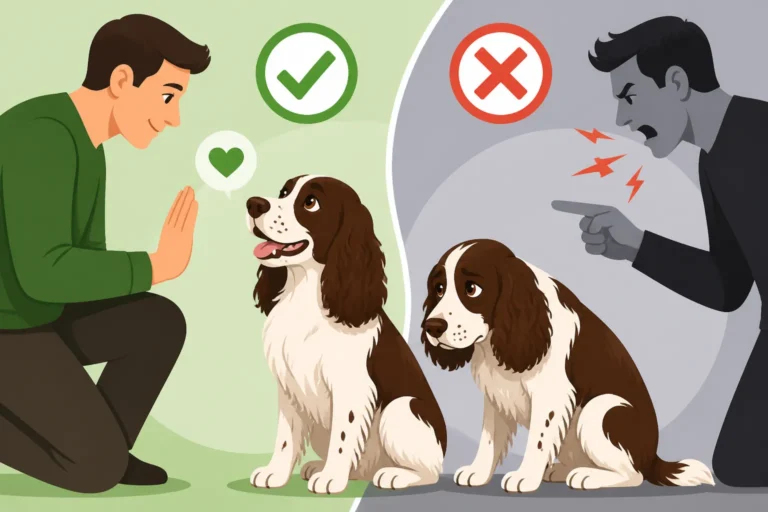
Before you even consider hitting the trails off-leash, your Springer needs to be proofed on cues like "heel," "leave it," and an emergency recall that is 100% reliable, even with major distractions. If you're planning to run off-leash in appropriate areas, a GPS collar, like those readily available on Amazon, can be a real lifesaver, offering peace of mind if their nose does lead them astray. Remember, for a Springer, a scent trail is like a compelling mystery novel – they simply must investigate. Training platforms like BAXTER & Bella offer excellent resources for building these foundational obedience skills in a positive and engaging way, which is crucial for a sensitive breed like the Springer. They thrive on clear communication and positive reinforcement; shouting or harsh corrections can set a Springer back considerably, as discussed in The Soft Springer Spaniel That Shuts Down If You Shout. Consider practicing whistle commands too, as they carry further and are less emotionally charged than voice commands, which can be invaluable when your dog is ranging ahead or caught up in a scent. Check out Whether a Springer Spaniel Learns Hand Signals for more on non-verbal cues.
Gear and Safety Considerations
Equipping yourself and your Springer properly for runs is non-negotiable for comfort and safety.
- Harness vs. Collar: A well-fitting, comfortable running harness is generally preferred over a collar for running. It distributes pressure evenly across their chest, preventing strain on their neck and throat, especially if they do pull. Look for harnesses designed for active dogs that allow for full range of motion.
- Leashes: A hands-free leash that attaches to your waist can be a game-changer, allowing you to maintain your running form and free up your hands. Again, these are widely available on Amazon. For off-leash training, a long line is an essential tool to practice recall in a controlled environment before granting full freedom.
- Hydration: Always carry water for both yourself and your dog, especially on longer runs or warm days. Collapsible bowls are light and easy to pack.
- Paw Protection: Depending on the terrain and weather, your Springer's paws can take a beating. Hot pavement, rocky trails, or icy conditions can cause discomfort or injury. Consider paw balm or even dog boots for extreme conditions.
- Visibility: If you run near roads or in low light, reflective gear for both of you is crucial. Many harnesses and leashes come with reflective stitching, and you can also get clip-on lights.
- Parasite Prevention: Field Springers, especially those running on trails, are more susceptible to ticks and other parasites. Ensure they are on a reliable preventive regimen.
| Consideration | Description |
|---|---|
| Energy Match | Field Springers have boundless energy, ideal for long runs, but require structured, purposeful exercise beyond just miles. |
| Mental Stimulation | Simple running may not satisfy their keen intelligence and prey drive. Incorporate scent work, varied routes, or obedience challenges. |
| Obedience Foundation | Impeccable recall, "heel," and "leave it" commands are crucial, especially if running off-leash, due to strong scent drive. |
| Physical Conditioning | Build up distance gradually, monitor for signs of fatigue, and ensure paw health. Avoid forced runs for puppies. |
| Gear Essentials | Running harness, hands-free leash, water, collapsible bowl, paw protection, reflective gear, and a GPS collar for off-leash safety. |
| Environmental Factors | Be mindful of heat, cold, rough terrain, and potential wildlife distractions that can affect your dog's performance and safety. |
Potential Challenges and Realistic Expectations
While a field Springer Spaniel can be an incredible running companion, it's vital to go in with eyes wide open about the unique challenges their breeding brings. Ignoring these can lead to frustration for both you and your dog.
The Scent Trail Dilemma
This is arguably the biggest hurdle for runners with a field Springer. Their nose is their world, and they are bred to follow scent trails relentlessly. You might be aiming for a personal best on your run, but your Springer might suddenly lock onto the faint scent of a rabbit that passed by hours ago and decide that is the priority. This is why Why a Springer Spaniel Puts Its Nose to the Ground and Vanishes is such a common and relatable problem for owners.
On a leash, this can translate to sudden, powerful pulls that throw you off balance. Off-leash, it can mean a dog that simply vanishes into the undergrowth, deaf to your calls, until the trail runs out or they decide to check back in. This isn't disobedience in their eyes; it's instinct. Managing this requires constant vigilance, proactive commands, and a deep understanding of their drive. Running in open, less scent-rich environments can help, but if you love trail running where wildlife abounds, you must accept that your pace might be interrupted, or your dog might need to stay on a long line for safety. Consider what happens when a Springer Spaniel Chases Birds Off Leash; it can be a significant safety concern.
Over-Excitement and Reactivity
Field Springers are enthusiastic by nature. This is wonderful when they're working, but it can be challenging on a run. Their excitement can bubble over into pulling, jumping, or intense reactivity towards other dogs, cyclists, or even people they encounter on the trail. A simple run can become a battle of wills if they haven't learned impulse control.
They are incredibly sociable and often want to greet everyone and everything, which isn't always conducive to a smooth run. Consistent training from a young age is paramount to teach them appropriate trail etiquette. This includes teaching them to focus on you even when distractions are present and to calmly pass other trail users. Building a strong foundation of positive experiences around various stimuli, away from the pressure of your run, will serve you well.
Joint Health and Physical Limits
While field Springers are robust and athletic, like many active breeds, they can be predisposed to certain orthopedic issues. Hip dysplasia is a concern in the breed, and while responsible breeders screen for it, it's something to be aware of throughout your dog's life. You can learn more about this in Hip Dysplasia in a Springer Spaniel. Similarly, elbow dysplasia can also affect their long-term soundness.
This doesn't mean they can't run, but it does mean being mindful of their physical well-being. Always warm them up with a brisk walk before a run and cool them down afterward. Watch for any subtle signs of lameness, stiffness, or changes in gait. Regular veterinary check-ups are crucial to monitor their joint health. As they age, you may need to adjust your running regimen, incorporating joint supplements or shorter, more frequent outings. Taking a look at Joint Supplements for a Springer Spaniel can offer valuable preventative and supportive strategies.
Making it Work: Tips for a Successful Running Partnership
Despite the challenges, a successful running partnership with a field Springer Spaniel is absolutely achievable and incredibly rewarding. It just takes a thoughtful, dedicated approach.
Build a Foundation of Obedience First
This can't be stressed enough. Before you even dream of serious running, ensure your Springer has a solid grasp of basic obedience commands, particularly "heel," "stay," "come," and "leave it." These aren't just polite parlor tricks; they are crucial safety commands that will dictate how smoothly and safely your runs go. Start training in low-distraction environments and gradually introduce more challenging scenarios.
Enroll in a good puppy class, then an intermediate obedience class. Consider online platforms like BAXTER & Bella if local options are limited or if you prefer a flexible learning schedule. Their positive reinforcement methods are ideal for a sensitive, intelligent breed like the Springer. A well-trained dog is a happy dog, and a well-trained Springer is a dog that can truly enjoy the freedom of running safely with you.
Vary Your Exercise Routine
While running is fantastic, remember that a field Springer thrives on variety. Don't make running your dog's only outlet for their energy. Incorporate other activities that tap into different aspects of their drive.
- Scent Work: This is a natural for a Springer. Hide treats or toys and let them use their incredible nose. This is incredibly mentally stimulating and tiring. Scent Games Tire a Springer Spaniel delves into this in more detail.
- Retrieving: Whether it's bumpers in the park or actual bird retrieves if you hunt, this engages their innate desire to fetch.
- Agility or Flyball: These sports combine physical exercise with mental challenges and can be a brilliant way to channel their enthusiasm and athleticism.
- Hiking: Different terrain and the opportunity for exploration can be very satisfying for them. How Far a Springer Spaniel Can Hike offers further insights into their capabilities.
By varying their exercise, you're ensuring a more well-rounded dog who is physically fit, mentally stimulated, and less likely to become fixated on just one type of activity. This also helps prevent overuse injuries that can arise from repetitive movements like running every single day.
Listen to Your Dog
Your Springer is an individual, and while they generally have incredible endurance, they also have good days and bad days, just like us. Learn to read their body language. Are they lagging behind? Are their paws looking tender? Is their tail low? Are they panting excessively?
Signs of over-exertion or discomfort can be subtle: a change in their stride, reluctance to keep going, excessive drooling, or seeking shade repeatedly. Pay close attention to environmental factors too. Running on hot pavement can burn their paw pads, and humid weather can lead to overheating much faster than you might realize. Always err on the side of caution. If you're questioning whether they've had enough, it's usually best to call it a day. A happy, healthy running partner is one whose limits are respected, ensuring many more enjoyable miles together in the future.
Disclaimer
This article is for general informational purposes only and does not constitute professional advice. Laws, prices and regulations vary by location and change over time. Consult a qualified professional for guidance on your specific situation.