Whether a Springer Spaniel Is Overexcited by Visitors
There's nothing quite like the boundless enthusiasm of an English Springer Spaniel, but when that energy explodes the moment a guest walks through the door, it can quickly turn from charming to overwhelming. Many of us have experienced the sheer chaos: the jumping, the frantic barking, the excited puddles on the floor. This guide aims to help you understand why your Springer gets so revved up and offers practical strategies to cultivate calmer, more enjoyable greetings for everyone involved.
Understanding the "Springer Spaniel Zoomies" When Guests Arrive
It’s easy to feel frustrated when your Springer Spaniel transforms into a furry, four-legged tornado at the sight of visitors, but understanding the root causes of this behavior is the first step toward managing it. It’s not about malice or disobedience; it’s usually about an intense cocktail of excitement, breed traits, and sometimes, a lack of clear guidance.
Why the Excitement Overwhelms Them
Imagine someone you adore showing up after a long absence, and you're just bursting to tell them everything. That's a tiny glimpse into your Springer's world when a visitor arrives. For many Springer Spaniels, the arrival of new people means novelty, potential play, attention, and a break from the usual routine. This rush of new sensory input, combined with their inherent drive, can simply be too much for them to process calmly. They might genuinely believe that jumping up or barking intensely is the best way to say "hello!" and solicit interaction, especially if they've inadvertently been rewarded for it in the past—even a quick pat to push them down can be perceived as attention. They haven't learned an alternative, more appropriate way to express their joy.
This overwhelming excitement often comes with a lack of self-control, which is something many young or undersocialized dogs struggle with. It’s not that they want to be naughty, it’s that their emotional regulation skills haven’t caught up with their enthusiasm. Think of it like a toddler who just can't contain their joy; they might shout or run wildly. Our Springers are much the same, relying on us to teach them how to navigate these exciting social situations with grace.
The Genetic Predisposition to High Energy
Let's be real, we picked a Springer Spaniel for a reason: their zest for life! They were bred to be active, intelligent, and highly engaged partners, whether in the field or as companions. This breed carries a strong genetic predisposition for high energy, drive, and a desire to be involved in everything their human family does. Their original purpose as "springing" dogs, flushing game from cover, demanded a dog with immense stamina and quick reflexes. This ingrained drive doesn't simply disappear when they become a family pet; it needs an appropriate outlet.
When this inherent drive isn't channeled effectively through consistent exercise and mental stimulation, it often manifests in less desirable ways, such as overexcitement with visitors. A Springer Spaniel who hasn't had adequate physical and mental activity might have a full "energy tank" that overflows the moment an exciting event—like a visitor—occurs. It’s important to remember that both How Much Exercise a Field Bred Springer Spaniel Needs and How Much Exercise a Show Bred Springer Spaniel Needs can be significant, and without it, managing their general behavior, including visitor greetings, becomes much harder. This breed also tends to be incredibly sensitive and people-oriented, making them even more prone to intense reactions when new humans enter their space.
Common Manifestations of Visitor Overexcitement
The way your Springer Spaniel shows their overexcitement can vary, but certain behaviors are hallmarks of a dog struggling to contain their enthusiasm when guests arrive. Understanding these common actions helps us pinpoint what needs addressing.
Jumping, Nipping, and Excessive Licking
The classic "welcome" from an overexcited Springer often involves launching themselves at your guests. This isn't usually aggression; it's a desperate plea for attention and interaction. They want to be part of the action, right there, nose-to-nose. When jumping doesn't work, some Springers might resort to playful nipping or mouthing at clothing or hands, again, not intending harm but rather trying to engage. And oh, the licking! A barrage of enthusiastic licks can be endearing to some, but overwhelming and unsanitary to others, especially if your guest isn't a "dog person."
These behaviors stem from a lack of boundaries and taught alternatives. Your Springer might have learned that jumping, even if met with a push-off, still garners some form of attention. The key is to teach them that the only way to get the desired interaction is to keep "four on the floor." This requires consistency from everyone who interacts with your dog, meaning guests need to be on board with your training plan too. Imagine your Aunt Mildred coming over, and your Springer, bless their heart, greets her with a full-body hug. Aunt Mildred, despite loving your dog, might stumble or get muddy paw prints on her nice dress. This isn't fair to her or your dog, who is just doing what they think is appropriate.
The "Happy Puddle" Phenomenon: Submissive Urination
One of the most frustrating and often misunderstood signs of overexcitement is submissive urination, sometimes lovingly (or exasperatedly) referred to as the "happy puddle." This is particularly common in young Springers or those who are naturally more sensitive or insecure. When faced with an exciting or slightly intimidating situation, like a new person towering over them, a Springer might involuntarily urinate. It’s not a house-training failure or spite; it’s a physiological response rooted in appeasement and overstimulation. It's their way of saying, "I'm no threat, please don't hurt me!" mixed with sheer uncontainable joy.
This is a behavior that often gets worse if the dog is chastised or punished, as it increases their anxiety and reinforces the idea that visitor arrivals are stressful. If you've found yourself cleaning up after a visit, you know how embarrassing and disheartening it can be. It often feels like a step backward in house-training, but it's really a different issue entirely. For more on this, you might find Why a Springer Spaniel Pees When Greeted helpful. The goal here is to reduce the pressure and excitement associated with greetings, making them feel safe and relaxed rather than overwhelmed.
Barking and Whining as Communication
While barking can serve many purposes, from alerting to perceived threats to initiating play, for an overexcited Springer Spaniel welcoming guests, it’s often a combination of all of the above. They might bark excitedly as soon as they hear the doorbell or see a car pull up, ramping up their own adrenaline and communicating their anticipation. This can escalate into persistent, high-pitched barking or whining, which can be grating on the ears and make it impossible for guests to even get through the door.
This vocalization is usually their way of expressing intense emotion and trying to gain attention or control the situation. They're telling you and your guests, "Look! Look who's here! Pay attention to me!" If the barking goes unchecked, it can become a deeply ingrained habit, hard to break. It creates a cycle where the dog's excitement fuels the barking, which in turn fuels more excitement, making it difficult for them to settle down. It’s a loud, clear sign that they need guidance on how to manage their feelings in a more appropriate way.
Practical Strategies for Managing Visitor Excitement
The good news is that managing an overexcited Springer Spaniel around visitors is entirely possible with patience, consistency, and the right strategies. It's about proactive management and teaching alternative behaviors.
Pre-Visitor Routines and Energy Outlets
Before any guests even think about knocking on your door, you need to "drain the tank" of your Springer's abundant energy. A tired Springer is a good Springer, and a good routine is key to ensuring that your dog is mentally and physically satisfied before a stimulating event. This means a solid exercise session—a long walk, a strenuous game of fetch in the park, or even a run alongside a bicycle if your dog is conditioned for it. For field-bred Springers, this might mean a more intense session of retrieving or Scent Games Tire a Springer Spaniel. For show-bred Springers, a brisk walk or a longer game of fetch can do the trick.
Mental stimulation is just as important. Engage their brilliant minds with puzzle toys or a training session focused on commands they already know. Even a sniffari walk, where they're allowed to follow their nose and explore, can be incredibly enriching and tiring. If your dog is really high-drive, consider some advanced obedience work or even a short stint on a flirt pole in the backyard. The goal is to get them into a relaxed, slightly fatigued state before the doorbell rings, not while guests are already there. Think about what truly tires your specific Springer out—is it physical exertion, or does mental work exhaust them more? Incorporating a structured game of "find it" with treats before guests arrive can also focus their mind and reduce overall jitters.
Training for Calm Greetings
This is where the rubber meets the road. Teaching your Springer how to greet guests calmly requires intentional training and consistent practice, both with and without actual visitors.
Here are some key techniques:
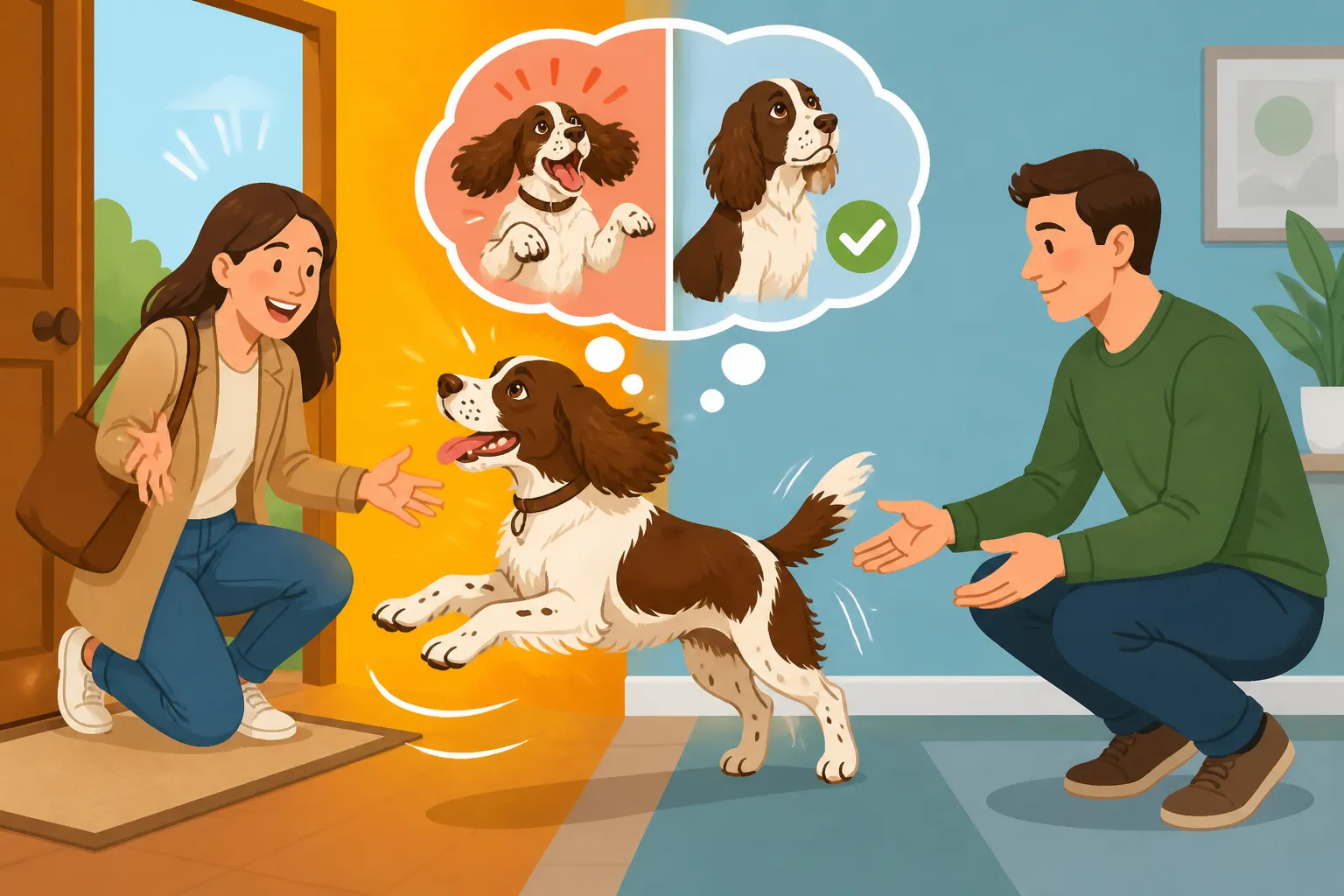
- "Four on the Floor" Rule: This is paramount. Your Springer only gets attention (praise, petting, treats) when all four paws are on the ground. If they jump, turn your back immediately, cross your arms, and ignore them completely. The moment they settle, even for a second, reward them. Guests must follow this rule, which can be hard, but it's essential. This is a crucial step to teach them that the jumping doesn't work.
- Place Command: Teach your Springer a "place" command, sending them to a designated mat or bed away from the door. Practice this extensively with high-value rewards. When guests arrive, send them to their place and have them stay there while you open the door. You can gradually allow them to greet once they are calm and released from their place command. This gives them a job to do and a way to earn a reward. A comfortable dog bed can be purchased from platforms like Amazon.
- Leash Management: Keeping your Springer on a leash during initial greetings provides you with control. You can gently guide them away from jumping, or cue them to sit or lie down. You can even walk them around the room on a loose leash until their energy levels drop, then allow calm greetings.
- Desensitization and Counter-Conditioning: Practice mock greetings. Have a friend or family member pretend to be a guest. Start with them just approaching the door. Reward calm behavior. Gradually increase the intensity: ringing the doorbell, opening the door, stepping inside. Always reward calm responses and manage overexcitement before it escalates. The online training programs like those offered by BAXTER & Bella often have detailed lessons on how to practice these scenarios effectively.
| Behavior to Discourage | Desired Behavior | Training Technique | Management Strategy |
|---|---|---|---|
| Jumping on guests | Four paws on floor | "Off" command, positive reinforcement for sitting | Leash, gate, turning back |
| Excessive barking | Quiet, settled | "Quiet" command, redirect to "place" | Muzzle training (for severe cases), crating, white noise |
| Submissive urination | Confident, calm | Build confidence, low-key greetings | Ignore initial excitement, manage environment |
| Nipping/Mouthiness | Gentle mouth, no contact | Redirection to toy, "leave it" | Chewing toys, positive reinforcement for calm mouth |
Utilizing Tools and Environmental Management
Sometimes, training alone isn't enough in the moment, especially when you're still working on these skills. This is where smart environmental management and the right tools come into play.
- Gates and Crates: Before guests arrive, you can gate your Springer in another room or keep them comfortably crated. This allows your guests to enter and settle without being mobbed. Once things are calm, you can then introduce your Springer on a leash for a controlled greeting. A good quality, secure crate or a sturdy pet gate can be a lifesaver, easily found on Amazon. Make sure it's a positive association for your dog, with toys and treats.
- Long-Lasting Chews or Puzzle Toys: Give your Springer a high-value, long-lasting chew or a stuffed Kong toy just before or as guests arrive. This provides a positive distraction and redirects their oral fixation (which can manifest as nipping) into an appropriate activity. It also helps them to settle and focus on something other than the excitement of the newcomers.
- Calming Aids: For some highly anxious or overexcited Springers, calming aids might be beneficial as part of a larger strategy. These can include pheromone diffusers, calming treats, or even a thunder shirt. These aren't magic bullets, but they can take the edge off and make your dog more receptive to training. Always consult with your veterinarian before introducing any supplements or calming medications.
- Visitor Briefing: This is critical. Before guests even step inside, give them a quick briefing: "Please ignore Rover until he has all four paws on the floor," or "Please don't lean over him or make direct eye contact right away." Your guests are partners in this, not just spectators. Their cooperation can make all the difference in reinforcing the desired behaviors.
Long-Term Solutions and Temperament Considerations
Successfully managing an overexcited Springer Spaniel isn't a quick fix; it's a marathon, not a sprint. It involves long-term commitment, understanding their unique temperament, and sometimes, knowing when to seek extra help.
Consistency is Key: A Family Affair
The absolute cornerstone of success in managing any Springer Spaniel behavior is consistency. Every member of the household, and indeed every guest, needs to be on the same page. If one person allows jumping and another corrects it, your Springer will become confused and the behavior will persist. This means setting clear rules, communicating them to everyone involved, and reinforcing them every single time. This applies not just to greetings but to their The Daily Routine a Springer Spaniel Actually Needs as a whole.
This consistent approach helps your Springer understand the expectations and trust that you are their leader, guiding them through potentially overwhelming situations. Think of it as building a strong foundation: each consistent interaction adds another brick. Without it, the whole structure can crumble. It can be tiring, especially during the puppy and adolescent phases, but the payoff of a well-mannered, calm Springer is absolutely worth the effort. It's about proactive training and management in all aspects of their life, not just when guests are present.
When Professional Help is Needed
There are times when despite your best efforts, your Springer Spaniel's overexcitement is simply too much to handle on your own. This might be due to extreme anxiety, deeply ingrained habits, or if the submissive urination is severe and persistent. In these cases, it's not a sign of failure on your part, but rather an indication that a fresh perspective and specialized expertise are needed.
Consider consulting with a certified professional dog trainer or a veterinary behaviorist. They can assess your Springer's individual temperament, identify any underlying issues (like anxiety that might be exacerbating the overexcitement), and develop a tailored training plan. They can also teach you advanced techniques and provide hands-on guidance. Sometimes, just having an experienced eye observe your dog's interactions can reveal subtle cues or habits that you've missed. For some dogs, a trainer might even suggest medication in conjunction with behavior modification if anxiety is a significant factor. Resources like BAXTER & Bella also offer ongoing support and one-on-one coaching that can be invaluable for particularly challenging behaviors.
Embracing the Springer Spaniel's Enthusiastic Nature
Ultimately, while we want a well-behaved dog, it's also important to remember and embrace the joyful, enthusiastic spirit that makes Springer Spaniels so beloved. They are dogs full of life, and we wouldn't want to completely extinguish that spark. The goal isn't to create a robotic, emotionless dog, but rather to channel their natural exuberance into appropriate and manageable behaviors.
It’s about finding a balance: giving them plenty of appropriate outlets for their energy and intelligence, consistently teaching them good manners, and then enjoying their lively company. Your Springer will always be excited to see guests, but with the right training, that excitement can manifest as a happy wagging tail and a polite sit, rather than a full-throttle tackle. Appreciate their zest for life, but teach them the rules of human society, and you'll have a wonderfully balanced companion.
Disclaimer
This article is for general informational purposes only and does not constitute professional advice. Laws, prices and regulations vary by location and change over time. Consult a qualified professional for guidance on your specific situation.