Whether a Springer Spaniel Makes a Jogging Partner
It’s a natural thought for any active dog owner, especially when you have a bundle of energy like an English Springer Spaniel: "Can my furry friend keep up with me on a run?" You might be dreaming of hitting the trails together, enjoying the fresh air, and burning off some of that boundless Springer enthusiasm. The good news is, for many Springer Spaniels, the answer is a resounding yes! However, it's not simply a matter of lacing up your shoes and heading out the door; there are crucial considerations and preparation steps to ensure it’s a safe, enjoyable, and beneficial activity for both of you. This guide will walk you through everything you need to know about making your Springer Spaniel your ideal jogging partner.
The Springer Spaniel's Natural Abilities for Running
English Springer Spaniels were bred for endurance and a strong work ethic. Their physical build and innate drives make them quite suitable for various athletic pursuits, including jogging, but it's important to understand what kind of running they excel at.
Built for Stamina, Not Sprinting
When you look at a Springer Spaniel, you see a medium-sized dog with a well-muscled, agile frame. They possess a deep chest, which allows for good lung capacity, and strong legs built for sustained movement over varied terrain. These aren't greyhounds designed for short, explosive bursts of speed. Instead, Springers are marathoners in a spaniel's body, bred to cover miles in a day, flushing game for hunters.
This historical purpose means they have incredible stamina. They can maintain a steady trot for extended periods, making them excellent companions for medium to long-distance jogging at a moderate pace. Think of it less as a race and more as a joyful, consistent trot through the park or along a quiet path. They thrive on having a "job" to do, and keeping pace with their human can certainly feel like a fulfilling one.
Boundless Energy Levels and the Need for an Outlet
Anyone who lives with a Springer Spaniel knows they come with an internal motor that never seems to switch off. These dogs are intelligent, eager to please, and utterly devoted to their people, but they also have a significant need for physical and mental stimulation. If their energy isn't properly channeled, it can manifest in less desirable behaviors like excessive chewing, digging, or general mischief.
Jogging provides an excellent outlet for this energy. It’s more than just a physical release; it’s an opportunity for them to explore new scents, see new sights, and spend quality time bonded with you. For many Springers, a good run isn't just exercise; it's an adventure. It helps to keep them mentally sharp and physically fit, contributing to a calmer, happier dog at home. You'll often find that a well-exercised Springer is a much more contented companion.
Factors to Consider Before Lacing Up
While many Springer Spaniels are naturals for jogging, a responsible owner must consider several critical factors before embarking on a running routine. Ignoring these can lead to injury or discomfort for your beloved companion.
The All-Important Age Factor
One of the most crucial considerations is your Springer Spaniel's age. It's an absolute non-negotiable that puppies should not be taken on repetitive, high-impact activities like jogging or long runs. Their growth plates are still open, meaning the bones are not yet fully fused and are highly susceptible to damage. Pushing them too hard, too young, can lead to irreversible joint problems, affecting them for their entire lives.
Generally, most veterinarians recommend waiting until a Springer Spaniel is at least 12-18 months old before starting a serious running routine. Even then, it should be introduced gradually. This allows their bones, joints, and ligaments ample time to mature and strengthen. A young adult Springer, typically around The Age a Springer Spaniel Finally Settles, will have the physical maturity to handle the demands of jogging, provided they are introduced to it slowly and progressively.
Health and Veterinary Clearance
Before you even think about hitting the pavement, a full veterinary check-up is essential. Your vet can assess your dog’s overall health, look for any underlying conditions, and give you the green light. Specific concerns for Springer Spaniels include joint issues like Hip Dysplasia in a Springer Spaniel and Elbow Dysplasia in a Springer Spaniel. While many Springers are healthy, these conditions can be present, and high-impact exercise would exacerbate them.
Your vet might also check their heart, lungs, and general musculoskeletal system. It's not just about obvious lameness; sometimes subtle issues can be caught early. Discuss your jogging aspirations with them, including the type of terrain you plan to cover and the distances you anticipate. They can offer tailored advice and help you determine if your specific Springer Spaniel is truly ready for this kind of physical activity.
Field Bred vs. Show Bred: Energy and Build Differences
The English Springer Spaniel breed has diverged into two distinct types: field-bred and show-bred. This distinction can play a significant role in how well suited a dog might be for long-distance running. How a Field Bred Springer Spaniel Differs in Drive is a topic many owners grapple with, and it certainly applies here.
Field-bred Springers are typically leaner, with lighter bone structure and a shorter, less profuse coat. They are bred for intense working drive, incredible stamina, and a relentless desire to cover ground. These dogs often have an insatiable need for exercise and can make exceptional running partners, often easily covering many miles. Their athleticism is paramount in their breeding.
Show-bred Springers, on the other hand, are bred to conform to a specific aesthetic standard. They tend to have a heavier bone structure, a more substantial build, and a much fuller coat. While still active and energetic dogs, their exercise requirements and endurance might not be quite as extreme as their field-bred cousins. They can certainly be good jogging partners, but might prefer shorter distances or a slower pace, and may be more prone to overheating due to their thicker coats. It's not a hard-and-fast rule, as individual dogs vary, but it's a general tendency worth noting.
Individual Temperament and Distraction Management
Every dog is an individual, and temperament plays a huge part in whether a Springer Spaniel will be a good jogging partner. Some Springers are incredibly focused and can easily ignore distractions, maintaining a steady pace alongside you. Others, however, are ruled by their magnificent noses and their innate hunting instincts.
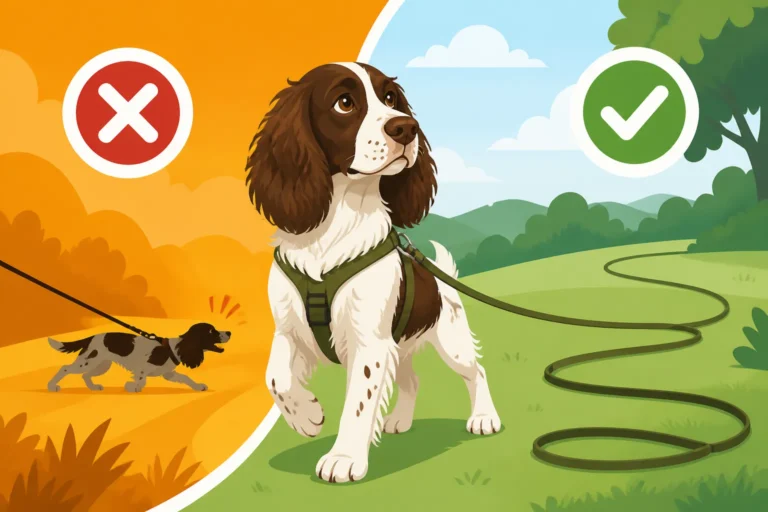
If your Springer is constantly pulling on the leash to investigate every scent, chase every squirrel, or "spring" at every bird, then jogging might be more frustrating than fun for both of you. Their prey drive and scent-following abilities are legendary, as detailed in Why a Springer Spaniel Puts Its Nose to the Ground and Vanishes. Consistent training of commands like "leave it," "focus," and a rock-solid "heel" are vital before you attempt to run together. Without these, your run might resemble a chaotic tug-of-war rather than a peaceful exercise session.
Training Your Springer Spaniel for Running Success
Once you’ve confirmed your Springer Spaniel is physically ready and has the right temperament, it’s time to prepare them for the actual activity. Like any athlete, they need proper conditioning and training.
Gradual Conditioning and Building Endurance
You wouldn't run a marathon without training, and neither should your Springer Spaniel. The key is to start slow and build up gradually. Begin with short intervals of running mixed with walking, perhaps just a few minutes of jogging followed by walking, then repeat. Over days and weeks, you can slowly increase the running portions and decrease the walking, incrementally extending the total distance and duration.
Pay close attention to your dog during these sessions. Are they lagging? Panting excessively? Showing signs of discomfort? Always err on the side of caution. Just because they can keep going doesn't mean they should. Their enthusiasm might mask fatigue. A good rule of thumb is that if you're feeling good, they probably are too, but always monitor their body language closely. On hot days, reduce intensity and distance significantly, or skip it altogether. The goal is to build endurance safely, ensuring their muscles and cardiovascular system adapt to the new demands.
Essential Commands for a Harmonious Run
A successful jogging partnership relies heavily on your Springer Spaniel’s obedience and your ability to communicate effectively while in motion. Commands like "heel," "leave it," "wait," and a reliable recall are non-negotiable. "Heel" ensures they stay right by your side, preventing tripping hazards and keeping them out of the path of others. "Leave it" is crucial for ignoring tempting distractions like discarded food, wildlife, or interesting smells that could lead to a sudden pull or a dangerous detour.
If your Springer Spaniel needs some work on these commands, consider a training program. Resources like BAXTER & Bella offer online modules that can help you build these foundational skills from the comfort of your home, making sure your dog is ready for the real-world distractions of a run. Consistent practice in varied environments will solidify these commands, making your runs much safer and more enjoyable. Remember, a dog that responds reliably to voice commands even when excited is a true asset on the trail.
Choosing the Right Gear for Both of You
Having the correct gear is paramount for comfort and safety. For yourself, comfortable running shoes and appropriate attire are a given. For your Springer Spaniel, the right harness and leash are crucial. Avoid neck collars for running, as they can put undue pressure on your dog's trachea and neck, especially if they pull. A well-fitting, Y-front harness that allows for full range of shoulder movement is ideal. Brands found on Amazon often have a wide selection, so you can choose one that fits snugly without chafing.
Consider a hands-free leash that attaches around your waist. This keeps your hands free, allowing for better balance and natural arm swing, and prevents you from dropping the leash if your dog suddenly pulls. Reflective gear for both of you is a must if you plan to run in low-light conditions. Always carry water – a collapsible bowl for your dog and a bottle for yourself. On longer runs or in warmer weather, a cooling vest for your dog can be a lifesaver, easily found through retailers like Amazon.
Hydration and Rest Breaks Are Not Optional
Just like human runners, dogs need to stay hydrated, especially during physical exertion. Always carry water and offer it frequently, even if your dog doesn't seem to be asking for it. Don’t wait until they’re panting heavily. A good strategy is to offer water every 15-20 minutes, or at planned walk breaks if you're interval training.
Rest breaks are also vital. Especially when starting out or on longer runs, incorporate short walking breaks to allow your Springer to recover, sniff around (which is mentally stimulating!), and rehydrate. This prevents overexertion and makes the experience more positive. Learn to read your dog’s cues: excessive panting, lagging behind, or seeking shade are all signs they need a break, or perhaps even to stop for the day. Never force a dog to continue if they show signs of fatigue.
Potential Challenges and How to Overcome Them
Even with the best preparation, running with a Springer Spaniel can present its unique set of challenges. Knowing what to expect and how to address these issues will make your journey much smoother.
The Irresistible Call of the Wild: Distractions on the Run
One of the biggest hurdles you might face with a Springer Spaniel is their powerful nose and high prey drive. Every bush, every patch of grass, and every rustle can present an irresistible distraction. Squirrels, rabbits, birds – anything that moves can trigger their instinct to flush and chase. This can lead to sudden, strong pulls on the leash, potentially injuring you or your dog, or even causing them to break free.
To mitigate this, consistent training is key. Reinforce your "leave it" and "heel" commands rigorously, even in highly distracting environments. Start practicing in low-distraction areas and gradually increase the challenge. Using high-value treats to reward focus and ignoring distractions can be very effective. If your dog is particularly scent-driven, a GPS collar might be a wise investment for safety, especially if you plan to run in areas where an unexpected bolt could lead to them getting lost. Whether a Springer Spaniel Needs a GPS Collar explores this topic further.
Overheating Risks and Environmental Considerations
Springer Spaniels have a double coat, which, while protective, can make them susceptible to overheating, especially in warmer climates or during intense exercise. Unlike humans who sweat all over, dogs primarily cool themselves by panting and through their paw pads. If they can’t dissipate heat effectively, they can quickly suffer from heatstroke, which is a serious medical emergency.
Always check the temperature and humidity before you head out. On warm days, stick to early mornings or late evenings when it's cooler. Avoid running on hot pavement, as it can burn their paw pads (a quick test: if you can't hold your hand on the pavement for five seconds, it's too hot for your dog's paws). Seek shaded routes and consider carrying a cooling vest or a wet towel to help them regulate their temperature. Watch for signs of overheating: excessive panting, dark red gums, lethargy, stumbling, or seeking shade desperately. If you see these, stop immediately, get them water, and seek veterinary attention if they don't recover quickly.
Protecting Those Precious Paws and Joints
The repetitive impact of running, especially on hard surfaces like pavement or concrete, can take a toll on your Springer Spaniel's paw pads and joints. While their feet are tough, they aren't impervious to wear and tear. Rough terrain, sharp rocks, or even just prolonged friction can cause abrasions, cuts, or blisters. Checking a Springer Spaniel's Feet After Working is a good habit to adopt after any strenuous activity.
Inspect your dog's paw pads regularly, especially after a run. Look for redness, tenderness, cuts, or excessive wear. Paw balms can help condition and protect their pads. Consider running on softer surfaces like dirt trails, grass, or gravel whenever possible, as these provide more cushioning and are kinder to their joints. Even with the right age and conditioning, prolonged, high-impact running can contribute to joint wear over time. If you notice any limping, stiffness, or changes in gait, consult your vet immediately.
Matching Pace and Managing Enthusiasm
While your Springer Spaniel might be eager to run, their natural pace might not always perfectly match yours. They typically excel at a steady trot, which is often faster than a brisk walk but slower than a human sprint. Trying to force them into a pace that isn't comfortable for them can lead to injury or make the activity unenjoyable. Be prepared to adjust your speed to match your dog's comfort level.
Sometimes, their sheer enthusiasm can be a challenge. They might start a run full of gusto, pulling ahead, only to tire themselves out prematurely. Teach them to maintain a consistent pace by your side using positive reinforcement. Reward them for staying in position at a comfortable trot, rather than allowing them to surge ahead. This not only makes the run smoother but also reinforces good leash manners. With patience and consistent effort, your Springer Spaniel can indeed become a fantastic and devoted jogging partner, enriching both your lives with shared outdoor adventures.
| Factor | Consideration for Jogging | Key Action |
|---|---|---|
| Age | Growth plates must be closed. | Wait until 12-18 months minimum. Consult vet. |
| Health | Check for underlying issues. | Full vet check-up, especially for joints (hips, elbows). |
| Type (Field/Show) | Varies in build and drive. | Field: more natural endurance. Show: may need more gradual approach. |
| Temperament | Distractibility and focus. | Train "leave it" and "heel" rigorously; consider a GPS collar. |
| Pace | Dog's comfortable trot. | Match your pace to theirs; avoid forcing speed. |
| Environment | Surface, temperature. | Avoid hot pavement, seek shade, run in cooler parts of the day. |
| Gear | Harness, leash, water. | Use a Y-front harness, hands-free leash, carry ample water & collapsible bowl. |
| Hydration | Essential for all runs. | Offer water every 15-20 minutes or at walk breaks. |
| Paw Care | Protect from injury. | Inspect paws after each run; use balms; prefer softer surfaces. |
Disclaimer
This article is for general informational purposes only and does not constitute professional advice. Laws, prices and regulations vary by location and change over time. Consult a qualified professional for guidance on your specific situation.