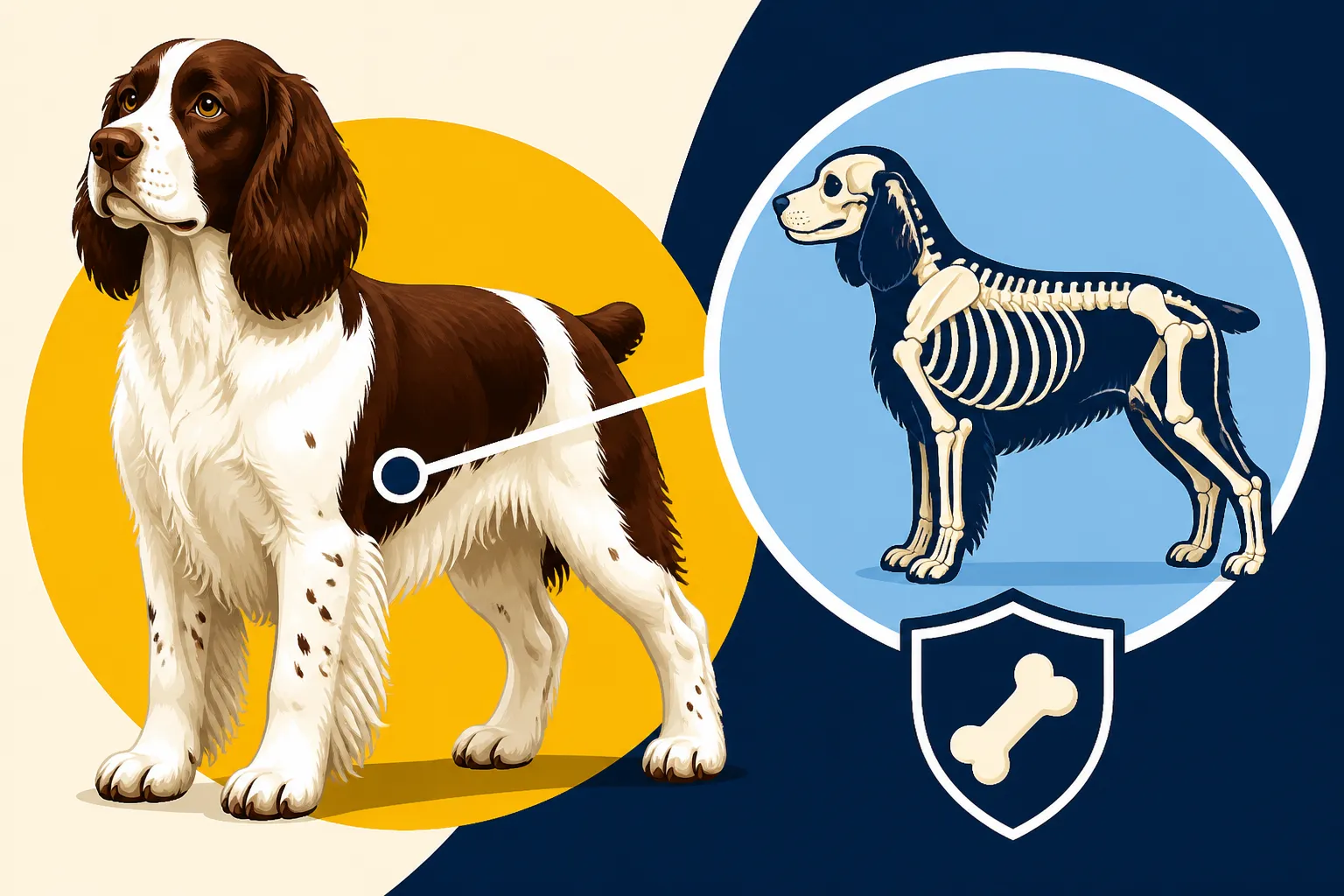
How Heavily Boned a Show Springer Spaniel Is
A show-bred English Springer Spaniel often looks broader, more substantial, and more heavily boned than a field-bred dog. That can make it hard to tell whether you’re seeing normal breed type or a dog carrying extra weight. This guide explains what “heavy bone” means, how it affects appearance, and how to judge a Springer’s build without mistaking coat or body fat for structure.
What “heavily boned” means in a show Springer Spaniel
Bone is structure, not body fat
When people describe a show Springer Spaniel as heavily boned, they mean the dog has a substantial skeletal frame: sturdy-looking legs, a solid build, and an overall impression of strength. It does not mean the dog should be bulky, lumbering, or overweight. A well-built Springer should still look balanced and capable of moving freely.
Bone is only one part of the picture. Muscle, body condition, coat, and posture all affect how substantial a dog appears. A thick coat can make the outline look fuller, while extra body fat can soften the waist and obscure the shape of the ribs. Neither is the same thing as a naturally sturdy frame.
That distinction matters in everyday life. Imagine two adult Springers standing side by side. One has thicker legs and a broader-looking body but a visible waist and easy movement. The other has a softer outline, with no clear waist and a layer of padding over the ribs. The first may simply be more heavily built; the second may need a body-condition check, regardless of how much bone it has.
How show type influences the outline
Show-bred Springers are often bred for a more substantial appearance than field-bred Springers. They may have more coat, broader-looking heads, and a sturdier overall frame. Field-bred dogs are often more lightly built and less heavily feathered, an appearance that can make them seem leaner even when both dogs are in good condition.
There is variation within each type, though. Not every show Springer is heavily boned, and not every field Springer is fine-boned. Individual dogs inherit different combinations of size, frame, coat, and muscle from their parents. It’s more useful to look at a dog’s proportions and movement than to assume its build based only on its breeding label.
For a closer look at the differences in outline, see How Different the Two Springer Spaniel Types Look. The comparison can help explain why one Springer appears more substantial, but it shouldn’t be treated as a strict rule for every dog.
How to judge a Springer Spaniel’s build
Look at proportions and movement
A sturdy Springer should still look like a balanced, athletic dog. Check whether the body appears proportionate from front to back, whether the legs support the frame comfortably, and whether the dog moves freely rather than looking weighed down. Heavy bone should not be confused with a coarse or exaggerated build.
Movement can be easier to assess than appearance alone. Watch the dog walk and trot on a level surface, if you can do so safely. Does it move comfortably and evenly? Does it seem reluctant to rise, turn, or keep up? Those observations don’t diagnose a health issue, but they can help you decide whether to ask a veterinarian for an assessment.
Photographs can be misleading, too. A dog photographed with its legs planted wide, its coat fluffed, or its body turned toward the camera may look larger than it is. If you’re comparing dogs, try to view them standing naturally from the side and front, and consider how their frames look in motion.
Use body condition, not “heaviness,” to assess weight
To check whether a dog may be carrying excess weight, look and feel rather than relying on a single number. From above, many dogs should show some waist behind the ribs. From the side, the abdomen often rises slightly toward the hind legs. You should be able to feel the ribs beneath the coat with gentle pressure, without having to press hard.
Long feathering can make this harder. A Springer’s coat may hide the waist or make the body appear rounder, so run your hands gently along the rib cage instead of judging by sight alone. If the dog’s shape is difficult to assess, your veterinarian can help evaluate body condition and advise whether weight changes are appropriate.
A dog’s weight by itself doesn’t tell the whole story. Two Springers of similar height can have different frames, and a heavier dog isn’t automatically overweight. For more context on size and build, see What a Springer Spaniel Actually Weighs. If you’re trying to tell whether a dog’s outline is changing because of weight gain, Whether a Springer Spaniel Gains Weight Easily covers another useful part of the picture.
What a substantial show coat can hide
Feathering can make a dog look bigger
Show-bred Springers commonly have more feathering than field-bred dogs. Hair on the ears, legs, chest, and underside can add visual volume, particularly after grooming. A full coat may make a dog look wider or heavier even when its underlying frame is moderate.
Coat maintenance can change the outline from week to week. Feathering that is brushed out and fluffed can look quite different from damp hair after a walk. Mats can also create lumps or uneven patches that make it harder to see the dog’s natural shape. Regular brushing helps you spot changes in the coat and feel the body beneath it.
If the coat is part of what makes a show Springer look more substantial to you, How a Show Springer Spaniel's Coat Differs explains how coat contributes to the type’s appearance. For day-to-day upkeep, choose brushing tools that work for your dog’s coat and use a gentle routine. Some owners order basic grooming supplies through retailers such as Chewy; what matters most is that the tools suit the coat and that brushing stays comfortable for the dog.
Keep coat care and weight management separate
It can be tempting to trim away a full coat to make a Springer look slimmer. But coat length won’t tell you whether the dog is at a healthy weight, and clipping should not replace a body-condition check. If the dog feels padded over the ribs or has lost a visible waist, talk with your veterinarian before making diet changes.
Food portions, treats, activity, and life stage all affect body condition. If you’re adjusting meals, make a plan with your veterinarian rather than sharply reducing food on your own. Some households use a measured scoop or food scale to keep portions consistent; retailers such as Chewy may carry feeding supplies, but a veterinarian’s guidance is what helps determine a suitable plan for an individual dog.
Treats can quietly add up, particularly during training. If your Springer works for food rewards, you can ask your vet how to account for those rewards in the daily feeding plan. A slow feeder or treat pouch, which may also be available through Chewy, can help make feeding and training routines more organized without changing the dog’s actual skeletal build.
Breeding, variation, and choosing a Springer
A heavier frame is not automatically better
A show Springer’s substantial appearance is one expression of breed type, not a promise of superior health or temperament. The goal should be a dog that is sound, proportionate, and comfortable in its body—not simply the largest or broadest-looking puppy in a litter. An exaggerated build can be less useful than a balanced one, especially if the dog struggles to move naturally.
If you’re choosing a puppy, ask the breeder about the parents’ size, build, movement, and general health. See the dogs in person where possible, and ask how they behave outside the show ring. A puppy’s adult frame can’t be predicted perfectly from a few weeks of age, so a confident claim that a puppy will become exceptionally large or heavy-boned deserves thoughtful follow-up questions.
The broader discussion in The Push to Breed Bigger Show Springer Spaniels can help put “more bone” into context. It’s sensible to prioritize soundness and a comfortable, functional build over a particular look.
Consider the whole dog, not just its bone
A Springer’s suitability for your home depends on more than its frame. Energy level, exercise needs, grooming, temperament, and health history all shape daily life with the dog. A heavily built show Springer may still be an energetic companion, while a lighter field-bred Springer may require substantial activity and training. Appearance alone won’t tell you which dog is the better match.
When speaking with a breeder or rescue, ask what the dog is like on an ordinary day: how it settles indoors, how it responds to handling, and what exercise and grooming it needs. If you’re comparing field and show lines, keep those practical differences in mind alongside build. What Springer Spaniel Owners Wish They Had Known is a helpful companion topic for thinking beyond first impressions.
In short, “heavily boned” describes a Springer’s frame, not its weight or coat. Look at proportions, movement, and body condition together, and ask a veterinarian if you’re unsure whether a dog’s shape reflects its natural build or a change in weight.
Disclaimer
This article is for general informational purposes only and does not constitute professional advice. Laws, prices and regulations vary by location and change over time. Consult a qualified professional for guidance on your specific situation.