Feeding a Springer Spaniel That Works and One That Does Not
One of the biggest head-scratchers for us Springer Spaniel owners is figuring out what to put in their food bowl. You've got this energetic, intelligent dog, but maybe yours is a couch potato, or perhaps they're out in the field every weekend. How can the same bag of kibble possibly be right for both? The truth is, it often isn't, and navigating the world of dog nutrition to match your Springer's unique lifestyle can feel like a maze. This comprehensive guide is here to walk you through exactly how to fuel your Springer Spaniel, whether they're springing pheasants or simply springing onto the sofa for cuddles.
The Energy Equation: Why One Size Doesn't Fit All for Springer Spaniel Diets
It's tempting to think all dogs of the same breed eat the same, but with Springer Spaniels, the difference between a field-bred dog and a show-bred companion can be like night and day when it comes to activity levels. This isn't just about their build; it's about their inherent drive and how much energy they expend daily. Ignoring these differences can lead to a host of problems, from an underweight, underfueled working dog to an overweight, lethargic pet. Your dog's food is their fuel, and just like a high-performance sports car needs premium, high-octane gas, a busy working dog needs a denser, more calorific diet. Conversely, a cherished house pet doesn't need to be running on racing fuel if they're only doing moderate activity.
The Metabolism of a Field-Bred Dynamo
Imagine a field-bred Springer Spaniel, muscles rippling, nose to the ground, quartering a field for hours on end, busting through thick cover, retrieving birds, and generally living their best, most active life. This isn't just a casual stroll in the park; this is a sustained, high-intensity workout, often over rugged terrain and in varying weather conditions. These dogs are finely tuned athletes, and their bodies are constantly burning calories to maintain that level of performance. They're built for endurance and explosive energy, meaning their metabolic rate is typically much higher than their more sedentary counterparts.
If you're not providing enough calories and the right balance of macronutrients to a working Springer, you'll see it in their performance, their weight, and eventually, their overall health. They might become easily fatigued, struggle to maintain body condition despite eating what seems like a lot, or even start to lose muscle mass. Their recovery after a day in the field will be longer, and they might seem more susceptible to injuries. It’s not about just quantity, but quality and density of their food. They need a diet rich in easily digestible protein for muscle repair and maintenance, and fats for concentrated, sustained energy. This is a topic we dive into more deeply in How Much a Working Springer Spaniel Should Eat.
The Calmer Life of a Companion Springer
On the flip side, we have our beloved companion Springers. These dogs might enjoy long walks, trips to the dog park, or even some casual retrieving in the backyard, but their daily energy expenditure usually pales in comparison to a working dog. They still have that wonderful Springer zest for life, but their daily routine is often centered around family activities, which might include significant downtime. A show-bred Springer, for instance, typically has a heavier build and a less intense drive for sustained field work, though they still benefit from regular exercise.
Feeding a companion Springer the same high-calorie, performance diet as a working dog is a recipe for weight gain, plain and simple. Excess weight puts undue stress on their joints, especially prone areas like hips and elbows, and can lead to other serious health issues like diabetes, heart disease, and a shortened lifespan. Owners often feel guilty about not giving their dog "the best" high-performance food, but the "best" food is the one that meets their individual needs. For a companion Springer, a balanced adult maintenance formula with appropriate calorie content and fiber to help them feel full is usually the ideal choice. We explore this further when discussing How Much a Pet Springer Spaniel Should Eat.
Decoding Dog Food Labels: What to Look For (and Avoid)
Once you understand why different Springers need different diets, the next hurdle is navigating the overwhelming array of dog food options out there. Walking down the pet food aisle can feel like deciphering a foreign language, with all the marketing buzzwords and ingredient lists. But by understanding the basics of nutrition and how to read a label, you can make informed choices that truly benefit your dog. Forget the fancy packaging for a moment; it's what's inside that counts.
Essential Nutrients for an Active Springer
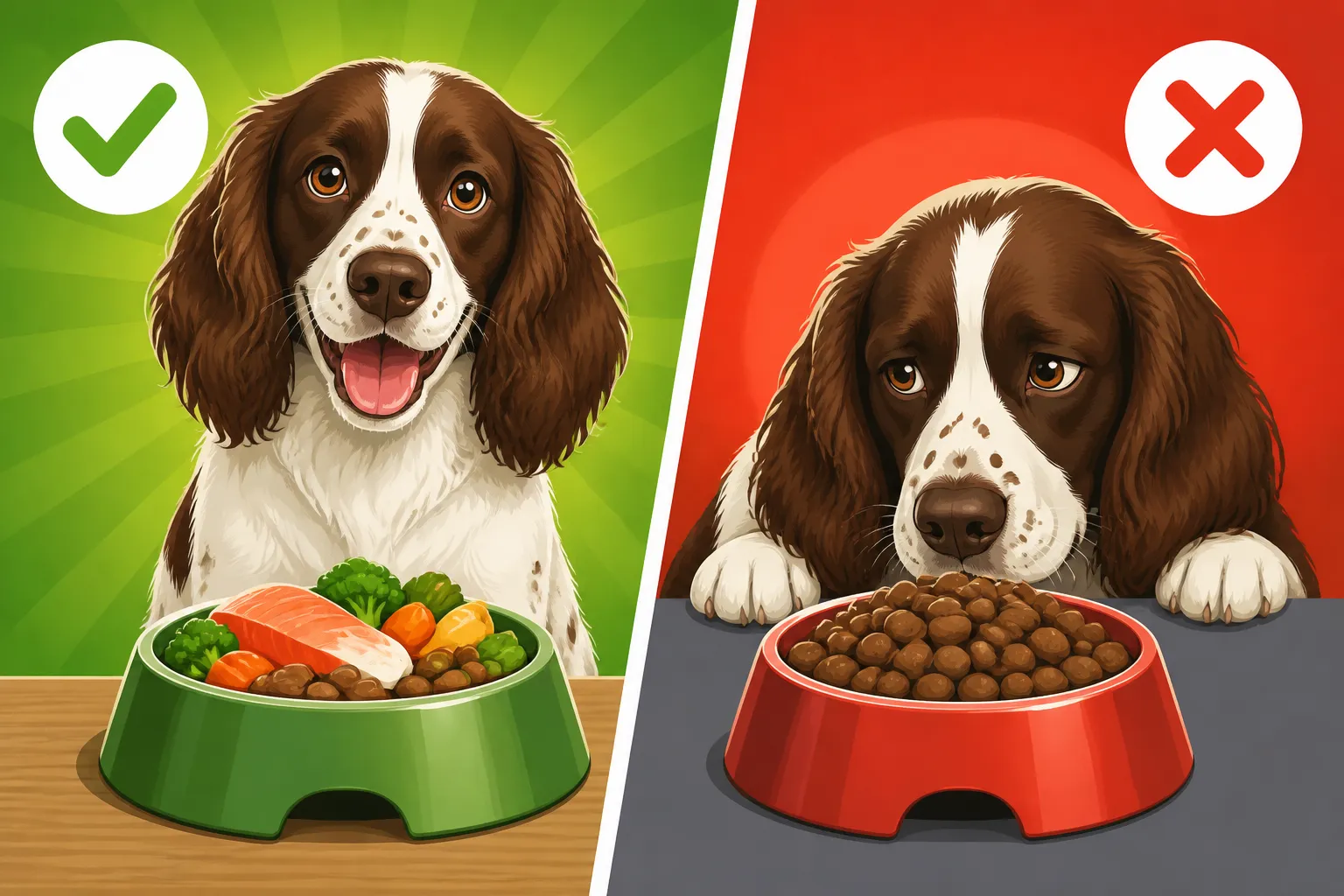
For a working Springer, the nutritional demands are similar to human athletes. They need an abundance of high-quality protein, which is crucial for muscle repair, growth, and overall body function. Look for foods where a named meat source (like "chicken meal," "beef," or "lamb meal") is the first ingredient, and ideally, the first few ingredients. Protein should constitute a significant portion of their diet, typically higher than what you'd find in a standard adult maintenance food.
Fats are equally, if not more, important for active dogs because they provide a concentrated source of energy that can be slowly released throughout a long day of work. They also contribute to healthy skin and a shiny coat. Sources like chicken fat, salmon oil, or flaxseed are excellent. Carbohydrates provide quick energy and fiber, but for working dogs, the focus should be on complex carbs like sweet potatoes or brown rice, which release energy steadily rather than causing sugar spikes and crashes. A good performance food will strike a balance, often with higher protein and fat percentages and moderate, high-quality carbohydrates. Think of it as sustained energy for their demanding days.
Ingredients to Prioritize and Those to Question
When you're scrutinizing those labels, aim for clarity and quality. Prioritize:
- Named Meat Sources: "Chicken meal" is actually often more concentrated protein than "chicken" because the water has been removed. "Beef" or "salmon" are great too.
- Healthy Fats: Chicken fat, salmon oil, flaxseed, sunflower oil. Omega-3 and Omega-6 fatty acids are vital for skin, coat, and joint health.
- Complex Carbohydrates: Sweet potato, brown rice, barley, oats. These provide steady energy.
- Fruits and Vegetables: Blueberries, carrots, spinach, apples (without seeds). These offer vitamins, minerals, and antioxidants.
- Digestive Aids: Prebiotics and probiotics can support gut health, which is vital for nutrient absorption.
Be cautious with:
- Generic "Meat Meal" or "Animal Fat": These can be rendered from various unknown animal sources and might not be as digestible or nutritious.
- Excessive Fillers: Corn, wheat, and soy aren't inherently bad, but in large quantities, they can be less digestible for some dogs and offer less nutritional value than whole grains or vegetables.
- Artificial Colors, Flavors, and Preservatives: These offer no nutritional benefit and can sometimes trigger sensitivities in susceptible dogs.
- By-products: While often demonized, not all by-products are bad (e.g., organ meats are highly nutritious). However, vague terms like "animal by-product meal" can be problematic. Focus on what the by-product is if it's listed clearly.
Reading labels on websites like Chewy or Amazon can be a great way to compare options side-by-side, diving into the ingredients without the pressure of a store aisle.
Navigating Different Food Formats
The world of dog food isn't just dry kibble anymore! You've got choices, and each format has its pros and cons for a Springer Spaniel.
- Dry Kibble: This is the most common and often the most economical option. It's convenient to store, has a long shelf life, and provides dental benefits by scraping plaque off teeth. High-quality kibbles formulated for active dogs or adult maintenance are readily available. However, some dogs might find it less palatable, and moisture content is low.
- Wet/Canned Food: Highly palatable, excellent for hydration, and often made with higher meat content. It can be a good option for picky eaters or dogs needing extra moisture. However, it's typically more expensive, has a shorter shelf life once opened, and doesn't offer the same dental benefits as kibble. It can also be mixed with kibble to entice dogs.
- Fresh/Human-Grade Food: Companies like Ollie specialize in fresh, gently cooked dog food that often mimics human-grade ingredients. This can be fantastic for palatability, digestibility, and is often free of artificial additives. Owners often report improvements in coat health and energy. The downsides are cost and storage (it usually needs refrigeration). It's a commitment but can be a game-changer for some dogs, especially those with sensitivities.
- Raw/BARF (Biologically Appropriate Raw Food): This diet consists of uncooked meat, bones, and organs, often with some fruits and vegetables. Proponents believe it's what dogs are biologically designed to eat. Benefits can include improved digestion, healthier coats, and cleaner teeth. However, it requires careful handling to prevent bacterial contamination, meticulous balance to ensure complete nutrition, and often specialist sourcing. It's not for the faint of heart and generally requires a lot of research and possibly vet consultation to implement safely and effectively.
Choosing the format depends on your budget, your dog's preferences, and any specific health needs. Some owners combine formats, feeding kibble in the morning and a fresh or wet food meal in the evening.
Crafting the Perfect Meal Plan: Portions, Schedules, and Strategies
Once you've settled on the type of food, the next practical step is figuring out how much to feed and when. This isn't a "set it and forget it" task; your Springer Spaniel's needs will fluctuate with their activity level, age, and even the weather. Getting this right is crucial for maintaining a healthy weight and ensuring they have consistent energy throughout their day.
How Much a Working Springer Spaniel Should Eat
For a working Springer, calculating calorie needs is an ongoing process. The general guidelines on the back of a bag are just a starting point. A dog actively working in the field for several hours a day, several days a week, might need significantly more calories than a dog getting daily walks. We're talking about a difference of 50% or even 100% more food, depending on the intensity and duration of their work.
Factors to consider:
- Intensity of Work: Is it light quartering, or heavy cover work in challenging conditions?
- Duration: A two-hour hunt vs. an eight-hour trial makes a huge difference.
- Weather: Working in cold weather burns more calories to maintain body temperature.
- Individual Metabolism: Some dogs just naturally burn through calories faster than others.
A good strategy is to start with the "active dog" or "performance" guidelines on your chosen food and then monitor your dog's body condition closely. You should be able to easily feel their ribs without seeing them, and they should have a discernible waist when viewed from above and a tuck-up from the side. If they're losing condition, increase food gradually. If they're gaining, reduce it. Often, this means feeding 3-4 meals a day for working dogs, especially on active days, to provide a steady energy supply and prevent bloat from a single large meal. This is why it’s so important to understand How Many Cups a Day a Working Springer Spaniel Eats.
How Much a Pet Springer Spaniel Should Eat
For your companion Springer, portion control is paramount to prevent obesity. These dogs, while active, typically aren't burning thousands of calories daily. They'll thrive on a high-quality adult maintenance formula. Start with the guidelines for your dog's ideal weight (not their current weight if they're overweight!) on the food bag.
Again, continuous assessment of body condition is key. If your Springer looks a bit round, or you can't easily feel those ribs, it's time to cut back. If they look too lean, increase slightly. Remember, even a few extra pounds on a medium-sized dog like a Springer Spaniel can put significant strain on their joints and organs. Many owners underestimate how easily a Springer Spaniel can gain weight, especially as they get older or if their activity fluctuates. For most companion Springers, two meals a day is ideal. This helps manage hunger and provides consistent energy without being excessive. It's often surprising to learn How Many Cups a Day a Pet Springer Spaniel Eats compared to what we think they need.
The Importance of a Consistent Feeding Schedule
No matter whether your Springer is a working dog or a beloved pet, consistency in feeding times makes a huge difference. Dogs are creatures of habit, and a regular schedule helps regulate their metabolism, digestion, and even their potty breaks. Feeding at the same times each day also helps manage their hunger, reducing anxiety around meal times and the likelihood of begging.
For working dogs, consistent timing is even more critical. You want to ensure they have enough time to digest their food before intense activity. Typically, a meal should be given several hours before work to avoid digestive upset or conditions like bloat. Similarly, a post-work meal helps with recovery, but should be given after the dog has had a chance to cool down and relax. For companion dogs, a morning and evening meal, spaced roughly 8-12 hours apart, is usually perfect. Establishing a routine from puppyhood, detailed in The Feeding Chart a Springer Spaniel Puppy Follows, sets them up for a lifetime of healthy eating habits.
Special Dietary Considerations for Springer Spaniels
While many Springer Spaniels will do well on a good quality commercial dog food appropriate for their activity level, some individuals may face specific dietary challenges. These can range from common issues like allergies and sensitive stomachs to the ever-present battle against weight gain. Being proactive and knowing what to look for can save you and your dog a lot of discomfort and vet visits down the line.
Addressing Food Sensitivities and Allergies
Springer Spaniels, like many breeds, can develop food sensitivities or allergies. These often manifest as skin issues (itchiness, rashes, hot spots, chronic ear infections), gastrointestinal problems (vomiting, diarrhea, excessive gas), or sometimes even behavioral changes due to discomfort. It's frustrating for owners because the symptoms can be vague and mimic other conditions. Telling a Food Itch From a Pollen Itch in a Springer Spaniel can be tricky, but persistent symptoms often point to diet.
If you suspect a food allergy, the most effective diagnostic tool is an elimination diet. This involves feeding a novel protein and carbohydrate source (ingredients your dog has never eaten before, like duck and potato, or venison and sweet potato) for 8-12 weeks. During this time, absolutely no other treats, chews, or flavored medications are allowed. If symptoms resolve, you then gradually reintroduce old ingredients one by one to identify the culprit. This process requires dedication, but it’s often the only way to pinpoint the problem. Many brands offer "limited ingredient diets" (LIDs) that can be helpful for this, or you might consider fresh food options from services like Ollie, which allow for greater control over specific ingredients.
Managing Weight for Optimal Health
We’ve touched on it, but it bears repeating: weight management is critical for a Springer Spaniel's longevity and quality of life. They are generally active dogs, but their eager appetites combined with our desire to treat them can quickly lead to extra pounds. And let's be honest, it's hard to resist those soulful eyes! Whether a Springer Spaniel Gains Weight Easily is a resounding yes for many individuals, especially as they age or if their activity drops off.
To maintain a healthy weight, be rigorous with portion control. Measure food accurately, don't just eyeball it. Reduce caloric treats and replace them with healthy, low-calorie alternatives like baby carrots, green beans, or small pieces of apple (without seeds). Increase exercise if possible, but remember that diet is generally 80% of the weight loss equation. Regular weigh-ins at home or at the vet can help you track progress. Consulting your vet for a target weight and daily calorie intake can also provide a clear roadmap for Keeping a Springer Spaniel at a Working Weight or simply a healthy pet weight.
The Role of Supplements for Joint and Coat Health
Sometimes, even a perfectly balanced diet might need a little boost. Supplements can play a valuable role in addressing specific health concerns, particularly for a breed like the Springer Spaniel that can be prone to certain issues.
- Joint Supplements: Given their active nature and potential for conditions like hip and elbow dysplasia, many Springer Spaniel owners consider joint supplements containing glucosamine, chondroitin, and MSM. These ingredients are thought to support cartilage health and reduce inflammation. Starting these preemptively, especially for working dogs or as they approach their senior years, can be a proactive step.
- Omega Fatty Acids: Fish oil (rich in EPA and DHA Omega-3s) is a fantastic supplement for skin, coat, and joint health. It can help reduce inflammation, improve coat shine, and even support cognitive function. This can be particularly beneficial for Springers prone to dry skin, allergies, or dull coats.
- Probiotics: If your Springer has a sensitive stomach, or experiences occasional digestive upsets, a probiotic supplement can help promote a healthy gut microbiome, improving digestion and nutrient absorption.
Always consult your veterinarian before adding any supplements to your dog's diet to ensure they are appropriate and won't interact negatively with any medications or existing conditions. Many quality supplements are available through pet supply retailers like Chewy or Amazon.
Feeding for Life Stages: From Puppyhood to Senior Years
A Springer Spaniel's nutritional needs aren't static; they evolve throughout their life. What's perfect for a rapidly growing puppy will be completely inappropriate for a mature adult or a slower-moving senior. Understanding these changes and adapting their diet accordingly is fundamental to supporting their health and vitality at every stage.
The Feeding Chart a Springer Spaniel Puppy Follows
Bringing home a Springer Spaniel puppy is an exciting time, and getting their diet right from day one is essential for healthy development. Puppies, especially active breeds like Springers, grow incredibly fast, and this rapid growth requires a diet specifically formulated for puppies. Puppy food is typically higher in calories, protein, and specific nutrients like calcium and phosphorus, crucial for bone and muscle development.
Overfeeding a puppy or feeding an adult dog food can lead to problems. Too many calories can cause too-rapid growth, which puts stress on developing joints and can exacerbate conditions like hip or elbow dysplasia. Puppy food guidelines on the bag are usually based on age and anticipated adult weight. For a Springer, you'll generally feed 3-4 small meals a day to help regulate blood sugar, prevent stomach upset, and manage their tiny bladder. Gradually, as they mature, this will reduce to two meals a day. The Feeding Chart a Springer Spaniel Puppy Follows usually provides a clear guideline, but always monitor your puppy’s body condition – they should be lean, not chubby.
Transitioning from Puppy to Adult Food
Knowing when to switch your Springer Spaniel from puppy food to adult food can be a bit confusing. Generally, most medium-sized breeds like Springers are ready for adult food between 10 to 12 months of age. Some larger, later-maturing field lines might benefit from staying on puppy food slightly longer, up to 14-16 months, especially if they are still growing significantly.
The key is to transition gradually. Don't just swap out their food overnight, as this can cause digestive upset. Over a period of 7-10 days, slowly mix increasing amounts of the new adult food with decreasing amounts of the old puppy food.
- Day 1-2: 75% old food, 25% new food
- Day 3-4: 50% old food, 50% new food
- Day 5-6: 25% old food, 75% new food
- Day 7+: 100% new food
Watch for any signs of stomach upset during this period. The adult food you choose should align with their activity level – a performance formula for a working dog, or a good quality adult maintenance for a companion.
What an Old Springer Spaniel Should Be Fed
As our beloved Springer Spaniels enter their golden years (typically around 7-9 years of age, though field Springers might show signs earlier), their nutritional needs shift once again. What an Old Springer Spaniel Should Be Fed is a question many owners grapple with, as they want to ensure their senior dog remains comfortable and healthy. Older dogs generally become less active, leading to a natural decrease in calorie requirements. Continuing to feed them the same amount of food they ate as a vibrant adult will almost certainly lead to weight gain, which is detrimental to aging joints and organs.
Look for senior dog food formulas. These are often lower in calories, fat, and sometimes protein (though good quality protein is still essential for maintaining muscle mass). They may also include enhanced levels of joint-supporting supplements (glucosamine, chondroitin) and omega fatty acids for cognitive and skin health. Fiber can be increased to support digestive regularity.
Senior Springers might also develop dental issues, making hard kibble uncomfortable. In such cases, softening kibble with warm water, or incorporating wet or fresh food (like those from Ollie) can be beneficial. Some older dogs might also have specific health conditions, like kidney disease or diabetes, which will necessitate prescription diets – always follow your vet's advice in these situations. The goal is to keep them lean, comfortable, and well-nourished, adapting their diet to their changing metabolism and any emerging health concerns.
Hydration and Treats: More Than Just Water and Rewards
When we think about feeding, our minds often jump straight to the food bowl. But two other critical components of a Springer Spaniel's diet are hydration and treats. These aren't just secondary considerations; they play vital roles in overall health, performance, and behavior. Getting them right can make a big difference in your dog's well-being.
Ensuring Adequate Hydration, Especially for Active Dogs
Water is arguably the most important nutrient for any living creature, and for active Springer Spaniels, it's absolutely non-negotiable. Dehydration can quickly lead to fatigue, heatstroke, and serious health problems. Working dogs, especially those out in the field on warm days or during intense activity, lose significant amounts of fluid through panting and exertion.
Always provide access to fresh, clean water. For working dogs, this means carrying water with you and offering it frequently during breaks. Portable water bowls and squeeze bottles are indispensable tools for hunters and hikers. On long days, some working dog owners might even add electrolyte solutions to their dog's water, but this should be done cautiously and preferably under vet guidance. Even for companion Springers, ensure their water bowl is always full and clean. Consider multiple water bowls around the house, especially if you have a multi-dog household or a large home. A wet food component in their diet can also contribute to their daily fluid intake.
Choosing Healthy Treats and Chews
Treats are wonderful for training, bonding, and just spoiling our Springers a little bit. However, treats are also a leading cause of accidental calorie intake and weight gain. Not all treats are created equal, and choosing wisely is important.
- Low-Calorie Options: Many commercial treats are high in calories, fat, and sugar. Opt for small, crunchy, low-calorie options, or even use pieces of their regular kibble as training treats.
- Natural & Fresh Options: Baby carrots, green beans, apple slices (no seeds!), and blueberries are fantastic, healthy, and low-calorie natural treats. Always introduce new foods slowly to check for sensitivities.
- Long-Lasting Chews: For mental stimulation and dental health, natural chews like bully sticks, dental chews, or even certain raw bones (consult your vet first) can be great. Just be mindful of their calorie content and potential for splintering or choking hazards. Always supervise your dog with chews.
- Moderation is Key: Treats should make up no more than 10% of your dog's daily caloric intake. If you're giving a lot of treats, reduce their meal portions accordingly. Many treats are readily available through retailers like Amazon or Chewy.
What a Springer Spaniel Picks Up in the Field and Should Not Eat
This is a particular concern for our working Springers, or any Springer that spends time off-leash exploring. Their powerful noses and natural foraging instincts mean they are prone to finding and consuming things they shouldn't. The field is full of potential hazards, and knowing What a Springer Spaniel Picks Up in the Field and Should Not Eat can be a literal lifesaver.
Common dangers include:
- Wild Animal Feces: Can transmit parasites and bacteria.
- Carcasses: Rotting meat can cause severe gastrointestinal upset, botulism, or even carry harmful bacteria.
- Poisons/Chemicals: Baits, pesticides, antifreeze, or fertilizers can be present, especially on agricultural land.
- Wild Plants/Mushrooms: Many plants and fungi are toxic to dogs.
- Garbage/Leftovers: Human food scraps can contain ingredients toxic to dogs (onions, garlic, grapes, chocolate) or be too fatty, causing pancreatitis.
- Obstructions: Bones, corn cobs, or even children's toys can cause blockages or internal injury.
Training a strong "leave it" and "drop it" command is paramount for any Springer Spaniel, but especially for those venturing into varied environments. Always be vigilant, and if you suspect your dog has eaten something harmful, contact your vet immediately.
Common Feeding Mistakes and How to Avoid Them
Even with the best intentions, it's easy to fall into common feeding traps. These mistakes can undermine your Springer Spaniel's health, contribute to weight problems, or lead to digestive upset. Being aware of these pitfalls and taking steps to avoid them will help ensure your Springer thrives.
Overfeeding and Underfeeding: Finding the Balance
This is perhaps the most common and impactful feeding mistake. As we've discussed, overfeeding a pet Springer leads to obesity, which brings a cascade of health issues: joint pain, diabetes, heart disease, reduced mobility, and a shorter lifespan. It's often driven by love – giving extra treats or larger portions – but it's a love that unintentionally harms. Conversely, underfeeding a working Springer or a growing puppy can lead to malnourishment, lack of energy, poor performance, muscle wasting, and a weakened immune system.
The solution lies in constant monitoring of body condition and adjusting portions. Use a kitchen scale to measure food accurately, especially if you're feeding kibble. Regularly perform a "rib check": you should be able to feel your Springer’s ribs easily without pressing hard, but not see them protruding. There should be a visible waist tuck. Remember, dog food bag guidelines are averages, and your individual dog's needs will vary. Be honest with yourself about your dog's activity level and adjust accordingly.
The Springer Spaniel That Inhales Its Dinner
Many Springer Spaniels eat their food so fast it's like a vacuum cleaner went off! The Springer Spaniel That Inhales Its Dinner isn't just a quirky habit; it can lead to problems like indigestion, vomiting, and in severe cases for larger, deep-chested dogs, a higher risk of bloat (gastric dilatation-volvulus), a life-threatening condition.
There are several excellent solutions to slow down a fast eater:
- Slow Feeder Bowls: These bowls have ridges or obstacles that force your dog to eat around them, significantly slowing down their intake. You can find a wide variety of effective slow feeders on Chewy or Amazon.
- Puzzle Feeders/Snuffle Mats: These turn mealtime into a game, making your dog work for their food. This not only slows them down but also provides mental stimulation, which is great for an intelligent breed like a Springer.
- Spreading Food Out: For kibble, you can simply scatter it across a clean floor or lawn, forcing your dog to "forage" for each piece.
- Multiple Small Meals: Splitting their daily ration into 3-4 smaller meals instead of two larger ones can also help.
Recognising When a Diet Change Is Needed
Sometimes, even if you're doing everything "right," your Springer Spaniel might signal that their current diet isn't working for them. Learning to read these subtle cues can help you intervene early and prevent more serious problems.
Signs a diet change might be beneficial:
- Persistent Digestive Issues: Chronic soft stools, diarrhea, constipation, excessive gas, or frequent vomiting (after ruling out medical causes).
- Skin and Coat Problems: Dull, dry, flaky coat, excessive shedding (beyond normal seasonal changes), persistent itchiness, or recurring ear infections. This might be Whether a Springer Spaniel's Ear Infection Is Allergy Driven.
- Low Energy/Lethargy: If your normally energetic Springer seems unusually tired or lacks their usual enthusiasm, assuming no underlying medical condition.
- Weight Management Struggles: Despite appropriate portions, your dog is either rapidly gaining weight or struggling to keep weight on.
- Poor Appetite: If your Springer is consistently turning up their nose at mealtime, especially if they were previously enthusiastic eaters.
If you notice any of these signs, the first step is always a visit to your veterinarian to rule out any underlying medical conditions. Once medical issues are excluded, discuss dietary changes with your vet. This might involve trying a different protein source, a limited ingredient diet, a food with higher fiber, or even exploring fresh food options like Ollie if their current diet isn't providing the necessary nutrients or agreeance with their system. Remember, your Springer Spaniel relies on you to make these important decisions for their health and happiness.
| Factor | Working Springer Spaniel | Companion Springer Spaniel |
|---|---|---|
| Activity Level | High: Hours of sustained, intense work daily | Moderate: Daily walks, backyard play, occasional hikes |
| Calorie Needs | Significantly higher (often 50-100% more than pet) | Moderate; easily overfed |
| Macronutrient Focus | High protein, high fat, complex carbohydrates for sustained energy | Balanced protein, moderate fat, appropriate fiber for satiety |
| Food Type Recommendation | Performance/Sporting dog formulas; potentially fresh food | Adult maintenance formulas; potentially fresh food |
| Meal Frequency | 2-4 meals/day, often with a pre-work and post-work meal | 2 meals/day |
| Weight Monitoring | Ensure lean muscle mass; avoid being underweight | Prevent obesity; maintain a discernible waistline |
| Hydration Focus | Critical: Constant access, portable water, electrolytes on extreme days | Important: Consistent access to fresh water |
| Treats | Use sparingly; consider high-value, small treats for training; factor into daily calories | Low-calorie, healthy treats; strict moderation to avoid weight gain |
| Special Concerns | Injury recovery, maintaining energy during long seasons | Joint health, weight management, preventing diet-related allergies |
Disclaimer
This article is for general informational purposes only and does not constitute professional advice. Laws, prices and regulations vary by location and change over time. Consult a qualified professional for guidance on your specific situation.