Telling a Food Itch From a Pollen Itch in a Springer Spaniel
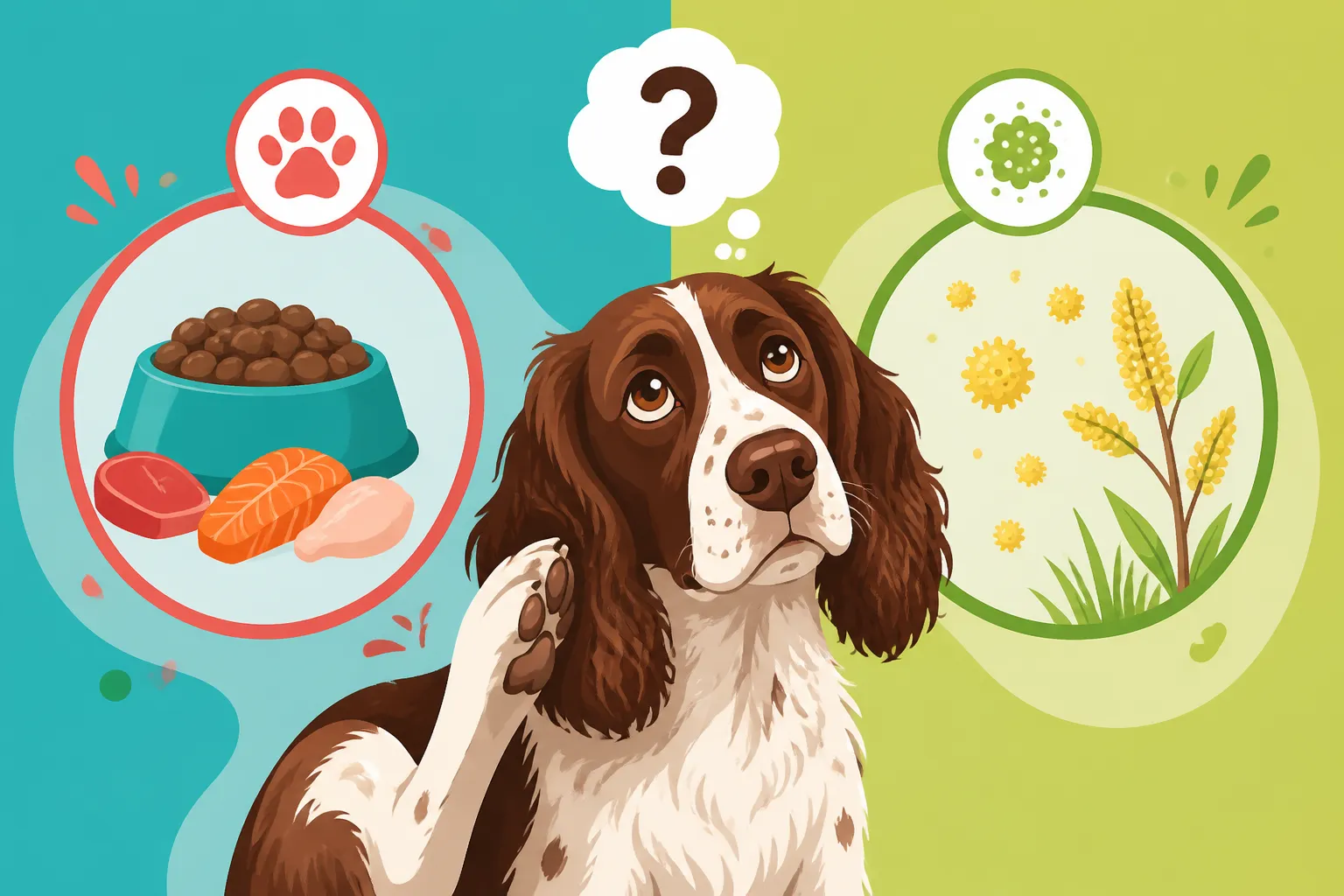
Few things are more heartbreaking than watching your beloved English Springer Spaniel constantly scratch, lick, and chew themselves, often to the point of creating raw, inflamed skin. It’s a relentless cycle, and as an owner, you feel utterly helpless trying to figure out if it’s something they ate or something in the air. This guide will walk you through the distinct signs and diagnostic steps to help you tell a food itch from a pollen itch, empowering you to work with your vet more effectively.
The Endless Itch: Why Springer Spaniels Are Prone to Allergies
If you own a Springer Spaniel, you've likely encountered their charming enthusiasm, their tireless drive, and, unfortunately, their propensity for skin and ear issues. Their lovely long ears, dense coat, and often sensitive skin make them prime candidates for various allergic reactions, which can manifest as persistent itching, redness, hair loss, and recurring infections. It's not just a minor annoyance; it can severely impact their quality of life and lead to secondary problems like bacterial or yeast infections, creating a deeply uncomfortable situation for your dog.
One of the biggest frustrations for us Springer owners is that the symptoms often overlap. An ear infection could be triggered by food, or it could be a flare-up from environmental allergies. Paw licking might signal a reaction to grass or a dietary intolerance. This makes the detective work incredibly challenging, and it's easy to feel like you're constantly playing whack-a-mole with symptoms. The journey to pinpointing the exact cause requires patience, keen observation, and often, a close partnership with your veterinarian. Knowing the nuances between food and environmental triggers is your first step in bringing your furry friend some much-needed relief. We've talked extensively about How Often Allergies Drive a Springer Spaniel's Ear Disease and The Allergens Behind a Springer Spaniel's Itch, so you know this isn't an uncommon problem for our breed.
Understanding Canine Allergies: The Immune System Overreaction
At its core, an allergy is an overreaction of the immune system to a normally harmless substance, known as an allergen. When your Springer Spaniel encounters an allergen, their immune system mistakenly identifies it as a threat and launches a defensive attack. This attack releases histamines and other inflammatory chemicals, leading to the classic signs we associate with allergies: itching, swelling, and redness.
In dogs, unlike humans who often get sneezing and watery eyes, skin issues are the most common manifestation of allergies. This is often referred to as allergic dermatitis. Whether it's food or environmental, the underlying mechanism is largely the same—the body's defenses go into overdrive. However, the specific triggers, the timing of the reaction, and how the symptoms present can give us critical clues about the root cause. It's a complex puzzle, but with careful observation, we can start putting the pieces together.
Decoding the Clues: Is It a Food Allergy in Your Springer Spaniel?
Food allergies and sensitivities in Springer Spaniels can be incredibly tricky to diagnose because the symptoms aren't always immediate or obvious. It's not like your dog eats something and instantly breaks out in hives. Often, the reaction can be delayed, making it hard to connect the dots between a particular meal and the onset of an itch. This frustration is something many of us have experienced firsthand, endlessly trying to remember what new treat or food ingredient might have caused the sudden flare-up.
Common Food Allergens and Associated Symptoms
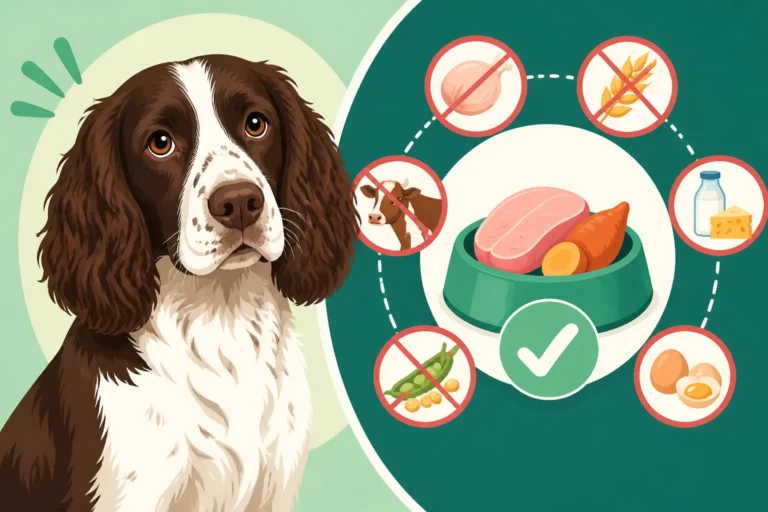
While any food ingredient could theoretically cause an allergy, some are far more common culprits in dogs. These often include proteins like chicken, beef, dairy, and eggs, but also grains such as wheat and corn. It's a common misconception that grain-free food is always the answer, but often, it's the protein source that's the true allergen. If your Springer Spaniel has a Chicken Allergy in a Springer Spaniel, simply switching to a grain-free chicken formula won't help.
Here’s what a food allergy often looks like:
- Non-seasonal Itching: This is a big one. Food allergies tend to cause itching that doesn't follow a seasonal pattern. Your dog might be itchy year-round, regardless of pollen counts or changes in weather.
- Generalized Itchiness, Often Focused on Specific Areas: While it can be anywhere, food allergy itching often concentrates around the paws, ears, groin, and anal area. You might notice your Springer obsessively licking their paws until they're raw, shaking their head a lot, or scooting across the floor.
- Gastrointestinal Upset: This is a key differentiator. Food allergies frequently come hand-in-hand with digestive issues. Look for symptoms like vomiting, diarrhea, chronic soft stools, excessive gas, or even constipation. If your Springer is scratching and having stomach troubles, food is a strong suspect.
- Recurring Ear Infections: Springer Spaniels are already prone to ear issues due to their floppy ears, but chronic, recurrent ear infections that don't seem to respond well to treatment can be a major sign of an underlying food allergy. It's often one of the first places a food allergy manifests.
- Skin Issues: Beyond just itching, you might see redness, rashes, hot spots (those angry, moist lesions), and even hair loss from constant scratching and biting. Hot Spots Under a Springer Spaniel's Feathering are particularly miserable.
It's important to remember that these symptoms can develop over time, sometimes after years of eating the same food. A dog isn't born allergic; they develop an allergy after repeated exposure to an ingredient their immune system eventually flags as an enemy.
The Elimination Diet: Your Best Diagnostic Tool
When you suspect a food allergy, the gold standard for diagnosis is an elimination diet. This isn't about guesswork; it's a systematic approach to identify the problematic ingredient. This process involves feeding your Springer Spaniel a novel protein (one they've never eaten before, like venison, duck, rabbit, or kangaroo) and a novel carbohydrate (like sweet potato or quinoa) for a strict period, typically 8-12 weeks. During this time, absolutely no other foods, treats, table scraps, or even flavored medications can be given. Even a tiny bite of a regular treat can derail the entire process.
Your vet will guide you on appropriate food choices. Some prescription hydrolyzed protein diets are also used, where the proteins are broken down into such small molecules that the immune system doesn't recognize them as allergens. Brands like Chewy often carry these specialized veterinary diets, making them accessible. Once the elimination period is over and symptoms have resolved or significantly improved, you'll start reintroducing old ingredients one by one, watching closely for a return of symptoms. If symptoms reappear after reintroducing chicken, for example, then bingo – you've found your culprit.
This process requires immense dedication and discipline, but it’s truly the most reliable way to figure out what's bothering your Springer. If you're considering a fresh food option like Ollie, they often have limited ingredient formulations that can sometimes work as part of an elimination trial, but always consult your vet first to ensure it's truly a novel protein source for your dog. For more on this, check out Running an Elimination Diet on a Springer Spaniel.
When the Outdoors Is the Enemy: Recognizing Environmental Allergies in Springers
Environmental allergies, often called atopy or atopic dermatitis, are incredibly common in dogs, and Springer Spaniels are definitely among the breeds that suffer. If your dog's itching seems to follow the seasons, or flares up after being outside in certain areas, then environmental allergens are a strong contender. The misery this causes is profound, as our active Springers love being outdoors, and it's frustrating to think that the very thing they enjoy could be making them so uncomfortable.
Seasonal Patterns and Typical Hot Spots
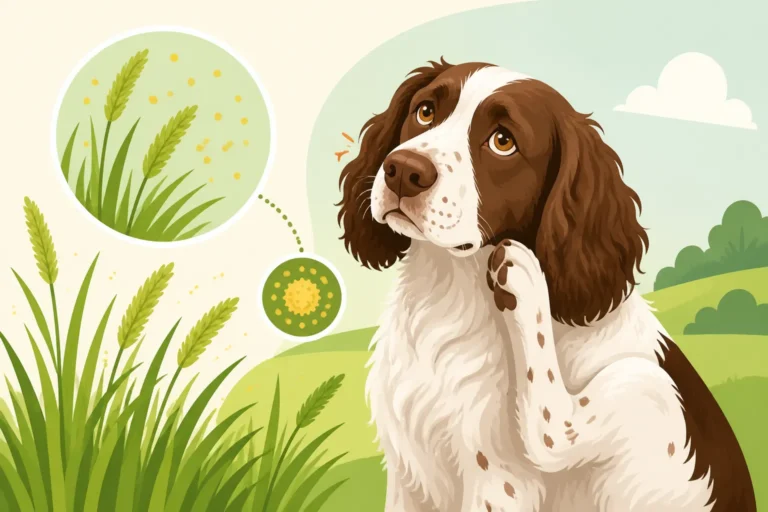
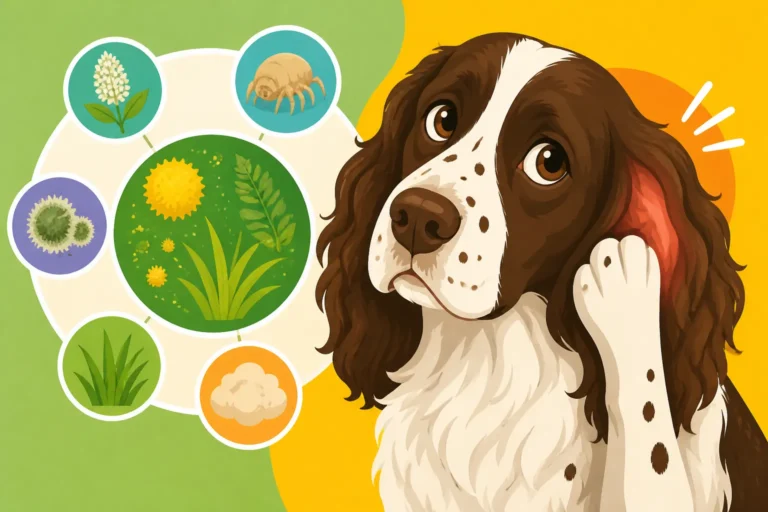
The most telling sign of an environmental allergy is its seasonal nature. Just like humans with hay fever, dogs can react to pollen from trees, grasses, and weeds. You might notice your Springer becoming itchy in the spring when trees are blooming, in the summer with grass pollen, or in the fall as ragweed becomes prevalent. However, some environmental allergens, like dust mites, can be year-round, complicating the seasonal pattern. Grass Allergy in a Working Springer Spaniel is particularly common given their love for sniffing through fields.
The areas most commonly affected by environmental allergies are typically those where allergens come into direct contact with the skin or where dogs lick and chew more readily:
- Paws: Obsessive paw licking and chewing, often leading to red, inflamed, or even infected paws, is a hallmark sign. Your Springer might try to soothe their itchy feet constantly. This is a common symptom for both types, but very prominent here. We know Why a Springer Spaniel Licks Its Paws Raw and it's often due to these allergies.
- Ears: Similar to food allergies, environmental allergens can cause chronic ear infections. The ear canal becomes inflamed and itchy, creating a perfect environment for yeast and bacteria to thrive. The struggle with Why a Springer Spaniel's Ears Are Never Quite Healthy is a common lament.
- Belly and Armpits: These are often moist, less furred areas that come into contact with allergens from the ground. You might see redness, small bumps, or a rash on their underside.
- Muzzle and Eyes: Rubbing their face against furniture or pawing at their eyes can indicate itchiness in these areas. While less common than human hay fever, it can still occur.
If your Springer Spaniel seems to get worse after rolling in the grass, going for a walk in a field, or spending time in a dusty environment, environmental allergies are a high probability.
Diagnosing Atopy: Skin Tests and Blood Panels
Unlike food allergies, which are diagnosed through elimination diets, environmental allergies can often be identified through specific tests. These typically include:
- Intradermal Skin Testing: Considered the most accurate, this involves shaving a small area of your Springer's side and injecting tiny amounts of common allergens just under the skin. The vet then observes for a localized hive or swelling, indicating a reaction. This is usually performed by a veterinary dermatologist.
- Blood Testing (Serology): A blood sample is taken and sent to a lab to measure antibodies against various environmental allergens. While less precise than skin testing, it's less invasive and can be a good starting point. Labs like those used by Chewy for health panels often offer these tests, or your vet can send a sample.
Once specific allergens are identified, your vet can discuss management strategies, including desensitization (allergy shots or oral drops, similar to human allergy treatments) which can offer long-term relief by gradually training your Springer's immune system not to overreact.
Taking Action: A Step-by-Step Approach to Diagnosing and Managing Allergies
Navigating your Springer Spaniel's allergies can feel overwhelming, but a structured approach will yield the best results. Remember, you're not alone in this; countless Springer owners face similar challenges. The goal is to provide relief and improve your dog's quality of life.
The Initial Vet Visit and Ruling Out Other Causes
Your very first step when your Springer Spaniel starts itching excessively is a trip to the vet. It's crucial to rule out other potential causes for itching that aren't allergies, such as fleas, mites (like sarcoptic mange), or fungal infections. These are often easier to diagnose and treat directly. Your vet will perform a thorough physical exam, perhaps skin scrapings to look for mites, or a fungal culture. They might also do a cytology (microscopic examination of skin or ear swabs) to identify secondary bacterial or yeast infections, which almost always accompany chronic allergies. Understanding What a Springer Spaniel's Ear Cytology Costs is part of the financial planning here.
Once parasites and infections are addressed, you and your vet can focus on differentiating between food and environmental allergies. This initial diagnostic phase is critical, as treating secondary infections will bring some immediate relief, even if the underlying allergy remains.
Comparison Table: Food Allergy vs. Environmental Allergy
To help you distinguish between the two types of allergies, here's a quick comparison of common signs:
| Symptom / Characteristic | Food Allergy | Environmental (Atopy) Allergy |
|---|---|---|
| Onset | Any age, can develop after years on same food. | Often starts between 6 months and 3 years of age. |
| Seasonality | Non-seasonal; year-round itching. | Often seasonal (spring, summer, fall), but can be year-round (e.g., dust mites). |
| Location of Itch | Paws, ears, groin, armpits, anal area (generalized). | Paws, ears, muzzle, armpits, belly, flanks (often contact areas). |
| Gastrointestinal Issues | Common (vomiting, diarrhea, gas, soft stools). | Less common; typically skin-focused. |
| Ear Infections | Very common, recurring, often bilateral. | Very common, recurring, often bilateral. |
| Response to Steroids | May or may not respond well. | Usually responds well to steroids (though not a long-term solution). |
| Diagnosis Method | Strict 8-12 week elimination diet followed by re-challenge. | Intradermal skin testing or blood allergy panels. |
Management Strategies: Diet, Environment, and Medication
Once you have a clearer picture of what's causing your Springer's itch, you can implement targeted management strategies.
For Food Allergies:
- Strict Dietary Adherence: This means sticking to the identified safe ingredients. If your Springer is allergic to chicken, absolutely no chicken-containing treats or foods. Reading labels rigorously becomes your new superpower. For example, if your vet recommends a novel protein, you might look for venison-based foods on Chewy or explore fresh options with Ollie.
- Homemade Diets: With vet guidance, you might prepare a balanced homemade diet using only safe ingredients.
- Hypoallergenic Treats: Use only single-ingredient treats that are safe for your dog's specific allergens. Amazon has a wide selection of limited-ingredient options.
For Environmental Allergies:
- Allergen Avoidance (where possible): This is often difficult, but minimizing exposure can help. If your Springer reacts to grass, wipe their paws and belly thoroughly after walks. Consider walking them on pavement during peak pollen seasons.
- Frequent Bathing: Regular baths with a gentle, hypoallergenic shampoo can wash allergens off the skin and provide relief. Medicated shampoos might be prescribed by your vet to manage secondary infections.
- Paw Wipes/Rinses: After outdoor excursions, use hypoallergenic wipes or a paw rinse to remove pollen and other irritants from their feet.
- Medications: Your vet may prescribe medications to control the itch and inflammation.
- Antihistamines: These can sometimes help mild cases, but are often not strong enough for significant allergic reactions in dogs.
- Steroids: Effective for rapid relief during flare-ups but are not suitable for long-term use due to potential side effects.
- Immunomodulators: Drugs like Apoquel for a Springer Spaniel's Itch or Cytopoint injections specifically target the itch pathway, offering excellent relief with fewer side effects than long-term steroids.
- Allergy Immunotherapy (Desensitization): This is the only treatment that targets the cause of the allergy. Once allergens are identified through testing, a custom vaccine is created to gradually desensitize your dog to those specific triggers. It takes time, but can offer significant, long-term improvement. What a Springer Spaniel's Allergy Workup Costs often includes the price of these initial tests.
Regardless of the allergy type, managing secondary infections (bacterial or yeast) is paramount. These infections are incredibly itchy on their own and exacerbate the underlying allergy. Your vet will prescribe antibiotics or antifungals, often alongside regular ear cleaning and medicated shampoos. Remember, treating the infection won't cure the allergy, but it will make your Springer Spaniel much more comfortable. Whether a Springer Spaniel Needs a Probiotic might also be a discussion point with your vet, especially if gastrointestinal health is a factor in their overall immune response.
Living with an allergic Springer Spaniel is a journey, not a destination. There will be good days and bad days, but with patience, persistence, and a strong partnership with your veterinary team, you can help your beloved companion lead a happy, comfortable life.
Disclaimer
This article is for general informational purposes only and does not constitute professional advice. Laws, prices and regulations vary by location and change over time. Consult a qualified professional for guidance on your specific situation.