The Age a Springer Spaniel Can Start Gundog Training
One of the most exciting, and sometimes overwhelming, parts of bringing a Springer Spaniel into your life is envisioning all the amazing things you'll do together. For many, that dream includes working in the field, watching their dog quarter the brush, flush game, and make those beautiful retrieves. But the question that often weighs heavily on eager owners is: "When can we actually start gundog training?" It's a valid concern because starting too soon can be detrimental, just as waiting too long might miss critical windows. This guide will walk you through the appropriate ages and developmental stages for introducing your Springer Spaniel to the rewarding world of gundog work, ensuring a confident and successful partnership.
Understanding the Springer Spaniel's Development Stages
Before we even think about whistles and dummies, it's crucial to understand that a Springer Spaniel, like any dog, goes through distinct developmental stages. Rushing these stages, particularly when it comes to formal gundog training, can lead to a dog that's either overwhelmed, fearful, or develops undesirable habits that are much harder to undo later. We're aiming for a well-rounded, confident gundog, not a robot.
The Crucial Puppy Period (8 weeks to 4 months)
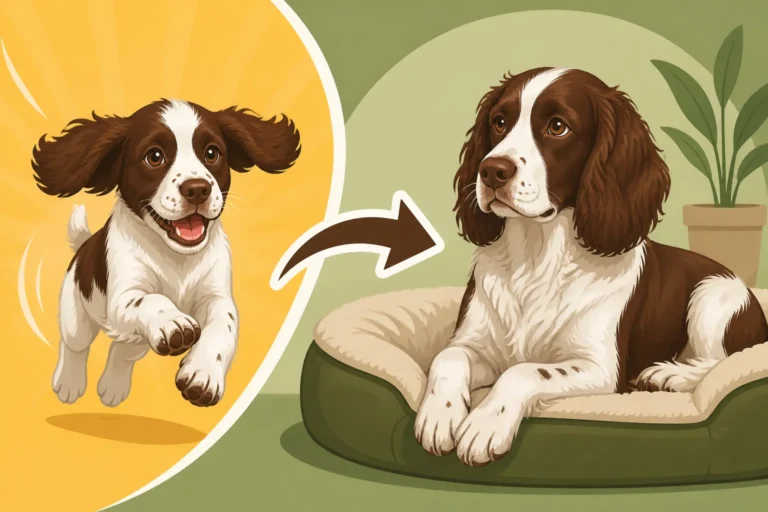
When your Springer Spaniel puppy first arrives home, usually around 8 weeks old, their world is entirely new. Their little brains are like sponges, yes, but they're soaking up general life lessons, not advanced calculus. This period is paramount for socialization, house training, and basic obedience in a positive, gentle manner. Think of it as laying the very foundation of your relationship and their understanding of the world.
During these early weeks, your puppy is learning bite inhibition, how to interact with other dogs and people, and gaining confidence in new environments. Formal gundog training, with its specific commands, retrieves, and exposure to loud noises, is simply too much. Imagine asking a kindergartener to solve quadratic equations – it just doesn't make sense. Instead, focus on short, fun sessions teaching simple commands like "sit," "down," and their name. Introduce them gently to different textures underfoot, different sounds in the home, and lots of positive experiences. This is also the time to make sure they know what a crate is for and that it’s a safe, den-like space. A puppy's training sessions should last only a few minutes, ending on a high note before they get bored or frustrated. Building that joy for learning is far more important now than any specific gundog skill. For a comprehensive look at what to expect, check out The First Year With a Springer Spaniel Puppy.
Adolescent Energy and Brain Development (4 months to 1 year)
Ah, adolescence! Just like human teenagers, your Springer Spaniel will hit a phase where they suddenly seem to "forget" everything you've taught them. Their hormones are surging, their energy levels are sky-high, and their brains are still developing. They might push boundaries, test your patience, and suddenly have selective hearing when off-leash. This is a normal, albeit sometimes frustrating, part of development.
While formal gundog training is still largely off the table, this is a fantastic time to introduce pre-training elements. Think of it as preparatory school. You can start introducing them to retrieving specific items (like soft bumpers you can find easily on Amazon), making it a high-value game that they want to play with you. Continue to solidify their basic obedience, especially recall. A reliable recall is non-negotiable for any working gundog, as their nose will often take precedence over their ears. Whether a Springer Spaniel's Recall Can Be Trusted is a question every owner needs to address proactively. You can also start working on simple "stays" in increasingly distracting environments. Keep all interactions positive, engaging, and relatively brief. Pressure at this stage can sour a Springer Spaniel on training for good. They’re still learning How Fast a Springer Spaniel Learns, and it's important to keep them enthusiastic.
Maturing Into a Working Partner (1 year and beyond)
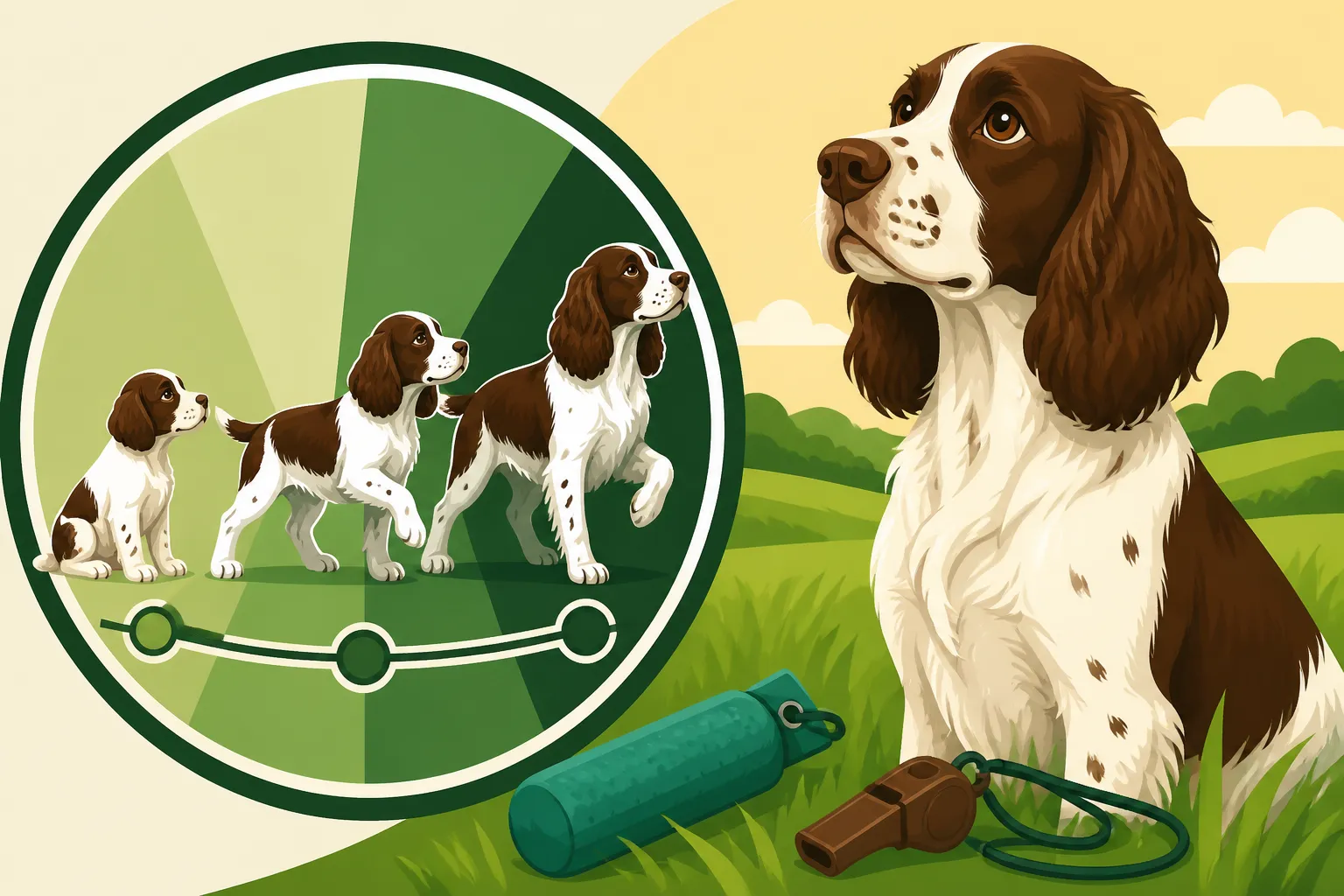
Generally, your Springer Spaniel will be ready for more formal, intensive gundog training around 12 months of age, often closer to 18 months for true mental maturity. This doesn't mean you haven't been doing any work; it means all the foundational work you've poured into them during their puppy and adolescent stages now pays off. By a year old, most Springers have reached their adult size, and their bones and joints are more developed, making them physically ready for the demands of fieldwork. More importantly, their brains are also maturing, allowing them to focus for longer periods, understand more complex commands, and handle pressure better.
At this point, your Springer should have rock-solid basic obedience: they come when called, they sit and stay reliably, they walk nicely on a leash, and they have a strong desire to retrieve. Without these prerequisites, specialized gundog training will be a constant uphill battle. You'll be trying to teach advanced skills while still correcting fundamental behaviors, which is inefficient and frustrating for both you and your dog. A mature Springer Spaniel is ready to channel its boundless energy and intelligence into learning a "job," which is exactly what gundog work provides.
Laying the Foundational Skills Before Gundog Training Begins
You wouldn't build a house without a strong foundation, and the same goes for training a working gundog. These initial skills aren't just polite manners; they are the absolute prerequisites for safety and success in the field.
The Absolute Must-Haves: Recall, Sit, Stay
Before your Springer Spaniel ever sets foot in a serious training field, they need to master the basics. A dog that bolts after a rabbit or ignores a "stop" command in a dangerous situation isn't just a nuisance; it's a liability to itself, other hunters, and wildlife.
- Reliable Recall (Here!/Come!): This is your ultimate safety net. Your Springer's nose is incredibly powerful, and once they hit a scent trail, their instinct to follow can override everything else. A solid recall means they will disengage from that fascinating smell and return to you, no matter the distraction. Practice this constantly in varied environments, always rewarding heavily. Start in a quiet backyard, then move to a park on a long line, and eventually to more stimulating areas.
- Solid Sit and Stay: In gundog work, "sit" isn't just for politeness; it's for control. You need your dog to sit quietly and patiently, sometimes for extended periods, perhaps while you're waiting for game, loading a gun, or crossing a fence. "Stay" is equally vital for scenarios like waiting at a peg or holding position while you send another dog. Practice these commands with increasing duration and distance, gradually introducing distractions.
- Heel/Walk Nicely on Leash: While a gundog often works off-leash, the ability to walk calmly beside you is essential for moving between locations, navigating crowded areas, and demonstrating control. A Springer Spaniel that constantly pulls on the leash signals a lack of responsiveness to your guidance, which translates poorly to fieldwork.
Without these foundational skills, you'll find yourself constantly correcting basic behaviors rather than building upon them, making the entire gundog training process much more difficult and less enjoyable for everyone involved.
Socialization and Environmental Exposure
A gundog needs to be bomb-proof in terms of its environment. They'll encounter all sorts of sights, sounds, and smells in the field – from rustling leaves and splashing water to sudden gunshots and the presence of other dogs and people. A dog that is fearful or reactive to new stimuli will not perform effectively and can even be a danger.
- Varied Experiences: Expose your puppy early and often to different places: busy streets (from a distance at first), quiet parks, dense woods, open fields, and various types of terrain. Let them walk on gravel, concrete, grass, and mud. The more varied and positive their early experiences, the more confident they will be.
- Sounds and Sights: Introduce them gradually to loud noises, starting with mild sounds like dropping a pan or closing a door, then moving to cap guns or blanks from a distance, always paired with positive reinforcement. Never force them into a scary situation. The goal is neutrality or positive association, not fear.
- Other Dogs and People: A working gundog often operates in close proximity to other dogs and handlers. They need to be comfortable and focused on their job, not distracted or reactive. Structured puppy classes and controlled interactions with calm, vaccinated dogs are invaluable. BAXTER & Bella offers a fantastic online puppy program that guides owners through effective socialization and basic obedience from the comfort of their home, which can be a great supplement to in-person classes.
This broad exposure builds a resilient dog, one that can focus on its work regardless of what's happening around it. A dog that cowers at a sudden noise or tries to fight another dog will never be a reliable hunting partner.
Building Drive and Desire to Retrieve
This is where the fun really begins for a Springer! Their natural instinct to retrieve is strong, but we want to channel it into a specific, controlled behavior for gundog work. It’s more than just playing fetch in the yard; it’s about making the retrieve a highly valuable, highly motivated task performed on command.
- Making Retrieving the Best Game Ever: Use soft, appropriate retrieve objects – starting with things like rolled-up socks or soft toys, then moving to rubber bumpers (available on Amazon). Keep retrieve sessions short, exciting, and always end wanting more. Never turn retrieving into a chore.
- The "Hold" Command: While formal "forced retrieve" training comes much later (if at all, depending on your philosophy), you can start teaching a soft "hold." This involves gently placing an object in their mouth and saying "hold," praising them for keeping it there, even for a second, then gently taking it. This prepares them for holding game gently without crushing it.
- Controlled Retrieves: Move beyond just tossing a ball. Start asking for a "sit-stay" before the throw, then release them with a clear command like "fetch" or "retrieve." This begins to instill the discipline required for steadiness. While you want to encourage retrieving, remember that Whether a Springer Spaniel Needs to Retrieve Every Day depends on the individual dog's drive and your training goals. For a working dog, daily retrieving practice, even short sessions, is highly beneficial.
Introducing Specific Gundog Concepts Age-Appropriately
Once your Springer has a solid foundation, you can gradually introduce more specialized gundog concepts. The key here is gradual and positive. Never jump ahead.
Early Scent Work and Quartering Instincts (6-9 months)
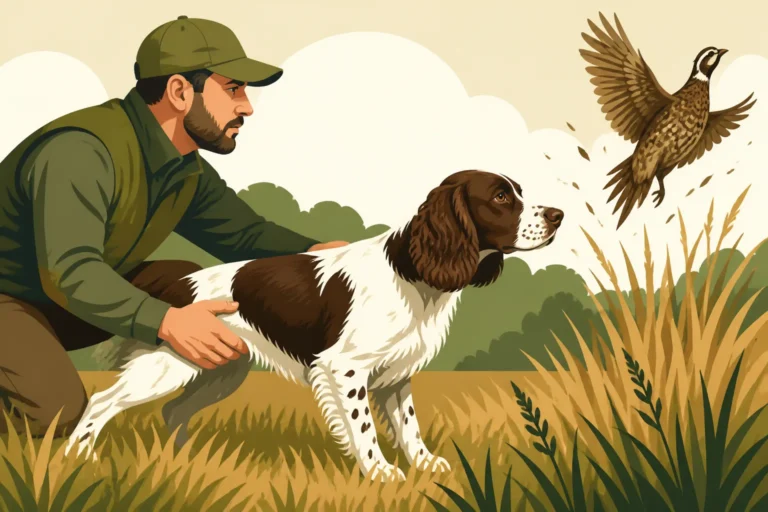
Springer Spaniels were literally bred to "spring" game – to quarter the ground in front of a hunter, flushing birds into the air. This instinct is often inherent, and you can gently encourage it in a controlled way, long before they ever see a live bird.
- "Puppy Quartering": In a relatively open space, like your backyard or a quiet field, encourage your puppy to work back and forth in front of you. Walk forward, and when your puppy ranges too far to one side, change direction with a verbal cue or a gentle whistle signal to encourage them to swing back across. This subtly reinforces the natural back-and-forth pattern. Don't make it rigid; just let them explore within a reasonable range. Many Springers will Whether a Springer Spaniel Quarters Naturally, but gentle guidance refines it.
- Scent Introduction: Hide small, scented dummies (you can get commercial training scents or even use a feather from a game bird for scent) in light cover. Encourage them to find it, celebrating enthusiastically when they do. This makes using their nose a fun, rewarding experience. This isn't about precise retrieves yet, but about engaging their natural scenting abilities.
Whistle and Hand Signal Introduction (9-12 months)
As your Springer grows, you'll want to transition from purely verbal commands to whistle and hand signals. These are essential in the field where verbal commands can scare game or be hard to hear over wind or gunshots.
- Pairing Cues: Start by pairing your verbal commands with their corresponding whistle blast or hand signal. For example, when you say "sit," also give your "sit" whistle blast. After many repetitions, your dog will associate the whistle with the action. Slowly, you can fade the verbal cue.
- Basic Whistle Commands: The most common gundog whistle commands are usually:
- One short pip: Sit/Stop
- Multiple short pips: Come/Recall
- Long, steady blast: Stay/Kennel up (or sometimes recall, depending on trainer)
- Arm sweeps: Directionals (left, right, back)
Teaching a Springer Spaniel Whistle Commands requires consistency and patience. Practice in various environments, always rewarding success.
- Hand Signals: Similarly, begin to pair hand signals with verbal cues for "sit," "stay," "come," and directional casts. This silent communication is incredibly powerful for a working dog.
Steadiness and Gun Introduction (12 months and older)
This is perhaps the most sensitive and critical stage of gundog training. Steadiness means your dog remains calm and in control, not breaking to chase flushed game or retrieve a fallen bird until sent. Gun introduction, or "gun proofing," means they are not afraid of gunshots. Done incorrectly, you can ruin a dog for fieldwork permanently.
- Building Steadiness: Begin by having your dog on a long line, performing a "sit-stay." Toss a retrieve dummy a short distance away. If they try to break, give a firm "no" and gently correct them back to position. Only send them to retrieve with a clear command like "fetch." Gradually increase distractions, such as someone else walking past with a dog, then someone flushing a bird (without a shot yet), always ensuring your dog remains steady.
- Gun Introduction: This must be done gradually and positively. Never take a young dog to a shooting range or stand next to someone firing a shotgun.
- Start with a cap gun or starter pistol fired at a significant distance (100+ yards) while your dog is happily eating or playing. The sound should barely be audible.
- If they show no reaction, or a positive one (they associate the sound with something good happening), gradually bring the sound closer over many sessions.
- Only introduce a louder gun when the dog is completely comfortable with the starter pistol.
- Always associate the sound with something positive, like a treat or a retrieve. Never fire a gun when a dog is startled, upset, or stressed.
- Never shoot over a dog that is not fully gun-proofed and steady. This stage is paramount, as detailed in How to Introduce a Springer Spaniel to Gunfire.
Remember, a dog that is "gun shy" is virtually impossible to fix for fieldwork. Take your time, prioritize positive experiences, and don't rush.
Common Pitfalls and Best Practices for Training a Young Springer
Training a gundog, especially a sensitive breed like the Springer Spaniel, comes with its own set of challenges. Being aware of common mistakes can save you a lot of heartache and ensure a stronger partnership with your dog.
Avoiding Burnout and Pressure
Springer Spaniels are eager to please and intelligent, but they are also often described as "soft" dogs. This doesn't mean they're weak; it means they are highly sensitive to correction and can easily shut down or become fearful if handled harshly or pressured too much.
- Keep it Positive and Fun: Every training session, especially for a young dog, should feel like a game. Use high-value treats, enthusiastic praise, and toys as rewards. If you're not having fun, your dog likely isn't either.
- Short Sessions: Their attention spans are limited, particularly when they're young. Five to ten minutes of focused training, several times a day, is far more effective than one long, grueling session. Always end on a successful note.
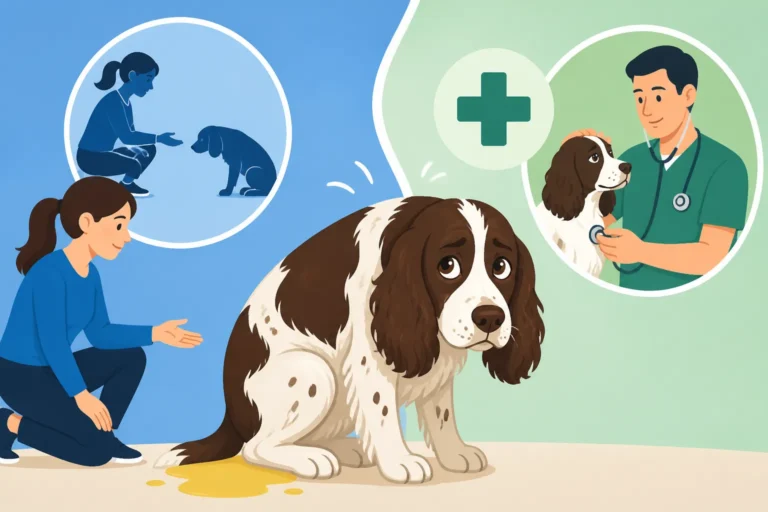
- Read Your Dog: Learn to recognize signs of stress or disengagement: lip licking, yawning, looking away, or refusing to take treats. If you see these, it's time to stop, take a break, or make the task easier. Shouting or becoming frustrated will be counterproductive, as highlighted in The Soft Springer Spaniel That Shuts Down If You Shout. A Springer thrives on positive reinforcement and clear, calm communication.
The Role of a Professional Trainer
While many owners can lay a strong foundation, the nuances of gundog training can be complex. Knowing when to seek professional help is a sign of a responsible owner, not a failing one.
- When to Seek Help: If you're struggling with a particular behavior, hitting a plateau, or simply want to ensure you're doing things correctly, a professional gundog trainer is invaluable. They can spot subtle body language cues you might miss and offer tailored solutions.
- Finding the Right Trainer: Look for a trainer with extensive experience specifically with flushing spaniels (English Springers, Cockers). Ask about their training philosophy – ideally, they should use modern, positive reinforcement methods. Observe a class or speak to other clients. A good trainer will teach you how to train your dog, not just train your dog for you. You might wonder Whether a Springer Spaniel Needs a Gundog Trainer – for serious fieldwork, often yes, or at least regular consultation.
- Online Resources: For those without local gundog clubs or trainers, online platforms like BAXTER & Bella provide structured training programs, virtual coaching, and a wealth of resources that can guide you through everything from puppy basics to more advanced obedience. This can be a great way to get professional guidance from home.
Patience, Consistency, and Celebrating Small Wins
Gundog training is a journey, not a sprint. It takes time, dedication, and an immense amount of patience. There will be good days and bad days, moments of triumph and moments of utter frustration.
- Consistency is Key: Dogs thrive on routine and clear expectations. Everyone in the household needs to be on the same page regarding commands, rules, and rewards. Inconsistency confuses your dog and slows progress.
- Celebrate Every Success: Even tiny advancements deserve recognition. Did your Springer hold a retrieve for an extra second? Did they come when called despite a distant squirrel? Praise them enthusiastically! These small victories build confidence and reinforce good behavior.
- Enjoy the Bond: Ultimately, gundog training should strengthen the bond between you and your Springer Spaniel. It's an opportunity to work together, communicate effectively, and build a partnership based on trust and mutual respect. Cherish the process, and you'll find it incredibly rewarding.
Here's a quick overview of developmental stages and appropriate training focus:
| Age Range | Primary Focus | Gundog-Specific Activities (Light Introduction) | What to Avoid |
|---|---|---|---|
| 8 weeks – 4 months | Socialization, house training, name recognition, brief basic obedience (sit, come) | Playful retrieves with soft toys, exploring different textures | Formal gundog commands, loud noises, pressure, long sessions |
| 4 months – 8 months | Reinforce basic obedience, reliable recall, leash manners, expand socialization | Introduce light bumpers, short fun retrieves, scent games (finding hidden items) | Formal steadying, gun introduction, harsh corrections, repetitive drills |
| 8 months – 12 months | Advanced obedience (stay, heel), whistle/hand signal pairing, distraction proofing | Introduce quartering patterns in open fields, formal "hold" drills, water work | Live bird work, actual gun fire (unless very gradual pre-conditioning complete) |
| 12 months + | Refine all obedience, consistent responsiveness to whistle/hand signals | Formal steadiness to flush/shot, gradual gun introduction, marked retrieves | Rushing, over-correcting, ignoring signs of stress, live hunting without readiness |
Disclaimer
This article is for general informational purposes only and does not constitute professional advice. Laws, prices and regulations vary by location and change over time. Consult a qualified professional for guidance on your specific situation.