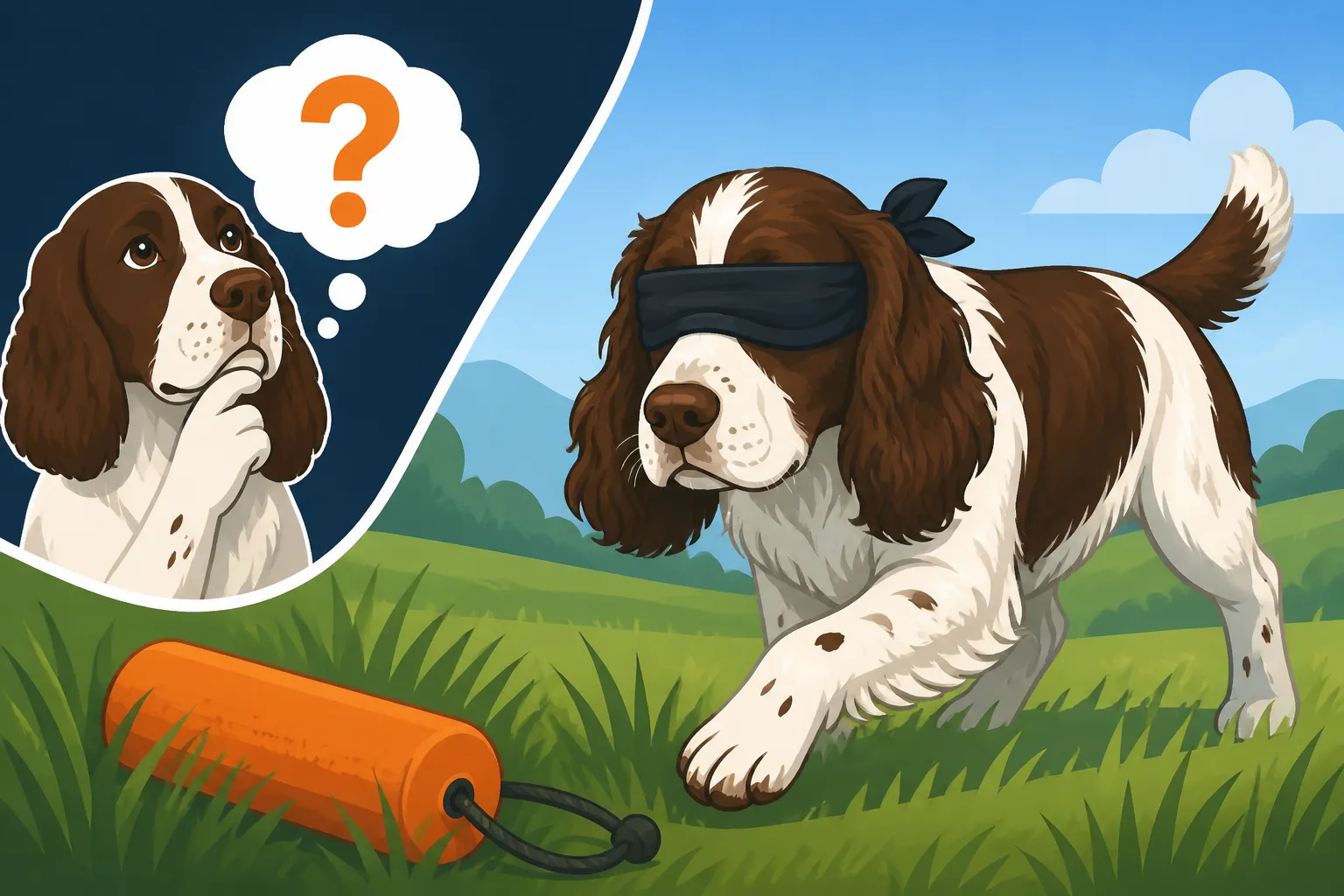
Whether a Springer Spaniel Does Blind Retrieves
It’s a common scenario for many Springer Spaniel owners who dream of a truly versatile gundog: your energetic companion is a whiz at marked retrieves, eagerly bringing back anything they see fall. But then comes the moment when the retrieve isn't visible, when the bird has fallen in dense cover, out of sight. You send your dog, full of expectation, only for them to quarter the area randomly, looking for something they can see, or perhaps just waiting for you to point it out. This frustration is real, and it makes you wonder if your Springer is truly capable of those intricate, handler-directed "blind retrieves." The good news is, yes, a Springer Spaniel is absolutely capable of performing sophisticated blind retrieves, but it requires a very specific, patient, and consistent training approach that harnesses their natural abilities while building a robust communication system between you. This guide will walk you through the journey, from understanding the basics to implementing advanced techniques, ensuring your Springer becomes the highly skilled retriever you envision.
Understanding the Foundation of Retrieves for a Springer Spaniel
Before we dive deep into the mechanics of blind retrieves, it’s crucial to understand the fundamental drive that makes Springer Spaniels such exceptional gundogs in the first place. Their very nature is geared towards finding and fetching.
The Springer Spaniel's Natural Instinct to Retrieve
Springer Spaniels are, at their core, flushing and retrieving spaniels. This means they were originally bred to "spring" game from cover for the hunter, and then, once the game was shot, to retrieve it gently. This instinct to pick up and carry objects in their mouth is incredibly strong in most Springers. They often start retrieving naturally as puppies, bringing you toys, socks, or anything else they can get their mouths on. This innate desire to please and carry things is your biggest asset when training retrieves. They love the interaction, the praise, and the reward of a job well done. It’s part of their genetic makeup, a deeply ingrained behavioral pattern that makes them eager partners in the field or even just in the backyard. This drive is why many owners find that teaching basic "fetch" or "retrieve" with a visible object is relatively straightforward. What a Springer Spaniel Retrieves is often varied and enthusiastically presented!
The Difference Between Marked and Blind Retrieves
While the core action of picking something up and bringing it back remains the same, a marked retrieve and a blind retrieve are worlds apart in terms of a dog's understanding and a handler's direction.
- Marked Retrieve: This is what most pet owners, and even many novice gundog enthusiasts, start with. A marked retrieve happens when the dog sees the object fall. They watch it, they mark its landing spot, and then they go directly to it. Their eyes and memory guide them. It's often highly exciting for the dog, as they are anticipating the fetch from the moment the object is thrown or falls. It relies heavily on their sight and their natural drive to pursue.
- Blind Retrieve: This is where the magic (and the serious training) comes in. In a blind retrieve, the dog has not seen the object fall. They have no visual cue to guide them to the precise location. Instead, they must rely entirely on their handler's directions – typically whistle commands and hand signals – to navigate to an unseen fallen bird or dummy. This isn't just about finding something; it's about being directed to find something, which requires a much higher level of obedience, trust, and understanding between dog and handler. The dog has to trust that you know where the object is, even if they can't see or smell it from the start.
Why Blind Retrieves Present a Challenge
The challenge of blind retrieves stems from several factors unique to a dog's natural instincts and learning processes. Firstly, dogs are highly visual creatures, and their natural inclination is to hunt by sight and scent. When you remove the visual cue of a falling object, you're asking them to override a very powerful instinct. Secondly, it requires an incredible amount of handler focus and precise communication. A slight miscue from you can send your dog off course, leading to frustration for both of you.
Another difficulty lies in a Springer's keen nose. While their nose is fantastic for quartering and finding game, it can also be a distraction during blind retrieves. If they get a whiff of an interesting scent trail that deviates from your intended line, their natural instinct to follow that scent can override your command. Whether a Springer Spaniel's Nose Overrides Its Ears is a very real consideration here. This is why building strong "lining" skills – teaching them to run a straight line until told otherwise – is paramount. It’s a complete shift from their natural free-ranging search pattern, demanding discipline and a deep understanding of your directional cues. Without careful, incremental training, this can easily become a source of confusion and ultimately, an unreliable retrieve.
Essential Skills for a Successful Blind Retrieve
Achieving reliable blind retrieves with your Springer Spaniel isn't just about teaching them to fetch on command. It's about building a complex set of foundational behaviors and communication signals that allow you to effectively direct them to an unseen object.
Steadiness and Control: The Non-Negotiables
Imagine trying to direct a rocket that’s already launched and veering wildly off course. That’s what it’s like trying to teach blind retrieves to a dog that lacks steadiness and control. For a blind retrieve, your Springer must remain calm and focused at your side until you give the exact command to "fetch" or "back." Any premature breaking, whining, or frantic movements will undermine your ability to give clear directions and their ability to receive them.
Steadiness means your dog sits quietly, watching you, waiting for instruction, even when other exciting things are happening around them. This level of control is built through consistent, positive reinforcement training, starting with very short durations and gradually introducing distractions. For a gundog, steadiness extends to remaining calm when a bird is flushed, and especially when a shot is fired. Steadying a Springer Spaniel to Flush is a crucial step that directly impacts their ability to perform blind retrieves later. Without a solid foundation of steadiness, your Springer will likely bolt in the general direction, relying on their nose and eyes, rather than your precise directions, which is counterproductive for blind work.
Whistle and Hand Signals: Building a Remote Control
Since your Springer Spaniel won't see the fallen object, they need a clear, consistent language to guide them. This language comes in the form of whistle commands and corresponding hand signals. These act as your "remote control" in the field, allowing you to stop, turn, and direct your dog from a distance.
- The Stop Whistle (Sit-Whistle): This is arguably the most important command for blind retrieves. A single, sharp pip on the whistle should mean "stop immediately and sit, facing me, waiting for further instruction." This isn't a suggestion; it must be an instant, non-negotiable response. It allows you to halt your dog’s progress, assess their position, and then redirect them.
- Directional Hand Signals: These are paired with a verbal or whistle cue, often a secondary whistle pip or a verbal "back" or "over."
- "Back" or "Go Back": An outstretched arm pointing forward, signaling the dog to continue in a straight line away from you.
- "Over" or "Left/Right": An arm swung out to the side, indicating a turn to the left or right, typically from a stopped position.
- Casting Whistle: A series of short pips that encourages the dog to cast (search) in an area, usually when they are close to the fall but haven't located the object.
Training these commands requires immense patience and repetition, starting in controlled environments and slowly increasing distance and distractions. Many trainers find online programs, like those offered by BAXTER & Bella, can provide structured, step-by-step guidance on establishing these crucial communication methods. Teaching a Springer Spaniel Whistle Commands and Whether a Springer Spaniel Learns Hand Signals are excellent topics to explore further to master this critical phase. The goal is for your dog to respond to these cues instantly and reliably, regardless of what their nose or eyes might be telling them.
Liner Discipline: The Straight Path
Liner discipline refers to your Springer's ability to run a perfectly straight line, on command, away from you until told to stop or change direction. This is absolutely fundamental to blind retrieves. If you send your dog "back" and they veer 20 degrees off course, they'll miss the fallen object completely.
Training for lining usually starts in very open, distraction-free areas. You'll use your "back" command and hand signal, praising and rewarding them for maintaining a straight line. Gradually, you'll introduce minor obstacles or changes in terrain, always reinforcing the straight-line concept. The idea is to teach them to trust your line implicitly. You’ll often start with very short distances, sometimes even just 10-15 yards, building up to much longer distances in stages.
One common method involves using visual aids like parallel walls, fences, or even tall grass lines to naturally encourage a straight path initially. This helps the dog understand the concept of a "line" before you remove those physical guides. It takes a lot of repetition and consistent reinforcement. What a Springer Spaniel Will Work For often includes positive praise and the thrill of a successful retrieve, which are powerful motivators for maintaining that liner discipline. Without this skill, every blind retrieve becomes a frustrating exercise in guesswork for both you and your dog.
Step-by-Step Training for Blind Retrieves
Once your Springer Spaniel has a solid foundation in steadiness, whistle commands, hand signals, and can run a straight line, you’re ready to introduce the concept of a blind retrieve. This isn't a skill you teach overnight; it's a gradual progression that builds confidence and understanding.
Starting with Short, Simple Blinds
The key to success is to start small and set your dog up for success every single time. Your first "blind" retrieves will barely be blind at all.
- Introduce the Concept with "Cheat" Blinds: Begin by placing a dummy or a target object in plain sight, just a short distance away (e.g., 10-15 yards). Send your dog with a "back" command. As they get close, give a "sit" whistle, then point to the dummy and give a "fetch" or "find it" command. This helps them connect your directional signals with finding an object.
- Gradually Reduce Visibility: Once they're consistent with the cheat blinds, start making the dummy just barely out of sight. Maybe it’s hidden behind a small rise, or tucked into some short brush that they can't quite see from the send-off point. Keep the distance short, perhaps 20-30 yards. Send them "back" with a whistle and hand signal. If they waver, use the stop whistle and redirect them. Always ensure they succeed, even if it means walking them closer initially.
- Use a Helper: Having a friend place the dummy while your dog watches (but cannot see where it's truly hidden) can be beneficial in the early stages. They can also stay near the dummy to confirm your dog is on the right track and give a slight rustle if the dog is struggling. However, the ultimate goal is for the dog to rely solely on your cues, not a helper near the fall.
Remember, patience is paramount. If your dog seems confused or frustrated, go back a step. It's better to build a rock-solid foundation than to push too fast and create bad habits.
Gradually Increasing Distance and Difficulty
As your Springer gains confidence and consistency with shorter, simpler blinds, you can begin to increase the challenge.
- Increase Distance: Slowly add more distance to your blinds. Instead of 20 yards, try 40, then 60, and so on. Make sure your whistle commands and hand signals remain clear and strong over these longer distances. This is where a good, strong whistle that carries well comes in handy. You can find excellent gundog whistles, often sold with lanyards, on platforms like Amazon.
- Add Moderate Cover: Introduce different types of cover. What starts as short grass can become taller weeds, then light brush, and eventually denser cover where the dummy is truly hidden. This teaches your dog to trust your directions even when their natural hunting instincts might be telling them to quarter.
- Introduce Angles and Multiple Blinds: Once your dog can handle a straight-line blind, you can introduce angles. Instead of just "back," you might send them "back," stop them, then give an "over" command to direct them left or right to a hidden dummy. Eventually, you can work on multiple blinds, where there might be two or three dummies hidden in different locations, and you direct your dog to each one sequentially. This is advanced work and requires flawless communication.
- Proofing with Distractions: Practice in increasingly distracting environments. Start in your quiet backyard, move to a park with other people, then to an area with other dogs, and finally to an actual field with game scent. The goal is for your dog to ignore distractions and focus on your commands, no matter what. Whether a Springer Spaniel's Recall Can Be Trusted is directly tied to this, as reliable recall to your whistle is fundamental before you attempt sending them on long blinds in distracting areas.
Troubleshooting Common Blind Retrieve Issues
Even with the best training, you'll encounter hiccups. It's how you handle these that determines your success.
- "Crashing" the Blind: If your dog runs past the fall zone without stopping to search, it often means your stop whistle isn't strong enough, or they haven't learned to broaden their search pattern at the fall point. Go back to basics with stop whistle practice and "hunting dead" drills, where they search a specific area for a hidden dummy.
- "Cheating" the Line: If your dog consistently drifts off the intended straight line, review your liner discipline training. Go back to short, easy lines, using physical barriers if necessary. Ensure your "back" command is clear and that you are not inadvertently giving subtle body cues that encourage them to drift. Sometimes, the problem is that the dog learns that if they just run fast in the general direction, you'll eventually point out the fall. You need to ensure they understand they must follow your directions.
- Lack of Drive to Find the Unseen Object: Some Springers might be brilliant at marked retrieves but less enthusiastic about blinds, as there's no visible reward. Ensure your dummy has some scent on it (e.g., bird scent) to make it more appealing, and always make the successful find incredibly rewarding with enthusiastic praise and perhaps a favored treat. What a Springer Spaniel Will Work For varies by dog, so tailor your rewards.
- Confusion with Signals: If your dog seems to misunderstand your whistle or hand signals, simplify, clarify, and practice more. Sometimes, a subtle change in your body language or the timing of your whistle can make all the difference. Break down the command into its smallest components and build back up. You might find resources like How Many Whistle Cues a Springer Spaniel Learns helpful to ensure you're not overwhelming your dog with too many signals too soon.
- Environmental Distractions: When practicing in new environments, always be prepared to take a step back. A field full of interesting new smells can be incredibly distracting for a Springer Spaniel. Practice shorter, easier blinds first in new locations before increasing the difficulty. This is where an electronic collar, used humanely and correctly as a reinforcement tool, can be very beneficial for maintaining focus and ensuring compliance, especially over distance. Whether an Electronic Collar Belongs on a Springer Spaniel is a good read if you're considering this tool.
Tools and Resources to Aid Blind Retrieve Training
Training complex behaviors like blind retrieves can be greatly enhanced by using the right tools and seeking expert guidance. These resources can help clarify your training, improve your communication, and ensure both you and your Springer Spaniel stay motivated.
Training Bumpers and Launchers
When it comes to the "objects" you'll be retrieving, not all tools are created equal, especially for blind work.
- Training Bumpers: These are typically plastic, canvas, or foam dummies designed to be easy for a dog to pick up, hold, and carry. They often come in various colors, but for blind retrieves, you'll want to use neutral colors like white, black, or olive green that blend into the landscape. This prevents your dog from relying on visual cues. Some bumpers have scent capabilities, allowing you to add bird scent, which can significantly increase your Springer's drive to find an unseen object by engaging their powerful nose. You can find a wide variety of bumpers, often in multi-packs, on Amazon. What a Springer Spaniel's Training Bumpers and Whistle Cost gives a good overview of these essential items.
- Dummy Launchers: These devices propel dummies (often specialized launcher dummies) much further than you can throw them by hand. While they are more commonly used for marked retrieves to simulate longer falls, they can also be useful for initial blind retrieve training. You can have a helper launch a dummy when your dog isn't looking, then direct your dog to the unseen fall. This adds realism and challenges your dog to run longer lines. Remember, safety first with launchers – always follow manufacturer instructions.
Electronic Collars and Their Role
The use of electronic collars (e-collars) in dog training is a topic that often generates strong opinions. However, when used correctly and humanely as a communication and reinforcement tool, an e-collar can be incredibly valuable for teaching and proofing advanced gundog work, including blind retrieves, especially over distance.
- Reinforcement, Not Punishment: The key is to introduce the e-collar at very low, consistent stimulation levels, always pairing it with a known command. For example, when teaching the stop whistle, you might give the whistle command, and if your dog doesn't respond instantly, a very low-level stimulation (often described as a "tap" or "tickle") is applied simultaneously with the whistle. This clarifies the urgency of the command.
- Ensuring Compliance at a Distance: For blind retrieves, where your dog might be 100+ yards away, an e-collar provides a way to reinforce your commands when your voice or whistle alone might not be sufficient or when a distraction is overriding their focus. It ensures that your "sit" whistle or directional commands are obeyed, preventing them from going off course.
- Professional Guidance is Essential: It cannot be stressed enough: if you choose to use an e-collar, seek guidance from a qualified gundog trainer who has experience with their proper application. Incorrect use can damage your dog’s trust and create fear, which is completely counterproductive. A good trainer will help you understand the appropriate settings, timing, and situations for e-collar use.
Professional Guidance and Online Programs
While many dedicated owners can make significant progress on their own, there's no substitute for expert advice.
- Gundog Trainers: A professional gundog trainer brings years of experience, a keen eye for subtle behavioral cues, and a structured curriculum. They can identify weaknesses in your training, troubleshoot specific problems, and help you advance to the next level. They can also provide access to training grounds and scenarios that are difficult to replicate at home. Finding a trainer specializing in spaniels is often ideal. How Many Weeks of Gundog Training a Springer Spaniel Needs can give you an idea of the commitment involved.
- Online Training Programs: For those without access to a local gundog trainer, or who prefer a self-paced approach, online programs can be an excellent resource. Companies like BAXTER & Bella offer comprehensive puppy and dog training courses that cover everything from basic obedience to more advanced concepts, often including foundational gundog skills. These programs typically feature video tutorials, step-by-step instructions, and sometimes even direct access to trainers for questions. They can provide the structured guidance you need to systematically build towards reliable blind retrieves from your own home. Whether a Springer Spaniel Needs a Gundog Trainer explores the benefits of such professional help.
- Training Clubs and Groups: Joining a local gundog training club or spaniel club can offer invaluable support. You'll meet other owners who share your passion, learn from their experiences, and have opportunities to train in a group setting, which introduces realistic distractions and camaraderie.
Blind Retrieve Training Progression
Here's a simplified look at the typical progression for training blind retrieves:
| Stage | Description | Key Skills Reinforced | Typical Distance | Environment |
|---|---|---|---|---|
| Foundation | Perfecting Sit, Stay, Come, Heel. Introducing Whistle Stop & Directionals. Building steadiness. | Basic Obedience, Steadiness, Stop Whistle, Hand Signals | N/A | Quiet, Controlled (home, yard) |
| "Cheat" Blinds | Dummy placed just out of sight, short distance. Dog knows it's there but can't see it from send. | Stop Whistle, Back Command, Directed Search | 10-20 yards | Open, Low Distraction |
| Simple Blinds | Dummy truly hidden, short distance. Dog relies on your direction completely. | Liner Discipline, Stop Whistle, Back Command | 20-40 yards | Open, Low Distraction |
| Increased Distance | Lengthening the straight-line blind. Dog runs further before stopping. | Sustained Liner, Distance Whistle Response | 40-70+ yards | Open fields, gradually more cover |
| Adding Cover | Introducing taller grass, light brush where dummy is deeply hidden. | Perseverance in Search, Trust in Handler Direction | Varies | Areas with increasing density of natural cover |
| Directional Blinds | Dummy hidden off to the side. Dog sent back, stopped, then directed left/right ("over"). | Precise Stop, "Over" Command, Multi-directional Handling | 30-80+ yards | Varied cover, open areas |
| Advanced Blinds | Multiple blinds, difficult terrain, water blinds, handling distractions (other dogs, scents, sounds). | Complex Sequences, Environmental Proofing, Trust in Handler | Long, varied | Realistic hunting scenarios, trial grounds |
With dedication, consistency, and the right approach, your Springer Spaniel absolutely has the potential to become a master of blind retrieves. It's a journey that strengthens the bond between you and your dog, transforming them into a truly sophisticated working companion. Embrace the process, celebrate the small victories, and enjoy watching your Springer's natural instincts evolve into highly refined skills.
Disclaimer
This article is for general informational purposes only and does not constitute professional advice. Laws, prices and regulations vary by location and change over time. Consult a qualified professional for guidance on your specific situation.