Whether a Springer Spaniel Is Gun Shy
It's incredibly disheartening when you envision a future with your spirited English Springer Spaniel, perhaps working in the field or enjoying outdoor adventures, only to discover they're terrified of loud noises like gunshots. This guide will walk you through what gun shyness is, why it happens, and most importantly, how to prevent it and manage it if it's already an issue, offering practical advice to help your beloved companion feel secure.
Understanding Gun Shyness in Springer Spaniels
The term "gun shyness" often conjures images of hunting dogs, but the reality is that any dog, regardless of breed, can develop a fear of loud noises. For a Springer Spaniel, a breed historically known for its eagerness to work alongside guns, this can be a particularly devastating problem for owners who dreamt of a working companion. It's a real and valid concern that many dog owners face, and it’s crucial to understand it deeply to help your dog.
What Exactly is Gun Shyness?
Gun shyness isn't just a slight flinch; it's a profound, often debilitating, fear response to sudden, loud noises, particularly gunshots. Imagine your dog hearing an unexpected, terrifying sound that causes them to instantly associate that noise with extreme danger. The reaction can vary widely, from mild anxiety to full-blown panic.
A mildly gun-shy Springer Spaniel might tense up, tuck their tail, or look to you for reassurance when a distant shot is fired. They might tremble slightly or try to hide under your legs. This level of fear is concerning but might be manageable with careful, positive intervention.
On the more severe end of the spectrum, a truly gun-shy Springer Spaniel might go into an absolute frenzy. They could bolt, desperately trying to escape the perceived threat, heedless of commands or their surroundings. This panic can lead to dangerous situations, like running into traffic or getting lost in unfamiliar territory. Some dogs might even cower, urinate, defecate, or become completely unresponsive, their minds overwhelmed by terror. This isn't naughtiness or stubbornness; it's a genuine phobia, a physiological and psychological reaction that the dog cannot control. This profound fear can significantly impact their quality of life and your relationship with them.
Why Some Springer Spaniels Develop Gun Shyness
While Springer Spaniels are generally bred for their sound temperaments and willingness to work, gun shyness isn't exclusively tied to a specific breed. It's a complex issue often stemming from a combination of genetic predisposition and environmental factors, especially negative early experiences.
Sometimes, a dog might inherit a more sensitive nervous system, making them naturally more prone to fear-based reactions to loud noises. This isn't necessarily a fault in breeding lines, but rather a characteristic that can manifest differently under various conditions. A well-bred Springer should ideally have a steady temperament, but individual variability exists, and some dogs might just be more sensitive.
However, environmental factors play a massive role. A single traumatic event can trigger gun shyness. Imagine a young, unconditioned Springer Spaniel puppy, perhaps at eight or nine months old, being unexpectedly exposed to a very close, very loud gunshot without any prior positive association. The sudden, jarring noise, combined with perhaps the pain of recoil if they were too close or the handler's startled reaction, can cement a negative association instantly. It's not just the gun itself; it's the sudden, unpredicted nature of the sound. Similarly, other sudden loud noises, like fireworks, thunder, or even a dropped metal pan, can create similar fear responses if the dog is sensitive and has not been properly conditioned. Lack of proper socialization to various sounds during their critical puppy development window can leave them unprepared for the world's sudden noises.
Preventing Gun Shyness: Early Conditioning and Socialization
Prevention is always better than cure, and this holds especially true for gun shyness. The groundwork laid during your Springer Spaniel's puppyhood is absolutely crucial. You have a prime opportunity to shape their resilience and confidence around sounds.
The Critical Period for Sound Socialization
Your Springer Spaniel puppy's most impressionable period for socialization is generally between 3 and 16 weeks of age. During this time, every experience, positive or negative, helps shape their view of the world. This is when you want to gently and positively expose them to a wide variety of sounds, sights, and experiences.
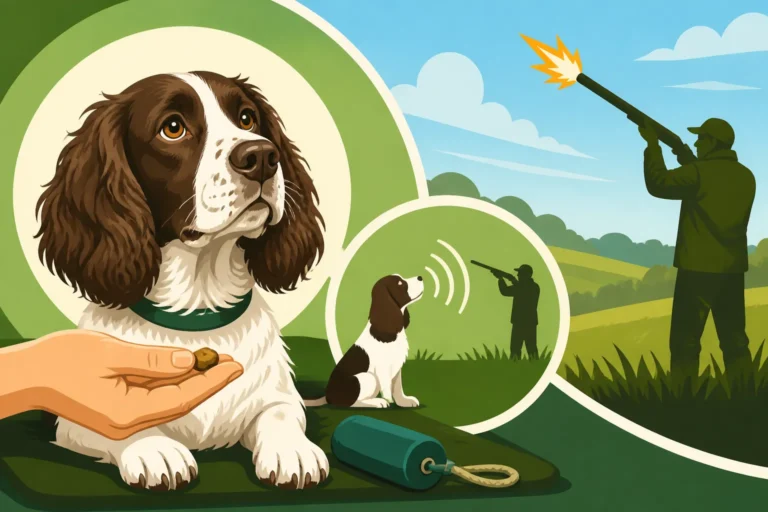
The goal isn't just to expose them to a lot of noise, but to associate all sounds with positive experiences. For example, while your puppy is eating their favorite meal or enjoying a high-value chew, play very low-volume recordings of various noises: traffic, distant thunder, even very muffled gunshots. Keep the volume so low that your puppy barely notices it, or simply accepts it as background noise while enjoying something fantastic. Gradually, over days and weeks, you can increase the volume imperceptibly if your puppy remains relaxed and happy. Never push them to the point of anxiety. A great foundational training program can guide you through these critical early stages. Many online puppy schools, such as BAXTER & Bella, offer comprehensive guides and support for introducing puppies to new experiences in a positive way, helping to build a confident, well-adjusted adult dog.
Gradual Introduction to Loud Noises
Once your Springer Spaniel is comfortable with a wide range of everyday sounds, you can begin the specific process of introducing them to louder, sharper noises, with the ultimate goal of them being unaffected by gunshots. This process requires immense patience and keen observation of your dog's comfort level. Remember, you want to make this a positive, even exciting, experience.
Start with very mild, non-threatening sharp noises. For instance, clap your hands softly a distance away while your puppy is engaged in play or eating a treat. Watch for any reaction. If they show no concern, gradually increase the intensity or closeness of the clap. Move on to dropping a metal pan softly from a low height in another room, again, while your dog is happily distracted. The key is that the noise is a non-event, or even better, an indicator that something good is about to happen. You want to make sure your dog associates these sounds with good things, not fear.
When it comes to actual gunfire, the most common tool is a starter pistol loaded with blanks. This should never be your dog's first introduction to a sudden loud noise. Begin with the starter pistol being fired very far away, perhaps several hundred yards, and only when your Springer Spaniel is completely engrossed in something highly rewarding, like a retrieve or a meal. The sound should be so faint that it barely registers. As they continue to show no reaction, you can ever-so-slowly decrease the distance over many, many sessions, always ensuring the dog is relaxed and happy. If your dog shows any sign of concern, immediately increase the distance or lower the intensity and go back a few steps. Never, ever force the issue. For a deeper dive into this, you might find valuable insights in articles like How to Introduce a Springer Spaniel to Gunfire. You can also find suitable starter pistols and blank ammunition on platforms like Amazon, but always ensure you understand their safe operation and local regulations.
Working Through Gun Shyness: Remedial Training Approaches
If you already have a Springer Spaniel that exhibits signs of gun shyness, it's not a lost cause, but it will require dedication, understanding, and often professional guidance. The approach will shift from prevention to remedial training, focusing on changing your dog's emotional response to the feared stimulus.
Assessing the Severity and Seeking Professional Help
The first crucial step is to accurately assess the severity of your Springer Spaniel's gun shyness. Does your dog merely flinch, or do they completely panic? Their reaction dictates the intensity and type of intervention needed.
- Mild Apprehension: If your dog shows only slight unease – a tail tuck, a quick glance at the noise source, then a return to normal activity – you might be able to work through this yourself with careful desensitization and counter-conditioning techniques.
- Moderate Fear: If your dog actively seeks to hide, trembles visibly, or is hesitant to return to normal activities after a loud noise, professional help is highly recommended.
- Severe Phobia/Panic: If your Springer Spaniel bolts, loses control of bodily functions, becomes inconsolable, or poses a danger to themselves (or others) during an episode, you absolutely must seek immediate assistance from a qualified professional. This could be a certified professional dog trainer specializing in fear and phobia, or a veterinary behaviorist who can assess if medication might be a helpful adjunct to behavioral modification. Trying to tackle a severe phobia alone can inadvertently worsen the situation, leading to further trauma for your dog. For those considering a serious commitment to training, understanding Whether a Springer Spaniel Needs a Gundog Trainer can clarify the benefits of professional input.
Desensitization and Counter-Conditioning Techniques
These are the cornerstones of addressing existing fears. The goal is to gradually expose your Springer Spaniel to the feared sound at such a low level that it doesn't provoke a fear response (desensitization), while simultaneously creating a positive emotional association with that sound (counter-conditioning).
Here's how it generally works:
- Controlled Environment: Start in a safe, familiar place where your dog feels secure.
- Sound Source: Use recordings of gunshots. You can find many sound effect apps or CDs, and even some smart speakers allow you to play specific sounds from platforms like Amazon Music. Play the sound at an extremely low volume – barely audible – far below your dog's threshold for fear.
- Positive Reinforcement: While the sound is playing at this non-threatening level, engage your Springer Spaniel in something they absolutely love. This could be playing with their favorite toy, receiving high-value treats (like small pieces of cheese or cooked chicken), or getting a gentle massage. The key is that the sound predicts something wonderful.
- Gradual Increase: Over many sessions, and only if your dog remains completely relaxed and happy, slowly and incrementally increase the volume of the sound. This might mean only a tiny nudge up in volume over several days or weeks.
- Watch for Signals: Pay close attention to your dog's body language. Any sign of tension, a tucked tail, lip licking, yawning, or refusal of treats means you've gone too far, too fast. Immediately decrease the volume or stop the session and try again later at a lower intensity.
- Consistency: Short, frequent sessions (5-10 minutes) are far more effective than long, infrequent ones. Consistency is vital.
This process can take weeks, months, or even longer, depending on the severity of the fear. It requires immense patience and a commitment to not pushing your dog beyond their comfort zone. For sensitive dogs, like some Springer Spaniels described in The Soft Springer Spaniel That Shuts Down If You Shout, this gentle approach is non-negotiable. It's about building trust and new associations, not conquering fear through force. Articles like Whether a Springer Spaniel Can Be Cured of Gun Shyness often highlight the importance of these dedicated, positive reinforcement strategies.
Managing a Gun-Shy Springer in the Field
If your Springer Spaniel remains gun-shy despite your best efforts, it's crucial to acknowledge that a traditional working life involving firearms might not be suitable for them. Forcing a gun-shy dog into a hunting environment is cruel and can exacerbate their fear, leading to further behavioral problems.
However, a gun-shy Springer Spaniel can still live a wonderfully fulfilling life. Consider alternative activities that tap into their natural instincts without the sound of gunfire:
- Scent Work: Springer Spaniels have incredible noses! Nose work, barn hunt, or tracking can be fantastic outlets for their natural abilities.
- Agility or Obedience: Many Springers excel in dog sports that require intelligence and athleticism.
- Therapy Work: Their affectionate nature can make them excellent therapy dogs, bringing joy to others.
- Advanced Retrieving (without guns): You can still train complex retrieves using silent cues and launchers that don't make a loud report. This allows them to engage their drive without the fear trigger.
If you are a hunter and your dog is gun-shy, you have a few options. You could train another dog for hunting, or explore silent hunting methods. Crucially, if you take your gun-shy Springer into the field, their safety must be paramount. Use a long lead, a secure harness, and ensure they cannot bolt. Consider protective ear muffs designed for dogs if you absolutely must expose them to distant, infrequent sounds in a controlled setting, but this should be a last resort and never for direct exposure. Remember that the deep-seated desire to "work" for a Springer can be satisfied in many ways beyond the traditional gun dog role. Understanding Teaching a Springer Spaniel to Stay in Range might still be useful for general control, even if they won't be exposed to gunfire.
Common Misconceptions and Important Considerations
Navigating the challenges of gun shyness in a Springer Spaniel can be frustrating, especially when misconceptions abound. It’s important to separate fact from fiction and focus on realistic expectations and compassionate care.
Is it Always the Gun's Fault?
It's easy to blame the gun, but often, the gun itself is just one specific trigger within a broader spectrum of sound sensitivities or generalized anxiety. A Springer Spaniel might be reactive to fireworks, thunder, backfiring cars, or even the clang of dropped dishes, all of which indicate a more general noise phobia rather than just "gun shyness."
Sometimes, a dog's general temperament or lack of confidence can contribute. If a puppy has not been well-socialized during The First Year With a Springer Spaniel Puppy to a variety of everyday sounds and experiences, they may develop a lower tolerance for anything sudden or unexpected. It's a cumulative effect; a dog with an already anxious disposition or one that hasn't learned to cope with novelty might be more susceptible to developing phobias. Therefore, while guns are a common trigger for breeds like Springers, it's vital to consider the dog's overall sound sensitivity and stress levels. Addressing underlying anxiety, if present, can significantly help in managing specific phobias.
The Role of the Handler
Your attitude, reactions, and consistency are paramount when dealing with a gun-shy Springer Spaniel. Dogs are incredibly attuned to our emotions, and if you are tense, anxious, or frustrated around loud noises, your dog will pick up on it and mirror your feelings.
- Patience is a Virtue: Healing fear takes time. There are no quick fixes or magic bullets. Rushing the process will almost certainly cause setbacks. Celebrate tiny successes, even if it's just your dog not reacting to a sound that previously caused a flinch.
- Consistency is Key: Whether it's daily desensitization sessions or consistently avoiding triggers, your efforts need to be unwavering. Sporadic training or inconsistent management will only confuse your dog and slow progress.
- Positive Reinforcement Only: Never punish a fearful dog. Punishing a dog for being scared will only intensify their fear and damage your bond. Your role is to be a source of safety and reassurance, not another source of fear. Yelling or harsh corrections will only make things worse, a concept explored in Whether an Electronic Collar Belongs on a Springer Spaniel and its discussion of sensitive breeds.
- Advocate for Your Dog: Be prepared to explain your dog's needs to others, especially in outdoor settings. If someone is about to fire a gun, it's okay to politely ask them to wait until you can move your dog to a safe distance, or to avoid areas where unexpected loud noises are common.
Remember, you are your Springer Spaniel's advocate and protector. With patience, understanding, and consistent positive training, you can help them become more confident and comfortable in their world, even if that world doesn't include the sound of gunshots. Understanding How a Field Bred Springer Spaniel Differs in Drive can also help adjust your expectations and training methods to suit your specific dog's needs and temperament.
| Severity of Gun Shyness | Description of Reaction | Recommended Approach | Potential Outcome |
|---|---|---|---|
| Mild Apprehension | Slight flinch, tail tuck, looks to owner, recovers quickly. | Gradual desensitization & counter-conditioning, positive association. | May become comfortable with distant gunfire, non-working pet. |
| Moderate Fear | Trembling, hiding, tries to escape, prolonged unease. | Professional trainer/behaviorist consultation, structured desensitization. | May tolerate low-intensity sounds, unlikely to be a working gun dog. |
| Severe Phobia/Panic | Bolting, uncontrollable terror, urination/defecation. | Veterinary behaviorist, medication (if advised), intensive behavioral modification. | Focus on quality of life; avoid all triggers; pet-only home. |
Disclaimer
This article is for general informational purposes only and does not constitute professional advice. Laws, prices and regulations vary by location and change over time. Consult a qualified professional for guidance on your specific situation.