Whether a Springer Spaniel’s Nose Overrides Its Ears
It’s a tale as old as time for many a Springer Spaniel owner: you’re out for a walk, enjoying the fresh air, and suddenly, your beloved companion catches a scent. One moment they’re trotting happily beside you, the next they’ve dropped their nose to the ground, ears are gone, and they’re off, a furry rocket fueled by an invisible trail, seemingly oblivious to your increasingly frantic calls. This deep dive will explore just how powerful a Springer Spaniel's nose truly is, why it can sometimes seem to completely override their hearing, and what you, as their dedicated human, can do about it.
The All-Consuming World of a Springer Spaniel's Nose
For an English Springer Spaniel, the world isn't seen; it's smelled. Their entire physiology, from their long, pendulous ears to their keen intelligence, has been sculpted by centuries of selective breeding to locate, flush, and retrieve game, primarily using their extraordinary olfactory senses. When they put their nose down, it's like opening up a whole new, vibrant dimension that we humans can barely fathom.
A Sensory Powerhouse Built for Scent
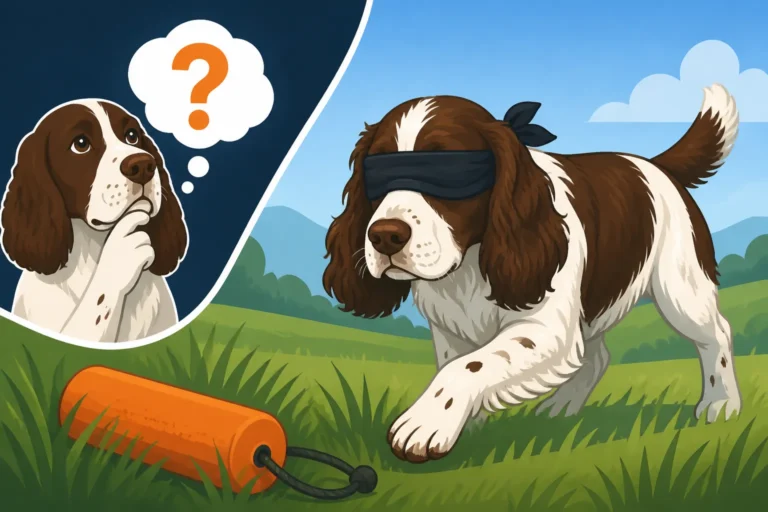
Let's talk numbers for a moment. While humans have around five to six million olfactory receptors in our noses, a Springer Spaniel boasts an astonishing 220 million or more. Think about that difference! It's like comparing a small neighborhood radio station to a global satellite network. Their brains are also hardwired to interpret these scents, dedicating a much larger proportion of their grey matter to processing smells than ours do. This isn't just a casual sniff; it's a deep dive into an intricate tapestry of information, telling them who has been there, when, and in what direction they went.
This incredible sensitivity means they can detect scent particles in concentrations that are mind-bogglingly small – often parts per trillion. To a Springer, a rabbit that crossed a path an hour ago leaves a vibrant, irresistible perfume. They're not just smelling the bunny itself; they're smelling its fear, its diet, its hormones, the crushed blades of grass it disturbed, the tiny microbes in its fur. It's an entire narrative unfolding under their nose, and it's a narrative they are compelled to investigate, given their history.
The Instinct to Follow a Scent Trail
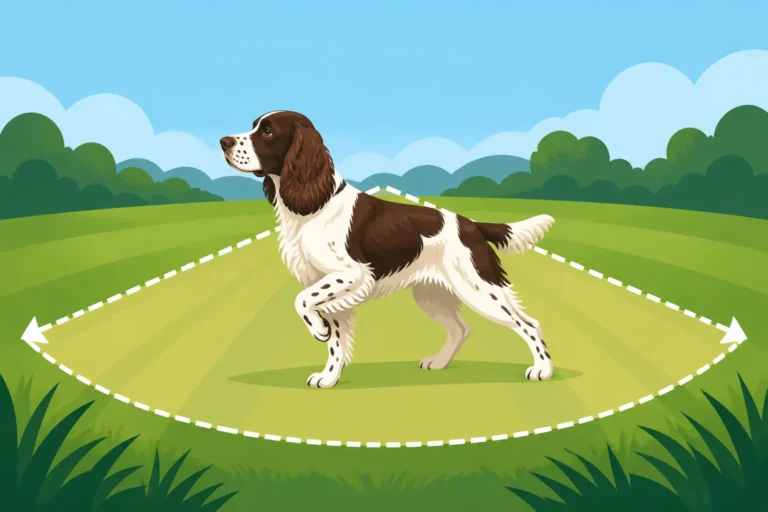
English Springer Spaniels were specifically developed to "spring" game, meaning they would dive into dense cover, roust out birds, and then retrieve them. This job requires an intense focus on scent and an innate drive to pursue it. It's deeply ingrained in their genetic makeup, a powerful echo from generations of working ancestors. When a Springer Spaniel locks onto a scent, they're not just casually interested; they are fulfilling their biological purpose. It's not a choice; it's a primal command.
This instinct means that when they hit a strong trail, their entire being shifts focus. Their ears might still be technically functioning, but the neural pathways that process auditory input are essentially deprioritized. It's similar to how a human might become so engrossed in reading a thrilling book that they don't hear someone calling their name from another room. Their mind is simply elsewhere, consumed by the rich sensory input that their nose is providing. This is why it often feels like their brain has completely switched from "listen to human" mode to "follow the fascinating smell" mode. This inherent drive also explains Why a Springer Spaniel Puts Its Nose to the Ground and Vanishes.
When the Nose Takes Over Completely
Picture this: you're walking your Springer Spaniel, Daisy, through a local park. Suddenly, her head snaps down, tail begins to wag furiously in a low, determined arc, and she's off, dragging you with her on the lead. You call her name, you tug, you might even try a sharper command, but it’s as if she’s become temporarily deaf. She’s following the ghost of a squirrel, a phantom scent trail that to her is as real as the pavement beneath her paws. Her body language tells the whole story: every muscle is engaged, her focus is absolute, and nothing else exists in that moment.
This phenomenon is particularly common with high-value scents like deer, rabbits, or even another dog in season. It's not a reflection of your training or your relationship; it's a powerful genetic predisposition asserting itself. In these moments, her primary sensory input is olfactory, and her brain is interpreting it as a direct instruction to follow. Trying to compete with that instinct requires immense effort and a very strong foundation of training, which we'll get into shortly.
Why "Nose Over Ears" Feels So True for Owners
For us, the human end of the leash, this can be incredibly frustrating and even frightening. We want our dogs to be safe, to respond to our calls, and to enjoy their freedom. When they seemingly ignore us in pursuit of a scent, it can feel like a personal affront, or at best, a sign that our training has failed. But understanding the "why" behind it can help us approach the situation with more empathy and effective strategies.
The Frustration of the Ignored Recall
Few things test a dog owner's patience like a failed recall, especially when your Springer has a scent-driven mission. You call, you whistle, you might even shout, and they just keep going, their tail flagging in the distance as they disappear into the undergrowth. Your heart pounds, visions of them running into traffic or getting lost flood your mind. You feel helpless, foolish, and perhaps a little bit angry. It’s a common scenario that leads many Springer owners to question their entire training approach, or even their dog’s affection for them. The sheer panic that can set in when your dog becomes a tiny speck on the horizon, driven by an invisible pull, is something many of us know all too well.
It's not just the fear for their safety; it's the feeling of disconnect. We work so hard to build a bond, to teach them, to be their trusted leader, and in that moment, it feels like all of it simply evaporates. They become a wild creature, driven by an instinct that we can't see, hear, or understand in the same way. This is a crucial point: it's not disrespect or a lack of love. It's a pure, unadulterated instinct taking over.
Understanding the Internal Conflict
It’s important to remember that for a Springer Spaniel, this isn't a conscious decision to disobey. They are experiencing an intense internal conflict. One part of their brain might register your voice – a faint, distant signal – while another, much louder and more compelling part, is screaming "SCENT! FOLLOW! HUNT!" Their default programming, honed over centuries, is to follow that scent. It's their instinctual "job." Asking them to ignore a powerful scent is like asking a human to ignore a blaring fire alarm – it goes against their very nature to prioritize something else.
Think of it as their brain having a supercomputer dedicated to scent processing, and a small, but functional, tablet for everything else. When the supercomputer fires up, the tablet essentially gets put on standby. Their ancestors were rewarded for finding and springing game, not for a perfect recall when a pheasant scent filled their nostrils. So, while we want them to listen, their internal wiring is telling them something entirely different, and often, far more urgent in their perception.
The Challenge of High-Distraction Environments
You might find your Springer Spaniel has a perfect recall in the living room, or even in a quiet, fenced park. But take them to a dense woodland with deer trails, a marshy area frequented by waterfowl, or a bustling urban park with a myriad of interesting human and dog smells, and suddenly, your meticulously trained "come" command evaporates into thin air. These environments are like a sensory overload for their powerful noses. Every rustle of leaves, every patch of damp earth, every distant breeze carries a symphony of smells that their brain instantly translates into a treasure map.
It's not just the presence of scent, but the intensity and variety of it that makes these places so challenging. A single rabbit trail is one thing; a cross-section of deer, fox, squirrel, and countless other canine scents layered over each other is another. The richer the scent landscape, the harder it is for your Springer to focus on anything else. This is why How Far a Springer Spaniel Will Go on a Scent can often be much further than you'd ever anticipate, especially in a new and exciting environment. Recognizing this environmental factor is key to managing expectations and adapting your training.
Training Strategies to Bridge the Gap Between Nose and Ears
So, what's a dedicated Springer Spaniel owner to do when facing such a formidable instinct? The good news is that while you can't eliminate their natural drive, you absolutely can teach them to prioritize your voice, especially when it comes to critical commands like recall. It requires patience, consistency, and a deep understanding of their motivations.
Building an Ironclad Recall (Before It's Too Late)
An "ironclad" or "bomb-proof" recall is not just a command; it's a life insurance policy for your Springer. It means your dog will return to you reliably, even when faced with significant distractions. This isn't built overnight, and it certainly isn't built in a high-distraction environment first.
- Start in a Low-Distraction Zone: Begin in a quiet, fenced yard or even inside your home. Call your dog with a happy, excited tone, using a consistent command (e.g., "Daisy, come!"). When they come, throw a party! High-value treats (like small pieces of chicken or cheese), enthusiastic praise, and a quick game of tug are all excellent rewards. The key is to make returning to you the most wonderful thing in their world. You want them to think, "Oh wow, my human is amazing when I come to them!"
- Increase Distance and Distraction Gradually: Once your recall is perfect indoors, move to a fenced area with minimal distractions. Use a long line (a 30-foot or 50-foot lead) for safety. Practice, practice, practice. Only when they are consistently responding there, slowly introduce more distractions – a friend walking by, another dog in the distance (on leash!), or a toy. Never push too quickly, as failure in training can set you back significantly.
- Vary Rewards: Don't just use treats. Sometimes it's a favourite toy, sometimes a belly rub, sometimes a quick game of chase. Keep them guessing and excited about what coming to you might bring.
- Practice Emergency Recall: This is a distinct, high-pitched, excited command or a specific whistle blast (many Springer owners use a whistle, which cuts through distractions better than a human voice). This command should only be used for true emergencies and should always be followed by the absolute best reward they can imagine. This ensures it retains its power. You can learn more about this in Whether a Springer Spaniel's Recall Can Be Trusted.
Harnessing the Power of Scent in Training
Instead of fighting their nose, sometimes you can work with it! Integrating scent work into their training can be a fantastic way to satisfy their natural instincts while reinforcing listening skills. This isn't about letting them bolt after deer, but about channeling their drive constructively.
- Scent Games: Hide treats around the house or yard and use a "find it" command. This engages their nose in a structured way. You can make it more challenging by hiding higher-value treats or using a specialized scent work kit.
- Tracking as a Reward: If your Springer loves to follow a trail, create controlled tracking exercises. Lay a simple scent trail yourself (using a strong-smelling treat or a favorite toy) and encourage them to follow it, rewarding them when they successfully find the "prize." This teaches them to follow your designated scent trail, not just any random one.
- Hunting for Toys/Dummies: For working line Springers, this can be particularly effective. Instead of random sniffing, teach them to "hunt dead" or search for a specific retrieving dummy that you've hidden. This channels their natural searching drive into a directed, handler-controlled activity. Programs like those offered by BAXTER & Bella often incorporate ways to engage a dog's natural instincts into positive training frameworks, which can be invaluable for high-drive breeds.
| Training Tool/Strategy | Benefit | Drawback | Best Use |
|---|---|---|---|
| Long Line (30-50ft) | Provides safety and control during recall training in open spaces. Allows freedom with security. | Can get tangled, requires careful handling to prevent injury. Not suitable for dense brush. | Early recall practice, confidence building in new environments. |
| High-Value Treats | Extremely motivating for scent-driven dogs, makes returning to you highly rewarding. | Can lead to dogs only performing for treats; needs to be faded or varied. Not ideal for long-term diet. | Critical for initial recall training and emergency recalls. |
| Whistle Commands | Sound carries further than voice, cuts through distractions, less emotional than shouting. | Requires teaching specific commands (e.g., pip-pip for recall, long blast for sit/stop). | Off-leash work in fields, woods, or noisy environments. |
| Scent Games/Tracking | Channels natural drive, mentally stimulating, builds focus on handler-directed tasks. | Requires owner creativity and setup. Not a direct recall fix. | Enrichment, mental exercise, building partnership. |
| GPS Collar | Pinpoints location if dog bolts, offers peace of mind. | Does not prevent bolting, can be an added expense. Requires battery charging. | For dogs with a history of bolting, or in very large, open, unfenced areas. (Many brands available on Amazon). |
Management Tools and Techniques
Sometimes, despite the best training, a Springer's nose will still try to lead them astray. In these cases, management is key to their safety and your peace of mind.
- The Mighty Long Line: We mentioned it in training, but it's also a fantastic management tool. A 30 to 50-foot long line allows your Springer to explore a much wider area, giving them the illusion of off-leash freedom, while still keeping them safely tethered to you. This is especially useful in unfenced areas where you're not confident in their recall, or in new places where novel scents might be particularly enticing. You can find robust long lines suitable for strong Springers easily online through retailers like Amazon.
- GPS Collars: For those moments when you absolutely must have your Springer off-leash in vast, open areas, a GPS collar can be a lifesaver. These devices allow you to track your dog's location in real-time via your phone, offering incredible peace of mind if they do decide to follow a hot trail far out of sight. They don't replace training, but they add a crucial layer of safety.
- Designated "Nose Time": Schedule specific times and places where your Springer can indulge their olfactory senses without strict recall expectations. This might be a sniffy walk on a long line in a safe area, or a controlled search game in your yard. Giving them an outlet for this powerful instinct can actually make them more attentive during other, more structured walks. This dedicated time can help manage their general excitement for new scents.
- Environmental Awareness: Always be scanning your environment. If you see a deer trail, a fresh pile of scat, or anything that screams "high-value scent" to a dog, be proactive. Shorten the leash, offer a high-value treat to redirect their attention, or change direction before they even catch the scent. Prevention is always better than trying to halt a scent-driven rocket. It's about being one step ahead of that powerful nose. Whether a Springer Spaniel Should Wear a GPS Collar is a serious consideration for many owners.
Ultimately, while a Springer Spaniel's nose is an incredibly powerful force that can, at times, seem to override everything else, it doesn't mean you're doomed to a lifetime of chasing them through the woods. With consistent, positive reinforcement training, an understanding of their deep-seated instincts, and smart management techniques, you can foster a Springer Spaniel who is both a joyful, scent-driven companion and a safe, responsive member of your family. It's a journey of balancing instinct with partnership, and it's one of the most rewarding aspects of living with these amazing dogs.
Disclaimer
This article is for general informational purposes only and does not constitute professional advice. Laws, prices and regulations vary by location and change over time. Consult a qualified professional for guidance on your specific situation.