Whether a Springer Spaniel Should Sit to Flush
One of the most foundational and often debated aspects of gundog training for an English Springer Spaniel revolves around control during the flush. Many new owners, even those not planning to hunt, wrestle with how much restraint is necessary when their enthusiastic spaniel "springs" a bird or even just a squirrel. This guide dives deep into the concept of a Springer Spaniel sitting to flush, exploring its benefits, challenges, and how to approach this critical training component for both working and companion dogs.
The Cornerstone of Control: What "Steadiness" Truly Means
Before we zero in on the specific action of sitting, it’s vital to grasp the overarching concept of "steadiness" in gundog training. Steadiness isn't just about one command; it's a profound state of mind and training that defines a reliable hunting dog and, frankly, a well-mannered pet. For a Springer Spaniel, a breed born to find and flush game, developing this control is perhaps even more critical due to their intense prey drive and boundless energy.
Beyond Just Sitting: The Concept of Steadiness
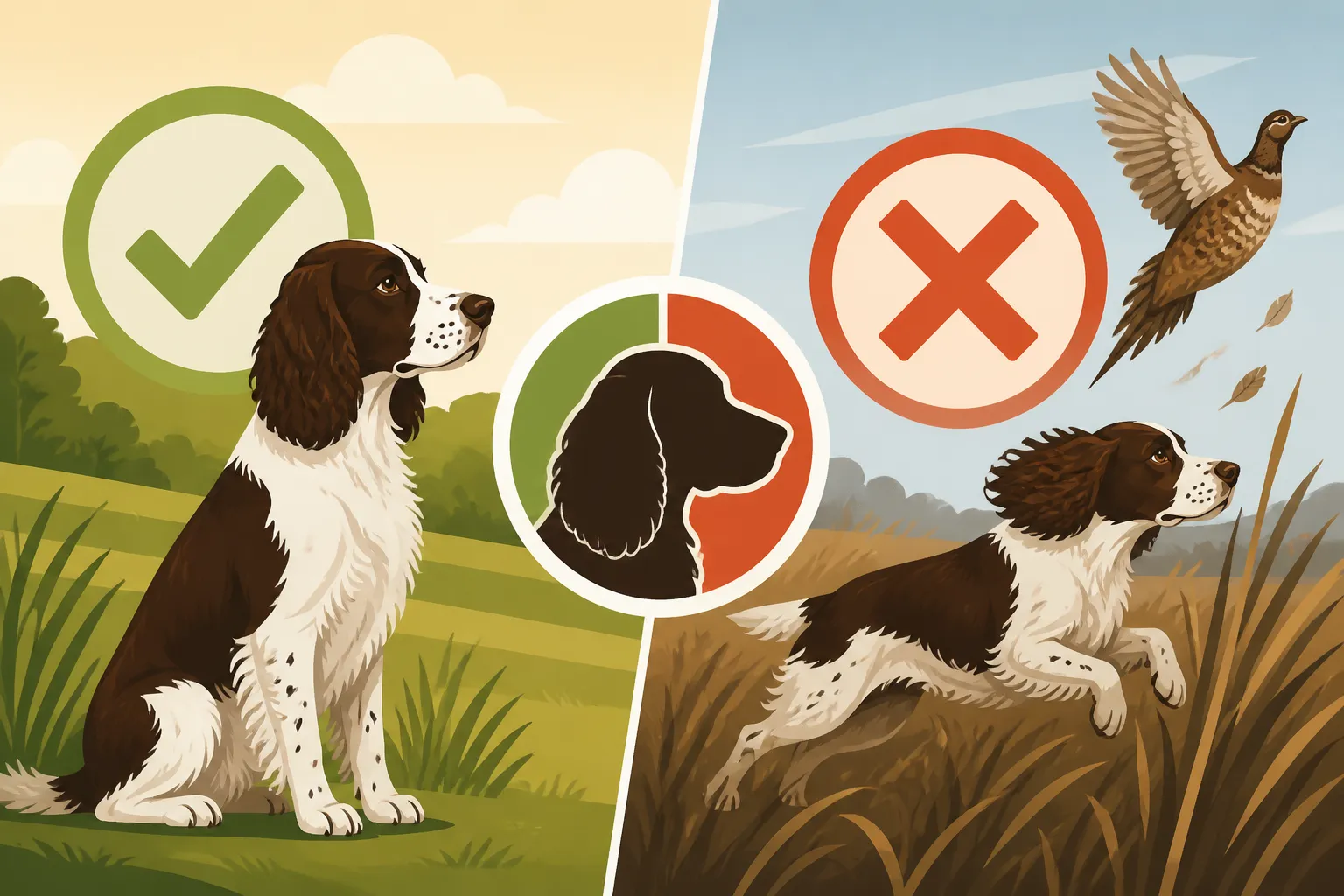
Steadiness means a dog remains calm, composed, and in position, even when thrilling things are happening around them. Imagine a game bird exploding from cover right under your dog’s nose, or a shot ringing out, or even a retrieved bird dropping nearby. A steady dog won't break, chase, or retrieve without being given an explicit command. This isn't just about suppressing instinct; it's about channeling it under the handler's direction. For a Springer, this often means waiting patiently while the game is flushed, the shot is fired, and the bird falls, before being sent to retrieve. It’s a huge ask for a dog hardwired for action, which is why it requires consistent and thoughtful training.
Why Steadiness Is Paramount for Gundogs
The reasons for paramount steadiness are multifold, extending far beyond simply achieving a "perfect" hunt. Firstly, it's about safety. An un-steady dog chasing after a flushed bird can run into the line of fire, endangering itself and others. It can also spook other game, ruin another hunter's shot, or even run out into traffic if hunting near roads. Secondly, it’s about efficiency and etiquette. In a hunting scenario, multiple dogs or hunters might be working, and a dog breaking early can disrupt the entire operation. It's about teamwork and respecting the flow of the hunt. Finally, it reinforces the handler's authority and the dog's focus. A dog that consistently waits for direction demonstrates a deeper level of training and partnership, which translates into better control in all aspects of life. This level of control is something that helps a gundog remain a joy to hunt with, rather than a liability.
The Springer Spaniel's Unique Role and Steadiness
Springer Spaniels are renowned for their enthusiastic flushing capabilities. They are called "springers" because they were bred to "spring" game from heavy cover, sending birds into the air for the waiting gunner. This means they are inherently active, driven, and have an incredible nose for finding hidden game. Their job isn't to point or range far ahead like some other breeds; it's to work close, quartering efficiently within gun range. Given this intense drive to find and flush, asking a Springer to then remain still when its instinct screams "chase!" is a profound challenge. Their unique blend of high energy and close-working style makes steadiness training absolutely essential. Without it, you simply have a dog chasing birds, not a hunting partner. This unique intensity is also why it's so important to understand A Field Bred Springer Spaniel Is a Different Dog to Live With compared to a show-bred Springer.
To Sit or Not to Sit: Examining the "Sit to Flush" Mandate
Now, let's address the specific question: should a Springer Spaniel sit to flush? The answer isn't always a simple yes or no, as it often depends on training philosophy, the specific hunting environment, and the dog's individual temperament. However, teaching a solid "sit" as part of steadiness training is generally considered a highly effective method for achieving reliable control.
The Case For Explicitly Sitting to Flush
Many trainers and handlers advocate for teaching a Springer Spaniel to explicitly sit when game flushes. This command provides a clear, undeniable action that signifies control.
- Clear Command and Action: When a bird bursts from the cover, the command "sit" provides a definitive, unambiguous action for the dog. There's no room for interpretation about whether the dog should just "freeze" or "stand still." A sit is a sit. This clarity greatly aids both the dog's understanding and the handler's ability to enforce the command under high-stress conditions.
- Reinforcement of Control: The act of sitting, especially in an exciting situation like a flush, is a strong reinforcement of the handler's control. It tells the dog, "Even though your instincts are screaming at you to chase, you must obey me first." This deepens the dog's respect for commands and improves overall obedience.
- Safety Net: A dog that is reliably sitting is less likely to accidentally break and chase, reducing the risk of them running into the line of fire or disturbing other game. It creates a physical barrier to their natural inclination to pursue. Think of it as an extra layer of safety in a dynamic hunting environment. This control also helps prevent your dog from suddenly bolting after Why a Springer Spaniel Puts Its Nose to the Ground and Vanishes after a compelling scent.
- Easier to Judge: From a handler's perspective, it's much easier to judge if a dog is truly steady when it's in a distinct "sit" position compared to just a "freeze" or "stand still." Any movement from the sit is a clear sign of a break, allowing for immediate correction and retraining.
Arguments Against a Rigid "Sit" and Alternative Approaches
While the benefits of a "sit to flush" are clear, some trainers argue that a rigid "sit" isn't always necessary or even ideal. Their perspective often centers on maintaining natural drive and efficiency.
- Maintaining Flow and Drive: Some believe that forcing a dog into a "sit" position every single time can interrupt their natural hunting rhythm and enthusiasm. A Springer Spaniel's job is to work cover actively and locate game. Constantly stopping them with a sit might, for some dogs, dampen their drive or make them hesitant to commit fully to the cover.
- "Stand Steady" as an Alternative: An alternative approach is to train the dog to "stand steady" to flush, shot, and fall. This means the dog simply freezes in position, remaining motionless until given the retrieve command. The argument here is that a dog can still be perfectly steady without having to drop into a sit, allowing for a more fluid transition once the retrieve command is given. This is particularly relevant if the dog needs to quickly pivot for a blind retrieve after marking another fall.
- Context of the Hunt: In some hunting scenarios, particularly fast-paced rough shooting where multiple birds might be flushed in quick succession, a hard sit might feel cumbersome to some handlers. They prefer a dog that can quickly assess and be ready for the next action without an enforced sitting pause. However, even in these situations, some form of immediate steadiness is non-negotiable.
Understanding the Practicalities in the Field
Regardless of whether you choose a "sit" or a "stand steady" command, the underlying principle is absolute control. In real-world hunting scenarios, especially when working heavy cover, a Springer Spaniel might not always be perfectly visible to the handler. This means the dog needs to be so ingrained in its steadiness training that it will respond correctly even without direct visual cues. This level of intrinsic control is what prevents dangerous situations and ensures a successful hunt. If a dog is always expected to sit, it creates a predictable expectation for both dog and handler. The reliability of this expectation is far more valuable than the subtle differences between a sit and a stand, especially when adrenaline is high. It also highlights the importance of consistent whistle work; Whistle Work: The Language a Springer Spaniel Learns is often more reliable over distance than voice commands.
Practical Training for Steadiness, With or Without the Sit
Achieving steadiness, especially the "sit to flush," requires a patient, methodical, and consistent training approach. You can't rush it, and you can't skip steps. It's a progression from basic obedience to advanced field work.
Building a Strong Foundation: Obedience First
Before you even think about birds or gunshots, your Springer Spaniel needs an ironclad foundation of basic obedience. This means a rock-solid "sit," "stay," "here" (recall), and "heel." These commands aren't just parlor tricks; they are the building blocks of control. Start in low-distraction environments and gradually increase the difficulty. Use positive reinforcement, making training fun and rewarding. Treats, praise, and favorite toys can be powerful motivators for a smart and eager-to-please Springer. If you're a new owner or struggling with the basics, online resources like BAXTER & Bella offer comprehensive puppy and dog training programs that can guide you through these essential foundational steps. They break down commands into easy-to-follow lessons, which can be invaluable when you're trying to build that strong bond and understanding with your pup. A dog that struggles with a simple "sit-stay" in the living room has no hope of performing it with a pheasant flushing.
Introducing the Flush: Controlled Exposure
Once basic obedience is flawless, you can start introducing the concept of a flush. This must be done in a highly controlled environment.
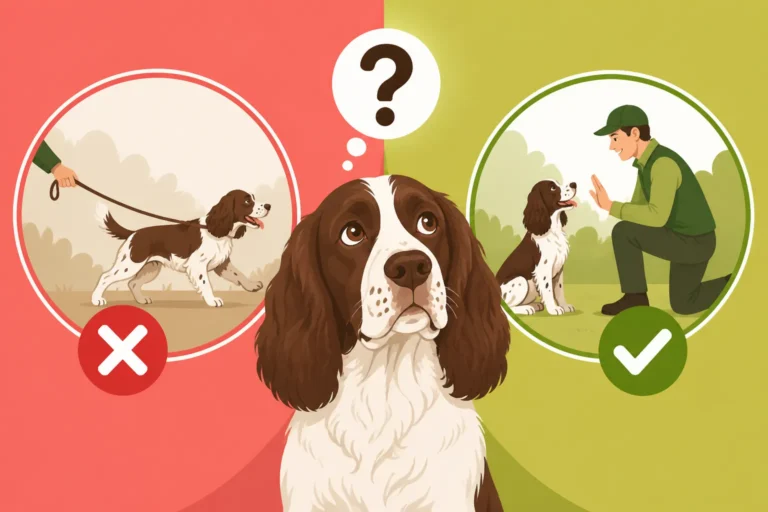
- Introduce the Dummy: Start with a retrieving dummy, not a live bird. Throw the dummy and give your "sit" or "stay" command before you throw it, keeping your dog on a long line. The long line is your safety net, allowing you to gently correct any attempts to break.
- Simulated Flush: Next, simulate a "flush" with the dummy. Have an assistant hide a dummy in light cover. Walk your dog towards it, and as the dummy is "flushed" (e.g., thrown or popped up by the assistant), immediately give your "sit" command. Reinforce heavily when the dog complies.
- Feathers and Scent: Gradually introduce elements that mimic a real flush. Use dummies with real feathers or game scent. Progress to using frozen birds. The goal is to gradually desensitize the dog to the excitement of the flush while reinforcing the sit/stay command. Remember, a Springer Spaniel's nose is incredibly powerful; it overrides its ears (Whether a Springer Spaniel's Nose Overrides Its Ears) during scent work, so you need to build control around that natural drive.
Proofing and Reinforcement: Making it Reliable
Proofing means practicing in increasingly challenging environments, ensuring the command holds true under all conditions.
- Adding Distractions: Practice in areas with more distractions – other dogs, people, sounds. This teaches your dog that the "sit" command is absolute, regardless of what else is happening.
- Introducing the Gun: The sound of a gun can be a significant hurdle. Introduce it gradually and positively, starting with very distant, low-caliber shots while your dog is calm and focused on something enjoyable (like eating a meal or playing a favorite game). Never introduce gunfire in a negative or surprising way, as this can lead to Whether a Springer Spaniel Is Gun Shy. Many handlers use blank pistols or .22 caliber starters initially, moving to larger gauges as the dog accepts the sound.
- Live Birds (Controlled): Only when your dog is completely reliable with dummies and gunshots should you introduce live birds in a controlled setup. This usually involves pen-raised birds that are predictable. Continue using the long line for safety.
- Consistency is Key: Every single time your dog flushes something, whether it's a bird, a rabbit, or even a leaf blown by the wind, the expectation for steadiness (and your chosen command, like "sit") must be the same. Inconsistency will only confuse your dog. You can find excellent long lines, training dummies, and even blank pistols on Amazon, which can be incredibly helpful for building up your training arsenal as you progress. This ensures you have the right tools for each stage of development.
Adapting Steadiness for Different Springer Spaniel Lives
The ideal level of "sit to flush" might vary depending on whether your Springer Spaniel is primarily a working gundog or a beloved family pet. However, the fundamental principles of control and safety remain constant.
Field Springer Spaniels: Precision and Performance
For a Springer Spaniel destined for the field, whether for hunting or field trials, precision in the "sit to flush" or "stand steady" command is absolutely non-negotiable. These dogs are working partners, and their ability to perform their job safely and effectively hinges on their handler's control.
- High Stakes: In field trials, a dog breaking early results in immediate disqualification. In hunting, it can mean a missed bird, a dangerous situation, or a frustrated hunting partner. The stakes are high, requiring rigorous training and unwavering consistency.
- Repetitive Proofing: Field dogs need endless repetitions in various covers, weather conditions, and with different types of game to truly proof their steadiness. They need to understand that the command applies in every scenario, from dense brambles to open fields. This often means working with a dedicated gundog trainer who has access to training grounds and birds.
- Building Drive AND Control: The challenge with field Springers is to build immense prey drive and enthusiasm for finding game, while simultaneously instilling the discipline to halt that drive instantly on command. It's a delicate balance that separates a truly great gundog from an uncontrolled chaser. The best field Springers are often those who have been consistently trained from puppyhood, understanding The Age a Springer Spaniel Can Start Gundog Training and having their natural instincts shaped.
Pet Springer Spaniels: Safety and Manners in Everyday Settings
Even if your Springer Spaniel will never see a shotgun or a pheasan, the principles behind "sit to flush" are still incredibly valuable for a well-behaved pet.
- Managing Prey Drive: Springer Spaniels, even those from show lines, retain a strong prey drive. They will chase squirrels, rabbits, deer, and even neighborhood cats with gusto. Training them to "sit" or "stay" when they see something exciting can be a lifesaver, preventing them from running into traffic or bothering wildlife.
- "Sit to Anything Exciting": For a pet, you can adapt the "sit to flush" concept to "sit to anything exciting." This could be the doorbell ringing, a child running past, or another dog approaching. It teaches them impulse control and that exciting events don't automatically mean they get to run wild. This patience is crucial for A Springer Spaniel in a House With Children or other pets.
- Reliable Recall: A dog that understands and obeys a "sit" command, even when highly stimulated, will also have a far more reliable recall. They understand that pausing and listening to you is paramount. This level of control means you can have more freedom with your dog, enjoying off-leash walks in safe areas without constant worry.
Recognizing Individual Temperaments and Adjusting Training
Every Springer Spaniel is an individual. Some are naturally more biddable and quick to learn, while others are more stubborn or high-strung.
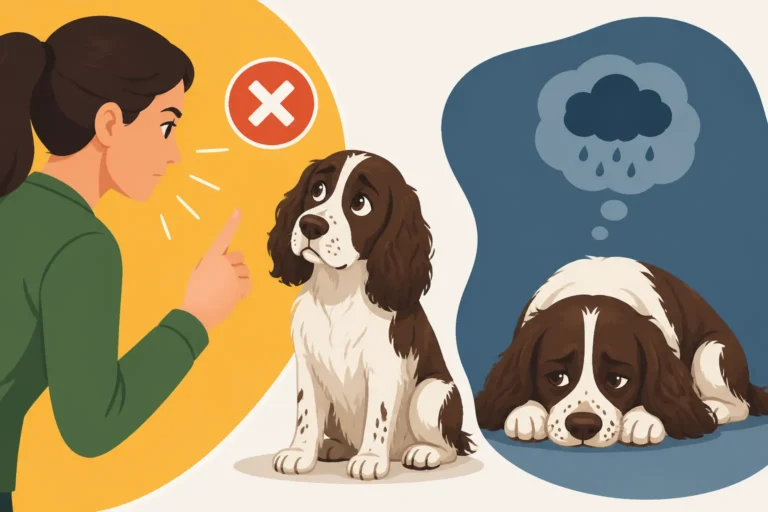
- Soft vs. Hard Dogs: Some Springers are "soft" and respond poorly to harsh corrections, shutting down or becoming fearful. Others are "harder" and might test boundaries more consistently, requiring a firmer, but still fair, hand. Understanding The Soft Springer Spaniel That Shuts Down If You Shout is crucial for tailoring your approach.
- Patience is a Virtue: Regardless of temperament, patience is always key. If you're struggling, step back, simplify the training, and ensure you're setting your dog up for success. Don't be afraid to seek guidance from a professional gundog trainer or a certified positive reinforcement trainer. They can help you identify your dog's learning style and adjust your methods accordingly.
- Consistency Across the Household: If multiple people are involved in the dog's care and training, everyone must be consistent with commands and expectations. A dog that is allowed to break and chase by one family member but expected to sit by another will become confused and unreliable.
Ultimately, whether your Springer Spaniel is sitting rigidly or standing steadfast, the core principle is the same: the dog must control its impulse to chase and wait for your command. This control is the hallmark of a well-trained Springer Spaniel, making them a safer companion and a more effective partner in any endeavor.
| Training Component | Description | Why It Matters for Steadiness |
|---|---|---|
| Basic Obedience | Solid "Sit," "Stay," "Here" (Recall), "Heel" commands. | Foundation for all control, teaches dog to listen under distraction. |
| Leash/Long Line Work | Practicing commands while physically connected to the handler. | Provides immediate control and correction, builds reliability. |
| Dummy Work | Retrieving practice with objects that mimic game (dummies, feathered items). | Builds retrieve drive while practicing patience and holding position. |
| Scent Introduction | Exposing dog to game scent on dummies or in controlled environments. | Teaches dog to focus on scent while maintaining steadiness. |
| Simulated Flushes | Having an assistant "flush" a dummy or bird for the dog. | Introduces the exciting visual stimulus in a controlled manner. |
| Gun Introduction | Gradual exposure to gunshots from a distance, increasing proximity. | Prevents gun shyness and teaches dog to remain calm around loud noises. |
| Live Bird Work | Controlled training with live, pen-raised birds. | The ultimate test of steadiness in a realistic setting. |
| Proofing | Practicing commands in various environments with increasing distractions. | Ensures reliability in any situation, solidifies training. |
Disclaimer
This article is for general informational purposes only and does not constitute professional advice. Laws, prices and regulations vary by location and change over time. Consult a qualified professional for guidance on your specific situation.