What Quartering Means in a Springer Spaniel
If you've ever watched a Springer Spaniel work in a field, or even just seen your own dog enthusiastically covering ground in a park, you might have noticed a distinctive, almost methodical back-and-forth motion. This isn't just random running; it's a specific, highly efficient hunting behavior called "quartering." This comprehensive guide will help you understand what quartering means, why your Springer does it, and how you can work with this incredible natural instinct, whether you're a hunter or simply a dedicated companion owner.
What Quartering Actually Is
Quartering is a term deeply rooted in gundog training, particularly for flushing breeds like the English Springer Spaniel. It describes the pattern a dog makes when methodically searching for game, typically in a zig-zag or windshield-wiper fashion, covering the ground in front of the handler. It’s a search pattern, pure and simple, designed to find birds or other quarry effectively and efficiently within a given area.
The Instinctive Pattern
Think of it like this: if you were trying to find something small dropped in a large, grassy field, you wouldn't just wander aimlessly. You'd likely walk back and forth, systematically covering every inch. That's exactly what quartering is for a Springer Spaniel, but with the added dimension of scent. Their powerful noses guide them, but the pattern ensures they don't miss anything. This natural, rhythmic movement is hardwired into their DNA, a testament to centuries of selective breeding for a specific purpose. It's truly fascinating to watch a dog fall into that rhythm, nose to the ground, tail wagging, completely absorbed in the task.
Why Springers Quarter Naturally
English Springer Spaniels were bred specifically to "spring" (flush) game from cover for hunters. To do this effectively, they couldn't just run wild. They needed to cover ground thoroughly, but also stay within a reasonable distance of the hunter. Quartering is the perfect solution. It allows them to use their superior sense of smell to sweep an area, moving from side to side, constantly adjusting to wind direction and scent trails, all while maintaining a working relationship with their handler. This inherent drive is why even pet Springers, without any formal training, often exhibit rudimentary quartering patterns in open spaces. They're just following their instincts, doing what they were born to do. If you've ever walked your Springer in a new field, you've probably seen them do a less refined version of this, systematically checking every interesting patch of grass.
Understanding the "Why" Behind Quartering
Beyond the simple "what," understanding the reasons behind quartering helps us appreciate the Springer Spaniel's unique talents and how to best channel their energy. It's not just about covering ground; it's about maximizing their incredible sensory abilities and working in harmony with a human partner.
Searching for Scent
A Springer Spaniel's world is dominated by scent. When they quarter, their head is usually down, nose actively working the ground and the air currents, constantly gathering information. They are piecing together a complex tapestry of smells, identifying where game might be hiding, where it has moved, and even how recently it was there. This focused scent work is incredibly mentally stimulating for them. A dog that is allowed to engage its nose through quartering isn't just getting physical exercise; it's getting a deep mental workout, which is just as vital for a happy, well-adjusted Springer. This is also why Why a Springer Spaniel Puts Its Nose to the Ground and Vanishes is such a common observation, as their drive to follow a scent can be all-consuming.
Efficiency in the Field
Imagine a hunter walking through a field of tall grass or dense brambles. They need their dog to find game hiding within that cover. If the dog just ran straight ahead, it would miss everything to the sides. If it ran too wide, it would be out of range for the shot. Quartering ensures maximum ground coverage within an optimal range. The dog works back and forth, always moving forward but sweeping wide enough to cover the terrain effectively. It's a dance between the dog and handler, often communicated through subtle body language, whistles, and hand signals. This makes them incredibly efficient hunting partners, able to clear a field much more thoroughly than if they were just allowed to roam haphazardly. This efficiency is also why Teaching a Springer Spaniel to Hunt Within Gun Range is so important for working dogs.
Recognizing Quartering in Your Springer Spaniel
Even if your Springer Spaniel isn't destined for the field, recognizing the signs of natural quartering can be really interesting and give you insight into their breed instincts. It helps you understand their needs for mental and physical engagement.
The Classic Zig-Zag
The most obvious sign of quartering is the zig-zag pattern. Your dog will run forward a short distance, then turn and run across the line of your travel, almost perpendicular to you, sweeping one side. Then, they'll turn again, come back across your path, and sweep the other side, moving slightly ahead with each "sweep." The width of this sweep, or "cast," can vary greatly depending on the dog, the terrain, and what they're looking for. A keen young Springer might cover a wide area with gusto, while an older, more experienced dog might be more contained. Observing How Wide a Springer Spaniel Should Cast can tell you a lot about your dog's natural hunting style.
Head Down, Tail Up
When a Springer is actively quartering, their posture often shifts. Their head will be down, nose to the ground or just above it, constantly sampling scents. Their body language will be focused, almost intense, as they concentrate on the task at hand. Interestingly, their tail often remains up, wagging furiously from side to side. This isn't necessarily a sign of finding game yet, but rather an indicator of intense focus and enjoyment in the search. It's a happy, working wag, signaling that they are fully engaged in their "job." If you see this combination of focused nose work and enthusiastic tail wagging, you're witnessing the essence of your Springer Spaniel's working heritage.
The Benefits of Encouraging Quartering
You might be thinking, "My Springer is a pet, not a gundog. Why should I care about quartering?" The truth is, even for companion Springers, encouraging and channeling this natural instinct offers immense benefits for their well-being and your relationship with them.
Mental and Physical Stimulation
A bored Springer is a destructive Springer. Their intelligence and boundless energy mean they need more than just a walk around the block. Quartering, even in a simulated non-hunting environment, provides incredible mental and physical stimulation. It allows them to use their brains to solve scent puzzles and their bodies to cover ground. Instead of simply running in circles or fetching a ball endlessly (though they love that too!), quartering engages their ancestral programming. Think of it as a canine treasure hunt. This engagement can significantly reduce behavioral issues rooted in boredom or pent-up energy, making for a much calmer and happier household. Many owners find that incorporating activities like Scent Games Tire a Springer Spaniel can transform their dog's demeanor.
Building a Stronger Bond
When you work with your Springer's natural instincts, you're speaking their language. Guiding them through a quartering pattern, even with simple commands, creates a deep connection. They learn to look to you for direction, to trust your judgment, and to understand that you are a partner in their most fulfilling activity. This collaborative effort builds mutual respect and understanding. It's not just about them obeying commands; it's about a shared experience, a dance where you are leading. This deep bond fostered through working together can be incredibly rewarding, far beyond what simple obedience training alone can achieve. This partnership is especially crucial for dogs like field-bred Springers, where A Field Bred Springer Spaniel Is a Different Dog to Live With due to their intense drive.
Teaching Your Springer Spaniel to Quarter
Whether you're looking to refine your Springer's natural instincts for the field or simply want to provide them with a rewarding mental and physical outlet, teaching them to quarter can be a fun and engaging process. It usually starts with very basic concepts and gradually builds up.
Starting with Basic Commands
You don't just throw a dog into a field and expect perfect quartering. It begins with foundational obedience. A solid "here" (recall), "sit," and "stay" are paramount. Equally important is teaching them to turn on command – a simple "hup" or "over" paired with a hand signal. You can practice this in an open area with no distractions. Start by walking in a straight line, then encourage your dog to run out to one side, using your voice and body language, and then to turn and come back across your path. Treats are your friend here! For more structured guidance, resources like BAXTER & Bella offer online puppy and dog training programs that lay this crucial groundwork for more advanced skills. They emphasize positive reinforcement, which is key for a sensitive breed like the Springer.
Using Whistle and Hand Signals
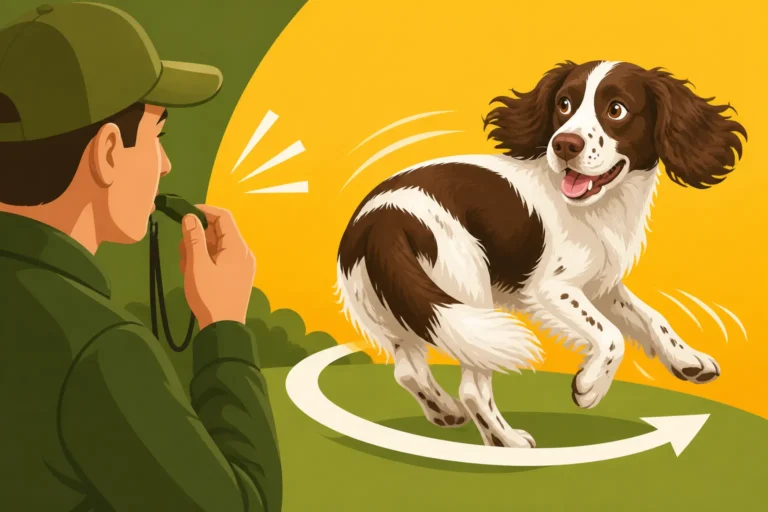
The whistle is an invaluable tool for gundog work, and quartering is no exception. A single pip on the whistle can mean "turn" or "change direction." Two pips might mean "come in," and a long, sustained blast usually means "stop" or "hup." Hand signals often accompany these whistle commands, providing visual cues. For example, a sweeping motion with your arm can indicate the direction you want them to turn. Consistency is critical. Always use the same signals for the same commands. This creates a clear language that your Springer will quickly learn to understand and anticipate. Understanding Whistle Work: The Language a Springer Spaniel Learns is fundamental to controlling their quartering pattern.
Introducing Cover and Scent
Once your Springer understands the basic commands and the concept of working back and forth, you can gradually introduce them to different types of cover – tall grass, light brush, or even just patches of interesting weeds in a park. This is where their natural scenting abilities come into play. You can hide scented articles or even training dummies for them to find. The goal is for them to systematically search the cover, using their nose, within the quartering pattern you're guiding them to perform. Over time, as they gain experience, they'll learn to adjust their cast based on the density of the cover and the strength of the scent. For those serious about gundog work, working with a professional trainer can be immensely helpful in refining these skills. Many trainers also recommend specific books or DVDs, which you can often find on Amazon, to supplement in-person lessons.
Common Quartering Challenges and Solutions
Even with the best intentions and training, you might encounter some common challenges when working on quartering with your Springer Spaniel. It's important to remember that these are intelligent, independent-minded dogs with strong instincts, and sometimes those instincts need a little redirection.
Too Wide or Too Close
One frequent issue is a dog casting too wide or, conversely, staying too close. A dog that ranges too wide can quickly get out of control and miss scents within your desired hunting zone. This is often seen in high-drive field-bred Springers. On the other hand, a dog that stays too close isn't covering enough ground efficiently.
For a dog casting too wide:
- Increase Whistle and Hand Signal Use: Be very consistent with your "turn" signal. Blow the whistle and give the hand signal the moment they start to drift too far, before they're out of range.
- Change Direction Frequently: Don't let them establish a long, wide run. More frequent turns will keep them closer.
- Work into the Wind: Wind carries scent, and working into the wind encourages the dog to stay tighter to pick up scent.
- Use a Long Line (Initially): In a safe, open area, a long line can provide physical correction and guidance without being harsh.
For a dog casting too close: - Encourage Outward Movement: Use an excited voice, throw a toy or dummy a short distance out to the side to encourage them to extend their search.
- Move Yourself: If your dog is sticky to your side, try taking a few steps back as you give the "go out" command. This forces them to extend.
- Vary the Terrain: Sometimes dogs get too focused on your immediate vicinity. Introduce them to areas with more interesting cover to explore.
Remember, consistency is key. Every time your dog performs the desired behavior, even if it's just a small improvement, offer praise and a reward. Knowing How Wide a Springer Spaniel Should Cast for different situations helps guide your training.
Breaking Point and Self-Hunting
Another common challenge is a Springer that "breaks point" (rushes in on game before commanded) or "self-hunts" (takes off on its own, ignoring handler commands). A dog that breaks point can flush game out of gun range or even spook it entirely. A self-hunting dog is not a partner; it's just a dog running wild, which can be frustrating and even dangerous if they run into roads or other hazards. This ties into Why a Springer Spaniel Puts Its Nose to the Ground and Vanishes, where their drive to follow scent overrides everything else.
Here’s how to address these:
- Reinforce the "Stop" or "Hup" Command: This is perhaps the most critical command for a gundog. Practice it relentlessly in varied environments, ensuring your dog will stop instantly regardless of distractions. Use a long lead initially if needed to enforce it.
- "Steady to Flush": This means the dog remains steady when game is flushed, waiting for your command. This is an advanced skill. Start with non-exciting items, then progress to training birds. The goal is for them to associate flushing with waiting, not chasing.
- Recall, Recall, Recall: A rock-solid recall is your ultimate safety net. If your dog starts to self-hunt, you must be able to call them back. Practice recall frequently, making it the most rewarding thing your dog can do. Don't just call them when you're angry; call them for happy check-ins and treats.
- GPS Collar: For dogs prone to self-hunting or those exploring large, open areas, a GPS collar can provide peace of mind. While not a training tool in itself, it helps you locate a dog that has gone too far. You can find various models suitable for dogs on Amazon, offering different features like real-time tracking and virtual fences.
- Manage Expectations: Understand that a Springer Spaniel has a powerful prey drive. Training is about channeling that drive, not extinguishing it. Always be aware of your surroundings, and if you can't trust your dog's recall in a high-distraction environment, keep them on a long line or a leash.
Developing a well-quartering, steady Springer Spaniel takes time, patience, and consistency. But the rewards – a well-exercised, mentally stimulated dog and a strong, trusting partnership – are absolutely worth the effort.
| Quartering Characteristic | Desirable | Challenging |
|---|---|---|
| Pattern | Even zig-zag, systematic, covers ground thoroughly | Erratic, random, skips areas, runs in circles |
| Range | Stays within handler's effective working distance (e.g., gun range) | Too wide, out of sight, too close (sticky to handler) |
| Focus | Nose to ground, actively working scent, responsive to handler | Distracted, chasing butterflies, looking at handler impatiently |
| Pace | Energetic but controlled, sustainable for extended periods | Rushing, frantic, quickly tires out, overly slow |
| Responsiveness | Turns promptly on whistle/hand signal, checks in visually | Ignores commands, takes off on scent, relies on handler's physical presence |
| Initiative | Uses wind, naturally seeks out cover, confident in search | Hesitant, waits for explicit direction for every step, lacks confidence |
Disclaimer
This article is for general informational purposes only and does not constitute professional advice. Laws, prices and regulations vary by location and change over time. Consult a qualified professional for guidance on your specific situation.