Teaching a Springer Spaniel to Turn on a Whistle
It's a familiar scene for many Springer Spaniel owners: you're out for a walk, enjoying the fresh air, when suddenly your beloved dog catches a scent. Nose to the ground, they're off like a shot, seemingly deaf to your panicked calls. This powerful instinct can be both a joy and a huge source of frustration, even danger. Teaching your Springer Spaniel to turn on a whistle is not just a neat trick; it's a fundamental safety command that can literally bring your dog back from the brink when their nose takes over. This guide will walk you through building that reliable, instant response, giving you peace of mind and your Springer the freedom to explore safely.
Why a Whistle Turn is Essential for Your Springer's Safety and Freedom
Springer Spaniels are purpose-bred hunting dogs, designed to quarter a field, find game, and "spring" it into the air for the hunter. This means they are naturally inclined to work at a distance from their handler, following their nose with intense focus. While this drive is what makes them such magnificent working companions, it also presents a significant challenge in everyday life. A squirrel across the road, a deer scent in the woods, or even just an interesting patch of grass can quickly lead them far afield, often into harm's way. This is precisely why a strong, consistent recall, particularly one cued by a whistle, is absolutely non-negotiable.
The Power of the Whistle Over the Voice
Think about it: your voice changes with your emotions. When you're frustrated, scared, or angry, your voice tightens, and the tone shifts. Dogs are incredibly sensitive to these vocal cues, and a strained, anxious voice can actually make them less likely to come back, especially if they associate it with being in trouble. A whistle, however, always sounds the same. It's consistent, carries over greater distances, and cuts through environmental noise far more effectively than your voice ever could. Moreover, a whistle doesn't typically carry the emotional baggage that human words often do. For a Springer Spaniel, whose ears are so often ignored once their nose is engaged, the distinct, unwavering sound of a whistle can be the only thing that truly breaks their focus. This makes it an invaluable tool, especially when your Springer has decided Why a Springer Spaniel Puts Its Nose to the Ground and Vanishes.
Working Against Instinct: A Necessary Skill
You might wonder if you're fighting against your Springer's very nature by asking them to turn away from an enticing scent. And to a degree, you are. But good training isn't about suppressing instinct entirely; it's about channeling it and providing your dog with the tools to make the right choice, even when their instincts are screaming otherwise. A reliable whistle turn allows your Springer to engage their natural drive to explore and follow scent, knowing that you have a foolproof way to bring them back when needed. It fosters trust and a clear line of communication, which is especially important for a breed that thrives on partnership. Without this fundamental command, you might find yourself constantly on edge, having to keep your otherwise energetic dog on a leash, preventing them from truly enjoying their outings. It’s about giving them freedom within safe boundaries, knowing you can always call them back, even if they've gone How Far a Springer Spaniel Will Go on a Scent.
Building the Foundation: Making the Whistle Sound Irresistible
Before you can ask your Springer Spaniel to spin on a dime and return to you from a hundred yards away, you need to establish that the whistle sound itself is the most wonderful thing in their world. This isn't about corrections or harsh commands; it's about positive association and making the whistle a predictor of amazing things. Remember, Springers are often sensitive souls, and The Soft Springer Spaniel That Shuts Down If You Shout if handled too roughly.
The "Party Whistle" Association
Start indoors, or in a very low-distraction environment. You'll need a good quality dog whistle – many trainers prefer the ACME brand for its consistent tone. You can find these easily on platforms like Amazon. When your dog is close to you and paying attention, give a short, sharp blast on the whistle (a simple "pip" or a quick series of "pip-pip-pips" – consistency is key, so choose your signal and stick with it!). The instant you make the sound, reward your dog with the highest value treat they know. We're talking tiny bits of cooked chicken, cheese, or whatever sends them into a happy frenzy. Don't ask them to come to you yet; just reward them for hearing the sound.
Repeat this many times, several times a day, for short sessions (5-10 repetitions). The goal is for your Springer's head to snap up, eyes wide, looking for that treat the moment they hear the whistle. You want them to think, "Whistle = instant deliciousness!" This process is called classical conditioning, and it's the bedrock of a reliable whistle command. You are literally building an emotional response to the sound. Some owners find programs like those offered by BAXTER & Bella helpful for structuring these early foundational steps, as they often break down conditioning into clear, manageable lessons.
Adding Movement and Distance
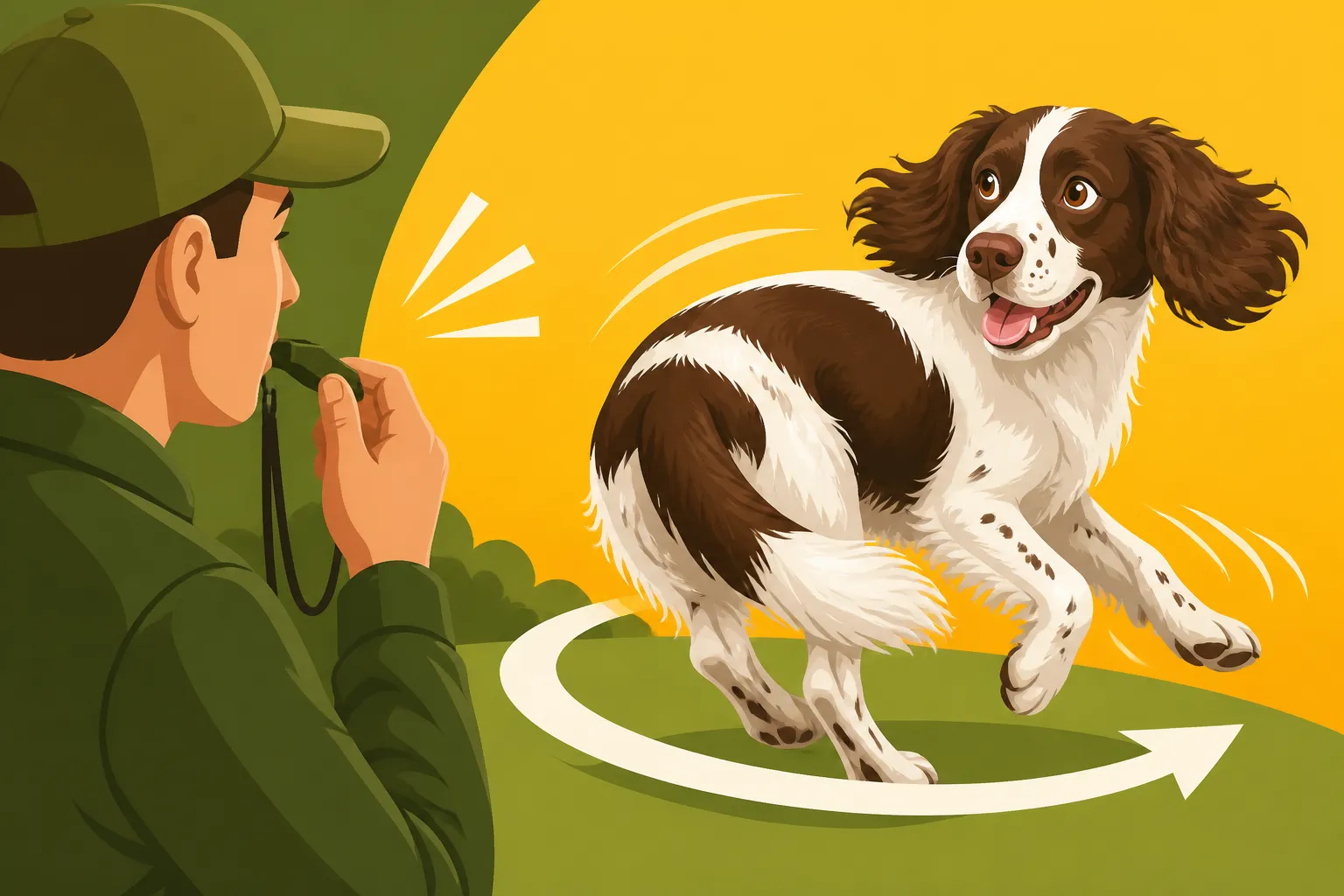
Once your Springer consistently reacts enthusiastically to the whistle up close, it's time to introduce a little movement. While your dog is moving away from you in a low-distraction area (like a fenced yard or a very quiet park), blow your chosen whistle signal. The moment they turn their head towards you, or better yet, take a step in your direction, mark that behavior with a verbal "Yes!" or a clicker, and then generously reward them when they reach you. Make coming back to you the most rewarding thing ever. Get excited, praise them lavishly, and give them a jackpot of treats.
Gradually increase the distance and introduce very minor distractions. Maybe another person quietly walks by, or a toy is placed a few feet away. The key is to progress slowly and only move to the next step when your dog is consistently successful at the current level. If they fail, it means you've moved too fast, and you need to go back a step. Remember that the whistle is not a command they might obey; it must be a command they always obey, because the reward is so overwhelmingly positive. This methodical approach builds a dog who understands Whistle Work: The Language a Springer Spaniel Learns and trusts it.
Step-by-Step: Teaching the Whistle Turn
Now that your Springer has a strong positive association with the whistle, it's time to teach them the actual "turn and come" action. This requires patience, consistency, and a clear understanding of your dog's natural instincts.
Starting in a Controlled Environment
Begin your training sessions in a highly controlled, distraction-free environment, such as your backyard or an empty park. You’ll want your dog to be off-leash, but consider using a long line (a lightweight leash 15-30 feet long, easily found on Amazon) initially for safety and guidance. This allows you to gently reel them in if they get too distracted, preventing them from learning that they can ignore the whistle.
- Dog Moving Away: Let your Springer wander a short distance from you, maybe 10-15 feet, sniffing around happily. Don't call their name.
- Whistle Signal: Deliver your consistent whistle signal (e.g., three short pips).
- Encouragement & Reward: The instant your dog turns their head or starts to come back, get excited! Crouch down, open your arms, and use encouraging, happy vocalizations (e.g., "Good boy! Come on!"). When they reach you, lavish them with praise and give them several high-value treats.
- Repeat and Vary: Practice this repeatedly in short bursts. Don't exhaust your dog. Vary the distance, but keep it manageable. Always make it a party when they return.
The goal here is for them to associate the whistle with the action of turning and returning, and with you being the source of wonderful things. Consistency in your whistle sound and your reward is paramount. If you're looking for structured curricula, online programs often feature detailed modules on recall and whistle work that can complement your efforts. Teaching a Springer Spaniel to Stay in Range is a closely related skill that you can integrate later.
Gradually Increasing Distance and Distractions
This is where many owners hit a wall, but it's also where the real magic happens. Once your Springer is consistently turning and returning in a quiet environment, you need to slowly introduce more challenges.
- Controlled Distractions: Introduce very mild, controlled distractions. This might be a family member walking by quietly, or another dog on a leash far in the distance. When your dog is focused on the mild distraction, blow the whistle. If they turn and come, jackpot! If they hesitate or ignore you, immediately reduce the distraction or distance and try again. Never set your dog up for failure.
- Varying Environments: Move to slightly busier parks, different terrains, or areas with more interesting smells. Always start with shorter distances in new environments and work your way up. The long line remains your best friend here, as it allows you to enforce the command without resorting to chasing or scolding, which can damage the positive association.
- Consistency is Key: Every single time you use the whistle, your dog must respond and receive a reward. If you blow the whistle and they don't come, don't let it go unrewarded. Use your long line to gently guide them back, then give them the treat and praise. This teaches them that the whistle is not optional.
It’s tempting to test their recall in a really challenging situation too soon, but resist this urge. Each successful return builds confidence and strengthens the command. Each ignored whistle chip away at its reliability. Think of it like building a house brick by brick; you need a solid foundation before adding the roof.
| Training Stage | Environment | Distance | Distractions | Focus |
|---|---|---|---|---|
| Foundation | Indoors/Quiet Yard | Close (0-5ft) | None | Whistle = Treat Association |
| Initial Turn | Fenced Yard/Quiet Park | Short (10-20ft) | Minimal (e.g., quiet person) | Turning head & moving towards handler |
| Increased Distance | Fenced Yard/Quiet Park | Medium (20-40ft) | Mild (e.g., distant dog) | Consistent return from range |
| Adding Distractions | Park/Nature Trail (leashed) | Medium-Long | Moderate (e.g., squirrels, people) | Maintaining focus on whistle over lure |
| Advanced Scenarios | Open Fields/Woods (long line) | Long | High (e.g., strong scent, game) | Reliable turn, even when highly stimulated |
Common Challenges and Troubleshooting
Even with the best intentions and the most delicious treats, training a Springer Spaniel to turn on a whistle isn't always smooth sailing. Their incredible drive, particularly for scent, can present some unique hurdles. Understanding these common challenges can help you navigate them more effectively.
When the Nose Overrides the Ears
This is perhaps the biggest battle you'll face. Your Springer Spaniel is hardwired to follow scent, and sometimes, that scent is just too intoxicating to ignore. Whether a Springer Spaniel Ignores You on a Scent is a very real frustration for many owners. If your dog is consistently ignoring the whistle when on a hot trail, it usually means one of two things:
- Insufficient Value: The reward for coming to you isn't outweighing the reward of the scent. You need to up your game. Are you using truly high-value treats? Is your praise enthusiastic enough? Are you making the return a genuine party? Sometimes, a different type of reward, like a quick game of tug or a thrown bumper, can be more effective for a working breed than just food.
- Too Much, Too Soon: You've pushed too quickly into high-distraction environments. Go back to a place where they do succeed. Rebuild their confidence and reinforce the whistle's value there, then very slowly reintroduce distractions. Work on Whether a Springer Spaniel's Recall Can Be Trusted from various scenarios.
- Lack of Enforcement: If you blow the whistle and let them ignore it without any consequence (like a gentle, consistent reel-in from a long line), you're teaching them that the whistle is optional. This is why a long line is invaluable. It's not about punishment, but about ensuring that every whistle blow results in them returning to you, even if you have to help them initially.
Consider integrating a GPS collar like a Garmin Alpha or a similar tracking device if your Springer is prone to truly vanishing. While not a training tool, it offers peace of mind when working on longer-distance recalls in open areas. Whether a Springer Spaniel Should Wear a GPS Collar can be a valuable safety net.
Environmental Factors and Consistency
Another common issue is inconsistency across different environments or with different handlers. Your dog might be brilliant in your backyard but completely deaf at the local park. This highlights the importance of generalizing the command.
- Training in Varied Locations: Don't just train in one spot. Practice the whistle turn in different parks, trails, fields, and even urban environments (starting with very low distractions). Each new place is like starting over for your dog, so be patient and go back to basics in each new location.
- Family Consistency: Ensure everyone in the household uses the exact same whistle signal and the same reward system. If one family member lets the dog get away with ignoring the whistle, it undermines all your hard work. Sit down with everyone and make sure you're all on the same page about how to use the whistle and what rewards follow.
- The Element of Surprise: Don't always blow the whistle when your dog is engaged in something obvious. Sometimes, blow it when they're just meandering, or even when they're already headed in your direction. This prevents them from predicting when you'll use it and keeps them on their toes, ready for that awesome reward.
Remember that building a bombproof whistle recall is a lifelong endeavor, not a one-time training session. Life changes, environments change, and dogs can have off days. Continuous, positive reinforcement, even in casual settings, will keep that whistle turn sharp and reliable for the entire The Twelve to Fourteen Years a Springer Spaniel Lives you share with your wonderful Springer.
Disclaimer
This article is for general informational purposes only and does not constitute professional advice. Laws, prices and regulations vary by location and change over time. Consult a qualified professional for guidance on your specific situation.