Teaching a Springer Spaniel to Hunt Within Gun Range
One of the most exciting aspects of owning an English Springer Spaniel, especially a field-bred one, is seeing them do what they were born to do: hunt. However, many new gundog owners quickly discover a frustrating challenge: their eager, high-drive Springer has a natural tendency to range far and wide, often well beyond effective gun range. This can lead to missed opportunities, lost birds, and a general breakdown in the seamless partnership you envision in the field. This guide is here to help you bridge that gap, offering practical, empathetic strategies to teach your Springer Spaniel to hunt consistently within gun range, turning that wild enthusiasm into focused, productive work.
Understanding the Springer Spaniel's Instinctive Range
Let's be honest, watching a Springer Spaniel work is a thing of beauty. They move with such zest and determination, nose to the ground, tail whipping. But that very drive, the one that makes them such phenomenal hunting partners, also holds the key to why they might range too far. It's not defiance; it's instinct.
The Natural Quartering Drive
Springer Spaniels were bred, for centuries, to "spring" game, pushing birds out of cover so a hunter could shoot them. To do this effectively, they developed an innate pattern of quartering, moving back and forth in front of the hunter, systematically covering ground. This is their superpower, their fundamental job in the field. When they are doing it well, it's efficient and effective.
The challenge arises because "quartering" doesn't inherently mean "quartering within 30 yards." Left to their own devices, many Springers will naturally expand their pattern, especially in open fields or dense cover where scents are strong and exciting. They're driven to find birds, and in their minds, more ground covered means more birds found. They're trying to be good dogs, but their definition of good might not align with your effective shotgun range. This is particularly true for field-bred Springers, whose intense drive is often much stronger than their show-bred cousins. If you're wondering How a Field Bred Springer Spaniel Differs in Drive, you'll quickly see it in their tireless pursuit of scent.
Why They Push the Boundaries
Beyond natural instinct, several factors contribute to a Springer pushing its boundaries. A big one is excitement. The thrill of the hunt, the fresh scent of game, the rustling of leaves – it all fuels their energy and can make them temporarily forget their handler. They get hyper-focused, and suddenly, they're 60 yards out, bursting through a hedgerow. Another factor can be a lack of consistent early training, where clear expectations for range were never firmly established. If a puppy is allowed to run wild and explore without boundaries, that behavior becomes ingrained.
Sometimes, it's also about a lack of communication. If the dog isn't sure what you want, or if your commands aren't consistent, they'll revert to their instincts. They might interpret a pause in your instruction as an invitation to investigate that exciting scent just a little further. It's a classic case of miscommunication, not necessarily disobedience. For these dogs, understanding Why a Springer Spaniel Puts Its Nose to the Ground and Vanishes is crucial, as their nose often takes precedence over their ears.
The Difference Between Field and Show Lines
It’s impossible to talk about range without touching on the distinct differences between field-bred and show-bred English Springer Spaniels. While both are undeniably Springers, generations of selective breeding have created two quite different animals in terms of drive and working style. Field-bred Springers are often lighter in build, with shorter coats, and possess an almost insatiable desire to hunt. Their engines are always running, and their natural quartering patterns can be very wide, requiring diligent training to rein in.
Show-bred Springers, on the other hand, are typically heavier-boned, with more profuse coats, and while they retain their spaniel instincts, their drive to range and hunt can be less intense. They might naturally stay closer, simply because they haven't been bred for the same level of independent, wide-ranging search. This isn't to say a show-bred Springer can't hunt, or that a field-bred Springer can't be a calm house pet. It simply means that your starting point for training, particularly for range control, will likely be different depending on your dog's lineage. A field-bred dog will almost certainly require more dedicated effort to keep them close, fighting against generations of breeding designed for expansive search.
Laying the Foundation: Early Training for Control
You might think gun range training only starts when you’re out in the field with a shotgun. But the truth is, the groundwork for a perfectly controlled gundog begins long before that, sometimes even when they’re still tiny puppies. This foundational training isn't just about obedience; it's about building a language of communication and trust that translates directly to the hunting environment.
The Importance of a Solid Recall
If there's one command that is non-negotiable for a gundog, it's a rock-solid recall. Without it, all other range control efforts are built on quicksand. Your Springer must come back to you, no matter the distraction, no matter the exciting scent, no matter how far away they are. This isn't just about convenience; it's about safety, control, and ultimately, whether you can trust your dog in a hunting scenario. Imagine your dog chasing a running pheasant into a busy road, or across private property where you don't have permission. A broken recall is more than just frustrating; it can be dangerous.
Start recall training the moment you bring your puppy home. Make it the most fun, rewarding thing your dog ever does. Use high-value treats, exciting toys, and enthusiastic praise every single time they come. Practice in low-distraction environments first, then gradually increase the challenge. Don't call your dog unless you're confident they'll come, and never punish them when they do eventually return, even if it took a while. That only teaches them that coming back is sometimes unpleasant. Remember, for a Springer, coming back to you means leaving an interesting scent, so you need to make you the most interesting thing in the world. Services like BAXTER & Bella offer comprehensive online puppy programs that can guide new owners through these crucial early stages, emphasizing positive reinforcement that builds a strong foundation for commands like recall.
Introducing Whistle Commands Early
While verbal commands are useful, a whistle is a gundog handler's best friend, especially for a Springer Spaniel hunting within gun range. The sound of a whistle carries further than your voice, cuts through wind and dense cover, and has a distinct, consistent tone that doesn't convey emotion like human speech. This consistency is vital when your dog is 40 yards away, focused on scent, and you need to get their attention without shouting and possibly alarming game.
Introduce the whistle from puppyhood. Associate a single pip with "come" (recall), and a series of pips or a specific pattern with "turn" or "change direction" (directional commands). Two sharp pips is often used for "hup" or "sit." Always pair the whistle command with an action and a reward. For example, give two pips, then immediately follow it with "sit" and guide your puppy into a sit, rewarding heavily. Over time, the verbal cue can be faded out, and the whistle becomes their primary language in the field. Whistle Work: The Language a Springer Spaniel Learns is critical for effective communication, allowing you to direct your dog silently and efficiently. Consistent practice, even in the backyard, ensures that the whistle commands are second nature. How Many Whistle Cues a Springer Spaniel Learns often depends on the handler's ambition and the dog's aptitude, but a core set of directional and stop commands is essential.
Leash and Long Line Work
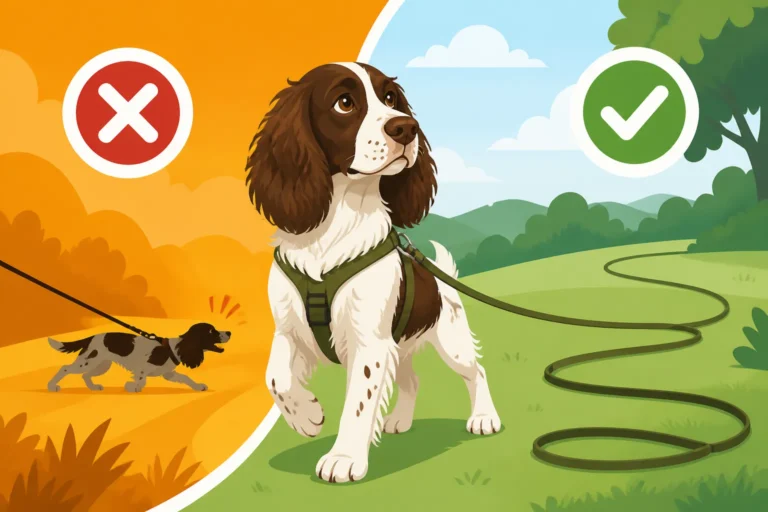
Before your Springer ever gets to experience the freedom of off-leash hunting, they need to understand boundaries on a leash. This isn't just about polite walking; it's about teaching them that your physical proximity defines their zone of operation. Start with a regular leash, teaching a loose-leash heel. Then, transition to a long line – think 20, 30, or even 50 feet of sturdy rope. This is your most valuable tool for teaching range control safely.
With a long line, you can allow your Springer to quarter naturally in an open field, but you control their maximum distance. As they start to hit the end of the line, you give your range command (e.g., "Hup," "Close," or a specific whistle signal), gently but firmly check them, and guide them back into the desired zone. This teaches them, through gentle pressure and release, that there is an invisible boundary they should respect. Never just let them pull against the end of the line; that teaches them to ignore the pressure. Instead, apply a small amount of tension, give your command, and then release the pressure the moment they start to move back toward you. This is a crucial step in Teaching a Springer Spaniel to Stay in Range before you even introduce game. You can find excellent quality long lines on platforms like Amazon, offering various lengths and materials to suit your training needs.
Defining "Gun Range" and Its Implications
For a gundog handler, "gun range" isn't just a vague concept; it's a very real, measurable distance that dictates success or failure in the field. Your Springer needs to understand this invisible perimeter as intimately as you do.
Visualizing the Effective Shooting Distance
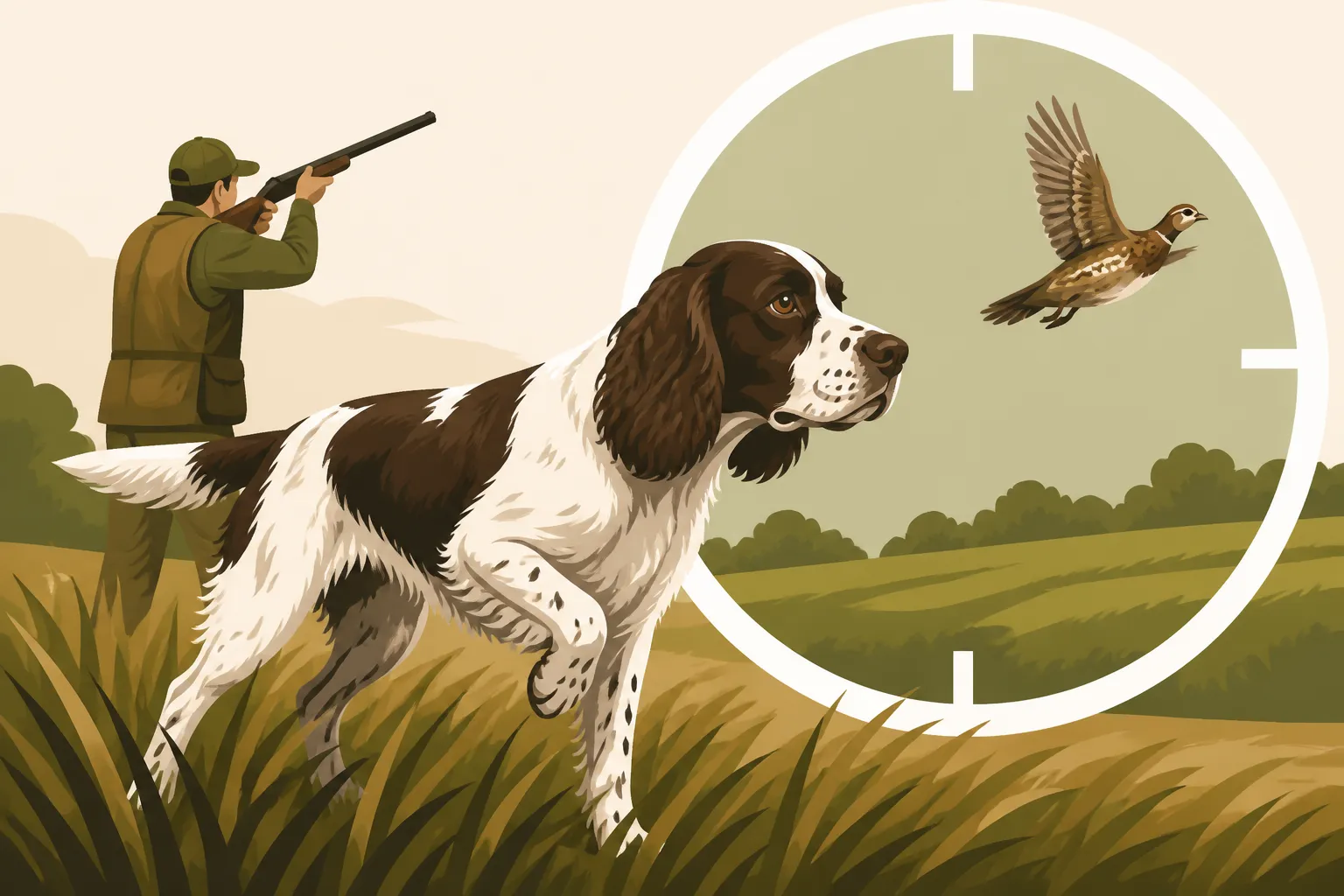
What exactly is gun range? For most upland bird hunting with a shotgun, effective killing range is generally considered to be around 25 to 40 yards, depending on the choke, load, and the shooter's skill. Beyond 40 yards, the shot pattern spreads too thinly, greatly reducing the likelihood of a clean kill and increasing the chance of wounding a bird, which is something no ethical hunter wants. Therefore, your Springer Spaniel needs to be taught to work within this bubble.
Imagine a circle around you with a radius of, say, 35 yards. Your dog should ideally be quartering back and forth, hitting the edges of that circle, but never consistently breaking out of it. This requires you to visualize that bubble constantly while your dog is working. It's a mental exercise that you'll perform repeatedly, judging distance and anticipating when your dog might push too far. Understanding this isn't just for your dog; it's for you to have clear, consistent expectations for them.
Why Staying Close Benefits the Hunt
There are several compelling reasons why keeping your Springer Spaniel close dramatically improves the hunting experience. Firstly, and most importantly, it increases your chances of a clean kill. A bird flushed within gun range is a bird you can ethically shoot. A bird flushed at 60 yards might as well be on another continent – you simply cannot take a responsible shot. This means more birds in the bag, and less lost game.
Secondly, it allows for better communication and control. If your dog is 20-30 yards away, you can still easily see their body language, hear their movements, and deliver whistle or verbal commands effectively. If they're out at 70 yards, they might not hear you, or worse, they might be running into dangerous situations you can't even see from your position. Finally, it creates a much more enjoyable and harmonious hunt. Hunting with a dog that constantly races off is frustrating, exhausting, and stressful. Hunting with a dog that works in partnership with you, anticipating your movements and staying within your zone, is deeply rewarding.
Safety First: Keeping Your Dog Out of Harm's Way
This aspect cannot be overstated. When your Springer Spaniel is hunting, especially in dense cover, it's incredibly easy for them to become obscured. A dog that ranges too far risks being mistaken for game by another hunter, or running into hazards like barbed wire, roads, or even falling into unseen ditches. Your dog's safety must always be paramount.
Teaching them to stay within gun range inherently keeps them safer. If they are always within a predictable distance, and you know where they are relative to your position, the risk of an accident drastically decreases. This is why consistent check-ins, whistle commands, and a focus on their location are so vital. It's not just about getting a shot; it's about getting your beloved companion home safe and sound at the end of the day.
Practical Training Techniques for Range Control
Once you've built a solid foundation with recall and whistle commands, and you understand why range control is important, it's time to put those principles into action with specific techniques. These methods help instill the invisible boundary your Springer needs to respect.
The "Whoa" or "Hup" Command
The "Whoa" or "Hup" command (meaning "stop" or "sit and stay") is arguably the second most important command after recall for a gundog. It's your emergency brake, allowing you to stop your dog instantly, no matter what they are doing. This is invaluable for range control, as you can stop them the moment they start to push beyond your desired perimeter. It gives you time to reassess, let them collect themselves, and then redirect them back into range.
Start teaching "Whoa" or "Hup" with your dog on a leash or long line. Give the command, gently pull up on the leash to encourage them to sit or stand still, and reward them when they comply, even for a second. Gradually increase the duration and distance, always returning to reward them in position. Never let them break the "whoa" until you release them. Some handlers use a specific "whoa" post or stand to help solidify the concept. Once mastered, you can use this command in the field the instant you see your Springer ranging too wide. A sharp, clear two-pip whistle blast is often paired with "Hup" in the field, making it an excellent extension of your Whistle Work: The Language a Springer Spaniel Learns.
Using Obstacles and Terrain to Your Advantage
Don't just train in wide-open fields. Real hunting often involves varied terrain, and you can use this to your advantage in training. Natural obstacles like hedgerows, tree lines, ditches, or even changes in ground cover can serve as excellent visual cues and physical barriers to help define your dog's working range.
When starting out, choose an area with natural boundaries that naturally encourage your dog to stay closer. For instance, working along the edge of a field next to a dense wood line might naturally keep your Springer from ranging too far into the trees. As your dog quarters, when they approach a boundary, use your whistle and body language to turn them back into the desired working area. This teaches them that the cover has limits, not just your verbal commands. It’s also important to vary your training locations. If your dog only learns to stay close in one specific field, they might not generalize that learning to a new, unfamiliar environment. Consistently apply your range commands regardless of the landscape.
The Role of E-Collars
This is a sensitive topic, but for many experienced gundog trainers, an electronic collar (e-collar) is a highly effective tool for teaching and reinforcing gun range, especially with high-drive Springer Spaniels. It is not a punishment device to be used indiscriminately, but rather a sophisticated communication tool that allows you to deliver a consistent, clear, and perfectly timed correction or reminder from a distance.
If you choose to use an e-collar, it must be introduced properly and ethically. This means starting with very low levels of stimulation, ensuring your dog understands that the sensation is a cue to comply with a known command, not a punishment for disobedience. The goal is for the dog to avoid the stimulation by responding to your whistle or verbal command, not to be shocked into submission. It's often paired with the "Whoa" or recall command, providing a subtle tap on the shoulder when your dog is about to ignore your whistle or push too far out of range. Remember, Whether an Electronic Collar Belongs on a Springer Spaniel is a personal decision, but if used, it requires careful, humane training. Always seek guidance from a professional gundog trainer if you are considering using an e-collar, and ensure you invest in a quality unit from a reputable brand available on platforms like Amazon.
Advancing Training with Birds and Cover
Once your Springer understands range control in a controlled environment, it's time to introduce the real temptations: birds and varying types of cover. This is where the training truly translates to the field.
Controlled Introduction to Live Birds
Introducing live birds is the ultimate test of your range control. Up until now, your dog has been responding to commands in relatively low-distraction settings. A live bird, however, represents the absolute highest value reward and the strongest distraction for a hunting dog. This is where you'll see if your training holds.
Start with pigeons or pen-raised pheasants, ideally in a training field where you can control the release. With your dog on a long line, allow them to work, quartering. The moment they scent a bird and begin to push out of your established range, give your "hup" or "turn" command. If they ignore it, use the long line (or a properly conditioned e-collar) to enforce the boundary. The goal is to make them think about staying close, even when the excitement of a bird is overwhelming. Initially, you might let them find a bird but not chase, rewarding them for holding steady or turning back to you. Over time, you can allow controlled flushes within range. The key is to start small, with high success rates, gradually increasing the challenge.
Working in Varied Cover Types
The cover your Springer Spaniel works in will vary dramatically, from open grass fields to dense briar patches, tall cattails, and thick woods. Each type of cover presents its own challenges for range control. Open fields allow dogs to speed up and range wide more easily, while dense cover might naturally slow them down but also make them harder to see and control.
Train your Springer in as many different types of cover as possible. This helps them generalize their understanding of range, rather than associating it with just one particular environment. In dense cover, you might need to rely more heavily on your whistle and the sound of bells on their collar to keep track of them. In very heavy cover, your definition of "gun range" might shrink slightly, as visibility is reduced. The important thing is for your dog to learn to adapt their working pattern to the cover, always keeping you in mind as the center point of their operation. This means more frequent whistle checks and turns to ensure they're staying within that safe and effective bubble.
Simulating Real Hunting Scenarios
The ultimate goal is for your Springer to perform flawlessly in a real hunting situation. To get there, you need to gradually simulate those scenarios during training. This means moving beyond simple bird flushes and incorporating elements like walking with a hunting party, encountering other dogs (if applicable), and dealing with gunshots.
Begin by adding the sound of a blank pistol or a starter gun during training sessions, far away at first, then gradually closer. This helps steady your dog to the shot and prevents gun shyness. How to Introduce a Springer Spaniel to Gunfire is a gradual process and should never be rushed. Practice walking in a line, simulating a hunting formation, and have your dog quartering in front of you, always within range. You can even practice with a friend acting as a "flusher" ahead of you, to mimic unexpected bird movements. The more realistic your training, the better prepared your Springer will be for the actual hunt. These simulations help build confidence and reinforce the idea that you are the leader, and their job is to work with you, not just for themselves.
Troubleshooting Common Ranging Problems
Even with the best intentions and consistent training, Springers are intelligent, independent dogs with strong instincts. You're bound to encounter some challenges when it comes to range control. Knowing how to diagnose and address these issues is key to success.
When Your Springer Ignores the Whistle
This is a common and incredibly frustrating problem. You give your clear, consistent whistle command to turn or hup, and your Springer, nose to the ground on a hot scent, just keeps going. It feels like they've gone deaf. There are a few reasons this happens, and understanding them is the first step to fixing it.
Firstly, their drive to pursue scent might simply be overriding their training. They're so engrossed that your whistle becomes background noise. Secondly, the whistle might not be deeply ingrained enough, or it hasn't been consistently enforced. Did you always follow through with a correction (like a long line check or e-collar stimulation) when they ignored it during training? If not, they've learned they can sometimes get away with it. To fix this, go back to basics. Re-establish the whistle in a low-distraction environment. Make sure your rewards are high-value. If using an e-collar, ensure the stimulation level is noticeable without being painful, and that it's consistently applied the moment they start to ignore the command, not after they've already run 50 yards further. Practice short, sharp whistle commands and immediate responses, often several times a day in various settings. This helps reinforce How Fast a Springer Spaniel Learns and makes the whistle an undeniable cue.
The Dog That Creeps Out of Range
This isn't a bolt, but a subtle, slow expansion of their quartering pattern. They start off great, working within 25 yards, but gradually, over five or ten minutes, they've drifted out to 40, then 50 yards, without you quite realizing how it happened. This is a sneaky problem because it doesn't involve outright defiance, but rather a slow erosion of boundaries.
The solution here is vigilance and more frequent check-ins. You need to be constantly monitoring your dog's distance. Establish a mental "line" or an imaginary boundary. The moment your dog steps over that line, even by a foot, give your "turn" or "close" command. Don't wait for them to be 10 yards out of range. Nip it in the bud. This means you might be giving more whistle commands than you initially anticipated, but it's crucial for reinforcing that invisible boundary. Think of it as gently corralling sheep. You're guiding them back into the pen constantly, not waiting until they're halfway down the road. Regular short, focused training sessions, emphasizing short casts and immediate turns, will help prevent this creeping behavior.
Dealing with Distractions and Strong Scent
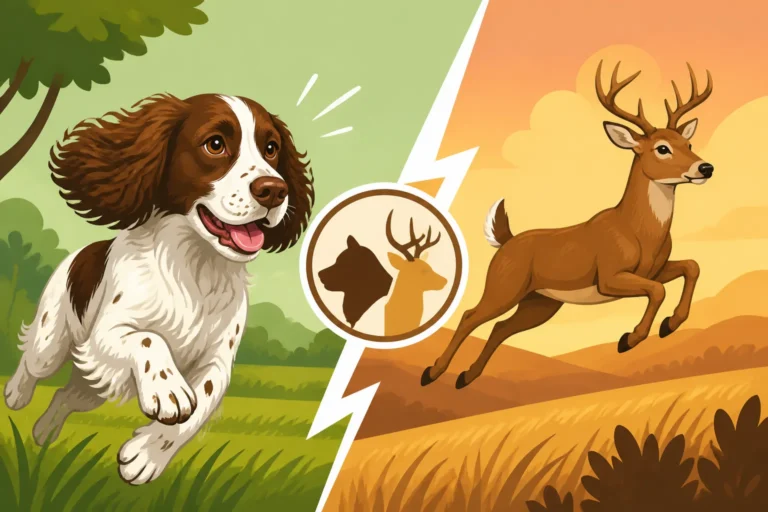
Springers are nose-driven dogs. A strong game scent, or even a running deer, can make them forget all their manners and training. How Far a Springer Spaniel Will Go on a Scent can be surprising if not controlled. This is the ultimate test of your range control and steadiness training. If your dog constantly breaks range on a hot scent, you haven't yet proofed your commands against high-level distractions.
To address this, you need to incrementally introduce distractions. Start with a training scenario where your dog encounters a strong scent from a non-game animal (like a rabbit, if you're not hunting them). Practice your range commands through that distraction. If they break, enforce the command immediately. Gradually, introduce game birds into the equation, first with the dog on a long line, then off-leash in a controlled environment. The key is to make complying with your command more rewarding (or failure to comply less pleasant via a correction) than the distraction itself. This takes immense patience and consistency. Remember, What a Springer Spaniel Will Work For needs to be something you can control and deliver, whether it's praise, a retrieve, or a subtle e-collar reminder.
Maintaining and Reinforcing Range Control
Training isn't a one-and-done event. It's an ongoing process, especially with a high-drive dog like a Springer Spaniel. Maintaining excellent range control requires continuous effort and understanding of your individual dog.
Consistency is Key
This cannot be stressed enough: consistency, consistency, consistency. Every time you take your Springer out, whether for a walk in the park or a training session in the field, you must reinforce the desired range. If you allow them to range wide one day, and expect them to stay close the next, you're sending mixed signals that will confuse your dog and undermine your training.
Consistency also applies to your commands. Use the same whistle patterns, the same verbal cues, and the same body language every single time. If multiple people handle the dog, they all need to be on the same page. Inconsistent training is often the root cause of ranging problems. Your Springer needs to understand that the rules for range always apply, regardless of the environment or the person giving the command. This unwavering approach builds trust and predictability, making it easier for your dog to understand and comply.
Regular Practice and Tune-Up Sessions
Even a perfectly trained gundog benefits from regular practice and tune-up sessions. Think of it like an athlete staying in shape; they don't just train for the big game and then stop. Throughout the off-season, and especially before hunting season, schedule regular training outings to reinforce range control, whistle commands, and steadiness.
These sessions don't always need to be full-blown hunting simulations. Even a walk in a suitable field where you practice quartering, turns, and "hup" commands within your desired range is beneficial. Use dead birds or bumpers for retrieves within range. The goal is to keep the concepts fresh in your dog's mind, ensuring that when the real hunting season arrives, they are sharp and ready. This helps prevent regression and ensures that the muscle memory for staying close is always primed.
| Training Tool | Primary Use in Range Control | When to Use | Important Considerations |
|---|---|---|---|
| Whistle | Communication for turns, stops, recall from distance | All stages of training and hunting | Consistent tone, specific cues, always pair with action/reward |
| Long Line | Establishing physical boundaries, gentle correction | Early stages, proofing recall/range in distractions | Never allow dog to hit end at full speed; apply gradual pressure |
| E-Collar | Reinforcing commands, remote communication/correction | After solid foundation, under professional guidance | Low levels, positive association, timing is crucial, not punitive |
| Dummy/Bumper | Retrieve practice within range | Introducing retrieves, maintaining enthusiasm within bounds | Keep retrieves short and within desired working range initially |
| Live Birds | Proofing commands against high drive, realism | Advanced training, simulating hunting conditions | Controlled environment, ensure ethical handling of birds |
| Varied Terrain/Cover | Generalizing range understanding | All stages, once basic commands are solid | Helps dog adapt range to different environments, builds confidence |
Understanding Your Dog's Individual Temperament
Finally, remember that every Springer Spaniel is an individual. Some will naturally stay closer, while others will have a stronger innate drive to roam. Some are more sensitive to corrections, others require a firmer hand. Understanding your specific dog's temperament, drive level, and learning style is paramount to tailoring your training approach.
A "soft" Springer, for example, might shut down or become anxious if handled too harshly, especially when learning a new concept like range. For such a dog, gentler corrections and even more positive reinforcement will be effective. Contrastingly, a very bold, high-drive Springer might require more consistent and firm reminders to stay focused on you rather than the distant horizon. The Soft Springer Spaniel That Shuts Down If You Shout is a real phenomenon, and adjusting your approach for sensitive dogs is vital. Pay attention to how your dog responds to different stimuli and adjust your methods accordingly. Celebrate their successes, be patient with their setbacks, and always strive to build a strong, trusting partnership. With patience and consistency, you can transform a wide-ranging Springer into a perfectly controlled, close-working gundog partner.
Disclaimer
This article is for general informational purposes only and does not constitute professional advice. Laws, prices and regulations vary by location and change over time. Consult a qualified professional for guidance on your specific situation.