Whether Rage Syndrome in Springer Spaniels Is Real
It's an incredibly frightening and heartbreaking experience to witness your beloved English Springer Spaniel suddenly, without warning, turn aggressive. One moment they might be cuddled beside you, and the next, their eyes glaze over, and they lash out in a way that feels utterly alien to their usual sweet nature. This terrifying phenomenon, often referred to as "Rage Syndrome" or Sudden Onset Aggression (SOA), leaves owners confused, scared, and desperate for answers. This guide aims to pull back the curtain on this complex and often misunderstood condition, confirming its reality, exploring its symptoms, causes, diagnosis, and the challenging journey of living with or managing an affected dog.
Understanding Sudden Onset Aggression in Springer Spaniels
When a dog's behavior changes dramatically and unexpectedly, especially into aggression, it's natural to question what's happening. For Springer Spaniel owners, the term "Rage Syndrome" can pop up, causing immediate alarm. It's a deeply concerning topic, not just because of the danger it poses, but also because it challenges our understanding of our loyal companions.
Defining Rage Syndrome and Its True Nature
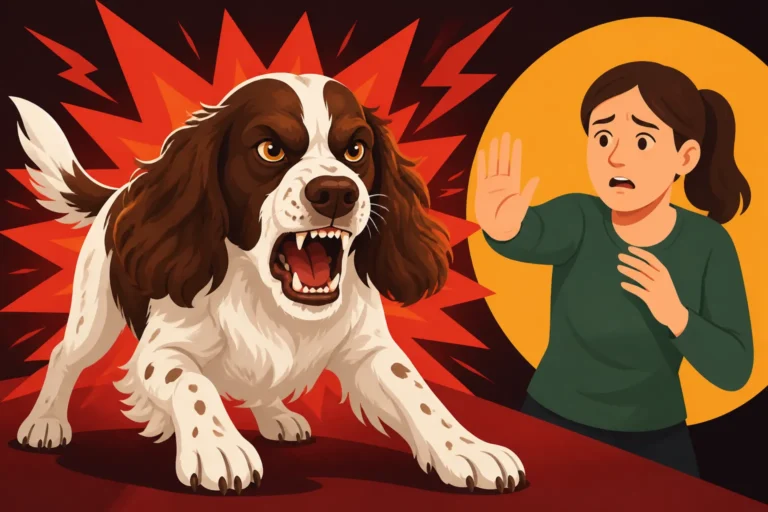
Rage Syndrome, properly known as Sudden Onset Aggression (SOA), isn't just a fancy name for a naughty or poorly trained dog. It's a recognized, albeit rare, neurological condition. Imagine a switch being flipped in your dog's brain, causing an instantaneous, often unprovoked, and intensely aggressive outburst. These episodes are characterized by their suddenness, their ferocity, and often, the lack of typical pre-aggression warning signs that most dogs display. The dog may appear to "zone out" or have a "glassy-eyed" look just before or during the attack, almost as if they aren't truly present.
What makes SOA so baffling and terrifying is its seemingly unprovoked nature. It doesn't typically arise from fear, resource guarding, or pain in the way other forms of aggression might. Instead, it appears to stem from an internal neurological dysfunction, akin to a seizure activity that manifests as extreme aggression. This distinction is crucial because it means that traditional obedience training or behavioral correction methods, which are effective for other forms of aggression, often fall short or are even detrimental when dealing with a dog suffering from true Rage Syndrome.
Why Springer Spaniels Seem More Prone
While any breed can technically exhibit sudden aggressive episodes, certain breeds, including English Springer Spaniels, seem to have a higher reported incidence of this specific condition. This observation has led researchers and breeders to investigate potential genetic predispositions. It's not that all Springer Spaniels are prone to it, far from it; the vast majority are wonderful, stable dogs. However, within some bloodlines, there appears to be an inherited susceptibility.
The exact genetic markers are still largely a mystery, but the empirical evidence from breeders and owners suggests a heritable component. This is why responsible breeders are so vigilant about temperament in their breeding lines and meticulously screen for any history of unexplained aggression. While it's a devastating condition, acknowledging its potential link to specific breeds helps drive research and promotes more informed breeding practices, ultimately aiming to reduce its occurrence in future generations. It's a heavy burden for the breed, but also a call to action for the community.
The Disturbing Signs of Rage Syndrome
Recognizing the signs of Rage Syndrome is paramount, not only for the safety of those around the dog but also for the dog's own well-being. It's a unique and distressing form of aggression that sets it apart from more common behavioral issues.
The "Glassy-Eyed" Stare and Unprovoked Attacks
One of the most chilling hallmarks of Rage Syndrome is the sudden shift in a Springer Spaniel's demeanor. Owners often describe their dog's eyes becoming vacant, dilated, or having a "glassy" or "unseeing" quality right before an episode. It's as if the dog is no longer "there," mentally present with you. This can be followed by an immediate, explosive, and often terrifying aggressive outburst. This is not a slow build-up of growling, lip-lifting, or snapping typical of other forms of aggression; it's an instant transition to a full-blown attack. You can read more about What Sudden Onset Aggression Looks Like in a Springer Spaniel.
The attacks themselves are usually severe and unprovoked by any discernible external trigger. The dog might bite, snap, or lunge with intense force, often targeting the owner or family members, though sometimes other pets. What's particularly alarming is the sheer intensity and seemingly uncontrolled nature of the aggression. It's disproportionate to any perceived threat and can be incredibly difficult to interrupt or de-escalate once it begins. This is why many owners feel utterly helpless and in shock after an episode, grappling with the sudden transformation of their loving companion.
Post-Episode Behavior and Memory
After an episode of Rage Syndrome, the dog often appears to "snap out of it" just as quickly as it began. They might seem confused, disoriented, or even lethargic, before quickly returning to their normal, affectionate selves. This immediate return to baseline behavior is another key characteristic that differentiates SOA from other types of aggression. The contrast can be jarring, leaving owners wondering if they imagined the whole thing, or if their dog truly understands what just happened.
The consensus among veterinary behaviorists is that dogs suffering from Rage Syndrome likely have no conscious memory of their aggressive outbursts. Because these episodes are believed to be neurological in origin, similar to a seizure, the dog is not operating with conscious intent or malice. This is a small comfort for owners, as it means their dog isn't "bad" or holding grudges, but it doesn't diminish the fear or the danger. Understanding this lack of memory helps owners cope with the emotional aftermath, though it doesn't make the practical challenges any easier. The question of Whether a Springer Spaniel Remembers a Rage Episode is one that weighs heavily on every owner's heart, and thankfully, the answer is generally no.
Distinguishing Rage from Other Aggression Types
It's crucial to understand that not all aggression in a Springer Spaniel is Rage Syndrome. Many other factors can cause aggression, and misdiagnosing can lead to inappropriate and ineffective management strategies. For example, fear aggression might manifest as a dog biting when cornered, resource guarding involves aggression over food or toys, and pain-induced aggression can occur if a dog is handled roughly when injured or arthritic. These forms of aggression usually have clear triggers and often display warning signs like growling, stiff body language, or a tucked tail.
Rage Syndrome, by contrast, is typically characterized by its spontaneity and lack of preceding signals. The dog transitions from calm to aggressive almost instantly, often with that distinctive glassy-eyed stare, and with an intensity that seems beyond normal canine reactions. There's also usually no obvious external motivation. If your dog consistently growls before biting, or only bites when a specific toy is approached, it's more likely to be a different form of aggression requiring a different diagnostic and management approach. A thorough veterinary examination and behavioral assessment are essential to differentiate between these various types of aggression.
Unraveling the Causes Behind Aggressive Episodes
The question "Why?" haunts owners grappling with a dog exhibiting Rage Syndrome. While a definitive, singular cause remains elusive, research and clinical observations point towards a complex interplay of neurological and genetic factors.
The Neurological Basis: Epilepsy or Something Else?
One prominent theory posits that Rage Syndrome is a form of focal or partial seizure activity, often originating in specific areas of the brain that control emotion and behavior. Instead of the typical grand mal seizures with full-body convulsions, these "behavioral seizures" manifest as sudden, uncontrollable bursts of aggression. The "glassy-eyed" stare, the rapid onset and cessation of the episode, and the post-episode confusion are all consistent with seizure activity. This is why many veterinary neurologists treat suspected Rage Syndrome with anti-epileptic medications, often with some success in reducing the frequency and severity of episodes.
However, it's not always a straightforward diagnosis. While the presentation strongly suggests a neurological component, not all dogs with SOA show abnormalities on standard diagnostic tests for epilepsy, such as an electroencephalogram (EEG), which measures brain activity. This leads to the thought that it might be a spectrum of neurological dysfunctions, some of which are more readily detectable than others. The discussion around Whether Rage Syndrome Is Epilepsy in a Springer Spaniel continues, highlighting the complexities in understanding these conditions fully. What is clear is that it's a physiological issue, not a volitional choice by the dog.
Genetic Predisposition and Lineage Concerns
The observation that Rage Syndrome seems more prevalent in certain breeds, and even within specific lines of English Springer Spaniels, strongly suggests a genetic component. This isn't to say every dog from an affected line will develop it, but rather that certain genetic markers may increase susceptibility. For breeders, this presents a significant challenge and responsibility. Good breeders are meticulous in researching pedigrees and avoiding breeding dogs with a known history of Rage Syndrome or even unexplained aggression in their close relatives.
The ethical implications are huge. If a breeding dog produces offspring with Rage Syndrome, or if it develops the condition itself, it should be removed from the breeding program. While there isn't a widely available genetic test specifically for Rage Syndrome in Springer Spaniels yet, understanding the familial patterns is crucial. Owners considering a Springer Spaniel puppy should always ask about the temperament and health history of the parents and grandparents, including any instances of aggression. This is why it's so important to ask Whether Rage Syndrome Runs in Springer Spaniel Lines when considering a puppy. Transparency from breeders, even about difficult health issues, is a sign of integrity.
Environmental Triggers vs. Inherent Condition
It's tempting to look for external triggers for aggressive behavior, and in many cases of aggression, triggers are indeed present (e.g., strangers, loud noises, resource guarding scenarios). However, with Rage Syndrome, while certain situations might precede an episode, they are rarely the cause. The underlying condition is an inherent neurological dysfunction. Think of it like a faulty circuit: some external input might overload it, but the fault lies within the wiring, not in the input itself.
For example, an otherwise calm dog might suddenly lash out when gently patted, or when waking up from a nap. The pat or the waking might be the "trigger" in the sense that they precede the episode, but the true cause is the brain abnormality. This distinction is vital because it means that simply avoiding triggers might reduce episodes but won't "cure" the underlying condition. It also highlights that these dogs aren't choosing to be aggressive; their brains are essentially misfiring. This realization can be both heartbreaking and liberating for owners, shifting the blame from their training or handling skills to a medical reality.
The Diagnostic Journey for Suspected Rage Syndrome
Diagnosing Rage Syndrome is not a simple process and often involves a collaborative effort between a veterinarian, a veterinary neurologist, and a certified veterinary behaviorist. It's largely a diagnosis of exclusion, meaning other potential causes for aggression must be meticulously ruled out first.
Ruling Out Other Medical Conditions
When confronted with a dog exhibiting sudden aggression, the very first step is always a comprehensive veterinary examination. Many medical conditions can manifest as behavioral changes, including aggression. Pain, especially chronic pain from conditions like arthritis or disc disease, can make a normally docile dog snap. Hormonal imbalances, such as those caused by hypothyroidism, can also lead to irritability and aggression. It's also vital to check for infections, tumors, or other neurological issues that might be causing discomfort or affecting brain function. You might want to consider Whether a Springer Spaniel's Thyroid Should Be Checked for Aggression if your dog's temperament has changed.
This initial workup typically includes blood tests to check organ function and hormone levels, urinalysis, and potentially imaging like X-rays to look for orthopedic pain. In some cases, if brain issues are suspected, an MRI or CT scan of the brain might be recommended to rule out structural abnormalities like tumors or inflammation. This extensive and often costly diagnostic process is essential because treating an underlying medical condition can resolve the aggression without needing to consider a more complex diagnosis like Rage Syndrome. Pet insurance providers like Healthy Paws can often help offset the significant costs of these advanced diagnostics and specialist consultations, making the best care more accessible during such a stressful time.
Behavioral Analysis and Expert Consultation
Once medical causes have been largely ruled out, the focus shifts to behavioral analysis. This is where a detailed history from the owner becomes invaluable. The veterinary team will want to know everything: when did the aggression start, what exactly happens during an episode, how long does it last, what does the dog do afterward, and are there any identifiable patterns or triggers? Video recordings of episodes, if safely possible, can be incredibly helpful for specialists to observe the exact nature of the aggression.
Consulting with a board-certified veterinary behaviorist is often the next step. These specialists are experts in animal behavior and can help differentiate Rage Syndrome from other behavioral issues like fear aggression, territorial aggression, or even severe forms of generalized anxiety. They use a nuanced understanding of canine body language, social dynamics, and learning theory to piece together the puzzle. This collaboration is crucial for forming an accurate diagnosis and developing an appropriate management plan. The cost of such consultations can be high, and knowing What a Behaviorist Costs a Springer Spaniel Owner is important for financial planning.
The Role of an EEG and its Limitations
Given the theory that Rage Syndrome might be a form of seizure activity, an electroencephalogram (EEG) might be considered. An EEG measures electrical activity in the brain and is a primary diagnostic tool for epilepsy in humans and animals. If a dog is having a behavioral seizure, an EEG might pick up abnormal brainwave patterns during or immediately after an episode. This could provide strong evidence for the neurological basis of Rage Syndrome.
However, performing an EEG on a dog, especially during an unpredictable aggressive episode, is challenging. Dogs typically need to be sedated, which can obscure brain activity. Furthermore, intermittent seizure activity might not be detected during a brief recording period, even if the dog has the condition. Therefore, a normal EEG result does not definitively rule out Rage Syndrome, as highlighted in discussions around Whether an EEG Diagnoses Springer Spaniel Rage. It's a useful tool when positive, but its limitations mean that diagnosis often relies on a combination of ruling out other conditions, detailed behavioral history, and expert clinical judgment.
| Diagnostic Step | Purpose | Typical Procedure | Potential Cost Range (Estimate) | Notes |
|---|---|---|---|---|
| Comprehensive Vet Exam | Rule out general health issues, pain, infections. | Physical exam, bloodwork (CBC, chemistry), urinalysis, fecal exam. | $150 – $500 | Essential first step, often covered by pet insurance like Healthy Paws. |
| Thyroid Panel | Rule out hypothyroidism, which can cause aggression. | Blood test to measure thyroid hormone levels. | $80 – $200 | Specific blood test, often included in broader panels. |
| Advanced Imaging (MRI/CT) | Check for brain tumors, inflammation, structural abnormalities. | Sedation/anesthesia required. | $2,000 – $5,000+ | Highly specialized, often requires referral to a neurologist. |
| Veterinary Behaviorist Consultation | Differentiate Rage Syndrome from other behavioral aggressions. | Detailed history taking, behavioral observation, customized treatment plan. | $300 – $800+ | Essential for accurate diagnosis and management; may involve follow-up sessions. |
| EEG (Electroencephalogram) | Detect abnormal brain electrical activity consistent with seizures. | Sedation required; electrodes placed on the scalp. | $500 – $1,500+ | Not always definitive, can be normal even if Rage Syndrome is present. |
Managing and Living With a Springer Spaniel Affected by Rage
Receiving a diagnosis of Rage Syndrome is devastating, but it doesn't always mean the end of the road. Management is possible, though it requires immense dedication, patience, and a realistic understanding of the condition's challenges.
Medication and Behavioral Modification
For dogs diagnosed with Rage Syndrome, medical intervention is almost always necessary. Since the condition is believed to have a neurological basis, anti-epileptic drugs (AEDs) are frequently prescribed. These medications, such as phenobarbital, potassium bromide, levetiracetam (Keppra), or zonisamide, aim to stabilize brain activity and reduce the frequency and intensity of aggressive episodes. The process of finding the right medication and dosage can take time and often involves trial and error, working closely with a veterinary neurologist. Sometimes, psychotropic medications like selective serotonin reuptake inhibitors (SSRIs) may also be used in conjunction with AEDs to help manage anxiety or impulsivity.
Alongside medication, careful behavioral modification strategies are crucial, not to "train out" the rage, but to minimize potential triggers and ensure safety. This involves creating a highly predictable and low-stress environment for the dog, avoiding situations that seem to precede episodes, and sometimes using safety equipment like muzzles during periods of higher risk. Positive reinforcement is key, focusing on building confidence and strengthening the human-animal bond without putting anyone at risk. It's important to remember that this isn't about punishing the dog for their aggression, which could worsen the condition, but about managing a medical disorder. This approach helps answer Whether Medication Controls a Springer Spaniel's Rage – it can, but it’s rarely a standalone solution.
Safety Protocols and Household Management
Living with a dog with Rage Syndrome demands stringent safety protocols. The unpredictable nature of the aggression means that preventing harm to family members, visitors, and other pets must be the top priority. This often involves strict supervision, especially in situations where episodes have occurred in the past. If the dog has a history of biting, a well-fitted muzzle might be necessary when guests are present or during walks, particularly if the dog is prone to aggression outdoors.
Household management might need to be adjusted to create a calm and predictable environment. This could mean limiting interactions with young children who might inadvertently trigger an episode, or ensuring other pets have safe spaces away from the affected dog. Some owners find it helpful to establish a "safe zone" or crate for their Springer Spaniel where they can retreat when feeling overwhelmed, or where they can be securely placed during times of potential risk. This level of management is not easy and can be emotionally draining, but it's vital for the safety and well-being of everyone in the home.
The Emotional Toll on Owners
Perhaps one of the most overlooked aspects of Rage Syndrome is the immense emotional toll it takes on owners. The experience of seeing your beloved companion transform into a terrifying aggressor, combined with the fear of potential injury, can lead to profound stress, anxiety, guilt, and even grief. Owners often feel isolated, unable to fully explain the situation to friends or family who might simply suggest "training" the dog or worse, advise euthanasia without understanding the complexities.
It's okay to feel overwhelmed and heartbroken. Seeking support from online communities of owners dealing with similar issues, or even a therapist, can be incredibly beneficial. Making difficult decisions, such as Whether a Springer Spaniel With Rage Can Be Kept when safety can no longer be guaranteed, is one of the hardest choices an owner can face. It's a decision born out of love and responsibility, often made after exhausting every possible option. Remember that organizations like Healthy Paws can help with the financial aspect of long-term care, offering a small reprieve for a condition that is already so emotionally taxing.
The Ethical Considerations of Rage Syndrome
Rage Syndrome brings forth serious ethical considerations, especially for breeders and for owners facing the most difficult decisions regarding their dog's future. Addressing these head-on is crucial for the welfare of the breed and the safety of all involved.
Breeding Decisions and Genetic Screening
Given the strong suspicion of a genetic component to Rage Syndrome in English Springer Spaniels, ethical breeding practices are paramount. Responsible breeders have a moral obligation to prevent the perpetuation of this devastating condition. This means meticulously screening their breeding stock, not just for physical health, but also for temperament and any history of unexplained aggression in their lines. Breeders should be transparent with prospective puppy buyers about any instances of rage syndrome or similar behavioral issues in their dogs' pedigrees. You can delve into The Health Tests Both Springer Spaniel Parents Should Have to ensure you're choosing a responsible breeder.
While a specific DNA test for Rage Syndrome isn't yet widely available, breeders must act with caution. Any dog that exhibits confirmed Rage Syndrome should be immediately removed from a breeding program. Furthermore, even close relatives (parents, siblings, offspring) of an affected dog should be carefully evaluated, and breeding decisions made with extreme prudence, if at all. The goal is to reduce the incidence of this condition in the Springer Spaniel population through careful genetic selection, even in the absence of a direct genetic marker.
When Euthanasia Becomes the Only Option
This is the hardest part of the conversation, but it's a necessary one. Despite the best efforts with medication, behavioral management, and environmental control, there are tragic cases where a Springer Spaniel's Rage Syndrome cannot be adequately managed. When the episodes are frequent, severe, and pose an undeniable and constant threat to the safety of family members, other pets, or the public, the heartbreaking decision of euthanasia sometimes becomes the only humane and responsible option.
This decision is never made lightly. It is typically reached after extensive consultations with veterinarians, neurologists, and behaviorists, after exhausting all possible treatments, and after acknowledging that the dog's quality of life, and the safety of its environment, are severely compromised. For owners, this is an act of profound love and mercy, relieving a dog from a neurological torment that makes it a danger to itself and others. It is a testament to the fact that Whether a Springer Spaniel With Rage Can Be Kept ultimately hinges on balancing safety, quality of life, and the efficacy of management strategies, and sometimes, the answer is a devastating no. The emotional support for owners during this time is critical, as the guilt and grief can be immense.
Disclaimer
The information provided in this article is for educational purposes only and is not intended to be a substitute for professional veterinary advice. Always consult with a qualified veterinarian or certified veterinary behaviorist for any health concerns or before making any decisions about your pet's health or treatment.