How a Springer Spaniel Trial Is Run in Braces
A spaniel field trial can look chaotic from the edge of a field: two dogs quartering, handlers giving quiet signals, and judges watching every move. Running in braces means the pair work at the same time, not that they are expected to act as a team. This guide explains the format, what judges look for, and how the day typically unfolds.
What running in braces means
Two dogs work the ground together
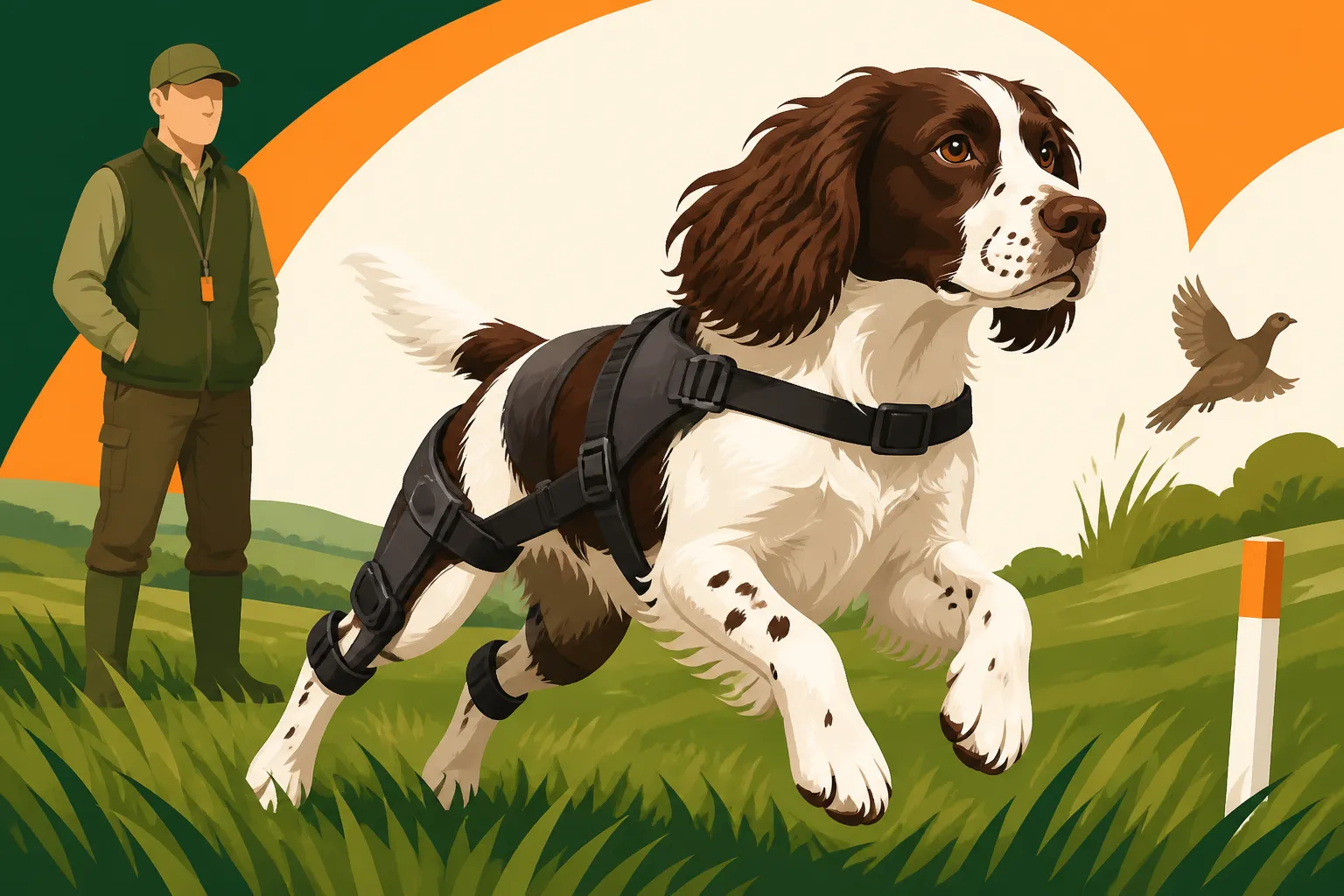
In a brace, two dogs are released to hunt the same section of ground at the same time. Each dog has its own handler, and the pair are judged as individual competitors. They are not supposed to cooperate like a trained team, although both must work safely and effectively while the other dog is nearby.
The point is to see how each spaniel performs under the same conditions. Both dogs encounter the same cover, scent, terrain, and opportunities to find game. Their work can be compared directly, but the judges still assess each dog on its own actions: how it searches, responds to its handler, handles game, and behaves when the other dog is working nearby.
A brace is not a simple race to find the most birds. A dog that rushes through cover, ignores its handler, or interferes with its partner may give a less convincing performance than a dog that hunts with purpose and remains responsive. Good work needs pace, initiative, control, and sound judgment.
What a brace is not
The dogs are not expected to hunt shoulder to shoulder or follow an identical route. Each spaniel should search the ground in a useful pattern, often moving back and forth across the handler’s front as it explores likely cover. This purposeful side-to-side search is often called quartering. A dog that consistently ranges too far away may miss direction from its handler or be difficult to keep within the area being worked.
The two dogs may naturally move through different patches of cover. One might find scent near a hedgerow while the other checks a strip of rough grass. The handler needs to manage their own dog without distracting or obstructing the competitor’s dog. A dog that repeatedly crowds its partner, chases it, or abandons its own search to follow the other can attract concern.
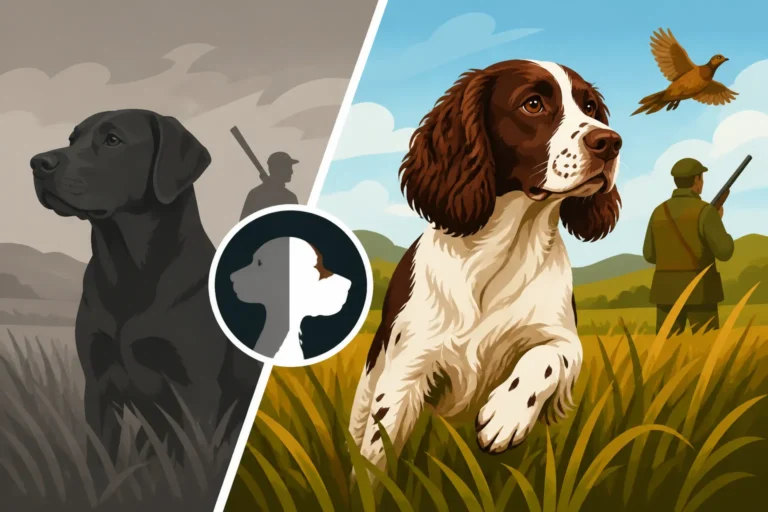
For a closer look at the difference between hunting and retrieving work, see Whether the Springer Spaniel Was Bred to Flush or Retrieve. The practical relationship between a spaniel and a retriever is also explained in How Springer Spaniel Field Trials Differ From Retriever Trials.
How trial formats vary
“Field trial” does not always mean the same format everywhere. Rules and judging conventions vary between organizations and countries, so the exact sequence, types of game, permitted handling, and expectations for retrieving depend on the particular trial. In some British spaniel trials, braces are a familiar part of the format. Other events, including many North American hunt tests, may run dogs individually or assess them according to a different test structure.
That distinction matters if you are watching from the sidelines or preparing a dog. A video of a dog working alone may show useful skills, but it does not necessarily explain how that dog would respond when another spaniel is hunting alongside it. Before entering or travelling to an event, check the organizing body’s rules and speak with the trial secretary or an experienced handler about the day’s format.
| Part of the event | What usually happens | What judges may observe |
|---|---|---|
| Brace assignment | Two dogs are paired for a run | Whether both dogs can work without interfering |
| Search | Handlers guide dogs through assigned cover | Hunting pattern, pace, nose, range, and responsiveness |
| Game encounter | A dog finds and flushes game | Whether it hunts purposefully and responds appropriately |
| Shot or fall | The dog may need to remain steady and mark the fall | Control, steadiness, and attention |
| Retrieve | A dog may be asked to retrieve game, depending on the rules and circumstances | Marking, delivery, control, and willingness |
| Overall assessment | Judges consider the dog’s performance during the run | Consistency, efficiency, manners, and suitability for the work |
How a brace run unfolds
Pairing, instructions, and the start
Before a run, the organizers establish which dogs are paired and explain where the handlers should begin. The handlers need to know the boundaries of the working ground, how the judges want them to move, and what signals or directions apply. That briefing is important: a handler who is unsure where to go can unintentionally spoil the dog’s search or put the pair in an unsafe position.
At the start, both handlers release or direct their dogs according to the trial’s rules. The dogs begin searching while the handlers move through the ground behind or alongside them. A good start is purposeful rather than frantic. The spaniel should get to work, but it should remain attentive enough to respond when its handler changes direction or asks it to search a particular patch.
Handlers often use a whistle, voice, or hand signal to guide the search. The aim is not to issue a constant stream of commands. Too much noise can interrupt the dog’s concentration and make it harder for judges to see whether it is hunting independently. The handler is there to guide, not to micromanage every step.
Searching and quartering
During the search, judges watch how the dogs use the available cover. A spaniel should show an active interest in likely places for game, rather than running in a straight line without investigating. The dog’s pattern should make practical sense: it covers ground, checks scent, and stays sufficiently connected to its handler.
A dog’s range is judged in context. If it works too close, it may fail to cover enough ground. If it ranges too widely, it may be hard to direct and may hunt outside the area being worked. The handler’s skill lies in supporting the dog’s natural drive while keeping it in a useful range. Teaching a Springer Spaniel to Stay in Range covers the training challenge behind that balance.
The brace adds another layer. Each handler has to keep their dog working without allowing it to disrupt the other dog. If one dog flushes game, the second dog should not rush in and steal the retrieve or chase after the action. Steadying a Springer Spaniel to Flush explains the control needed around a flush, while Teaching a Springer Spaniel Whistle Commands looks at the communication that can help a dog respond at a distance.
Flush, shot, and retrieve
When a spaniel finds game, it may flush the bird or animal from cover. The exact expectations depend on the trial rules and the circumstances, but the dog’s behavior at this moment is significant. Judges may watch whether it continues under control, responds to its handler, and behaves appropriately when game rises.
If a shot is fired, the dog may be expected to remain steady rather than chase immediately. A controlled dog can mark where the game falls and wait for direction. Steadiness is not just about a dog sitting still; it reflects training and self-control when instinct is pulling it toward moving game. Whether a Springer Spaniel Can Be Steadied to Shot explores that particular skill.
A retrieve may follow, depending on the rules and what happens during the run. The dog may need to locate the fallen game, pick it up, and return it in a manner the trial considers acceptable. Judges can observe whether it marked the fall, whether it searches intelligently if it did not see the landing place, and whether it delivers without unnecessary delay. Whether a Springer Spaniel Marks a Fall and What a Springer Spaniel Retrieves provide more context on those abilities.
A dog does not necessarily get a neat, predictable retrieve opportunity in every run. Wind, cover, the angle of the fall, and the dog’s position all affect what it can see and do. That is why judges assess the whole performance rather than treating one moment as the only measure of ability.
What judges look for
Hunting ability and use of ground
A strong search is energetic but not random. Judges want to see a dog that uses its nose, investigates suitable cover, and keeps working with purpose. A dog that skips likely scenting areas or repeatedly covers the same strip without adapting may appear less effective than one that searches with a clear sense of direction.
The quality of the ground matters too. Dense cover can slow a dog and make its movements harder to follow. Open ground may reveal its pattern more clearly, but scent can behave differently with wind and weather. Judges take the conditions into account, though the dog still needs to show practical hunting ability within them.
The breed’s instinct to hunt cover is part of its appeal, but natural enthusiasm is not enough by itself. A spaniel also needs to work within the handler’s direction. For a broader explanation of how field-bred and show-bred dogs can differ in working style, see How a Field Bred Springer Spaniel Differs in Drive.
Control, manners, and the other dog
The brace makes manners visible. Judges can see whether a dog remains focused when its partner flushes game, whether it responds to its own handler, and whether it avoids interfering. A dog that is steady and composed may give its handler more opportunity to guide it safely and effectively.
Control does not mean the dog lacks drive. In a trial, useful control allows the dog to keep hunting, respond to direction, and pause when the situation calls for it. A dog that becomes so excited it cannot listen may miss opportunities or create problems for the other competitor. Conversely, a dog that is hesitant or lacks initiative may not demonstrate enough hunting ability.
Handlers matter here as well. Clear, timely direction can help a dog stay in the right area, while repeated shouting or abrupt corrections can unsettle it. The goal is a partnership in which the dog works confidently and the handler helps it make good choices. To understand how much a spaniel’s performance depends on its handler’s signals, see How a Springer Spaniel Trial Is Run in Braces only if you are using a separate overview article; for training details, the whistle and range articles above are more useful.
The overall picture
Judges generally evaluate the dog’s performance across the run rather than relying on one isolated action. A dog may have an excellent nose but be difficult to direct. Another may be very responsive but fail to search with enough initiative. The assessment involves how the parts fit together: hunting, game finding, control, response to the handler, and any retrieve or other work required by the rules.
It is also possible for a dog to have a quiet run simply because opportunities are limited. If game is scarce or conditions make scent difficult, the judges have less evidence to assess. A trial is a test of performance under particular conditions, not a guarantee that every dog will get the same opportunity during its brace.
Preparing to watch or compete
What handlers should understand before entering
If you are considering entering a trial, start with the rules for that specific event. Confirm the eligibility requirements, the expected work, equipment restrictions, safety procedures, and how dogs are handled during a brace. Rules can differ enough that general advice from another event may not apply.
Training should build the component skills gradually. A dog needs to hunt cover, respond to its handler, and learn appropriate behavior around game. It also needs practice remaining composed near another working dog. A dog that is reliable when working alone may still need careful exposure to the added distraction of a brace.
Do not try to create a trial-ready dog in a few outings. Short, positive training sessions, suitable supervision, and advice from an experienced spaniel trainer can help prevent confusion. The dog’s physical condition matters too; work on uneven ground and through dense cover can be demanding. Prepare the dog for the kind of terrain and duration it is likely to encounter, and ask a veterinarian about fitness or health concerns.
Equipment and care on the day
Bring only equipment allowed by the organizer, and check what is needed well in advance. A suitable lead, whistle, water, and a way to manage the dog safely between runs are common practical considerations, but the event’s instructions take priority. If you are assembling everyday walking or grooming supplies, retailers such as Chewy may be one place owners look; confirm that any item you plan to use is appropriate for the event.
For a spectator, the most useful preparation may simply be learning what the judges and handlers are watching. Stand where the organizers direct you, keep quiet while dogs are working, and do not approach a dog or handler without permission. A dog in a trial environment may be highly focused, and sudden movement or noise can distract it.
After a run, check the dog for burrs, scratches, ticks, and tiredness, especially if it worked through thick cover. Keep water available and allow it to settle before expecting more work. A basic grooming kit from a general pet supplier such as Chewy can be useful for routine coat care at home, but any injury, lameness, or unusual fatigue calls for appropriate veterinary advice rather than simply brushing the dog off and carrying on.
Good care also means not overloading a dog with equipment it does not need. If you are comparing brushes, leads, or travel items, Chewy is one familiar retail option, but the best choice depends on the dog, the job, and the trial’s rules. Focus on fit, safe use, and whether the item solves a real need rather than buying gear just because it appears in a trial photograph.
Disclaimer
This article is for general informational purposes only and does not constitute professional advice. Laws, prices and regulations vary by location and change over time. Consult a qualified professional for guidance on your specific situation.