How a Show Springer Spaniel Fares in a Hunt Test
A show-bred English Springer Spaniel can take part in a hunt test, and some do far better than their polished coat and ring presence might suggest. The real question is not whether a show dog can hunt, but whether its instincts, training, fitness, and confidence match the work being tested. This guide explains what to expect and how to prepare realistically.
What a hunt test asks of a show Springer Spaniel
The test evaluates hunting work, not show-ring polish
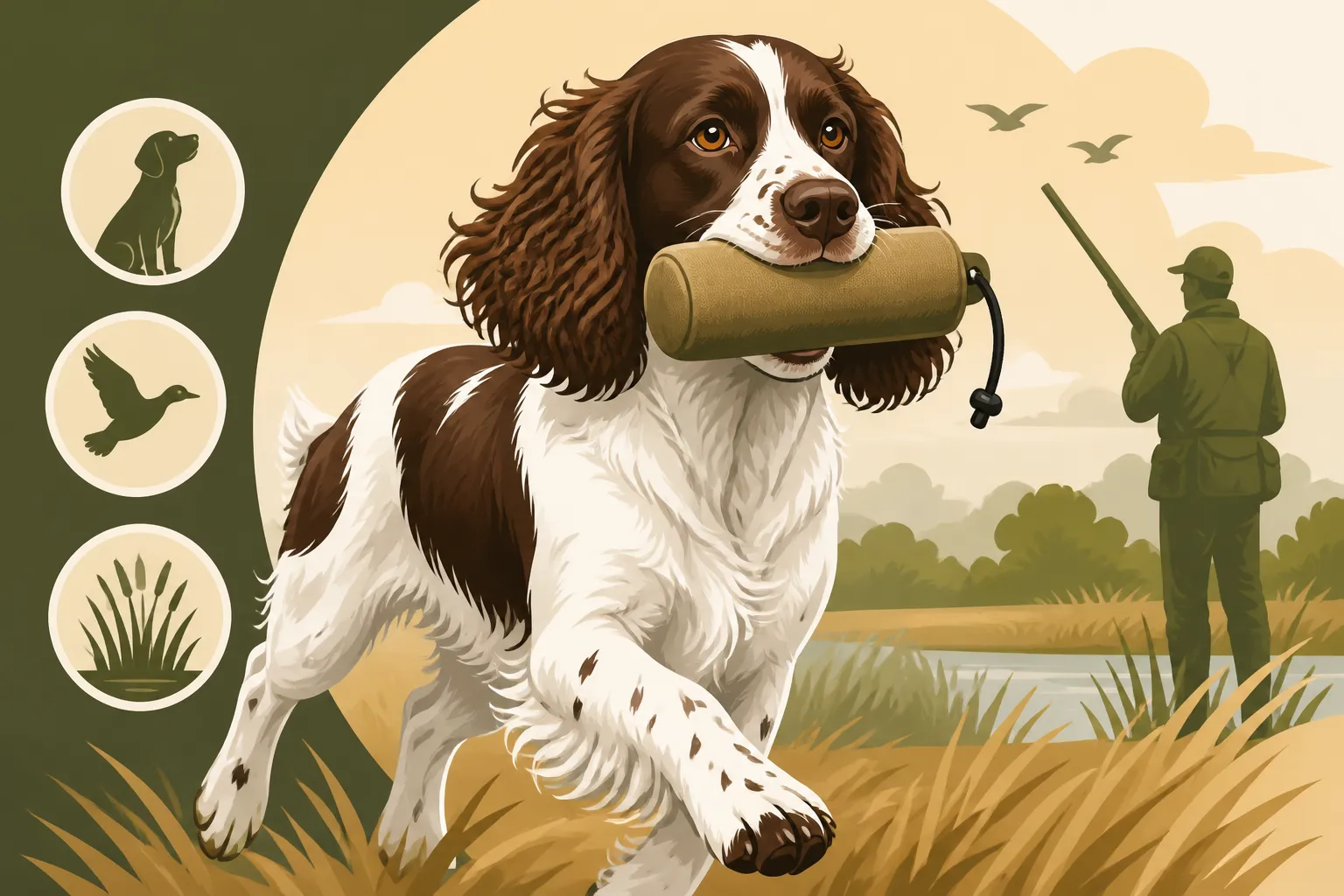
In an American spaniel hunt test, a dog is judged on its ability to perform practical hunting tasks. Depending on the level, that may include searching cover, responding to its handler, flushing game, remaining steady when required, and retrieving. The judge is looking for a capable, cooperative hunting dog—not a particular coat length, head shape, or show-ring outline.
That distinction matters because a show Springer Spaniel does not need to look or move like a field-trial specialist to take part. A dog with more feathering or a heavier build can still learn to work cover and respond to cues. The test does, however, make it clear whether the dog can do the work asked of it. A smart-looking stack in the ring cannot substitute for a reliable recall or a willing retrieve.
Hunt-test levels build on one another, so the expected skills become more demanding as a dog progresses. Broadly, a beginner may be asked to demonstrate basic hunting ability, while higher levels call for more control and steadiness. The exact setup and requirements depend on the test rules and level, so handlers should read the current rulebook and ask the club what to expect before entering.
Show breeding does not automatically remove hunting ability
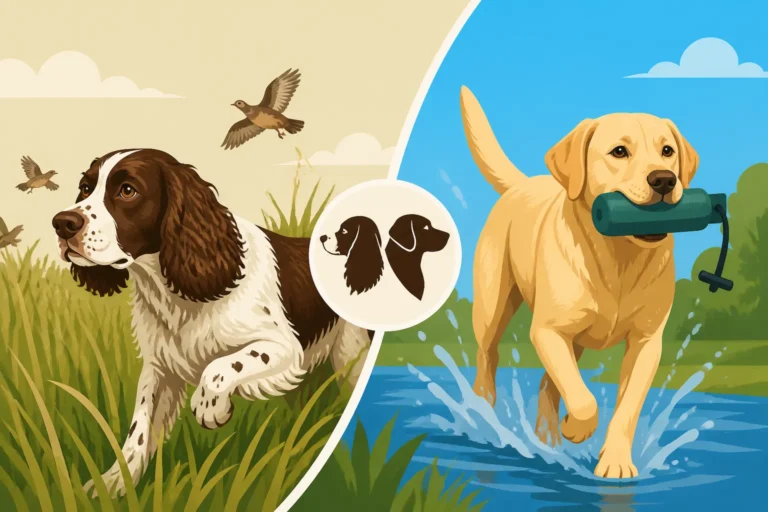
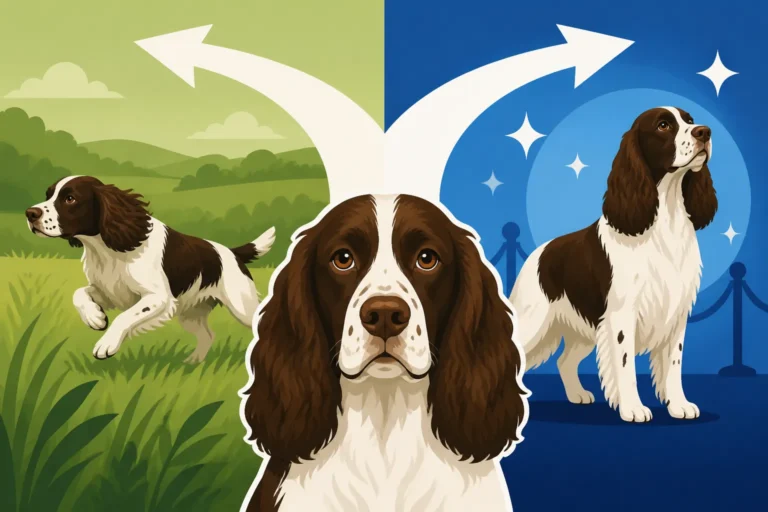
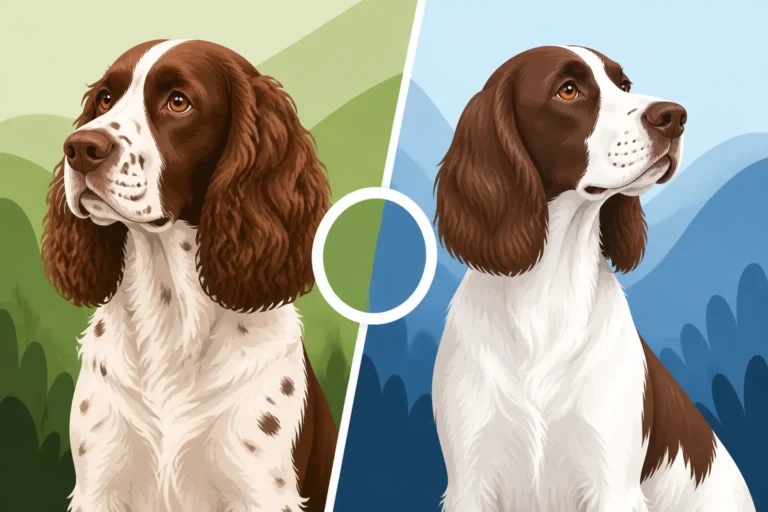
Show and field Springer Spaniels have diverged in appearance and, in many lines, in typical working style. But that divide is not a hard boundary between “can hunt” and “cannot hunt.” Some show-bred dogs show strong interest in scent and cover; others are less driven, or need more time to build confidence in unfamiliar terrain. Individual temperament, early exposure, training, and health all matter.
A show-bred dog may also work at a different pace from a highly driven field-bred dog. That is not necessarily a fault. A dog that searches methodically, checks in with its handler, and remains engaged can be a pleasure to handle, even if it does not race through cover. For more on the variation between lines, see Whether a Show Bred Springer Spaniel Still Hunts.
It helps to assess the dog in front of you rather than assume its abilities from its pedigree label. Does it investigate new scents? Will it move through light cover with encouragement? Does it enjoy carrying and returning a toy or dummy? Can it disengage from distractions and reconnect with you? These observations give a more useful starting point than comparisons with a different type of Springer.
Where show-bred dogs may need extra preparation
Coat, feathering, and build affect comfort, not eligibility
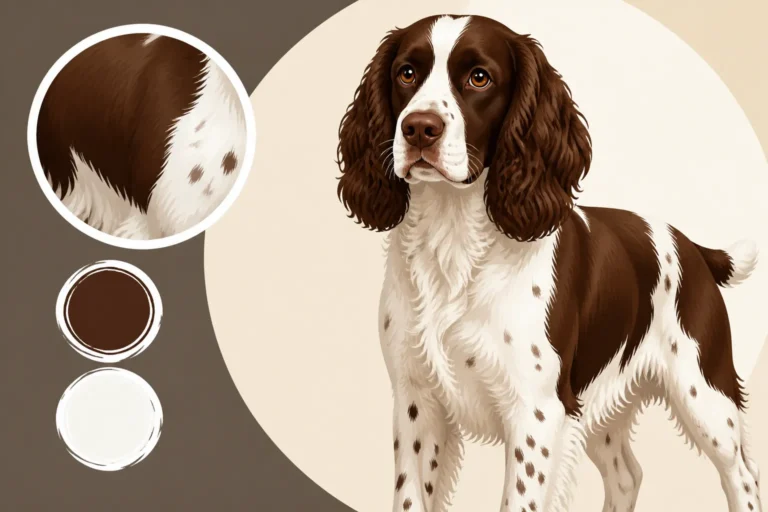
A show Springer’s longer feathering can collect burrs, seeds, mud, and damp vegetation. The coat is manageable, but it may need more attention after a day in cover than a shorter, less feathered coat. Before and after training, check behind the ears, under the legs, between the toes, and through the feathering for tangles or plant material. A small burr left unnoticed can pull at the skin and turn an otherwise good outing into an uncomfortable one.
A fuller coat can also hold water and dirt, so plan for a towel, a brush, and a calm post-session inspection. Keep feathering tidy enough that it does not interfere with movement or trap debris, while avoiding sudden changes to the coat simply for a test. Grooming choices can be discussed with a groomer familiar with the breed; How a Show Springer Spaniel's Coat Differs explains why coat routines vary between types.
Build and fitness matter just as much as coat. A heavier or less conditioned dog may tire sooner in warm weather or after repeated retrieves. Start with short, easy sessions on safe ground, and gradually increase the amount of work. The goal is a dog that can enjoy the task and recover comfortably—not one pushed into exhaustion to match another dog’s pace.
Confidence and drive are developed through suitable foundations
A dog that has spent most of its life in a quiet backyard may find a hunt-test setting overwhelming at first. There may be unfamiliar dogs, people, whistles, open fields, dense cover, and gunfire. Give the dog time to become comfortable with each part rather than combining every new challenge in one outing.
Begin with low-pressure activities: walking over different surfaces, searching for a toy in short grass, and retrieving a soft dummy over a short distance. Let the dog succeed easily and end while it is still interested. If it hesitates at cover, do not drag it in or scold it. Try a lighter, more inviting patch, or walk through together and reward curiosity.
A show-bred Springer may also need help understanding that the handler wants a purposeful search rather than casual sniffing. Keep early sessions brief and encouraging, and reward the dog for checking back in. The foundations in Teaching a Springer Spaniel to Hunt Within Gun Range and Teaching a Springer Spaniel to Stay in Range are relevant even for a recreational handler who is not aiming for advanced competition.
Training for the skills a hunt test measures
Build a reliable response before adding excitement
A dog working in cover can become absorbed in a scent. That is normal, but the handler still needs a way to regain the dog’s attention and guide its search. Practice recall and simple directional cues first in a low-distraction place, then gradually work in more interesting locations. A long line can provide safety while the dog learns, especially near roads, livestock, or areas where wildlife is present.
Use short, consistent sessions. If the dog is struggling to respond, make the exercise easier rather than repeating the cue louder and louder. Springer Spaniels can be sensitive to harsh handling, and pressure may reduce a cautious dog’s willingness to engage. Reward the response you want, then increase difficulty in small steps.
Before entering, practice the specific skills expected at that test level with an experienced spaniel trainer or club. A general obedience class can help with manners and attention, but it may not teach quartering, flushing, steadiness, or retrieving in cover. Steadying a Springer Spaniel to Flush offers context on one of the more specialized pieces of work.
Introduce gunfire carefully and professionally
Gunfire is not something to test casually by firing a gun near a dog and hoping it will be fine. A sudden loud bang can frighten a dog and create a lasting association. Introductions should be gradual, controlled, and handled by someone experienced in conditioning gundogs. The dog should already be comfortable with basic training and retrieving before gunfire becomes part of the picture.
Watch the dog’s body language. A dog that startles but quickly returns to normal is different from one that freezes, tries to escape, refuses food, or becomes anxious around the training area. Do not push through clear fear. Pause, reduce the intensity, and seek experienced help. The step-by-step considerations in How to Introduce a Springer Spaniel to Gunfire are worth reviewing before attempting this stage.
Even a confident dog should not be expected to master every test skill at once. A sensible sequence is to build engagement and recall, encourage a search, develop retrieving, then add more distractions and test-like conditions as the dog is ready. For many owners, the most useful preparation is regular practice with a local spaniel club, where the dog can learn in a structured setting.
Preparing for test day and deciding what success means
Check eligibility, fitness, and practical equipment
Before entering, confirm that your dog meets the event’s eligibility requirements and that you understand the class format. Ask the organizer what equipment is allowed, what the dog will be expected to do, and whether spectators can observe a session beforehand. Rules and procedures can differ between organizations and levels, so checking directly avoids a stressful surprise on the day.
Keep the dog’s condition in mind. A dog that is overweight, out of practice, or recovering from an injury should not be pushed through a demanding session. Build fitness gradually with walks and controlled play, and talk with your veterinarian if you are unsure whether the dog is ready for increased activity. Bring water and allow breaks, especially when conditions are warm.
A basic kit might include a secure lead, a long line for training where appropriate, a familiar retrieve item, towels, a brush, and bags for waste. Retailers such as Chewy may offer general dog-training and care supplies, but choose items for fit, durability, and the activity—not simply because they are marketed for sporting dogs. A well-fitted collar or harness and a reliable lead matter more than a large collection of equipment.
| Preparation area | What to consider | A realistic first step |
|---|---|---|
| Fitness | Stamina, comfort, and recovery | Add activity gradually and watch for fatigue |
| Search | Interest in scent and cover | Reward short searches in easy terrain |
| Recall | Response around distractions | Practice on a long line before off-leash work |
| Retrieving | Willingness to pick up and return | Start with short, upbeat retrieves |
| Coat care | Burrs, tangles, mud, and dampness | Inspect the ears, legs, feet, and feathering after work |
| Test format | Level, rules, and expected tasks | Ask the host club and read the relevant rules |
Treat a first test as information, not a verdict
A first hunt test can be a learning experience for both handler and dog. Your Springer may search enthusiastically but need more practice checking in. It may retrieve beautifully at home but hesitate in unfamiliar cover. Those outcomes do not prove that the dog is incapable; they tell you what to work on next.
A useful goal is to help the dog stay confident and engaged, not to force a title on a particular timeline. If the dog becomes worried, overheated, or overwhelmed, stopping is a responsible choice. Success can mean completing a short exercise happily, recovering well afterward, and showing more confidence than at the previous session.
After the outing, check the dog from nose to tail. Look for burrs, ticks, cuts, sore feet, and debris in the coat, and pay attention to any persistent limping, unusual fatigue, or discomfort. The routine in What to Check on a Springer Spaniel After a Day in Cover can help you make that inspection thorough without turning it into a rushed once-over.
If you enjoy the process, continue with appropriate training and ask experienced handlers for feedback. If your dog prefers retrieving in the garden or walking through open woodland, that is useful to know too. A show-bred Springer Spaniel does not have to become a competitive hunting dog to benefit from scent games, field walks, and purposeful training. The best measure is whether the work suits the individual dog and remains safe, enjoyable, and fair.
Disclaimer
This article is for general informational purposes only and does not constitute professional advice. Laws, prices and regulations vary by location and change over time. Consult a qualified professional for guidance on your specific situation.