How Long the Field and Show Springer Spaniels Have Been Separate
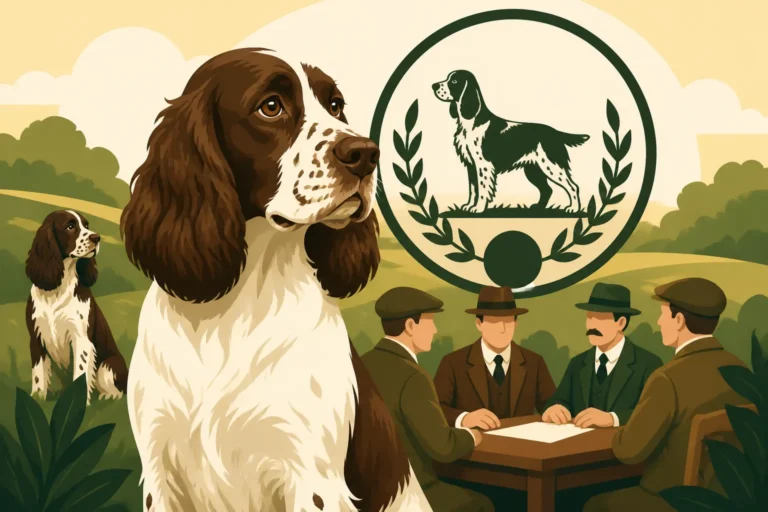
If you have seen one English Springer Spaniel racing through cover and another moving neatly around a show ring, it is fair to wonder whether they have been separate breeds for generations. The short answer is that their paths began diverging more than a century ago, but there was no single date when the split happened. The difference accumulated gradually through breeding choices.
How long have field and show Springer Spaniels been separate
Field and show Springer Spaniels have been diverging for many generations, with the separation becoming more noticeable during the twentieth century. There is no official “split year” to point to: breeders on both sides selected dogs for different jobs, and those choices gradually shaped different-looking, differently working types.
It is more accurate to describe them as distinct types within one breed than as two formally separated breeds. The story is a long process of selection, not a clean break in a kennel club record.
The divergence began before the modern types were obvious
Springer Spaniels were developed as working gundogs, but dogs have always varied in size, build, coat, and working style. As organized breeding and dog shows became more influential, breeders increasingly had reasons to favor particular traits. Some prioritized a dog’s usefulness in the field; others placed more emphasis on appearance and conformation.
Those priorities did not instantly create two recognizable camps. A dog bred to work could also look attractive, and a show prospect could still have hunting ability. Early on, the categories were much less rigid than the labels can make them sound today.
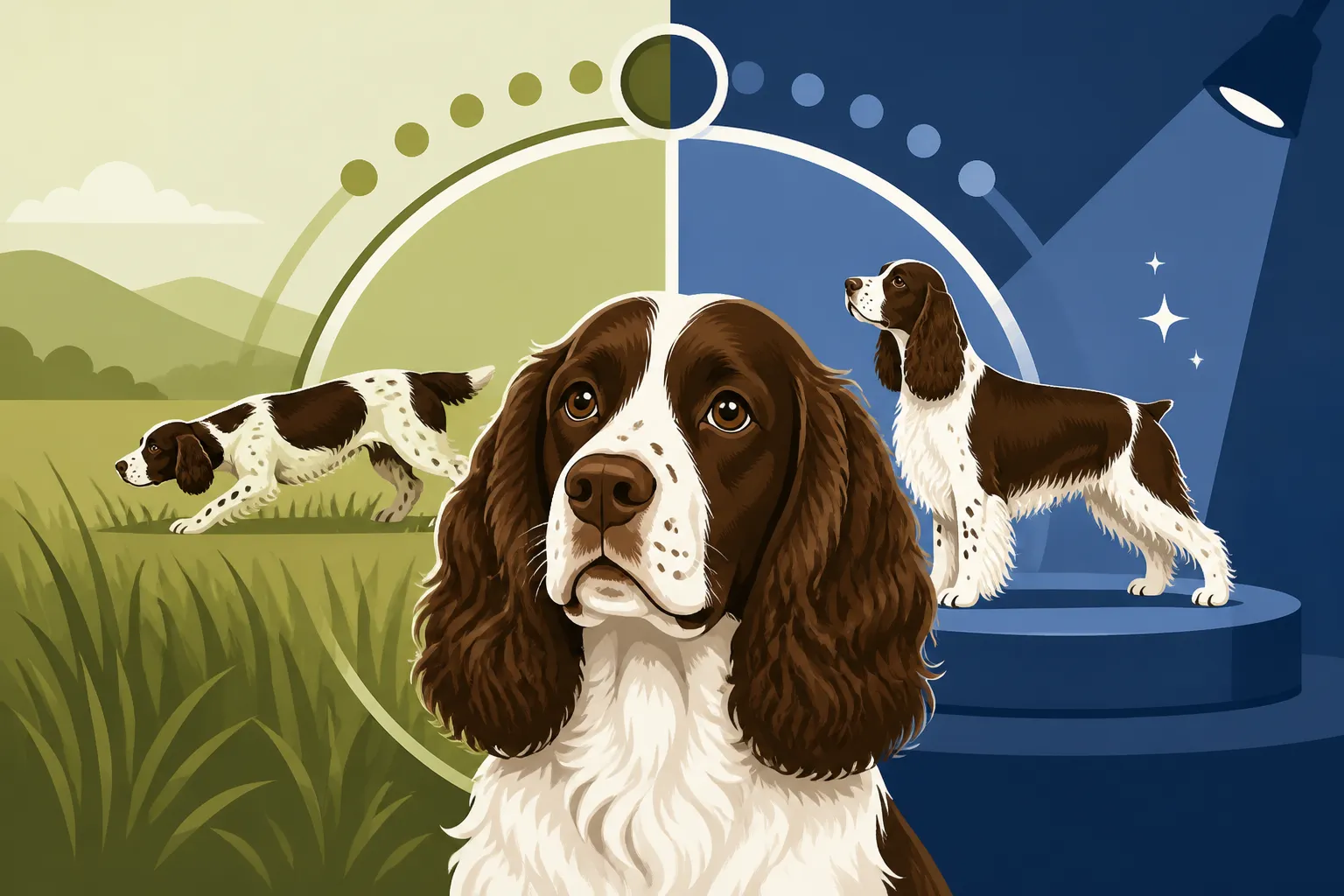
Over time, however, repeated selection added up. Breeders who consistently chose dogs for field performance tended to favor speed, stamina, agility, and a strong working drive. Those selecting for the show ring placed more emphasis on how a dog matched the breed standard, including its outline, coat, and overall presentation. How the Field and Show Springer Spaniel Diverged
The twentieth century made the difference easier to see
The divide became more pronounced as field trials and conformation shows developed as separate competitive pursuits. Each setting rewarded a different set of strengths. A field trial dog had to perform under pressure in practical working conditions; a show dog was evaluated against a written standard and judged in the ring.
Once breeders began choosing parents from dogs successful in their own discipline, their breeding goals became more specialized. Generations of that selection could change a population even without a formal boundary. The difference did not depend on one breeder or one decision: many individual choices, repeated over time, helped produce the types people recognize now.
This is why owners may hear that the two types have been “separate” for a particular number of years. That number is usually an estimate of how long the divergence has been noticeable or sustained, rather than the date of a formal separation. The history is better understood as a gradual widening of a gap. The Seventy Year Gene Pool Divide Inside One Springer Spaniel Breed
A practical timeline
The table below shows the broad phases of the divergence. The boundaries are approximate because breeding practices changed gradually and varied among countries and kennels.
| Broad period | What was happening | What it meant for the types |
|---|---|---|
| Before organized competition became influential | Springer Spaniels varied, and breeding was closely tied to practical work | There was no sharply defined modern field-versus-show divide |
| Early twentieth century | Dog shows and organized field competition encouraged different kinds of selection | Breeders increasingly chose for either ring presentation or working performance |
| Mid-twentieth century onward | Separate breeding priorities were repeated across more generations | Field and show populations became more recognizable as different types |
| Today | Both types remain part of the English Springer Spaniel breed | They are distinct in many kennels and settings, but not formally separate breeds |
The timeline is a guide, not a claim that every dog or breeding program followed the same path. Some lines remained closer in type, and some breeders have continued to value both sound conformation and working ability.
Why the field and show types grew apart
The central reason is straightforward: breeders selected dogs for different purposes. When one group values performance in cover and another values success in the show ring, the traits emphasized in breeding decisions can differ. Over many generations, those preferences influence both appearance and behavior.
That does not mean every field-bred dog behaves alike or every show-bred dog looks identical. Individual temperament, training, health, and the breeder’s choices still matter. But broad tendencies can emerge when particular traits are consistently rewarded.
Field breeding emphasizes working ability
A field-bred Springer Spaniel is generally selected with practical work in mind. Breeders may value a dog that is energetic, agile, persistent, responsive to handling, and willing to search cover. A relatively lighter build and shorter coat can be useful in demanding conditions, though dogs vary considerably.
These traits can shape everyday life, too. A dog bred for field work may need thoughtful outlets for its energy and instincts, even if it never goes hunting. A long walk alone may not satisfy a dog that thrives on searching, retrieving, and working closely with a handler. Families considering this type can explore How Much Exercise a Field Bred Springer Spaniel Needs and Whether a Field Springer Spaniel Can Be a House Pet.
Field ability is not simply a matter of being fast or high-energy. A working dog also needs to use its nose, respond to cues, and stay connected to its handler amid distractions. Those qualities are developed through both inherited tendencies and training; neither breeding nor training acts alone.
Show breeding emphasizes the breed standard
Show-bred Springer Spaniels are bred with greater attention to conformation and presentation in the ring. Their appearance may differ from field-bred dogs in build, coat, and overall outline. The coat and feathering that look striking in a show setting can also require more maintenance at home, especially after walks through wet grass, mud, or burr-filled paths.
Show breeding does not mean a dog has no working instincts. Many show-bred Springers enjoy scent games, retrieving, swimming, and outdoor activity. Nor does it guarantee a quiet temperament. A dog’s daily needs depend on the individual, its family line, and the way it is raised and exercised. For visual comparisons, see How Different the Two Springer Spaniel Types Look and How a Show Springer Spaniel's Coat Differs.
The difference is one of emphasis, not an absolute division between a “working dog” and a “pet dog.” A show-bred Springer can be an active companion, while a field-bred dog can learn to settle in a home. Prospective owners should ask breeders about the parents’ behavior and typical needs, rather than relying on type labels alone.
Selection can change a population without creating a new breed
When breeders select dogs from a relatively narrow group that excels in a specific discipline, those choices can make a population increasingly distinctive. If field breeders mostly choose field competitors and show breeders mostly choose show winners, the dogs in each group are more likely to share traits valued in that setting.
This is one reason people describe the field and show populations as having separate gene pools. The phrase does not necessarily mean that all dogs in either group are completely isolated from the other. It describes a tendency toward different breeding circles and priorities. The history of that divergence is explored further in How Britain and America Diverged on Springer Spaniel Type.
There have also been breeders who value dogs that can work and meet show-ring expectations. Their efforts complicate any simple account of two sealed-off groups. The ongoing conversation about whether the difference is helpful or harmful is covered in How the Divide Harms the Springer Spaniel.
Are field and show Springer Spaniels officially separate breeds
No. Field-bred and show-bred English Springer Spaniels are generally treated as types within the same breed, not as two separate breeds with separate identities everywhere. The distinction is meaningful in breeding and in the activities dogs are selected for, but it is not the same thing as a universal formal division.
That distinction can be confusing for puppy buyers. Someone may see two dogs that look very different and assume one must be a separate breed. In practice, breed labels, registry systems, and local terminology do not always describe the same thing as the differences visible between breeding lines.
Registry categories are not the same as breeding types
A registry’s rules determine how dogs are recorded and recognized. A breeder’s use of “field” or “show” describes a dog’s background, intended purpose, or the kind of traits emphasized in its line. Those labels can be useful, but they do not necessarily correspond to separate registry categories.
The result is that two Springers can be recognized as the same breed while having very different ancestors, proportions, coat, and working style. The question of formal classification is addressed in Whether Any Registry Separates the Two Springer Spaniel Types.
It is also worth asking what a breeder means by the label. “Field-bred” might refer to parents actively used in field work, a family line developed around field performance, or simply a dog with a leaner look. “Show-bred” can refer to a line selected for conformation, but it does not, on its own, tell you how a particular dog behaves at home.
The two types can still be bred together
Because they remain types within the same breed, crossing field and show lines is possible. Some breeders do so to combine qualities they value in both populations. The result is not automatically a perfect midpoint: puppies in a litter can inherit different combinations of appearance, drive, coat, and temperament.
A family hoping for a moderate-energy companion should not assume that a cross between the types will reliably deliver one. Ask to meet the parent dogs when possible, learn what the breeder is aiming for, and discuss how the puppies are being matched to homes. More on this subject is available in Whether the Two Springer Spaniel Types Interbreed and The Breeders Still Crossing the Two Springer Spaniel Types.
The same caution applies when choosing a puppy from a single type. Labels offer a starting point for questions, not a guarantee. A thoughtful breeder should be able to explain what the parents do, what their temperaments are like, and what kind of home tends to suit their puppies.
What the long separation means for prospective owners
A century-scale divergence can sound like a complete break, but its practical importance is simpler: different breeding goals may produce different everyday needs. The best match depends less on which type is “better” and more on how its likely activity level, coat care, and instincts fit your household.
Someone who wants a dog for field training may welcome a Springer with strong drive and a desire to work. Someone looking for an active companion may be equally happy with a show-bred dog, a field-bred dog, or an individual from a mixed background, provided they understand what that dog needs.
Compare the likely lifestyle demands
Think about an ordinary week, not just the weekend you imagine spending outdoors. Consider how much time you can give to exercise, training, grooming, and companionship. A high-drive dog may be manageable in a suburban home with consistent enrichment, but a yard alone usually does not provide the mental work a busy Springer craves.
| Question to ask | Why it matters |
|---|---|
| What do the parents do in daily life? | Their activities may offer clues about the kind of outlets the puppy could enjoy |
| How does the breeder describe their temperaments? | Energy, sensitivity, and sociability vary within both types |
| What coat care do the parents need? | Coat length and feathering can affect brushing and cleanup |
| What does the breeder prioritize in the line? | It clarifies whether selection has focused mainly on field work, conformation, or a combination |
| What support is offered after adoption? | Good guidance can help owners navigate training and settling-in challenges |
It is useful to ask about realistic examples. “Is this line active?” is broad; “How does an adult dog behave after a regular walk and a short training session?” may give you a more practical answer. Ask how the dogs respond to being left alone, how they handle busy environments, and what owners most often find challenging.
Look beyond appearance and labels
A dog’s silhouette can be immediately striking, but appearance alone will not tell you whether the dog is right for your home. Learn about health testing, early socialization, and the breeder’s approach to matching puppies with families. For a wider view of the breed’s history and divisions, see Two Breeds Registered as One: the Field and Show Springer Spaniel.
If you are drawn to the working type, be honest about whether you can provide structured activity and training. If you prefer a show-bred dog, do not assume that its coat or conformation means it will be content with a low-activity routine. Ask what the breeder sees in the individual puppy, not just the lineage label.
The most accurate answer to “How long have they been separate?” is therefore: their breeding paths have been diverging for many generations, especially as field and show competition encouraged different selection goals, but they have not undergone a single formal split into two breeds. Their history is a gradual widening of emphasis, with some overlap still possible.
Disclaimer
This article is for general informational purposes only and does not constitute professional advice. Laws, prices and regulations vary by location and change over time. Consult a qualified professional for guidance on your specific situation.