How Springer Spaniels Worked Before Guns
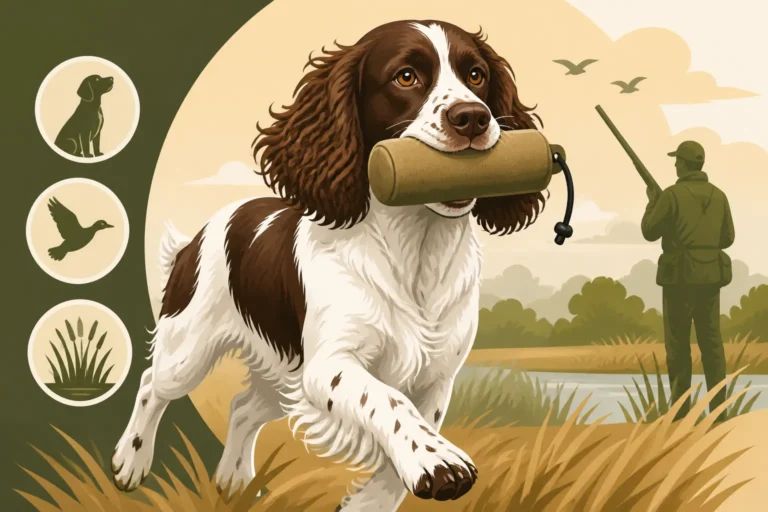
When you think about an English Springer Spaniel today, you probably picture a dog eagerly working cover, perhaps retrieving a pheasant or grouse for a hunter carrying a shotgun. It's a classic image, one deeply ingrained in the breed's identity. But what if I told you their incredible working abilities predated firearms entirely? It's true! Long before the crack of a shotgun echoed across the fields, these agile, intelligent dogs were invaluable partners in a very different kind of hunt, proving their worth by springing game for nets, traps, and even birds of prey. This guide will delve into that fascinating history, revealing the ingenious ways early spaniels played a crucial role in putting food on the table and enriching sporting pursuits.
The Ancient Roots of Spaniel Work
It's easy to assume that specialized dog breeds like the English Springer Spaniel simply appeared with their modern roles, but the truth is far more complex and goes back centuries. Long before the term "Springer Spaniel" was formally coined or the breed registered, there were "spaniel-type" dogs known across Europe, especially in Great Britain. These dogs were generally characterized by their eager temperament, keen noses, and their ability to work through dense cover to find and "spring" game.
Think of a time when the concept of distinct dog breeds, as we understand them today with their closed studbooks and breed standards, simply didn't exist. Dogs were bred for function, pure and simple. If a dog excelled at flushing birds from bushes, or retrieving small game, those were the traits admired and sought after in their offspring. People weren't necessarily tracking pedigrees in the way we do now, but rather observing performance. These early spaniels were robust, medium-sized dogs, brimming with energy, and possessing an insatiable drive to hunt. They were truly the foundational stock from which our modern Springers eventually emerged. You can read more about their deep history in How Old the Springer Spaniel Is as an English Gundog.
The lineage of these working dogs can be traced back through historical records, illustrating just how long humanity has relied on these four-legged partners. Ancient texts and artistic depictions show dogs remarkably similar in build and purpose to our Springers, diligently working alongside hunters. These records paint a picture of dogs that were indispensable members of the hunting party, essential for locating and driving game in an era before the sophisticated tools we have today. The very essence of what makes a Springer a Springer – that unwavering desire to hunt and work – was present from the start.
Flushing Game for Nets and Traps
Imagine a hunter in a medieval field, perhaps in a misty English dawn. There's no shotgun slung over their shoulder, no cartridge belt. Instead, they might have large, carefully concealed nets or strategically placed traps. Their most valuable tool, however, would be their trusty spaniel. This is where the "springing" action, which gives the Springer Spaniel its name, truly comes into play.
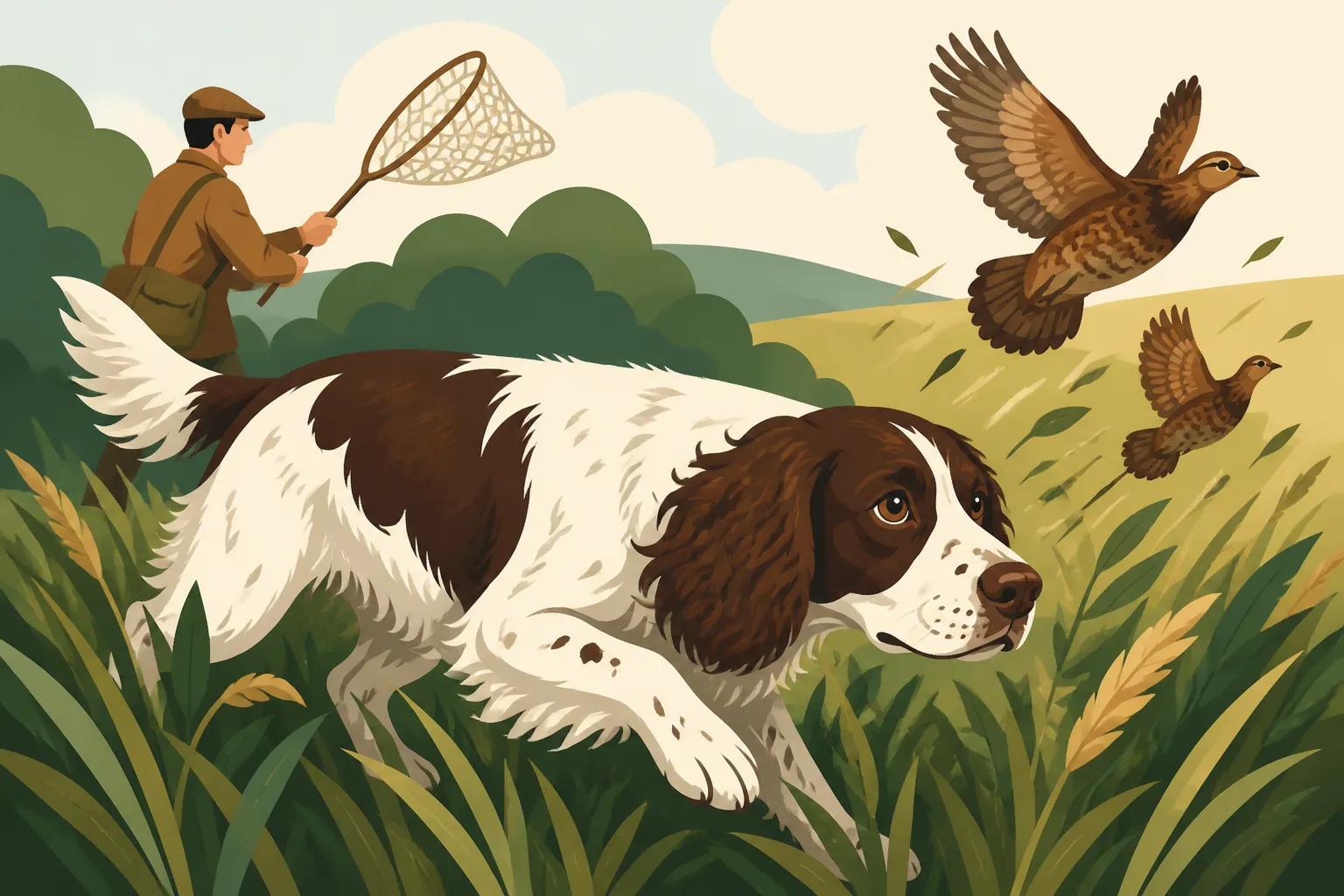
The primary method of hunting small game before firearms involved these nets or traps. The spaniel's job was to systematically quarter (work back and forth in a methodical pattern) through fields, hedges, and thickets, using their superior nose to locate game birds like partridges, pheasants, or even rabbits and hares hiding in the cover. Once the game was located, the dog would "spring" or "flush" it – meaning they would burst in, causing the hidden animal to leap or fly from its hiding place.
Driving Game into Nets
For netting, the process was quite coordinated. The hunter would set up long, often fine-mesh nets, sometimes several feet high, carefully camouflaged to be invisible to birds. These nets might be positioned across game trails or at the edges of a field. The spaniel would then be sent out to work. Their goal wasn't to catch the game themselves, but to drive it. They would actively push the birds or rabbits towards the waiting nets, forcing them into the trap. This required immense control and understanding of direction from the dog, and a close working relationship with the handler.
A dog that was too wild or undisciplined would flush game randomly, making it impossible to predict which way the quarry would run. The ideal spaniel would work in a controlled, purposeful manner, guiding the game subtly but surely towards the nets. Think of it less like a chaotic chase and more like a carefully orchestrated herding. The dogs needed to be agile enough to navigate dense undergrowth, but also intelligent enough to understand the strategy of the hunt. This meticulous process is something that highlights How a Springer Spaniel Drove Game Into Nets.
Utilizing Natural Instinct for Traps
Similar principles applied when hunting with various types of traps. Snares, box traps, or even pits might be set. The spaniel's role was to locate game and then gently or energetically push it towards these hidden dangers. This often meant the dog had to navigate difficult terrain, sometimes working silently to avoid spooking the game prematurely, and then initiating the "spring" at just the right moment. The success of the hunt relied heavily on the dog's ability to interpret scent and read the landscape, combined with the handler's ability to place traps where game was likely to be found.
The dog’s natural retrieve drive, though perhaps not fully developed into the "retrieve to hand" we see in modern gundogs, was also present. While their main job was flushing, an early spaniel might also have been used to pick up any game that was caught or injured. Their soft mouths, a hallmark of the breed, would have been highly valued to bring back game without further damage. This close partnership was essential for survival and sport in times gone by. If you’re curious about the general historical context of their work, you might enjoy How a Springer Spaniel Worked Before Firearms.
Working with Falcons and Hawks
Beyond nets and traps, early spaniels formed a truly remarkable partnership with an entirely different kind of hunting tool: birds of prey. Falconry, the sport of hunting with trained raptors, was a highly esteemed activity among nobility and royalty for centuries. And at the heart of many falconry hunts was a diligent spaniel.
The dynamic between dog, hawk, and human was a delicate dance of coordinated effort. The hawk, a magnificent predator of the sky, could spot game from a great height, but often struggled to get at birds hiding deep within dense cover. This is precisely where the spaniel became indispensable. Their keen nose and unwavering persistence in flushing game from thickets provided the crucial link.
The Spaniel's Role in Falconry
Imagine the scene: a falconer, perhaps with a majestic peregrine or goshawk perched on their gloved fist, walks across a field with their spaniel ranging ahead. The dog's task was to systematically search the ground, using its powerful sense of smell to pinpoint where game birds, like pheasants, partridges, or even quail, were hiding. Once the spaniel got "birdy" – indicating it had found scent – it would typically tighten its quartering pattern, signaling to the falconer that game was nearby.
Then came the "spring." With an explosive burst of energy, the spaniel would dive into the cover, flushing the bird into the air. This action was the cue for the falconer to release their hawk. The raptor, having likely watched the dog's actions from above or been alerted by the falconer, would then launch its attack, swooping down to strike the flushed bird. It was a perfectly timed, highly skilled operation where each participant played a vital and distinct role. This fascinating partnership is explored further in Springer Spaniels Working Under Falcons.
Discipline and Partnership
Working with a hawk required a very specific kind of discipline from the spaniel. The dog couldn't simply chase after the flushed bird; doing so would interfere with the hawk's hunt and potentially put the dog in danger. Instead, the spaniel needed to be "steady to flush" – meaning they would remain calm and still, often sitting or lying down, as the bird took flight and the hawk gave chase. This level of control showcased the spaniel's intelligence and biddability, traits that continue to be highly prized in the breed today.
The relationship was truly a partnership built on trust and mutual benefit. The dog couldn't catch flying game, and the hawk often couldn't find deeply hidden game. Together, they formed an unstoppable hunting team. This sophisticated method of hunting highlights just how adaptable and trainable these early spaniels were, proving their worth in complex, multi-species collaborations. It also explains why that intense desire to find and flush game is so deeply embedded in the Springer Spaniel's DNA, making it a natural fit for any field activity.
Life Before the Gun: Adaptability and Instinct
The capabilities of these early spaniels weren't just about learned behaviors; they were deeply rooted in an incredible array of natural instincts honed over generations. These dogs possessed an innate drive that made them perfect partners for hunting in a world without firearms. Their entire being was geared towards finding, flushing, and sometimes retrieving game, regardless of the tools their human companions employed.
The Instinctive Hunter
Think about the core instincts of a Springer Spaniel: their incredible scenting ability, their boundless energy, their desire to please, and that distinctive "springing" action. These aren't recent developments; they are ancient traits that have been purposefully selected and refined over centuries. Before guns, a dog that could consistently find game in dense cover and drive it out into the open was a lifesaver. A dog that could follow complex commands from a distance, or adapt its working style to different game and terrain, was a true treasure.
These early spaniels were, by nature, active and inquisitive. They needed to cover a lot of ground, often in challenging environments, to locate game that was intent on remaining hidden. Their robust build, protective coats, and stamina allowed them to work tirelessly all day. Their intelligence meant they could quickly learn to interpret hand signals, whistle commands, and the subtle cues of their handlers. The Medieval Records That Mention Springer Spaniels often speak to these dogs as essential companions, not merely pets, highlighting their functional value.
From Flushing to Retrieving
While the act of "springing" or flushing was their primary duty, their natural retrieve instinct was also a significant asset. Even without a gun, game could be injured or caught, and a dog with a "soft mouth" that could gently bring back downed game without damaging it was highly valued. This instinct for carrying objects, which you see in many modern Springers who love to carry toys or household items, is a direct link to their ancestral retrieving duties. This dual purpose, flushing and retrieving, is fundamental to Whether the Springer Spaniel Was Bred to Flush or Retrieve.
The transition to working with guns was therefore quite a natural progression for these dogs. The core tasks remained the same: find game, flush it, and then retrieve it. The primary difference was the sound of the gun replacing the visual cue for the game being secured. Their adaptability, coupled with their strong drive, allowed them to seamlessly integrate into this new form of hunting as firearms became more common and refined.
The Lasting Legacy in Modern Springers
Even today, centuries later, the echoes of their ancient work are profoundly present in every English Springer Spaniel. That intense desire to quarter a field, nose to the ground, searching for scent, or the sudden burst of energy when they "spring" a hidden bird, is a direct genetic inheritance from their ancestors. Whether a modern Springer is a beloved family pet or a competitive gundog, those instincts remain.
Understanding this historical context also helps us appreciate the breed's temperament. They are not dogs designed for a sedentary life. They need an outlet for their intelligence and their physical energy, whether that's through formal gundog training, agility, scent work, or simply long, engaging walks where they can use their incredible noses. The traits that made them indispensable before guns still make them vibrant, engaging companions today. The history of The Norfolk Spaniel and the Springer Spaniel also shows how various spaniel types contributed to the development of these working characteristics.
| Historical Hunting Method | Primary Dog Role | Hunter's Primary Tool | Required Dog Trait(s) |
|---|---|---|---|
| Netting | Flush game into nets | Large nets | Directed flushing, scenting, obedience |
| Trapping | Drive game into traps | Snares, box traps | Persistent searching, intelligence |
| Falconry | Locate & flush for hawk | Trained raptor | Steady to flush, scenting, control |
This foundational history truly highlights why the Springer Spaniel is such a vibrant, intelligent, and driven breed. Their instincts for finding and working game were not developed overnight; they were forged through centuries of essential partnership with humans, adapting to the tools and methods available. From the medieval fields where they helped fill nets to the falconer's side, prompting the hawk's majestic dive, the Springer Spaniel's role as an indispensable hunting companion is a testament to their enduring spirit and remarkable capabilities.
Disclaimer
This article is for general informational purposes only and does not constitute professional advice. Laws, prices and regulations vary by location and change over time. Consult a qualified professional for guidance on your specific situation.