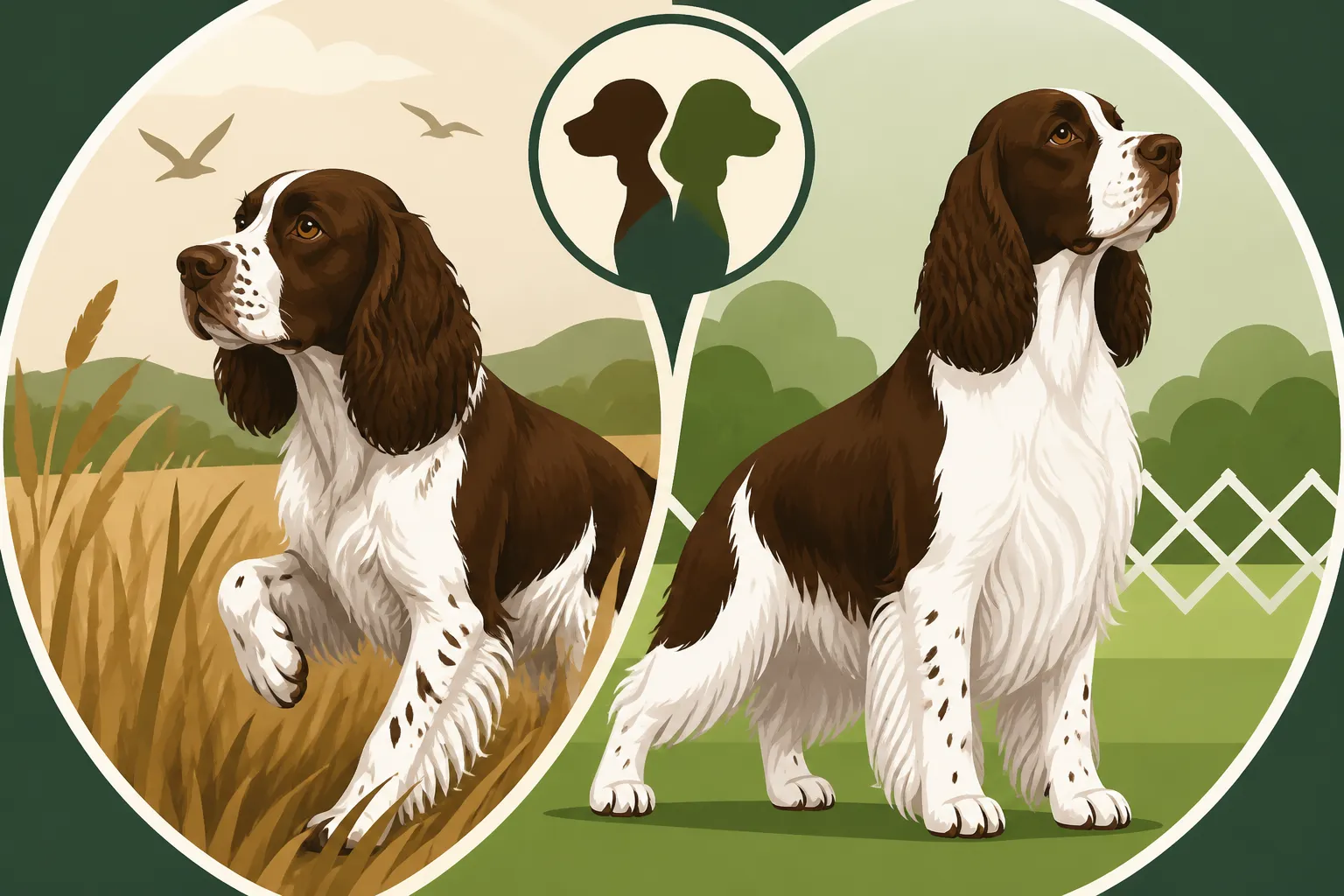
Two Breeds Registered as One: the Field and Show Springer Spaniel
It can be incredibly confusing for new and even experienced dog owners to understand why a single breed, the English Springer Spaniel, appears in two such vastly different forms: the sleek, intense field type, and the more heavily coated, often calmer show type. Many people bring home a Springer expecting one experience, only to find themselves living with a dog that seems to belong to an entirely different breed altogether. This guide aims to clear up that confusion, diving deep into the history, characteristics, and lifestyle implications of both the field and show English Springer Spaniel, helping you understand their unique needs and how to choose the right fit for your family.
The Historical Roots of a Single Breed with Dual Purpose
Before the world of formalized dog breeds and kennel clubs, dogs were bred purely for function. If a dog could do a job, it was valued. This practical approach meant that dogs with similar working styles, but perhaps different sizes, might even come from the same litter. The journey of the English Springer Spaniel from these humble, utilitarian beginnings to the distinct types we see today is a fascinating one, deeply entwined with the history of hunting and dog breeding in Britain.
Early Spaniels and the Size Divide
Imagine a time before breed standards were etched in stone, where dogs were simply called "spaniels" because they were of Spanish origin or simply worked in a certain "spaniel" way, typically flushing game. In those days, a litter of spaniel puppies might produce individuals of varying sizes. Some might be smaller, nimble enough to dive into thickets and flush woodcock, leading to them being colloquially known as "cockers." Others, larger and more powerful, were better suited to "springing" or flushing heavier game like pheasants and hares out into the open for hunters with nets, falcons, or eventually, primitive firearms.
It wasn't that they were two separate breeds, but rather functional categories based on their size and the game they pursued. A breeder might keep the smaller ones for woodcock and the larger ones for springing. This fluidity meant that genetically, these dogs were very much intertwined. The focus was entirely on their ability to perform their job effectively, not on a precise look or pedigree. This practical selection laid the groundwork for the eventual divergence, even before anyone thought to formally distinguish them.
The Emergence of the "Springing" Dog
The name "Springer" itself speaks volumes about the breed's original purpose. These dogs were literally bred to "spring" game from cover. Picture dense undergrowth, tangled brambles, and thickets where game birds or rabbits might hide. A good Springer Spaniel would work methodically back and forth, using its keen nose to locate the hidden quarry, then, with a burst of energy, flush it into the air or out into the open. This action was crucial for the hunter, whether they were employing nets, trained hawks, or the early, often single-shot, firearms.
This specialized role required a dog with specific attributes: incredible scenting ability, boundless energy, a fearless attitude towards heavy cover, and an innate desire to stay within a reasonable distance of the hunter. The dogs had to be biddable enough to respond to commands, yet independent enough to work cover effectively. Their job was not to retrieve (though many did), but to put the game up for the hunter. This period solidified the Springer's working style and began to select for the physical and mental traits we still associate with the breed today. It's fascinating to consider How Springer Spaniels Worked Before Guns, pushing game into nets or for birds of prey, long before the bang of a shotgun.
The Official Split from the Cocker
The formal recognition of the English Springer Spaniel as a distinct breed, separate from the Cocker Spaniel, occurred in 1902 by The Kennel Club in England. Before this, as mentioned, puppies in the same litter might be registered as either "Cocker" or "Springer" based on their mature size. The distinction was purely arbitrary for a long time, relying on the adult weight of the dog – generally, dogs over 25 pounds were Springers, and those under were Cockers.
This official separation, however, began to shift the focus from purely functional differentiation to a more formalized breed standard. Breeders could now specifically aim to produce Springers that met the emerging criteria for conformation, as well as working ability. This move was pivotal, as it meant that genetic lines, while once shared, would slowly but surely start to diverge. This demarcation marked the beginning of a truly separate identity for the Springer, even as it set the stage for the later internal split between the field and show types that confuses so many today. The decision point of The 1902 Split That Separated Springer From Cocker was a turning point for both breeds.
The Great Divide: How Field and Show Types Emerged
Once the English Springer Spaniel was recognized as its own breed, two distinct philosophies began to emerge within the breeding community. On one side were those dedicated to preserving and enhancing the breed's working capabilities, primarily for hunting. On the other side were breeders who focused on aesthetics, aiming to produce dogs that conformed perfectly to an evolving breed standard for the show ring. Over generations, these divergent goals led to two visually and temperamentally distinct types registered under the same breed name.
Post-Recognition Divergence of Purpose
After the formal recognition of the English Springer Spaniel, the two primary purposes—working in the field and excelling in the show ring—began to pull the breed in different directions. Field breeders were concerned with practical traits: stamina, intelligence, biddability, nose, courage in cover, and natural retrieving ability. A dog that couldn't perform its job in the field, regardless of how handsome it was, wasn't a valuable breeding animal. Their selection criteria were purely functional. They wanted a dog that could run all day, flush game with enthusiasm, and obey commands from a distance, often with whistle and hand signals.
Show breeders, conversely, started to emphasize traits that were rewarded in the conformation ring: correct coat texture, length and markings, graceful movement, bone structure, head shape, and overall presence. While the breed standard always included an acknowledgement of the Springer's sporting heritage, the practical demands of the show ring often prioritized visual appeal and adherence to specific aesthetic points over raw working drive. This difference in focus meant that lines quickly began to specialize, each group breeding dogs that excelled in their chosen arena, leading to a profound divergence that many refer to as How the Field and Show Springer Spaniel Diverged.
Physical Characteristics: A Tale of Two Looks
The most immediately striking aspect of the field and show divide is their appearance. A show-bred English Springer Spaniel often boasts a much heavier, longer, and silkier coat, with abundant feathering on its legs, chest, and ears. Their build tends to be more substantial, with heavier bone, a broader skull, and a more pronounced stop (the indentation between the eyes). They carry themselves with a noble grace that catches the judge's eye in the ring. Their ears are typically set lower and are more pendulous, framing their face beautifully.
The field-bred Springer, in stark contrast, is built for efficiency and endurance in harsh terrain. Their coats are typically shorter, coarser, and less feathered, minimizing the collection of burrs and debris in cover. Their build is leaner, more athletic, with lighter bone and a slightly narrower skull, all designed for agility and speed. They have a more "no-frills" look, reflecting their purpose. Their ears might be set a little higher and are often less heavy. While both are undeniably Springer Spaniels, seeing them side-by-side, it's easy to wonder how they are even the same breed. It truly is a visual testament to How Different the Two Springer Spaniel Types Look.
Temperament and Drive: More Than Skin Deep
Beyond the physical differences, the temperament and drive of field and show Springers can vary significantly, and this is where many new owners experience a mismatch of expectations. Field-bred Springers are often described as having an intense, almost insatiable drive to work. They are bursting with energy, incredibly intelligent, and possess a keen prey drive. They need a job, whether it's hunting, agility, or competitive obedience, to be truly content. Without sufficient physical and mental stimulation, a field Springer can become restless, destructive, or even anxious. They are enthusiastic, quick to respond, and have an almost constant "on" switch. A Field Bred Springer Spaniel Is a Different Dog to Live With speaks volumes to the commitment these dogs require.
Show-bred Springers, while still energetic and intelligent, generally have a more moderate drive. They are often bred to be wonderful family companions, excelling in obedience and enjoying long walks and playtime. They are typically affectionate, eager to please, and adapt well to active home environments. While they certainly need regular exercise and mental engagement, their intensity is usually less than that of their field-bred cousins. A show Springer might be perfectly happy with a couple of long walks and some backyard play, whereas a field Springer might see that as merely a warm-up. This is not to say one is "better" than the other, but rather that their innate drives are tailored to different lifestyles.
Field Springer Spaniels: Athletes of the Upland
When you encounter a field-bred English Springer Spaniel, you're looking at a dog whose entire being is geared towards performance in the hunting field. These dogs are finely tuned athletes, bred for generations to excel at their traditional job. Understanding what "field" truly means for these dogs is essential for anyone considering bringing one into their home.
Bred for Performance: What "Field" Really Means
For a field Springer, performance is everything. Every aspect of their breeding, from their physical build to their innate temperament, is selected to produce a highly efficient hunting machine. They possess incredible stamina, capable of working tirelessly for hours on end, covering vast amounts of ground in search of game. Their intelligence is sharp, not just for learning commands, but for understanding scent, terrain, and the nuances of flushing and retrieving. They have an innate prey drive that is a fundamental part of their being, driving them to locate and spring game.
This intense focus on function means that field Springers require a purpose. They thrive when they have a "job" to do, whether it's actual hunting, participating in hunt tests, or engaging in demanding canine sports like agility or dock diving. For a hunter, there's nothing quite like watching a well-trained field Springer quarter the ground, responding to whistle commands and hand signals, systematically working every inch of cover. Their biddability—their strong desire to please and work cooperatively with their handler—makes them highly trainable, but it also means they need consistent direction and engagement. This is the very essence of Teaching a Springer Spaniel to Hunt Within Gun Range, a skill honed over generations.
The Field Springer's Appearance and Build
The physical appearance of a field-bred Springer Spaniel is a direct reflection of their functional purpose. You won't find the lavish, flowing coats of their show-bred counterparts here. Instead, field Springers typically have shorter, often coarser coats, with minimal feathering on their legs, chest, and ears. This streamlined coat is a practical advantage in the field, as it collects fewer burrs, mud, and debris, making post-hunt cleanup much easier and preventing painful matting. It's a coat designed for protection and ease of movement, not for elaborate grooming. You'll notice How Short a Field Springer Spaniel's Coat Runs is a key differentiator.
Their build is distinctly more athletic and leaner, characterized by lighter bone structure and a more compact, agile frame. Every muscle seems designed for speed, endurance, and quick turns in dense cover. Their head might appear less broad, and their muzzle perhaps a bit longer, giving them a more rugged, "working dog" look. Even their tail, often docked in working lines to prevent injury in thick cover, is held with purpose, acting as a rudder and communicator in the field. These aren't dogs bred for a beauty pageant; they are bred for the rigors of the hunt, and their physique clearly reflects that.
Life with a Field Springer: High Energy, High Reward
Bringing a field Springer into your life is a commitment to a highly energetic, intelligent, and driven companion. These dogs are not content to be couch potatoes, even if they're happy to cuddle up with you after a long day. They demand significant physical exercise—not just a stroll around the block, but vigorous, off-leash running, swimming, or active play that truly tires them out. Expect daily sessions of 1-2 hours or more, often incorporating mental challenges. How Much Exercise a Field Bred Springer Spaniel Needs is not a suggestion; it's a requirement for their well-being.
Without adequate outlets for their boundless energy and sharp minds, field Springers can develop undesirable behaviors. They might become destructive, chewing furniture or digging up the yard, or they could become anxious and bark excessively. They excel in homes where they have a dedicated owner willing to engage them in activities like hunting, competitive obedience, agility, or even just extensive daily games of fetch and scent work. Their desire to please is strong, and when their needs are met, they are incredibly loyal, affectionate, and rewarding companions. They thrive on routine, consistency, and having a "job," even if that job is simply being the best family dog who gets to hike for miles every day. Providing quality, high-energy food from a trusted source like Chewy is also essential to fuel their active lifestyle.
Show Springer Spaniels: Conformation and Companionship
In stark contrast to their field-bred cousins, show English Springer Spaniels are primarily bred for the conformation ring. This means their breeding focuses on adherence to the official breed standard, emphasizing physical appearance, graceful movement, and a generally calmer disposition suitable for family life. While still possessing the inherent charm and intelligence of the breed, their purpose and presentation differ significantly.
Bred for the Ring: The Emphasis on Standard
For show Springer Spaniel breeders, the ultimate goal is to produce dogs that perfectly embody the written breed standard. This standard describes the ideal physical characteristics—everything from ear set and eye color to bone structure, gait, and coat texture. The emphasis is on balance, proportion, and elegance, with an overall picture of a handsome, well-put-together dog that can move with power and grace. While the standard does acknowledge the breed's sporting heritage, the practical demands of the show ring prioritize aesthetics and specific physical points over raw working drive.
Judges in the conformation ring are looking for a dog that moves effortlessly, holds its tail correctly, has the proper head planes, and possesses the desired coat quality and markings. This focus has led to a selection process that often favors certain physical traits that might not be as critical in the field but are highly valued in the show ring. The biddable and friendly temperament is also crucial, as a show dog must be able to stand calmly for examination and move confidently around a busy ring. This dedication to the standard influences generations of breeding, shaping the show Springer into the elegant dog we recognize today. You'll see discussions about How Heavily Boned a Show Springer Spaniel Is in these circles, reflecting the importance of a substantial, yet balanced, build.
The Show Springer's Distinctive Coat and Build
One of the most noticeable characteristics of a show-bred English Springer Spaniel is their abundant, luxurious coat. They typically have longer, silkier hair with significant feathering on their ears, chest, belly, and legs. This dense, flowing coat gives them a more elegant and refined appearance, requiring regular grooming to keep it free of mats and looking its best. This is precisely why The Show Springer Spaniel Coat That Adds a Groomer to Your Budget is a reality for many show Springer owners. The coat is often trimmed and shaped to enhance their outline for the show ring, a process that requires skill and time.
In terms of build, show Springers tend to be more substantial and heavily boned than their field counterparts. They often have a broader head, a more pronounced stop, and a generally more solid, compact body. While still athletic and capable of vigorous activity, their overall impression is one of strength and grace rather than lean, rugged efficiency. Their ears are generally longer and set lower than field types, contributing to their classic "spaniel" look. This distinct appearance is highly valued in the show ring, reflecting the breed standard's aesthetic ideals.
Living with a Show Springer: A Doting Companion
Show-bred English Springer Spaniels are renowned for being loving, devoted, and adaptable family companions. While they still possess the inherent energy and intelligence of the breed, their drive is typically more moderate than that of field lines. They thrive on being part of the family, enjoying cuddles on the couch as much as a good romp in the park. They are generally very good with children and other pets, making them excellent choices for active families.
These Springers still require regular exercise to stay healthy and happy, but their needs are often met with a couple of good walks or jogs each day, combined with playtime in the yard. They still love to retrieve and enjoy engaging in activities that stimulate their minds, but the intense, non-stop drive seen in many field lines is usually absent. This makes them a more suitable choice for individuals or families who want an active dog but aren't looking for a dedicated hunting partner or high-level canine athlete. Knowing How Much Exercise a Show Bred Springer Spaniel Needs will help you plan your daily routine and ensure your show Springer is a well-adjusted, happy member of the household. They are eager to please, respond well to positive reinforcement training, and form strong bonds with their human companions, making them truly doting pets.
Bridging the Divide: Similarities and Overlaps
Despite the striking differences in appearance and primary drives between field and show English Springer Spaniels, it's crucial to remember that they are, at their core, the same breed. Beneath the variations, there are fundamental traits that make a Springer a Springer, regardless of whether its ancestors trod the show ring or the pheasant field. Understanding these shared characteristics, as well as the ongoing discussions about their divergence, helps paint a complete picture of this versatile and beloved breed.
The Core Springer Spaniel Temperament
At the heart of every English Springer Spaniel, whether field or show, lies a set of core temperament traits that define the breed. They are universally known for their cheerful, enthusiastic disposition – often described as having an endlessly wagging tail. Springers are intelligent, eager to please, and highly trainable, making them receptive to various forms of instruction. They are deeply affectionate dogs, forming strong bonds with their families and often demonstrating a strong desire to be involved in whatever their humans are doing. This is why many lament The Soft Springer Spaniel That Shuts Down If You Shout, as their sensitive nature means harsh corrections are counterproductive.
Both types possess an innate curiosity and a keen sense of smell, always ready to explore their environment. They are active and playful dogs, regardless of the intensity of that activity. This inherent "spaniel-ness" – the biddability, the cheerfulness, the intelligence, and the affectionate nature – remains consistent across the field and show divide. While the degree of these traits might vary, their presence is undeniable, making Springers beloved companions for a wide range of owners.
Health Concerns Across Both Lines
When it comes to health, both field and show English Springer Spaniels share many of the same breed predispositions. Responsible breeders, regardless of whether they focus on working or conformation lines, strive to produce healthy puppies through careful genetic screening and health testing. However, owners should be aware of common issues that can affect Springers.
Ear infections are notoriously common in the breed, largely due to their long, pendulous ears that trap moisture and reduce air circulation. This creates an ideal environment for bacteria and yeast to flourish, making regular ear cleaning and vigilance essential. It’s why topics like Why a Springer Spaniel's Ears Are Never Quite Healthy are so important to discuss. Hip and elbow dysplasia, common orthopedic conditions in many medium to large breeds, can also affect Springers, leading to arthritis and lameness. Eye conditions such as Progressive Retinal Atrophy (PRA), Retinal Dysplasia, and Primary Glaucoma are also seen in the breed, necessitating regular eye exams. The DNA Test That Should Precede Every Springer Spaniel Purchase can help identify carriers for some of these genetic conditions. While certain conditions might appear more frequently in one line due to specific breeding selections, overall, a diligent approach to health is critical for all Springer Spaniel owners.
The Interbreeding Debate and "Dual Champions"
The question of interbreeding between field and show lines is a complex and often debated topic within the Springer Spaniel community. Historically, when the divide was less pronounced, it was more common for breeders to cross lines, seeking to maintain both working ability and correct conformation. The ultimate achievement for a Springer Spaniel was a "Dual Champion" title, meaning the dog had earned championships in both conformation (show ring) and field trials. These dogs perfectly embodied the breed's ideal: beauty and brains, form and function.
However, as the two types diverged further over the last 70 years, dual champions became exceedingly rare. The specific traits required for top-level performance in the field are now so distinct from those rewarded in the show ring that very few dogs can excel in both. This genetic divide, often referred to as The Seventy Year Gene Pool Divide Inside One Springer Spaniel Breed, makes crossing the lines challenging. Some breeders argue that a reunification or at least more intentional crossing could strengthen the overall breed gene pool and help restore some of the breed's original versatility. Others maintain that the specialized lines serve their respective purposes best as they are. This ongoing discussion reflects the passionate dedication of breeders to the future of the English Springer Spaniel.
Making the Right Choice: Field vs. Show for Your Home
Deciding whether a field-bred or show-bred English Springer Spaniel is right for you is one of the most important decisions an prospective owner can make. The differences aren't just cosmetic; they significantly impact the daily life and commitment required. A thoughtful assessment of your lifestyle and expectations will help ensure a harmonious relationship with your new companion.
Assessing Your Lifestyle and Expectations
Before you even start looking at puppies, take a long, honest look at your own life. How much time do you realistically have each day for exercise? Are you an avid runner, hiker, or hunter who can provide hours of vigorous activity, or are you looking for a companion for moderate walks and backyard play? Field Springers thrive on intense activity and a "job," often needing upwards of two hours of serious exercise daily, plus mental stimulation. If they don't get it, they can become destructive or anxious.
Consider your grooming tolerance. Are you prepared for the regular brushing, trimming, and potential professional grooming that a show Springer's luxurious coat demands? Or do you prefer a lower-maintenance coat that's easier to clean after adventures outdoors? Think about your experience with dogs. Are you a first-time owner, or do you have experience with intelligent, high-drive breeds? Field Springers can be a lot for novices. Ultimately, if your ideal dog is a constant, energetic companion for outdoor adventures and mental challenges, a field Springer might be a good fit. If you prefer a slightly calmer, elegant companion for active family life with moderate exercise, a show Springer could be more your speed.
Finding a Reputable Breeder for Either Type
Once you've decided which type of Springer Spaniel aligns best with your lifestyle, the next critical step is finding a reputable breeder. This holds true whether you're looking for a working field dog or a beautiful show dog. A good breeder prioritizes the health, temperament, and welfare of their dogs above all else. They will be transparent about their breeding practices, health testing, and the specific characteristics of their lines. Don't be swayed by convenience or a lower price tag; the initial cost of a puppy is a small fraction of what you'll spend over its lifetime, and cutting corners here can lead to heartbreak and much higher vet bills down the road.
Look for breeders who perform extensive health clearances on both parent dogs, checking for genetic conditions common in Springer Spaniels. This includes hip and elbow evaluations, eye certifications (like OFA Eye Certification or similar), and DNA tests for conditions such as Fucosidosis and PFK Deficiency. The importance of The Health Tests Both Springer Spaniel Parents Should Have cannot be overstated. A reputable breeder will happily share these results and discuss the health history of their dogs. They will also be knowledgeable about the temperaments of their puppies and can guide you towards a puppy that matches your family dynamics. They should ask you just as many questions as you ask them, ensuring their puppies go to suitable homes. Never hesitate to demand proof of The DNA Test That Should Precede Every Springer Spaniel Purchase, as this is a fundamental part of responsible breeding today.
Preparing for a Springer Spaniel, Regardless of Type
No matter if you choose a field or show English Springer Spaniel, preparing your home and lifestyle for their arrival is paramount. Springers are intelligent and active dogs, and a well-prepared environment sets them up for success. Puppy-proofing your home is essential; remove anything valuable or dangerous that a curious puppy might chew or ingest. Invest in high-quality puppy food, appropriate toys (especially durable chew toys, perhaps found on Chewy's website), a comfortable crate, and basic training supplies like a leash and collar.
Early socialization is crucial for all Springer Spaniels. Expose your puppy to a wide variety of sights, sounds, people, and other friendly dogs in a positive and controlled manner. Enroll in puppy classes to get a head start on basic obedience and good manners. Consistency in training and a positive reinforcement approach will go a long way with these eager-to-please dogs. Understand that the first year is a period of intense learning and growth, requiring significant time and patience. Even as puppies, Springers thrive on routine and clear expectations. Getting through The First Year With a Springer Spaniel Puppy successfully lays the foundation for a lifetime of companionship. Remember that regular veterinary care, including vaccinations and parasite prevention, is also a vital part of responsible ownership.
The Future of the English Springer Spaniel
The journey of the English Springer Spaniel from its early, undifferentiated spaniel ancestors to the two distinct types we recognize today is a testament to human intention and selective breeding. As we look ahead, the discussions surrounding these two types—and whether they should remain united under one breed standard—continue to evolve, shaping the future of this charming and capable gundog.
The Ongoing Debate: Should They Be Separate Breeds?
The significant differences between field and show English Springer Spaniels lead many to question whether they should, in fact, be officially recognized as separate breeds. Proponents of this idea argue that such a split would eliminate confusion for prospective owners, allowing them to choose a "Field Springer" or "Show Springer" with clearer expectations regarding appearance, temperament, and exercise needs. It would acknowledge the reality of their genetic divergence and the specialized roles each type now largely fulfills. They believe it would allow each type to thrive without the inherent conflict of a single standard trying to encompass two disparate ideals.
However, there are strong arguments against an official split. Many purists and long-time breed enthusiasts emphasize the shared history and core characteristics that unite all English Springer Spaniels. They argue that separating them could further fragment the gene pool, potentially leading to increased risk of certain genetic health issues or a loss of genetic diversity. The challenge, of course, is how to balance preserving the traditional versatility and health of the breed while acknowledging the very real practical differences that have emerged over decades of specialized breeding. The conversation around Whether the Springer Spaniel Should Be Split Officially remains a passionate one, with valid points on both sides.
Preserving the Versatility of the Breed
Despite the clear divergence, many dedicated breeders and owners across both lines share a common goal: to preserve the inherent versatility, intelligence, and charming temperament that define the English Springer Spaniel. This often means carefully selecting breeding stock for sound health, stable temperament, and natural working ability, even within show lines, and conversely, ensuring that field lines maintain the biddability and excellent disposition that makes them wonderful companions.
There are also some breeders who actively try to bridge the gap, selectively breeding dogs with moderate drive and good conformation, hoping to produce Springers that can excel in both the field and the show ring, or at least be highly capable family companions with a strong work ethic. They believe that maintaining some degree of overlap is crucial for the long-term health and integrity of the breed, ensuring that the Springer remains a truly "all-around" spaniel. This approach often involves a very nuanced understanding of genetics and a deep commitment to the breed's historical roots as a versatile gundog.
The Enduring Charm of the Springer Spaniel
No matter the type, the English Springer Spaniel continues to capture the hearts of countless owners worldwide. Their intelligent eyes, boundless energy, and perpetually wagging tails are iconic. They are cherished for their loyalty, their affectionate nature, and their ability to bring joy and activity into a home. Whether flushing game, excelling in agility, or simply being the family's devoted shadow, Springers embody a cheerful zest for life that is truly infectious.
The challenge and beauty of the English Springer Spaniel lies in its dual nature. It offers prospective owners a choice, albeit one that requires careful consideration. By understanding the distinct paths the field and show types have taken, and by honestly assessing your own lifestyle, you can find the perfect Springer Spaniel to share your life with. This remarkable breed, in all its variations, promises years of devoted companionship, thrilling adventures, and that unmistakable "Springer Smile."
| Feature | Field-Bred English Springer Spaniel | Show-Bred English Springer Spaniel |
|---|---|---|
| Primary Goal | Hunting, Field Trials, Performance | Conformation (Show Ring), Family Companion |
| Appearance | Leaner, more athletic, lighter bone; shorter, coarser coat, less feathering | More substantial, heavier bone; longer, silkier coat, abundant feathering |
| Coat Care | Lower maintenance, less prone to matting; designed for rough cover | High maintenance, regular brushing/trimming; prone to mats without care |
| Energy Level | Very high, intense drive, needs significant physical and mental work | Moderate to high, still active but typically less intense drive |
| Temperament | Often more driven, focused, sensitive to harsh correction | Generally calmer, affectionate, eager to please, good with families |
| Exercise | 1-2+ hours vigorous daily exercise, often needs a "job" | 1-2 hours moderate daily exercise, enjoys playtime and walks |
| Head Shape | Can be narrower, less pronounced stop | Often broader skull, more pronounced stop |
| Tail | Often docked (in areas where legal) to prevent injury in brush | Can be docked or left natural, based on regulations and breeder preference |
Disclaimer
This article is for general informational purposes only and does not constitute professional advice. Laws, prices and regulations vary by location and change over time. Consult a qualified professional for guidance on your specific situation.