How a Springer Spaniel’s Appetite Changes After Neutering
It's a common story I hear from fellow Springer Spaniel owners, and something I've personally experienced with my own dogs: you get your beloved companion neutered, expecting them to be the same bouncy, food-motivated whirlwind, but instead, their whole relationship with food seems to shift. Suddenly, they're either perpetually ravenous, or paradoxically, they start gaining weight even on the same food portion, leaving you scratching your head about what happened to their once-lean physique. This guide is here to shed light on why your Springer Spaniel's appetite and metabolism can change so dramatically after neutering, and how you can proactively manage these changes to keep them healthy and happy for years to come.
The Hormonal Shift and Its Impact on Metabolism
Neutering, whether it's spaying a female or castrating a male, involves removing the primary source of sex hormones. While this procedure offers significant health and behavioral benefits, it undeniably creates a profound shift in your dog's internal chemistry. This isn't just a minor tweak; it's a fundamental alteration that impacts everything from their metabolism to their overall energy expenditure. Understanding this is the first step to managing their post-surgical life effectively.
The Role of Sex Hormones Before Neutering
Before neutering, your Springer Spaniel's body is humming with sex hormones. In males, testosterone plays a crucial role. It contributes to higher muscle mass, a more active metabolism, and often a stronger drive to explore, mark territory, and engage in high-energy activities. Think of your intact male Springer: he's often a lean, mean, running machine, burning calories just by existing and being driven by those natural instincts. These hormones act like a natural accelerant for their metabolism, keeping them burning fuel efficiently.
For female Springer Spaniels, hormones like estrogen and progesterone fluctuate throughout their heat cycles. These hormones also contribute to their metabolic rate, albeit in a different pattern than males. The cyclical nature of their reproductive system demands a lot of energy, preparing their bodies for potential pregnancy and motherhood. Even outside of a heat cycle, these hormones influence a baseline metabolic speed, supporting their lively and often relentless energy levels. Both sexes, in their intact state, are naturally primed by these hormones to maintain a higher internal 'furnace' temperature, which supports their active Springer Spaniel lifestyle and helps keep them trim.
How Neutering Alters the Hormonal Landscape
Once your Springer Spaniel is neutered, those primary sources of sex hormones are gone. The immediate effect is a rapid decline in testosterone in males and estrogen/progesterone in females. This dramatic reduction in hormones has a direct and significant impact on their metabolic rate. Essentially, their internal engine downshifts. They no longer have those hormonal signals telling their body to maintain such a high metabolic speed. This means they burn fewer calories at rest and often have a reduced drive for the intense, boundless activity that was once characteristic of their intact selves.
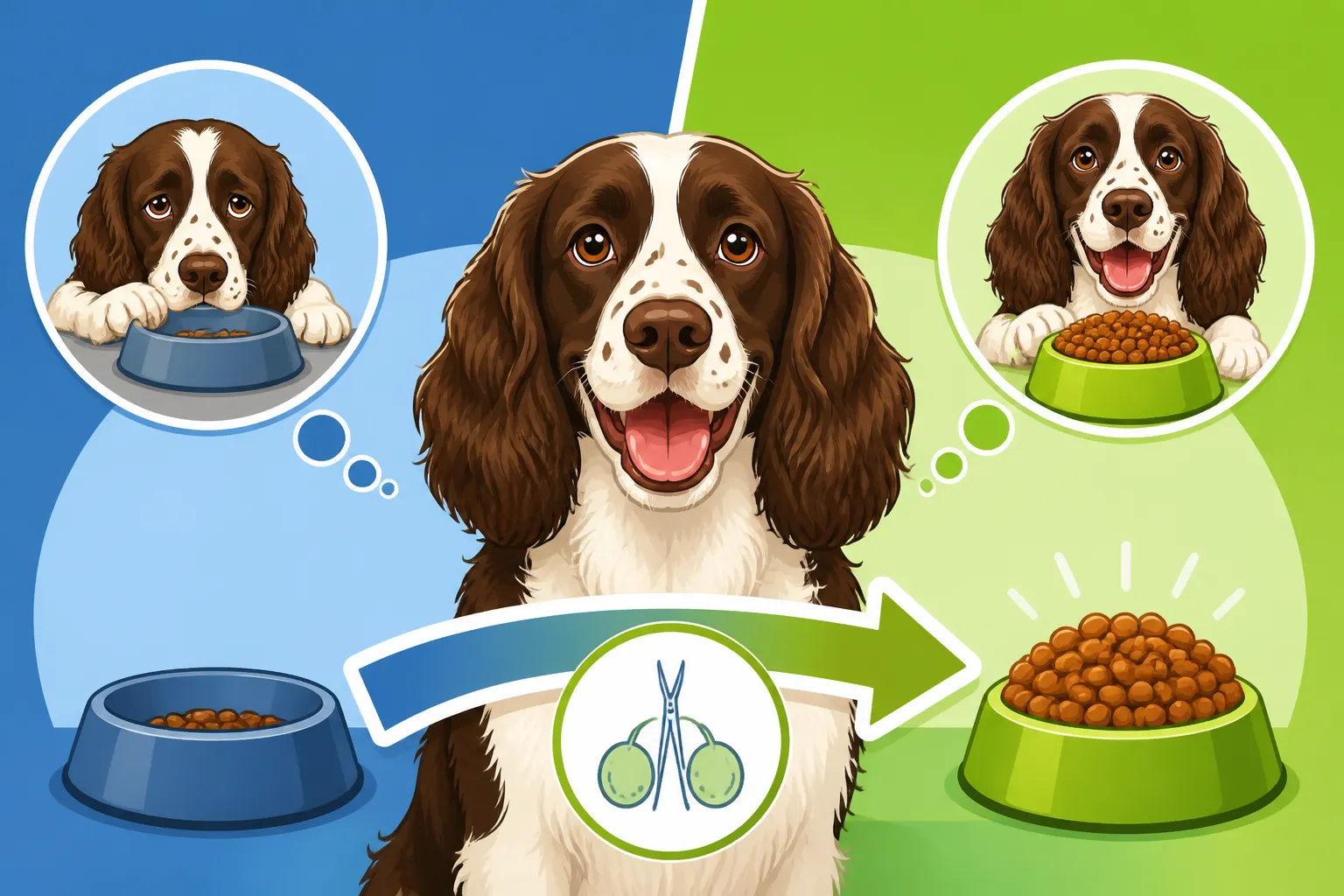
What this translates to for you, the owner, is that your dog simply doesn't need as many calories to maintain the same body weight. That same scoop of kibble that kept them lean and energetic before surgery might now be too much, leading to gradual weight gain. It's not that they've suddenly become lazy; it's that their body's inherent energy requirements have fundamentally changed. They might still be active, but the internal physiological demand for energy has decreased, making it easier for excess calories to be stored as fat. This is a common and often frustrating observation, as many owners continue to feed their dogs the same way they always have, unaware of this crucial internal shift.
Increased Appetite vs. Reduced Energy Needs: The Weight Gain Dilemma
It's a perplexing situation for many owners. You might swear your neutered Springer Spaniel is suddenly acting like a bottomless pit, constantly begging for food. Or, perhaps you notice them getting a bit pudgier, despite seemingly no change in their diet or exercise. This common scenario isn't always about a true increase in hunger but more about a fundamental imbalance between their food intake and their new, lower energy requirements.
The Misconception of an "Increased Appetite"
Many owners feel like their newly neutered Springer has developed an insatiable appetite, constantly hovering around the kitchen or nudging them for snacks. While it certainly feels like they're hungrier, it's often more accurate to say that their perception of hunger, or their drive for food, has become more pronounced because their body isn't burning through calories as quickly. The "same" amount of food they ate before neutering now represents an excess for their body's reduced caloric needs. Their stomach might feel less full, or the satisfaction from eating might be less enduring, precisely because their metabolism is operating at a slower pace.
Moreover, a significant part of a Springer Spaniel's life, especially if they are a working or field-bred dog, revolved around high-energy output. Before neutering, the sheer thrill of running, hunting, and exploring often served as its own reward. Once neutered, some dogs may shift their focus. The intense drive to sprint across a field might lessen, and in its place, the simpler, more immediate gratification of food can become a more prominent motivator. They might start "asking" for food more, not necessarily because they're starving, but because food now fills a larger behavioral void or provides an easily accessible source of pleasure when their former high-octane activities aren't as hormonally driven. This behavioral change can easily be misinterpreted as genuine, physiological hunger.
Why Weight Gain Becomes a Concern
The combination of a slower metabolism and a dog still being fed the same pre-neutering portions is a recipe for weight gain. It’s a subtle creep, often not noticeable week to week, but over months, that extra pound or two turns into five, then ten. A Springer Spaniel, with its naturally athletic build, is not designed to carry extra weight. This excess weight puts undue strain on their joints, particularly their hips and elbows, potentially exacerbating conditions like Hip Dysplasia in a Springer Spaniel or leading to Arthritis in an Older Springer Spaniel much earlier in life. Imagine carrying a backpack filled with bricks all day – that's what carrying extra weight feels like for your dog.
Beyond joint issues, obesity in Springer Spaniels significantly increases their risk for a host of other serious health problems. These can include diabetes, heart disease, respiratory issues, and even certain types of cancer. Overweight dogs often have less stamina, are more prone to heat intolerance, and simply don't enjoy life with the same vitality as their leaner counterparts. It's a silent threat that can chip away at their quality of life and shorten their lifespan. Keeping your Springer at their ideal weight – usually around The Weight a Male Springer Spaniel Should Hold or The Weight a Female Springer Spaniel Should Hold – is one of the most impactful things you can do for their long-term health and happiness.
Adjusting Diet and Exercise for a Neutered Springer Spaniel
Recognizing that your Springer Spaniel's internal mechanics have changed is the crucial first step. The next is taking proactive measures to rebalance their caloric intake with their energy output. This isn't about drastic, overnight changes but rather a thoughtful, gradual adjustment to their daily routine to accommodate their new physiological reality.
Re-evaluating Food Portions and Calorie Intake
The most critical adjustment after neutering is almost always with their food. If you continue to feed the same amount as before, weight gain is practically inevitable. My first piece of advice is always to talk to your veterinarian. They can provide specific calorie recommendations based on your dog's age, current weight, ideal weight, and activity level. Many commercial dog foods, like those found on Chewy or Ollie, offer formulas specifically designed for "weight management" or "less active dogs." These typically have fewer calories per cup, often by being lower in fat and higher in fiber, which helps your dog feel full without consuming excess calories.
Don't just assume; measure! It's surprising how often a "scoop" can vary. Use a proper measuring cup, not just any old cup from the kitchen. Start by reducing their current portion by about 10-20% and monitor their weight over a few weeks. If they're still gaining, reduce a little more. Remember, consistency is key here. Every treat, every little bit of human food, adds up. Being mindful of How Much Food a Springer Spaniel Eats Monthly and making conscious choices about calorie density will go a long way in Keeping a Springer Spaniel at a Working Weight. For senior dogs, who often become less active, this adjustment is even more vital, as discussed in What an Old Springer Spaniel Should Be Fed.
Maintaining Activity Levels
While their metabolism might slow down, a Springer Spaniel's intrinsic need for activity doesn't vanish entirely with neutering. They are, at heart, energetic working dogs, and denying them appropriate outlets for their energy can lead to frustration, destructive behaviors, and indeed, continued weight gain. The key here is proactive engagement from you. Instead of relying on their former hormonal drive to keep them perpetually moving, you now need to be the consistent motivator.
This means committing to regular, structured exercise. Longer, brisk walks are a great starting point, but don't stop there. Engaging their minds is just as important as exercising their bodies. Scent work, where they use their incredible noses to find hidden treats or toys, can be incredibly tiring for them. Structured play sessions with toys, retrieving games, or even agility courses in the backyard can help burn calories and keep them mentally stimulated. Remember, a field-bred Springer Spaniel might need more hours of activity (How Many Hours a Field Springer Spaniel Needs Daily), while a show-bred Springer might be content with slightly less, perhaps closer to How Much Exercise a Show Bred Springer Spaniel Needs. The goal is to keep them moving, engaged, and prevent boredom that can lead to excessive eating or lethargy.
Practical Strategies for Managing Post-Neutering Appetite
Beyond adjusting the basics of food and exercise, there are several practical, day-to-day strategies you can implement to help manage your neutered Springer Spaniel's appetite and keep them at a healthy weight. These methods focus on making mealtime more satisfying and controlling calorie intake without making your dog feel deprived.
Slowing Down Mealtime
One common issue with dogs, especially those who feel perpetually hungry or are prone to gulping their food, is eating too quickly. When a dog eats too fast, their brain doesn't get the signal that they're full until it's too late, leading them to feel unsatisfied even after consuming a large amount of food. This is where tools like slow feeder bowls or puzzle toys come in incredibly handy. These devices force your Springer Spaniel to work for their food, slowing down their ingestion significantly.
By extending mealtime, you allow their digestive system and brain to catch up, promoting a greater sense of satiety. It also provides valuable mental stimulation, which is crucial for a smart breed like the Springer Spaniel. Instead of a two-minute chow-down, they might spend ten to fifteen minutes engaged in a productive, rewarding activity. Many different styles of slow feeders are available on Amazon, from simple labyrinths to more complex interactive puzzles. Using these can make a big difference in how your dog perceives their meal and can help with overall portion control. For a comprehensive look, you can explore Which Slow Feeder Works for a Springer Spaniel.
Healthy Treats and Alternatives
Let's be honest, we all love giving our dogs treats. It's a way to bond, to reward good behavior, and simply to show affection. However, after neutering, those calorie-dense treats can quickly derail any weight management efforts. It's not about eliminating treats entirely, but about being much more discerning about what you offer and how much. Many commercial dog treats are surprisingly high in calories, fats, and sugars.
Instead, opt for low-calorie, healthy alternatives. Plain cooked vegetables like baby carrots, green beans, broccoli florets (in moderation), or slices of apple (without seeds) can be fantastic, guilt-free treats. Not only are they low in calories, but they also provide fiber and vitamins. You can also reserve a small portion of their daily kibble allowance to use as training rewards throughout the day. This way, you're not adding extra calories but simply distributing their regular intake. Always check the ingredients and calorie count on any commercial treats, and remember that even small amounts add up. Be realistic about how many treats you're truly giving throughout the day; it's often more than we realize.
Monitoring Weight and Body Condition
The most accurate way to manage your neutered Springer Spaniel's weight is through regular monitoring. This isn't just about stepping on a scale; it's about understanding their body condition. While a scale gives you a number, a body condition score (BCS) tells you if that number is healthy for your dog. You should be able to easily feel your Springer's ribs with slight pressure, like feeling the knuckles on your hand. There should be a noticeable waist tuck when viewed from above, and an abdominal tuck when viewed from the side. If you can't feel their ribs or see a waist, it's time to act.
Your veterinarian can help you learn how to body condition score your dog and determine their ideal weight. Regular weigh-ins at home (if you have a suitable scale) or at your vet's office are crucial. Many vets are happy for you to pop in for a quick weight check between appointments. Don't wait until your dog is visibly overweight; subtle changes can be addressed much more easily. Here's a quick guide to body condition scoring:
| Body Condition Score | Description | Ribs | Waist/Tuck |
|---|---|---|---|
| 1: Emaciated | Ribs, spine, pelvis, prominent from distance | Easily visible, no fat | Extreme abdominal tuck |
| 2: Very Thin | Ribs, spine, pelvis, easily visible | Easily visible, minimal fat | Marked abdominal tuck |
| 3: Thin | Ribs easily palpable, minimal fat cover | Palpable with little pressure, minimal fat | Evident abdominal tuck |
| 4: Ideal | Ribs easily palpable with slight fat cover | Easily palpable, slight fat | Well-proportioned waist, abdominal tuck |
| 5: Overweight | Ribs palpable with difficulty, moderate fat cover | Palpable with pressure, moderate fat | Less distinct waist, slight abdominal sag |
| 6: Obese | Ribs difficult to palpate, heavy fat cover | Difficult to palpate, heavy fat | No waist, obvious abdominal sag |
| 7: Grossly Obese | Massive fat deposits, ribs impossible to palpate | Not palpable, massive fat | Distended abdomen |
Aim for a BCS of 4. If your Springer is creeping towards a 5 or 6, it's time to implement changes. Being proactive about Taking Weight Off a Springer Spaniel That Is Not Working will ensure they live a full and active life.
When to Seek Professional Guidance
While many post-neutering appetite and weight changes can be managed with diligent adjustments to diet and exercise, there are times when it's wise to consult with professionals. Sometimes, what seems like a simple weight issue can have underlying medical causes, or behavioral changes around food might require more specialized interventions. Don't hesitate to reach out if you feel stuck or concerned.
Persistent Weight Gain or Loss
If you've conscientiously adjusted your Springer Spaniel's diet and exercise regime, and yet they are still either gaining weight relentlessly or, conversely, losing weight unexpectedly, it's definitely time for another vet visit. Persistent weight gain, despite appropriate calorie reduction and increased activity, could indicate an underlying metabolic issue, such as hypothyroidism, which can affect a Springer Spaniel's metabolism. Your vet can perform diagnostic tests to rule out any medical conditions that might be contributing to the problem.
Similarly, unexpected weight loss in a neutered dog, especially if accompanied by changes in thirst, urination, or energy levels, should never be ignored. While it's less common after neutering, it's crucial to rule out other health concerns like diabetes, kidney disease, or dental problems that might affect their ability or desire to eat. Your vet is your best partner in navigating these more complex scenarios and ensuring your Springer Spaniel's health is thoroughly evaluated.
Behavioral Changes Related to Food
Sometimes, the changes post-neutering aren't just about weight, but about your Springer Spaniel's behavior around food. You might notice an increase in begging, resource guarding (becoming protective over their food bowl or high-value treats), or even heightened anxiety during meal times. These behaviors, while frustrating, often stem from a dog feeling less satisfied or more insecure about their food supply, especially if their caloric intake has been reduced.
If you're struggling with these behavioral shifts, or if they seem to be escalating, it's a good idea to seek help from a certified professional dog trainer or a veterinary behaviorist. They can help you implement strategies to reduce anxiety around food, build confidence, and teach your dog appropriate mealtime manners. In some cases, a veterinary nutritionist might also be helpful. They can work with you to devise a diet plan that is both calorie-appropriate and maximizes satiety, sometimes by incorporating different types of food or feeding schedules that help your Springer Spaniel feel more content without overeating. Remember, addressing these behaviors early can prevent them from becoming deeply ingrained habits, making life more peaceful for both you and your beloved companion.
Disclaimer
This article is for general informational purposes only and does not constitute professional advice. Laws, prices and regulations vary by location and change over time. Consult a qualified professional for guidance on your specific situation.