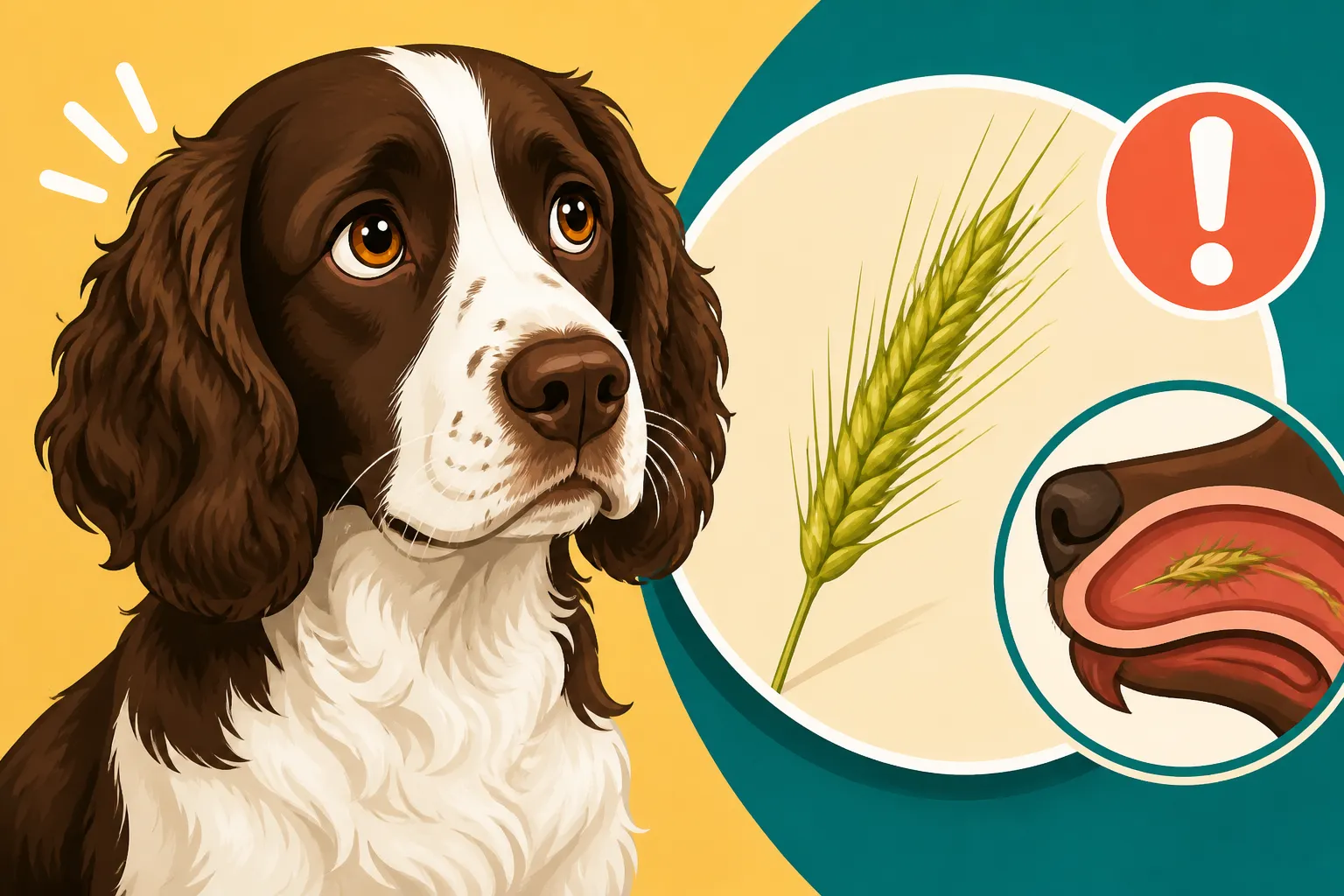
Whether a Grass Awn Can Kill a Springer Spaniel
Many Springer Spaniel owners dread the late summer and fall, not just for shedding, but for the silent, sinister threat of grass awns. These seemingly innocent plant seeds can pose a deadly risk to our beloved companions, burrowing into their bodies and causing severe, even fatal, complications. This guide will meticulously unpack how grass awns can endanger your Springer, where they typically hide, and what you can do to protect your loyal, energetic friend.
Understanding the Insidious Nature of Grass Awns
The world outside is full of wonders for a Springer Spaniel, but it also harbors hidden dangers. Among the most deceptive are grass awns – the needle-sharp, barbed seeds from various grasses that seem innocuous but can wreak havoc.
What Exactly Are Grass Awns and Why Are They So Dangerous?
Grass awns, often known by local names like foxtails, cheatgrass, or wild oats, are the seed heads of certain grasses that grow abundantly in fields, meadows, roadsides, and even in some less-maintained suburban parks. They are typically small, dry, and often blend seamlessly into the environment, making them hard to spot. Their presence is a particular concern from late spring through fall when these grasses dry out and release their seeds.
What makes these seemingly harmless seeds so incredibly dangerous is their unique, barbed structure. Imagine a tiny fishhook, or a miniature arrow with backward-pointing bristles; that’s essentially how an awn is designed. This shape allows them to cling tenaciously to fur and, crucially, to only move in one direction: forward. They cannot easily fall out or be dislodged by normal movement once they've started to embed.
This barbed design means that once an awn gets caught in your dog's fur or comes into contact with their skin, it's primed for penetration. Every movement your dog makes – walking, shaking, stretching, or even the natural contractions of their muscles – can work the awn deeper into the tissue. The natural oils and moisture on your dog’s skin also aid in their insidious journey. They are not merely splinters; they are actively migratory foreign bodies, driven deeper by biological forces.
It’s this self-propelling, one-way movement that sets grass awns apart from other outdoor hazards like burrs or ticks. While burrs might create uncomfortable mats and ticks can transmit diseases, awns have the terrifying ability to burrow into the body, leading to hidden infections and damage that can be incredibly difficult to detect until it's too late.
How Springer Spaniels Are Particularly Vulnerable
Our beautiful Springer Spaniels, with their glorious, flowing coats, especially the long feathering on their ears, legs, and bellies, are like walking magnets for grass awns. Their dense, double coats easily trap these seeds, giving them ample opportunity to begin their dangerous journey. It's almost as if their breed characteristics, so beloved by us, unwittingly increase their risk. You can read more about various hazards in Burrs, Ticks and Grass Awns in a Working Springer Spaniel.
Beyond their coat, a Springer Spaniel’s very nature puts them at heightened risk. They are energetic, curious, and possess an unwavering drive to explore every scent and corner of their environment. This means they routinely plunge into tall grasses, dense underbrush, and areas where awns thrive. Their noses, eyes, and ears are often the first points of contact, making these sensitive areas common entryways for the insidious seeds. A Springer being a Springer, happily quartering a field, is unfortunately putting themselves directly in harm's way.
Their distinctive pendulous ears, a hallmark of the breed, are another major vulnerability. The warm, dark, and often moist environment within the ear canal is an ideal spot for an awn to lodge and quickly burrow deep. Once an awn is inside the ear, it's usually impossible for an owner to spot, and incredibly painful for the dog. Without swift veterinary intervention, it can cause severe inflammation, infection, and even rupture the eardrum. The general susceptibility of their ears is further explored in The Springer Spaniel Ear That Never Fully Dries.
Moreover, their soft, cushioned paw pads, with hair growing between the toes, provide another prime target. An awn can easily work its way between the toes, causing excruciating pain, localized infection, and swelling, or even travel up the leg. These paw issues are often initially mistaken for a simple cut, sting, or minor abrasion. A detailed look at foot care after outdoor activity can be found in Checking a Springer Spaniel's Feet After Working.
The Journey of a Grass Awn: Where They Lodge and What They Do
Once a grass awn has found a purchase on your Springer Spaniel, its journey can begin, often without immediate, obvious signs. Knowing the common entry points and the potential path an awn can take is crucial for early detection.
Common Entry Points and Initial Symptoms
The ears are perhaps the most notorious and common entry point for grass awns. If an awn enters the ear canal, your Springer might suddenly start shaking their head violently, pawing or scratching frantically at an ear, or tilting their head persistently to one side. They might seem distressed, yelp when you touch the affected ear, or become withdrawn. These signs often mimic a standard ear infection, but the sudden onset after outdoor activity should raise a red flag.
The nose is another frequent target. A sudden, intense bout of sneezing, reverse sneezing, or pawing at the nose can indicate an awn has been inhaled. You might also notice nasal discharge, which could be clear, yellowish, or even streaked with blood. If the awn travels further up the nasal passages, it can cause irritation, infection, and in severe cases, penetrate the sinuses or even lead to lung issues.
Paws are also highly susceptible, particularly between the toes. An embedded awn here will often cause your dog to lick obsessively at the affected paw, limp, or refuse to put weight on the foot. You might observe swelling, redness, or a small, painful lump. These symptoms are often initially mistaken for a thorn, splinter, or insect bite, delaying appropriate treatment. For more on specific lodging sites, see Where a Grass Awn Lodges on a Springer Spaniel.
While less common, eyes can also be affected, leading to sudden irritation, excessive blinking, rubbing at the eye, or copious tearing and discharge. The awn might be lodged under an eyelid, causing painful corneal abrasions or ulcers. And don't forget the skin! Awns can burrow directly through the skin anywhere on the body, creating painful abscesses that can pop up in unexpected places, sometimes far from where the awn initially attached.
The Silent Progression: When Things Get Serious
What makes grass awns so uniquely dangerous is their ability to migrate once they've breached the skin or mucous membranes. Unlike a simple splinter that typically stays put, an awn, propelled by its barbs and your dog's movements, can travel through muscle, soft tissue, and even into body cavities. This migration often occurs internally, without any obvious external signs, making diagnosis incredibly challenging for veterinarians and a source of immense frustration for owners.
As the awn travels, it acts as a foreign body, carrying bacteria from the outside world deep into sterile internal tissues. This invariably leads to significant infection and inflammation. Abscesses – collections of pus – can form in unexpected places like the chest cavity, abdomen, or along muscle planes, growing larger and more painful internally while external signs remain vague or non-existent.
If an awn manages to enter the lungs (e.g., via the nasal passages or by migrating from the chest wall), it can cause severe pneumonia, lung abscesses, or pleural effusion (fluid accumulation around the lungs), leading to serious respiratory distress. If it enters the abdominal cavity, it can cause peritonitis, a life-threatening infection of the abdominal lining. These internal infections are insidious, often presenting as non-specific signs like general lethargy, fever, loss of appetite, and vague abdominal or chest discomfort.
In the most horrifying, albeit rare, scenarios, grass awns have been known to migrate into the spinal canal or even the brain. When this happens, they can cause severe neurological symptoms such as weakness, incoordination, paralysis, or seizures. The entire progression is slow, insidious, and often mimics other, less severe conditions, giving the awn ample time to inflict catastrophic damage before its presence is even suspected.
When a Grass Awn Becomes Life-Threatening
While many awns are caught and removed successfully, there are instances where they can lead to severe, life-threatening complications. These situations are every Springer owner's worst nightmare.
Systemic Infections and Organ Damage
When a grass awn leads to a deep-seated infection that goes undetected or untreated, it can become systemic. This means the infection has spread beyond the local area and is affecting the entire body, leading to a condition known as sepsis. Sepsis is a medical emergency that can rapidly lead to organ failure and death. Your energetic Springer Spaniel might go from seemingly "off" to critically ill in a matter of hours or days.
An awn that has migrated into the chest cavity can cause pyothorax, a dangerous accumulation of pus around the lungs, or severe lung abscesses. This compromises the dog's ability to breathe, leading to respiratory distress, coughing, and general weakness. Similarly, an awn in the abdominal cavity can result in peritonitis, characterized by excruciating abdominal pain, rigidity, and a rapid deterioration of the dog's overall health. Both conditions require immediate, aggressive medical and often surgical intervention.
Beyond direct infection, the body's persistent inflammatory response to a migrating foreign object can itself be highly damaging. Chronic inflammation and infection wear down a dog's immune system, making them susceptible to other illnesses. The vibrant energy and zest for life that define a Springer Spaniel can be completely drained, leaving them weak, emaciated, and struggling to recover.
Though less common, direct damage to vital organs can occur if an awn migrates into close proximity or penetrates structures like the lungs, liver, or even the pericardium (the sac around the heart). Even if the dog survives these extreme events, the long-term consequences can include permanent organ damage, chronic pain, and a significantly reduced quality of life. The potential for such devastating outcomes underscores the severe danger posed by these tiny seeds.
The Difficulty of Diagnosis and Treatment
One of the most frustrating aspects of grass awn migration is the incredible difficulty in diagnosing the problem. Grass awns are typically "radiolucent," meaning they do not show up clearly on standard X-rays. This often leads to frustrating delays, multiple veterinary visits, and a perplexing lack of clear answers as vets try to pinpoint the cause of your Springer's vague symptoms.
Veterinarians often have to rely on more advanced imaging techniques such as ultrasound, CT scans, or even MRI to try and locate the foreign body or, more commonly, the abscess or inflammatory tract it has created. These diagnostic tools are sophisticated, expensive, and not always readily available, often requiring referrals to specialist centers. Even with advanced imaging, direct visualization of the awn itself can be challenging, as it may be small or surrounded by inflammatory tissue.
Once a migratory awn is suspected or located, treatment almost always involves invasive surgery. The goal is to surgically locate and meticulously remove the awn and thoroughly drain any associated abscesses. This can be an incredibly complex and delicate procedure, particularly if the awn has migrated deep into sensitive tissues or near vital organs. Recovery can be prolonged, and in some cases, multiple surgeries might be necessary if the awn has fragmented or if new abscesses form in different locations.
In situations where the awn cannot be found, or where it has caused widespread infection, aggressive antibiotic therapy is crucial, often combined with supportive care like intravenous fluids, pain management, and sometimes even chest tubes for pyothorax. Despite the best efforts, the prognosis can be guarded, especially if the infection has become systemic (sepsis) or if vital organs have been compromised. The emotional and financial toll of such an ordeal can be immense, as discussed in What an Emergency Vet Visit Costs for a Springer Spaniel.
Real-World Scenarios and Fatal Outcomes
To truly grasp the danger, it helps to consider a hypothetical, yet tragically realistic, scenario. Imagine "River," a spirited field-bred Springer Spaniel, returning from a glorious day of retrieving in dense cover. A few days later, she develops a persistent, dry cough that her owner initially dismisses as kennel cough or irritation from dust. Weeks pass, and River gradually becomes lethargic, loses her appetite, and her breathing becomes noticeably labored.
By the time River is rushed to the emergency veterinary clinic, the insidious grass awn has burrowed from her nasal passage, down her windpipe, and into her lung, causing severe pneumonia and an extensive lung abscess. Despite aggressive treatment, including surgery to remove the awn and drain the infection, the damage is too widespread. River, once a powerhouse in the field, tragically succumbs to the overwhelming complications, a victim of a silent, microscopic assassin. This is a heart-wrenching, but not uncommon, path for undetected awns.
Another common, though equally concerning, story involves a beloved family pet Springer named "Daisy." After a summer hike through a local nature preserve, Daisy developed a mysterious lameness and began obsessively licking her left paw. Her owner diligently checked for thorns and applied Epsom salt soaks, assuming it was a minor puncture. However, after a month, a large, painful, and draining swelling appeared high up on her inner thigh, near her elbow.
Initial X-rays were inconclusive, offering no clear explanation for the swelling. But a subsequent ultrasound, performed by a specialist, revealed a deep-seated abscess with a tell-tale linear structure: a grass awn. It had traveled from between her toes, up her leg, and into her thigh muscle. The surgery to extract the awn and resolve the massive infection was complicated, and Daisy faced a long, difficult recovery period. This scenario vividly illustrates how even a seemingly minor entry point on a paw can lead to major, life-threatening internal issues if the awn is allowed to migrate unchecked.
Prevention and Vigilance: Protecting Your Springer Spaniel
Given the severe risks associated with grass awns, proactive prevention and vigilant monitoring are the absolute best strategies for protecting your cherished Springer Spaniel.
Proactive Measures
The first and most effective defense against grass awns is avoidance. During late spring, summer, and fall – the prime season for these seeds – try to steer clear of areas with tall, dry grasses. If your regular walking trails or hunting grounds are known to have these grasses, consider finding alternative routes or limiting your Springer's exposure to such environments. This simple step can dramatically reduce their risk.
Regular and thorough grooming is paramount for Springer Spaniels, whose coats are prone to trapping foreign objects. After every single walk or outing, especially if you've been in grassy or brushy areas, perform a meticulous "awn check." Start with their beautiful, feathered ears: carefully inspect the fur, the folds of the ear leather, and the opening of the ear canal. Gently run your hands over their entire coat, paying special attention to the dense feathering on their legs, belly, and tail where awns love to hide.
Don't forget their paws! Spread their toes apart and thoroughly inspect the pads and the fur between them for any embedded seeds. Many working dog owners find success using specialized paw balms or protective boots for their dogs when traversing heavy cover. You can find helpful grooming tools like fine-toothed combs, brushes designed for dense coats, or even protective dog boots from reputable online retailers like Chewy or Amazon. For those working in dense areas, wearing a protective vest, as discussed in Whether a Springer Spaniel Needs a Vest in Heavy Cover, can also help shield the chest and belly.
Additionally, keeping the hair between your Springer's toes trimmed short, and regularly tidying up the feathering on their legs and belly, can significantly reduce the surface area where awns can attach. This doesn't mean shaving your elegant Springer, but maintaining these key areas can make a huge difference in catching awns before they have a chance to burrow. This proactive grooming complements the advice in How Often a Working Springer Spaniel Needs Washing and Trimming a Springer Spaniel's Feathering.
Recognizing Early Warning Signs
Vigilance is your second most powerful tool. Learn to recognize the subtle cues that might signal an awn problem. For ears, watch for any persistent head shaking, excessive scratching, or rubbing an ear against furniture or the ground. Any discharge, redness, or foul odor from the ear canal, as detailed in Signs a Springer Spaniel Has an Ear Infection, warrants immediate investigation.
If your Springer is repeatedly sneezing, snorting, or pawing at their nose after being in grassy areas, or if you notice any unusual nasal discharge (especially if it's bloody), consider a nasal awn as a strong possibility. Do not automatically assume it's just allergies; these signs require prompt veterinary attention to rule out a more serious issue.
For paws, incessant licking, limping, swelling, or tenderness between the toes are major red flags. Sometimes, you might even spot a small, red, inflamed bump or a tiny draining tract where the awn has started to burrow. Check their pads carefully for any punctures or irritation.
Any sudden onset of eye irritation, excessive tearing, squinting, or pawing at the face needs to be examined immediately. Awns can easily lodge under eyelids. For the rest of the body, be on the lookout for any unexplained lumps, bumps, or draining sores that seem to appear out of nowhere, particularly in areas like the armpits, groin, or flanks. These can be the result of an awn burrowing through the skin.
The Importance of Immediate Veterinary Attention
This point cannot be overemphasized: if you suspect a grass awn has embedded itself in your Springer Spaniel, especially in a sensitive area like an ear canal, nostril, or eye, do not delay seeking veterinary care. Attempting to remove an awn yourself, particularly if it's deeply lodged, can push it further in, cause more trauma, or complicate later professional removal.
Time is absolutely critical when dealing with grass awns. The sooner a veterinarian can examine your Springer, the higher the chance of successful, less invasive removal. A vet has specialized tools, such as otoscopes for ears or endoscopes for nasal passages, which allow them to visualize and safely extract the awn before it has a chance to migrate deeper into the body. Early intervention often means a simple outpatient procedure.
Even if you don't actually see the awn, but your Springer is showing consistent, unexplained symptoms like head shaking, limping, persistent sneezing, or a new lump after being in grassy areas, a vet visit is absolutely warranted. Clearly explain the situation to your vet, emphasizing the recent exposure to grass and your suspicion of an awn. This crucial information can guide their diagnostic process.
Early and prompt veterinary intervention can literally mean the difference between a quick, relatively inexpensive procedure and a complex, life-threatening surgical emergency. Never underestimate the destructive potential of these tiny seeds. Prioritize getting your Springer Spaniel to the vet without delay; it is the most loving and responsible action you can take to protect them from this insidious danger. The escalating costs of treating chronic or advanced issues, as might occur if an awn is left untreated, are evident in discussions like What Chronic Ear Disease Costs a Springer Spaniel Owner.
Disclaimer
This article is for general informational purposes only and does not constitute professional advice. Laws, prices and regulations vary by location and change over time. Consult a qualified professional for guidance on your specific situation.