Whether a Springer Spaniel Picks Up Ticks in Cover
If you're a proud English Springer Spaniel owner, especially one who loves to let your dog roam and explore, you've probably asked yourself this question countless times: "Will my Springer Spaniel pick up ticks in cover?" The simple, honest truth is, yes, absolutely they will. Their very nature, their luxurious coats, and their innate desire to plunge headfirst into dense vegetation make them prime candidates for unwelcome hitchhikers like ticks, and dealing with these tiny parasites is a persistent reality for us Springer owners. This guide is here to walk you through why your Springer is such a tick magnet, what dangers those ticks pose, and, most importantly, how you can protect your beloved companion and minimize the stress of tick season.
The Inevitable Truth: Why Cover and Ticks Go Hand-in-Hand for Springer Spaniels
It's not a question of if but when a Springer Spaniel will encounter a tick, particularly if they spend any time in their natural element. These dogs are purpose-bred to work through dense cover, to flush game from thickets and tall grasses, and that very instinct puts them squarely in tick territory. It's a reality that can be frustrating, especially when you just want your dog to enjoy being a dog without constant worry.
The Springer Spaniel's Natural Habitat: A Tick's Paradise
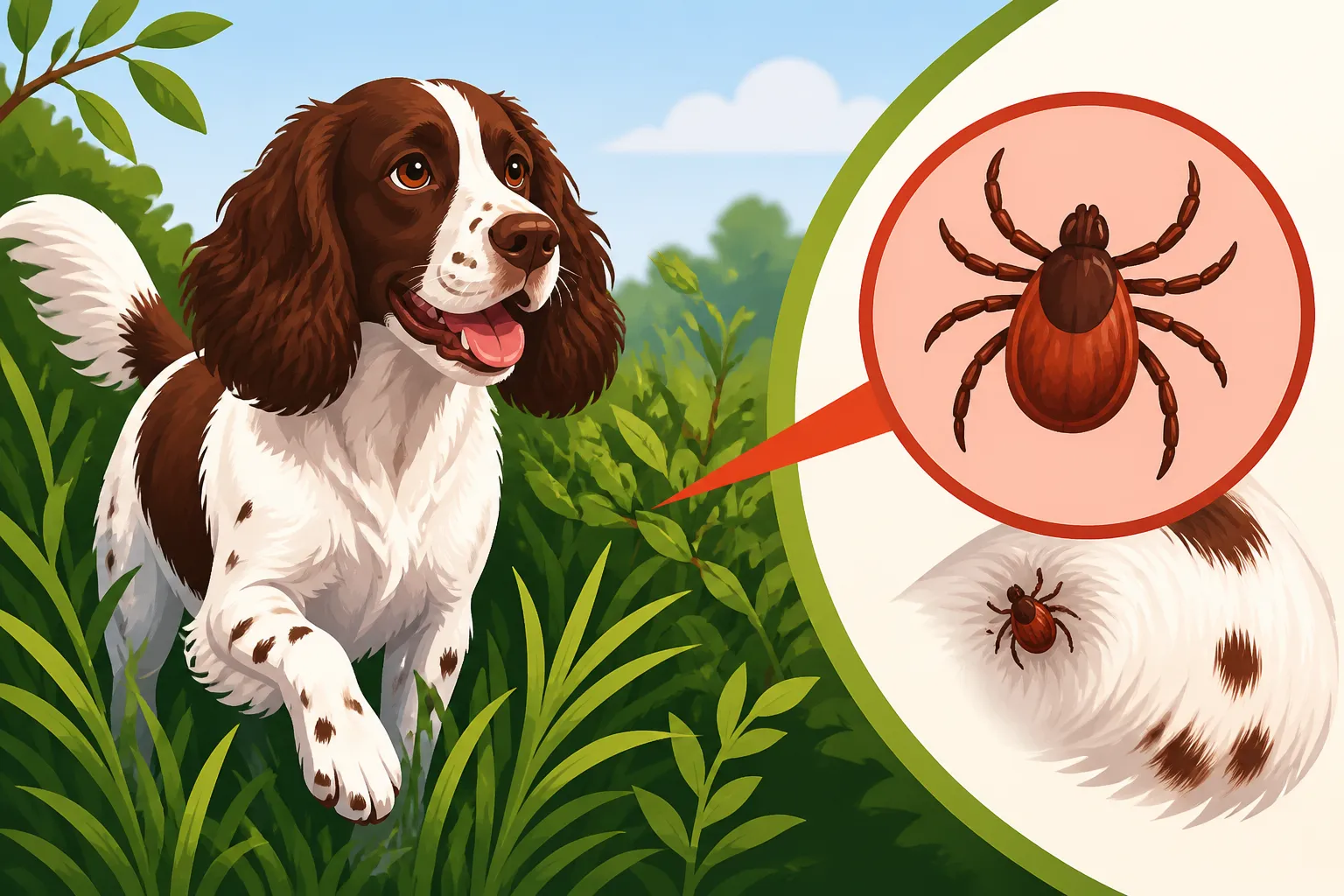
Think about what your Springer Spaniel loves to do: they're in their glory quartering a field, nose to the ground, diving into the tall weeds along a fence line, or pushing through the undergrowth of a woodland trail. This isn't just a casual stroll; it's a full-body immersion. Ticks, in turn, aren't waiting on paved paths. They reside in tall grasses, leaf litter, shrubs, and low-hanging branches, patiently waiting for a host to brush by. When your Springer is joyfully crashing through these areas, they're essentially inviting ticks aboard. It's like walking through a dense forest with a giant sticky roller; everything that's loose and waiting to cling on will find a way.
This isn't just about hunting dogs, either. Even a pet Springer who loves their daily romp in the local park's untrimmed areas or a weekend hike through state forests is at high risk. Their enthusiasm to explore means they don't skirt around the edges; they go straight through the heart of potential tick habitats. This natural drive, which we all adore about them, is precisely what makes them so susceptible.
Coats, Feathering, and the Perfect Hiding Spots
Beyond their habitat preferences, a Springer Spaniel's physical attributes unfortunately make them excellent hosts for ticks. Their beautiful, dense double coat provides ample protection from the elements but also offers a veritable labyrinth of warmth and concealment for ticks to crawl into and settle down. Add to that their characteristic feathering – the longer hair on their ears, legs, chest, and belly – and you've got even more prime real estate for ticks to latch onto undetected.
Imagine a tick, barely larger than a poppy seed when unfed, trying to navigate through that thick, silken fur. It's incredibly easy for them to get lost, making detection difficult for even the most vigilant owner. The feathering, in particular, acts like natural brushes, sweeping up ticks as your dog moves through vegetation. Once they're nestled deep within the coat, they're insulated from the weather and out of immediate sight, giving them plenty of time to find a suitable spot to attach. This is why a thorough check after every outing, regardless of how short, is absolutely non-negotiable. It's part of the deal with owning these wonderful, active dogs. You might find it useful to read more about Burrs, Ticks and Grass Awns in a Working Springer Spaniel for further insights into what your dog can pick up from cover.
Common Hiding Spots and the Dangers Ticks Pose
Knowing where ticks like to hide on your Springer is half the battle in preventing problems. And understanding the risks they carry is crucial for staying proactive about your dog's health.
From Paws to Ears: Prime Tick Real Estate
Ticks aren't picky, but they do have favorite spots where the skin is thinner, warmer, and harder for your dog to scratch or lick. When you're performing your post-outing check, pay special attention to these areas:
- Ears: The floppy ears of a Springer Spaniel are like warm, dark caves for ticks. Check both the outside of the ear flap and, very importantly, deep inside the ear canal. Ticks here can cause intense irritation, leading to head shaking and scratching, which can then lead to further ear problems. This is related to why a Springer's ears are already prone to issues; you might want to learn more about Why a Springer Spaniel's Ears Are Never Quite Healthy.
- Paws and Between Toes: As your Springer strides through grass and leaves, their paws are the first point of contact. Ticks often crawl up the legs and can settle right in the cozy, protected spaces between their toes or on their paw pads. This area is often overlooked, but it's a hotbed for ticks.
- Armpits and Groin: These are warm, moist areas where skin is thin, making them ideal feeding grounds. Ticks can be well-hidden in these folds of skin and dense feathering.
- Under the Tail and Around the Anus: Again, a warm, private spot that's not easily inspected by the dog themselves or by a quick glance from you.
- Around the Face, Neck, and Collar Area: Ticks can easily crawl up the face from the ground, especially around the muzzle, chin, and eyelids. The area under the collar offers another secure spot.
It's vital to systematically check all these areas. It's not enough to just give a quick pat-down. You really need to part the fur, run your fingers over the skin, and visually inspect. This thoroughness is what we cover in articles like How to Check a Springer Spaniel for Ticks and After the Hunt: Checking a Springer Spaniel Over Nose to Tail.
Beyond the Itch: The Health Risks of Tick Bites
A tick bite isn't just an annoying itch; it carries significant health risks for your Springer Spaniel. Ticks can transmit a variety of serious diseases that can impact your dog's health, sometimes with long-lasting consequences.
Some of the more common tick-borne diseases include:
- Lyme Disease: Caused by bacteria, Lyme disease can lead to lameness, joint pain, lethargy, fever, and, in severe cases, kidney failure. Early detection and treatment are crucial.
- Anaplasmosis: This bacterial infection can cause fever, lethargy, loss of appetite, joint pain, and occasionally vomiting and diarrhea.
- Ehrlichiosis: Another bacterial disease, Ehrlichiosis, can manifest with fever, lethargy, weight loss, nosebleeds, and joint pain. It can become chronic if not treated.
- Rocky Mountain Spotted Fever: While less common in all areas, this can cause fever, joint pain, swelling, and neurological issues.
The reality is that these diseases can be debilitating and expensive to treat. The symptoms can sometimes be vague, making diagnosis challenging, and some conditions can lead to chronic issues. This is why prevention isn't just about comfort; it's about protecting your dog from potentially life-threatening illnesses. A single tick bite, if it carries a pathogen, can be enough to transmit disease, underscoring the importance of vigilance.
Proactive Prevention Strategies for the Active Springer
Given the inherent risks, a multi-pronged approach to tick prevention is essential for any Springer Spaniel owner. It's about creating layers of protection to keep those pesky parasites at bay.
Topical Treatments, Collars, and Oral Medications
The market is full of effective tick prevention products, and choosing the right one for your Springer Spaniel often depends on your dog's lifestyle, any sensitivities they might have, and your veterinarian's recommendations.
Let's look at the main categories:
| Prevention Method | Application/Form | Pros | Cons |
|---|---|---|---|
| Oral Medications | Chewable tablet | Very effective; kills ticks quickly; not affected by water/shampoo. | Requires vet prescription; some dogs may experience side effects (e.g., GI upset); need to remember monthly or quarterly dosing. |
| Topical Spot-Ons | Liquid applied to skin | Easy to apply at home; generally effective. | Can be messy; dog may need to avoid swimming/bathing for a few days post-application; effectiveness can diminish over time; some dogs may have skin reactions. |
| Repellent Collars | Collar | Long-lasting protection (several months); easy to use. | Some dogs may have skin irritation under the collar; needs to be worn constantly; can be a choking hazard if not fitted correctly or gets snagged. |
Oral medications, like those you might discuss with your vet, are often favored by active dog owners because they work from the inside out and aren't affected by swimming or baths, which can be a huge plus for a water-loving Springer. They also tend to kill ticks quickly after a bite, minimizing disease transmission time. Topical spot-ons are applied to the skin, usually between the shoulder blades, and the active ingredients spread over the dog's body. Collars, like certain well-known brands, release active ingredients that either repel or kill ticks.
It's crucial to use products specifically designed for dogs and always follow the manufacturer's instructions, paying close attention to weight guidelines. Never use products meant for other animals, especially cats, as they can be toxic to dogs. Your vet is your best resource for recommending the most suitable product based on your dog's age, health, and risk exposure. Don't forget to factor in the cost of these preventatives; What a Year of Preventives Costs for a Springer Spaniel can give you an idea of the financial commitment. For many of us, ordering these supplies from reputable online pet supply retailers like Chewy or Amazon can be convenient and help manage those ongoing costs.
Grooming and Inspection Routines After Every Outing
Preventative medications are excellent, but they're not a force field. Ticks can still hitch a ride and even attach before the medication has a chance to kill them. This is where diligent grooming and inspection routines become your second, crucial line of defense.
- The Post-Adventure Pat Down: Immediately after your Springer has been in cover, even before going back inside, do a quick visual and tactile inspection. Run your hands over their entire body, paying special attention to the areas mentioned earlier (ears, armpits, groin, paws).
- Thorough Examination Indoors: Once inside, with good lighting, conduct a more detailed inspection. This involves systematically parting their fur section by section, starting from the head and working your way down to the tail. Use a fine-toothed comb if your Springer tolerates it, especially through the feathering, as this can help dislodge unattached ticks.
- Brushing and Combing: Regular brushing, particularly with a slicker brush or a good pin brush, helps to remove loose debris, shed hair, and, critically, any unattached ticks that are still crawling on the surface of the coat. For more details on what brushes work best, consider reading Which Brush Suits a Springer Spaniel.
- Bathing: While not a daily necessity, an occasional bath, particularly with a good dog shampoo, can help wash away loose ticks. However, be mindful that frequent bathing can strip natural oils from the skin, and if you're using topical preventatives, you'll need to check the product's instructions regarding bathing schedules. For a working dog, you might explore How Often a Working Springer Spaniel Needs Washing and Which Shampoo Suits a Springer Spaniel's Oily Coat.
- Checking Gear: Don't forget to check your dog's vest, collar, or harness. Ticks can cling to fabric just as easily as fur.
This routine needs to be consistent, especially during peak tick season. Think of it as a mandatory debriefing after every mission your Springer undertakes! It's an investment of your time that pays dividends in peace of mind and your dog's health.
What to Do When You Find a Tick and Aftercare
Finding a tick attached to your Springer can be alarming, but remaining calm and knowing the correct removal procedure is key. Improper removal can leave parts of the tick behind or even increase the risk of disease transmission.
Safe Tick Removal: Step-by-Step
You'll need a few essential tools: fine-tipped tweezers or a specialized tick removal tool (many pet owners swear by tools like the "Tick Twister" available on Amazon or Chewy), antiseptic wipes or rubbing alcohol, and a small container with a lid.
Here’s how to safely remove a tick:
- Prepare Your Tools: Gather your tweezers or tick removal tool, antiseptic, and container. You might want to wear gloves to avoid direct contact with the tick.
- Part the Fur: Gently part your Springer's fur around the tick so you have clear access to where it's attached to the skin.
- Grasp the Tick Firmly:
- With tweezers: Grasp the tick as close to the skin's surface as possible. Avoid grabbing the tick's body, which can squeeze its contents into your dog.
- With a tick removal tool: Follow the tool's instructions, typically by sliding the fork end under the tick and twisting or lifting.
- Pull Straight Up (or Twist):
- With tweezers: Pull upward with steady, even pressure. Do not twist or jerk, as this can cause the mouthparts to break off and remain embedded in the skin.
- With a tick removal tool: Many are designed for a twisting motion. A steady, gentle twist often dislodges the tick cleanly.
- Inspect the Bite Site: Once the tick is removed, examine the bite area to ensure the entire tick, including its mouthparts, has been removed. If mouthparts remain, don't fret too much; they usually fall out on their own, but keep an eye on the area for signs of infection.
- Clean the Area: Clean the bite site thoroughly with an antiseptic wipe or rubbing alcohol.
- Dispose of the Tick: Place the removed tick into your container. You can put it in alcohol or flush it down the toilet. Some vets recommend keeping the tick in a sealed bag with the date for a few weeks in case your dog develops symptoms, as identifying the tick species can help with diagnosis.
Never try to burn the tick off, smother it with petroleum jelly, or use fingernails, as these methods can stress the tick, causing it to regurgitate potentially disease-causing fluids into your dog. Patience and the right tools are your best friends here.
Monitoring and When to Seek Veterinary Advice
Removing the tick is just the first step. The next is vigilant monitoring of your Springer Spaniel for any signs of illness, as well as keeping an eye on the bite site itself.
- Observe the Bite Site: Over the next few days, check the bite area for any signs of irritation, redness, swelling, or infection. A small bump or scab is normal, but if it becomes hot, very swollen, or oozes, contact your vet.
- Monitor for Symptoms of Illness: Keep a close watch on your dog for the next several weeks (up to a month or two) for any changes in behavior or health that could indicate a tick-borne disease. These symptoms can include:
- Lethargy or unusual tiredness
- Loss of appetite
- Lameness or limping (shifting from leg to leg)
- Joint swelling or pain
- Fever (your dog might feel warm to the touch or be panting excessively)
- Swollen lymph nodes
- Changes in urination or thirst
- Vomiting or diarrhea
- When to Call the Vet: If you notice any of these symptoms, even if they seem mild, contact your veterinarian immediately. Be sure to tell them that your dog recently had a tick bite, as this information is crucial for diagnosis. Even if you've done everything right, sometimes ticks can still transmit disease. Early intervention gives your Springer the best chance of a full recovery.
Being a Springer Spaniel owner means embracing their active, outdoor nature, which inherently comes with the challenge of managing ticks. But with consistent prevention, thorough checks, and knowing how to act when a tick is found, you can ensure your adventurous companion stays happy and healthy for many years to come.
Disclaimer
This article is for general informational purposes only and does not constitute professional advice. Laws, prices and regulations vary by location and change over time. Consult a qualified professional for guidance on your specific situation.