Why a Springer Spaniel Quarters Your Yard Without Being Asked
You glance out the window, expecting to see your English Springer Spaniel enjoying a casual wander, but instead, you find them working your yard like a finely-tuned machine, systematically sweeping back and forth, nose to the ground. It's a baffling sight for many new owners: why does your dog do this intricate dance, covering every inch of ground, even when there's no game in sight and you haven't given a single command? This guide will dive deep into the fascinating world of your Springer Spaniel's innate instincts, explaining why they "quarter" your yard without being asked, and how you can understand and even channel this powerful, inherent behavior.
Understanding the Instinct: What "Quartering" Really Means
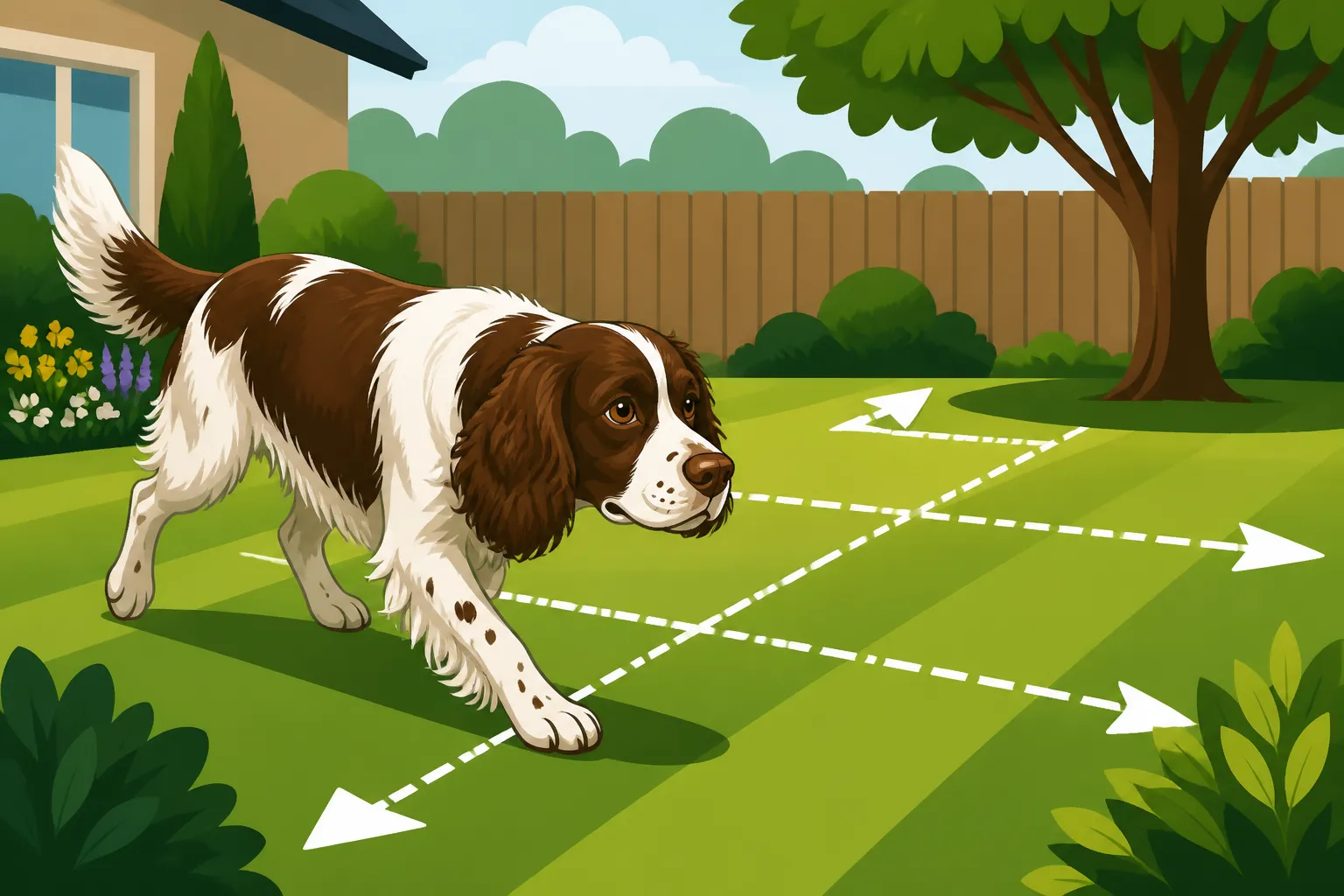
When you see your Springer Spaniel moving in that deliberate, grid-like pattern across your lawn or through a field, they're demonstrating a behavior known as "quartering." It's not just a random stroll; it's a highly efficient, systematic search pattern designed to cover ground thoroughly and pick up the scent of game. For a breed like the English Springer Spaniel, this isn't just a learned trick; it's practically written into their DNA. They were bred for centuries to be flushing spaniels, meaning their job was to find hidden game birds or small mammals and "spring" them into the air or out of cover for a hunter.
This instinct is so strong that even a Springer Spaniel who has never seen a bird or been formally trained will often exhibit some form of quartering. It's a testament to the power of selective breeding over generations, honing specific traits until they become second nature. You might observe it in a puppy in a relatively open space, meticulously crisscrossing, head down, tail wagging with intense focus. It's their world, and they're exploring it with the precision of a seasoned tracker, even if all they're sniffing out is yesterday's squirrel droppings or the faint trace of a neighbor's cat.
A Deep Dive into the Springer Spaniel's Ancestry
To truly grasp why your Springer Spaniel quarters so naturally, we need to take a step back in time. The English Springer Spaniel descends from a long line of "land spaniels" in Great Britain, dogs specifically developed to work alongside hunters on foot. Before firearms became commonplace, these dogs were essential for driving game into nets or for hunters using falcons. Their method of working close, systematically covering ground ahead of the hunter, was crucial for success.
As hunting evolved with the advent of shotguns, the Springer Spaniel's role became even more specialized. They needed to find game, flush it within gun range, and often retrieve it afterwards. This required a dog that could work tirelessly, cover a large area efficiently without ranging too far, and respond readily to commands. The quartering pattern—a zig-zag or windshield-wiper motion—was the most effective way to achieve this, especially when working into the wind to maximize scent detection. This wasn't just about covering ground, but about doing so in a way that ensured no scent cone was missed, moving back and forth across the wind to catch every whiff of a pheasant or rabbit. You can read more about their history in Where the English Springer Spaniel Comes From.
Over centuries, breeders selected dogs that naturally exhibited this methodical search pattern, those with the intense desire to find game and the stamina to execute the pattern all day. This continuous selection process hardwired the quartering instinct deeply into the breed's genetic makeup. So, when your modern pet Springer Spaniel quarters your yard, they're not consciously thinking about hunting; they're simply acting on instincts passed down through countless generations, doing what their ancestors were born to do. It’s a beautiful, if sometimes inconvenient, display of their heritage.
The Difference Between Instinctive Quartering and Trained Quartering
It's important to differentiate between the innate, instinctual quartering you see in your yard and the refined, disciplined quartering practiced by a trained gundog. While the underlying drive is the same, the execution and control are vastly different.
Instinctive quartering is often less structured. Your dog might follow a generally zig-zag pattern, but it can be easily disrupted by a strong, interesting scent. A sudden rabbit trail might send them off on a direct chase, breaking the pattern entirely. They're driven by scent and curiosity, exploring their environment in the most efficient way their genes dictate. It’s a freestyle version of the dance, full of passion but lacking precision. This natural inclination means they might quarter your flowerbeds with as much enthusiasm as an open field, sometimes to the detriment of your prize-winning petunias! It’s simply how their brain is wired to investigate and explore.
Trained quartering, on the other hand, is a highly controlled and responsive behavior. A gundog is taught to quarter within a specific, consistent range of the handler, adjusting their pattern based on hand signals and whistle commands. They're trained to hunt into the wind, to shorten or widen their casts (the length of each leg of the zig-zag), and to "turn on the whistle"—changing direction instantly upon hearing a specific blast. This takes immense practice and builds upon the dog's natural instinct, refining it into a precision tool. The goal is not just to find game, but to do so in a predictable manner that allows the hunter to stay engaged and prepared. You can explore this further in Teaching a Springer Spaniel to Stay in Range. The difference lies in conscious direction versus inherent drive; one is a spontaneous expression of breed legacy, the other a cultivated partnership.
The Mechanics of Natural Quartering in Your Yard
Even in the relatively tame environment of a suburban backyard, the mechanics behind your Springer Spaniel's natural quartering are deeply rooted in their hunting heritage. They're not just sniffing around; they're actively searching and processing information, driven by the same sensory inputs that guide their working counterparts in dense cover. It's a sophisticated interplay of scent detection, wind awareness, and an innate desire to cover ground thoroughly.
Think of your yard, no matter how small, as a mini-game preserve in their eyes. Every blade of grass, every shrub, every fence line holds a potential secret – a lingering trace of a squirrel, a phantom mouse, or even just the scent of another dog that passed by hours ago. Your Springer Spaniel is meticulously surveying this landscape, driven by their incredible nose and their historical purpose. They’re not being disobedient; they’re being a Springer Spaniel.
How Scent Drives the Pattern
Scent is the primary driver for a Springer Spaniel's quartering pattern. Dogs perceive the world through their noses in a way we can barely imagine, and spaniels are particularly adept scent hounds. When your dog puts their nose to the ground and starts weaving back and forth, they are systematically analyzing the scent available to them. Each pass allows them to pick up new scent particles, building a richer picture of what (or who) has been in the area.
Their nose is constantly working, sifting through layers of odors. They're not just smelling a general "dog" or "squirrel" scent; they're detecting specific chemical compounds, variations in intensity, and the directionality of the scent trail. This is why a strong, fresh scent – like that of a rabbit that just darted through the yard – can momentarily break their methodical pattern, causing them to focus intensely on that one trail. This isn't a failure of their quartering; it's an immediate response to a high-priority scent, a natural reaction that would lead them directly to game in a hunting scenario. It's their way of maximizing the information they get from the air and ground, ensuring no potential "find" is overlooked.
Reading the Wind and Terrain
While scent is paramount, a Springer Spaniel also instinctively "reads" the wind and the terrain to optimize their search. Even without formal training, they often try to work into the wind. Why? Because working into the wind carries scents directly towards them, making detection easier and allowing them to pinpoint the source more effectively. You might notice them subtly shifting their angle or extending a "cast" (one leg of the zig-zag) to better catch a breeze.
The terrain also plays a role. If your yard has varied surfaces – a patch of long grass, a flowerbed, a paved path – you might see their quartering pattern adjust. They might slow down and intensify their search in denser cover, where game might hide, and move more quickly over open, less promising areas. This intelligent adaptation is a hallmark of their hunting instincts. A trained dog would refine this, but even an untrained one shows flashes of this innate understanding. For example, if you have a dense shrub border, they might spend more time working that edge, knowing instinctively that such cover is prime hiding real estate for small critters. It’s fascinating to watch, isn't it? It's like they have an internal GPS tuned to environmental cues, constantly optimizing their search strategy for maximum effectiveness.
Why Your Springer Spaniel Does This Without Training
It's common for owners to wonder if their Springer Spaniel is just being hyperactive or disobedient when they engage in this relentless quartering. The truth is, it's far from either. What you're witnessing is a fundamental expression of their breed identity, an action so deeply ingrained it requires no conscious thought or command to initiate. It's simply what a Springer Spaniel does.
Many owners get frustrated, thinking their dog should just "relax" in the yard, but that's like asking a fish not to swim. This behavior is a powerful demonstration of their innate drive and intelligence. It also highlights why understanding your breed's specific traits is so vital for a harmonious life together. You can delve into how their drives differ in How a Field Bred Springer Spaniel Differs in Drive.
Hardwired Genetics: It's Not Disobedience
Let's be absolutely clear: when your Springer Spaniel quarters your yard without a command, they are not being disobedient. They are being a Springer Spaniel. This behavior is a prime example of a genetically predisposed trait, honed through centuries of selective breeding. Their ancestors who excelled at systematically finding game within gun range were the ones chosen to reproduce, passing on those strong instincts.
This means the desire to search, to methodically cover ground, and to investigate every interesting scent is simply hardwired into their brains. It's an internal program running in the background, constantly prompting them to "hunt" their environment. For a dog like a Springer, sitting idly in a yard often feels unnatural. Their minds and bodies are built for activity, for problem-solving through scent, and for covering ground. They derive immense satisfaction from this activity. You'll often see their tail wagging, their whole body engaged, their focus absolute. This is a dog doing what feels right and natural, fulfilling an ancient purpose on a modern lawn. It's a powerful genetic legacy that shapes their everyday behavior.
Reinforcement from the Environment
While the initial drive to quarter is genetic, the environment can inadvertently reinforce and strengthen this behavior. Every time your Springer Spaniel quarters and successfully sniffs out something interesting—a forgotten treat, the faint scent of a mouse, or even just a new patch of grass—their brain receives a reward. This positive feedback loop encourages them to continue the behavior.
Imagine your dog is quartering, and suddenly they hit a strong scent cone of a rabbit that passed by moments ago. The excitement, the chase (even if only a mental one), and the successful detection of that scent are incredibly reinforcing. Even if there's no physical "prize," the act of searching and finding something is its own reward for a Springer. They are satisfied by the process itself. This self-reinforcing loop means that the more they do it, and the more "successes" they have (even small ones like identifying a new weed growth), the more likely they are to continue quartering your yard with vigor. It becomes a deeply satisfying activity, a puzzle they constantly solve with their nose and legs.
The Pros and Cons of an Untrained Quartering Habit
Living with a dog that instinctively quarters can be a mixed bag. On one hand, it's a beautiful display of their heritage and drive. On the other, it can present certain challenges, especially for owners who aren't familiar with the behavior or don't have a specific working purpose for their dog. Understanding these facets can help you better manage expectations and appreciate your Springer Spaniel for who they truly are.
It’s about balancing their innate needs with your living situation. A dog's natural behaviors, while charming, can sometimes conflict with a domesticated lifestyle, and quartering is a prime example of this duality. Recognising both the advantages and disadvantages is key to a happy home for both you and your diligent sniffer dog.
Unexpected Benefits for a Pet Home
While not explicitly a "trained" behavior, your Springer Spaniel's natural quartering habit can offer some surprising benefits in a pet home. Firstly, it provides excellent physical and mental exercise. Unlike a casual potter around the yard, quartering is an active, focused activity that burns calories and engages their brain. They're constantly evaluating scents, making decisions, and moving purposefully. This can contribute significantly to their overall well-being and help prevent boredom, which often leads to destructive behaviors. A tired Springer is a good Springer, and quartering them is one way they can tire themselves out productively.
Secondly, it's a form of natural enrichment. Your dog isn't just relieving themselves; they're fulfilling a deeply ingrained need to hunt and explore. This can lead to a more content and balanced dog. For owners who might not engage in formal scent work or gundog training, allowing them to quarter provides a valuable outlet for their instincts. It’s also a fantastic way for them to "read the news" of the neighborhood, staying up-to-date on all the comings and goings of other animals and people via scent. Think of it as their daily dose of stimulating intellectual activity, performed with enthusiasm right in your own backyard.
| Feature | Instinctive Quartering (Untrained) | Trained Quartering (Gundog) |
|---|---|---|
| Primary Driver | Innate desire, scent, curiosity | Handler commands, whistle, hand signals, scent |
| Pattern Consistency | Variable, often broken by strong scents, may be less systematic | Highly systematic, predictable, consistent range from handler |
| Handler Control | Minimal or none; dog operates independently | High; dog adjusts pattern/direction on command |
| Goal | Personal exploration, satisfying instinct to search | Efficiently find/flush game for handler |
| Energy Output | Moderate to high physical & mental exercise | High physical & mental exercise, precise focus |
| Environmental Impact | May disturb flowerbeds, follow random scents out of yard | Stays within designated hunting area, works specific cover |
| Dog's Satisfaction | Fulfillment of natural drive, excitement of new scents | Fulfillment of partnership, pleasing handler, finding game |
Potential Drawbacks and Management Challenges
While natural quartering has its upsides, it also comes with potential drawbacks for the average pet owner. One of the most common issues is the disruption of landscaping. A Springer Spaniel intently quartering might not pay much attention to your prize roses or carefully planted vegetable patch, potentially digging, trampling, or simply flattening areas in their zealous pursuit of a scent. Their focus is on the scent on the ground, not the delicate plant growing out of it!
Another challenge is range. In an open field, a dog might naturally extend its casts, but in a small yard, this can lead to repetitive, almost manic pacing. Furthermore, if your yard isn't securely fenced, their powerful nose and drive to follow a compelling scent can easily lead them to "quarter" right out of your property and into danger. What starts as an innocent search in the garden can quickly become a lost dog scenario if that rabbit scent leads them under the fence. You can think about this in the context of Why a Springer Spaniel Puts Its Nose to the Ground and Vanishes. It’s a powerful instinct that, without boundaries, can be a real headache. Managing this natural drive requires conscious effort to keep both your dog safe and your yard intact.
Channeling the Instinct: Basic Training to Harness Quartering
So, your Springer Spaniel is hardwired to quarter – that's clear. But does that mean you just let them run wild in your yard, creating chaos or disappearing after every squirrel? Not at all! While the instinct itself is innate, you can absolutely channel and refine this behavior, even if you never plan to hunt. Basic training can transform a sometimes-uncontrolled natural habit into a purposeful, enriching activity that strengthens your bond and provides both physical and mental stimulation. It's about giving direction to their natural enthusiasm.
This isn't about eradicating the quartering instinct, but rather giving it a framework. By introducing simple cues and boundaries, you teach your dog when and where it's appropriate to unleash their inner hunter, making them a more enjoyable companion and keeping them safe. This is where understanding their drives becomes a tool for better communication.
Introducing Whistle Commands and Directional Cues
One of the most effective ways to channel your Springer Spaniel's quartering instinct is by introducing whistle commands and directional cues. Traditional gundog training heavily relies on a whistle, which cuts through distractions and travels further than the human voice. Even if you're not hunting, a whistle can be incredibly useful for directing your dog in a large yard or park.
Start with a simple "turn" command. A common method is two short pips on the whistle, immediately followed by a hand signal (like a sweep of your arm) in the direction you want them to turn. Practice this in a low-distraction environment. When your dog turns, even slightly, praise them enthusiastically and reward them with a high-value treat. The goal is to associate the whistle and signal with an immediate change in direction. Over time, you can encourage them to work a specific area, turning them left or right as they reach the perceived "end" of their cast. This teaches them to work with you, rather than just on their own impulse, laying the groundwork for a more controlled search pattern. Teaching a Springer Spaniel Whistle Commands can give you more insights here.
You can also use verbal cues like "hup" (a traditional gundog command for sit/stop) to momentarily halt their quartering. This helps them learn impulse control and focus on you even when their nose is highly engaged. The key is consistency and positive reinforcement, making the training process enjoyable and rewarding for your naturally driven Springer.
Using Boundaries and Controlled Environments
To manage natural quartering in your yard, establishing clear boundaries and practicing in controlled environments is crucial. If your yard isn't fully fenced, a long line (a long, lightweight leash, often 20-30 feet) can be an invaluable tool. This allows your Springer Spaniel the freedom to quarter while still giving you control and preventing them from chasing a scent out of the yard. You can use the long line to gently guide them, reinforcing turns with your whistle and ensuring they stay within a safe zone.
For smaller yards, consider creating a designated "search zone" with temporary fencing or even just visual markers. Train them to understand that this is the area where they are encouraged to quarter and explore. This helps them differentiate between areas where they can engage their instincts freely and areas (like your pristine flowerbeds!) where a more sedate walk is expected. The goal isn't to suppress their instinct but to teach them where and when it's appropriate to express it. BAXTER & Bella, an online puppy school, often emphasizes early boundary training and positive reinforcement techniques that can be applied to managing these natural drives in a home environment. By starting with clear expectations and gradually expanding their freedom, you empower your Springer Spaniel to be both a diligent searcher and a well-behaved family member.
Advanced Training for the Serious Hunter (or Enthusiast)
For those who wish to go beyond basic control and truly harness their Springer Spaniel's quartering instinct, advanced training opens up a world of possibilities. Whether you aspire to compete in hunt tests, work your dog in the field, or simply enjoy seeing your Springer perform at their peak, this level of training refines their natural abilities into an art form. It's about precision, responsiveness, and a deep partnership built on clear communication and mutual understanding.
This isn't just about finding game; it's about how the game is found, the methodical elegance of the dog's work, and their absolute dedication to their handler. It pushes both dog and owner to master a nuanced form of communication, making the most of the Springer Spaniel’s inherent talents.
Developing a Consistent Pattern and Range
The hallmark of an advanced quartering dog is a consistent, predictable pattern and range. This means the dog works a systematic zig-zag pattern, keeping within a certain distance (the "range") of the handler, and adjusting their pattern based on the wind and cover. This isn't something a dog naturally does perfectly; it requires extensive training.
Trainers use a combination of whistle commands, hand signals, and sometimes even electronic collars (used humanely and appropriately, primarily for long-distance communication) to guide the dog. The goal is for the dog to perform perfect "casts," turning sharply on command at the end of each leg of the zig-zag, always working into the wind. This ensures that every inch of ground is covered effectively, maximizing the chances of finding game. The dog learns to "read" the handler as intently as they read the wind, creating a seamless partnership. This level of precision allows a hunter to walk through cover knowing their dog is systematically searching ahead of them, flushing game in a controlled manner. It’s a continuous conversation between dog and handler, where every movement and sound has meaning, leading to beautiful and effective teamwork.
Steadying to Flush and Retrieve Work
Beyond simply quartering, advanced training for a gundog Springer Spaniel includes "steadying to flush" and sophisticated retrieve work. Steadying to flush means the dog must stop or "hup" (sit) when game is flushed, rather than chasing immediately. This is crucial for safety and for allowing the hunter to take a shot. It's a demanding piece of training because it goes against the Springer's powerful instinct to chase. It requires immense impulse control, building on their natural desire to find game but teaching them to defer to the handler's control.
Once steady to the flush, the dog is then trained for retrieving. This involves marking the fall (remembering where the bird landed), going on command, and retrieving the game gently back to hand. This complex sequence of behaviors—quartering, flushing, stopping, marking, retrieving—all flow together in a skilled gundog. These elements are taught incrementally, starting with basic obedience and building up to complex scenarios with live birds or training dummies. For the enthusiast, even without hunting, training for these elements can be incredibly rewarding, showcasing the full potential of the breed. This comprehensive approach ensures that the Springer Spaniel isn't just a quartering machine, but a complete gundog partner, capable of intricate tasks.
Living with a Natural Quarterer: Management Strategies
Living with an English Springer Spaniel means embracing their natural zest for life and their deeply ingrained instincts. While their propensity to quarter your yard without being asked can be a point of fascination or frustration, understanding why they do it is the first step toward effective management. It's not about stopping them from being a Springer Spaniel, but about providing outlets and structure that allow them to express these instincts in a way that works for both of you.
Your role as an owner isn't to suppress their nature, but to guide it, to provide enriching alternatives, and to ensure their safety and your peace of mind. A little bit of proactive management goes a long way in turning a potential challenge into a joyful characteristic of your beloved companion.
Enrichment Beyond the Yard
Since natural quartering provides both physical and mental stimulation, it's essential to offer other forms of enrichment, especially if you have a smaller yard or concerns about them damaging your landscaping. Think beyond simply letting them out to "do their business."
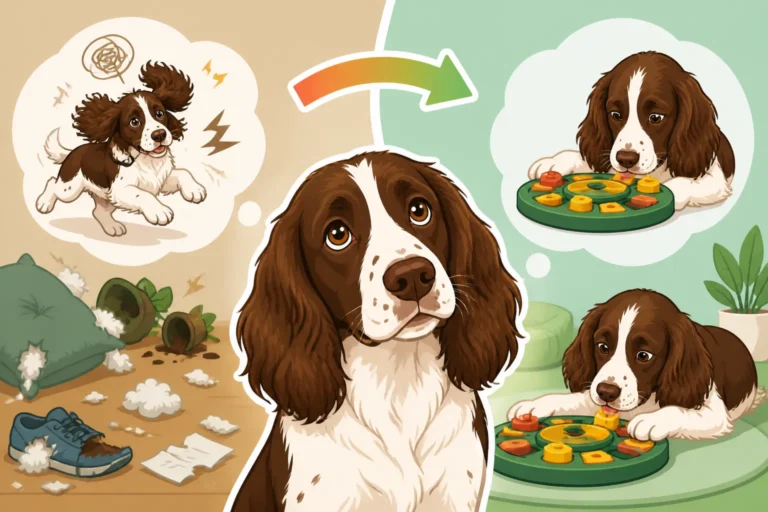
Regular, structured walks are a must. Instead of just a leash walk around the block, seek out trails, parks, or open fields where your Springer can actually move and explore with their nose. Consider taking up scent work classes or joining a local tracking club; these activities directly tap into their natural abilities in a controlled, fun environment. Even hide-and-seek games with treats in your home or yard can satisfy their searching drive. Puzzle toys, especially those that dispense treats as they're manipulated, provide mental engagement when you can't actively supervise them outside.
For the active pet owner, consider activities like agility or canine parkour, which offer physical challenge and problem-solving. Remember, a bored Springer Spaniel is often a destructive Springer Spaniel, so channeling that innate drive into positive, appropriate outlets is key to a happy dog and a harmonious home. Whether a Springer Spaniel Needs a Job is a relevant topic here, as these dogs thrive on having a purpose.
Tools and Resources to Help
Managing a natural quarterer effectively often involves utilizing the right tools and resources. A sturdy, appropriately sized harness or flat collar with clear identification is always important. If your yard isn't fully enclosed, or you want to give your dog more room to roam safely in an open area, a high-quality long line is indispensable. Look for one that's durable, tangle-resistant, and easy to clean. Many options are available on Amazon, ranging from basic nylon to specialized biothane lines that are great for wet conditions.
For owners looking to dive deeper into understanding and training their Springer Spaniel, online resources and local classes can be incredibly beneficial. Websites dedicated to gundog training or positive reinforcement methods often provide tutorials on whistle commands, directional cues, and recall training specific to high-drive breeds. Local dog clubs frequently offer classes in basic obedience, scent work, or even introductory gundog skills, which can teach you how to work with your Springer's instincts. Investing in these resources can transform your understanding of your dog's behavior and equip you with the skills to channel their natural drives into constructive and enjoyable activities. For owners just starting out, even a basic online puppy class, like those offered by BAXTER & Bella, can lay crucial foundations for communication and positive reinforcement.
Ultimately, living with a Springer Spaniel who quarters naturally means appreciating their unique heritage. It's a reminder of the centuries of careful breeding that went into creating these intelligent, driven, and loving companions. By understanding why they do what they do, and by providing appropriate outlets and training, you can ensure that your Springer Spaniel thrives, bringing joy and a touch of their wild ancestry into your everyday life.
Disclaimer
This article is for general informational purposes only and does not constitute professional advice. Laws, prices and regulations vary by location and change over time. Consult a qualified professional for guidance on your specific situation.