Whether a Springer Spaniel Follows You to the Bathroom
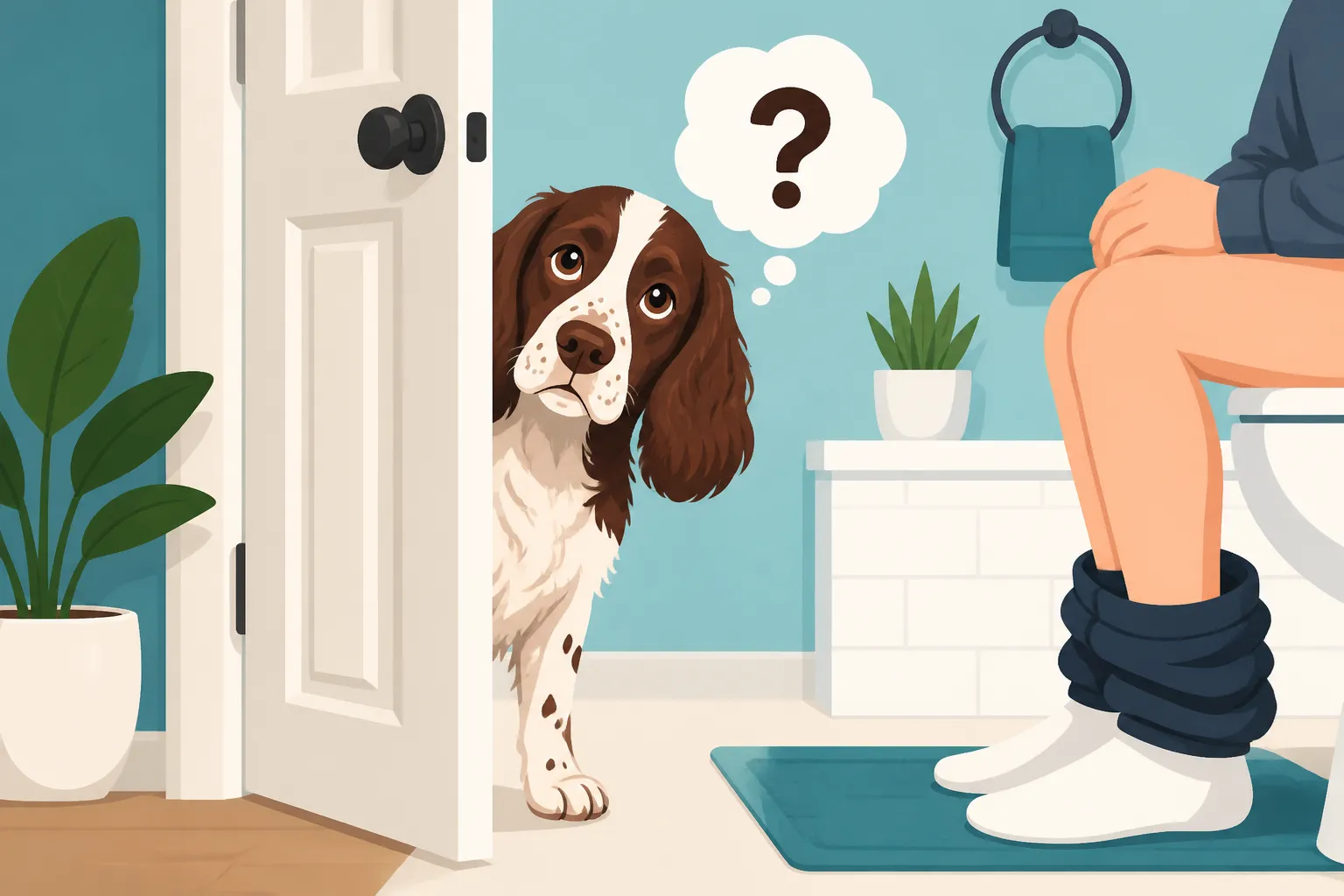
Oh, the quintessential Springer Spaniel question: "Does my dog really need to accompany me to the bathroom?" If you're a Springer owner, you know exactly what I'm talking about. You just want a moment of peace, a tiny slice of solitude, and there they are – nose under the door, a paw pushing gently, or even worse, already sprawled on the bath mat looking at you with those deep, soulful eyes. It’s endearing, yes, but it can also be a little… much. This isn't just a quirky habit; it's deeply rooted in the Springer Spaniel's nature, and understanding why they do it is the first step to either embracing it or gently managing it. This guide will dive into the heart of this "Velcro dog" behavior, exploring its origins, when it's normal, and how you can reclaim a sliver of privacy if you need to, all while keeping your beloved companion happy and secure.
Understanding the Springer Spaniel's "Velcro" Nature
Springer Spaniels are renowned for their intense devotion and desire to be near their people. It's not just a cute trait; it's a fundamental aspect of their breed character, bred into them over generations. They are, quite literally, "Velcro dogs," and this tendency to stick to you like glue extends to every corner of your home, even those you consider strictly private.
A Breed Built for Proximity
Think about the historical role of the English Springer Spaniel. They weren't just dogs that went hunting with their humans; they worked intrinsically with them. A Springer's job was to "spring" game from cover close to the hunter, remaining within gun range, and then retrieving it. This required constant communication, attention to their handler's cues, and an unwavering focus on their person. This close working relationship cultivated dogs that are highly attuned to human presence and deeply desire to be part of every activity. They aren't independent wanderers; they thrive on partnership.
This deep-seated need for proximity translates directly into their home life. If you're moving from the kitchen to the living room, they're right there. If you stand up, they're up. And if you head towards a closed door – especially one they associate with a brief disappearance – their instincts kick in. They don't want to miss anything, and they certainly don't want to be separated, even for a moment. This isn't clinginess in a negative sense; it's a profound connection. It's the same drive that makes their recall often so reliable in the field; they want to be with you. You'll find more about their inherent drives in A Field Bred Springer Spaniel Is a Different Dog to Live With.
Companionship and Security
Beyond their working history, Springer Spaniels are incredibly social animals who thrive on companionship. For many of them, their human is their entire world. Being with you provides them with comfort, security, and a sense of purpose. When you disappear behind a closed bathroom door, it can briefly disrupt this feeling of connectedness. They might wonder what exciting thing they're missing, or perhaps more profoundly, they might simply feel a slight pang of separation, even if it's only for a minute.
Consider a typical scenario: you're home all day, your Springer following you from room to room, perhaps snoozing at your feet while you work, or bringing you a toy when you take a break. Your presence is a constant, reassuring hum in their life. When you suddenly vanish, even briefly, it's a change in that familiar pattern. They might not fully grasp the concept of "privacy" as humans do. To them, it's simply you going somewhere, and they want to be included or at least understand what's happening. My own Springer, Willow, will often just lie down outside the bathroom door with a deep sigh, content just to be within earshot, as if guarding my incredibly important bathroom excursion. It's their way of staying connected and ensuring their world remains predictable and safe with you in it.
Is This Behavior Normal, or a Cause for Concern?
For most Springer Spaniels, following you to the bathroom is completely normal, albeit sometimes slightly inconvenient, behavior. It speaks volumes about their personality and the strong bond they share with you. However, there are times when this "Velcro" tendency can lean into something more concerning, like anxiety.
It's Often a Sign of Love (and a Little Obsession)
Let's be real: for the vast majority of Springer Spaniels, being your bathroom buddy is a testament to their unwavering affection and loyalty. They love you! They enjoy your company! They literally want to be everywhere you are, doing whatever you're doing. This isn't them plotting world domination from the comfort of your bathmat; it's them expressing their deep bond. Think of it as a constant, wagging compliment. They choose you, every single time. My friend often jokes that her Springer, Finn, thinks "alone time" is just a human construct designed to exclude dogs from important life events.
This behavior is particularly common in young, impressionable puppies who are still learning the ropes of their new world, and in dogs who have formed an especially strong attachment to one person in the household. It’s part of the charming, sometimes overwhelming, intensity that makes Springers so special. They are truly "heart dogs" for many, and this constant companionship is a big reason why people fall so deeply in love with the breed. It shows they are engaged, attentive, and utterly devoted. For many owners, it’s a non-issue, or even something they secretly cherish. Who needs a guard dog when you have a Springer making sure you're safe while brushing your teeth?
When "Velcro" Becomes Anxiety
While most bathroom escort services provided by your Springer are benign, it's crucial to distinguish genuine companionship from potential anxiety. If your dog only follows you to the bathroom, then flops down and relaxes, it's likely just their normal desire to be near. However, if their following behavior is accompanied by other signs of distress when you try to leave them alone—even for a minute—it might be indicative of separation anxiety.
Signs that their bathroom escort service is more anxiety-driven could include:
- Excessive whining or barking when you close the door.
- Destructive behavior (chewing the door frame, scratching the door) even during short absences.
- Pacing, trembling, or drooling when you prepare to leave the room.
- Frantic greetings when you return, even from a very short absence.
- House soiling during your absence, even if they are otherwise perfectly house-trained.
If you observe these behaviors consistently, your Springer might be struggling with genuine Separation Anxiety in a Springer Spaniel. In such cases, the bathroom following isn't about wanting to hang out; it's about a desperate need to prevent being left alone, which can be truly distressing for the dog. This is a situation that warrants careful attention and possibly professional guidance, as it can significantly impact your dog's quality of life. Understanding The Springer Spaniel That Cannot Be Left Alone can provide further insights into this more serious issue.
| Behavior Trait | Sign of Normal "Velcro" Love | Sign of Potential Separation Anxiety |
|---|---|---|
| Following | Calmy follows, lies down nearby. | Panicked following, tries to block exit. |
| Vocalizations | Quiet, perhaps a soft sigh. | Whining, barking, howling when separated. |
| Door Interaction | Noses door, waits patiently. | Scratches, chews, tries to break down door. |
| Body Language | Relaxed, loose posture. | Tense, trembling, tail tucked. |
| Response to Return | Happy, wagging tail, calm greeting. | Over-the-top, frantic greeting, jumping. |
| Destructive Acts | None. | Chewing, destroying items, house soiling. |
Strategies for Gaining a Little Privacy
If your Springer Spaniel's constant shadow, especially into the bathroom, is genuinely bothering you, there are gentle and effective ways to encourage more independence without dampening their loving spirit. Remember, Springers are sensitive souls, so positive reinforcement is always the key. The Soft Springer Spaniel That Shuts Down If You Shout is a good reminder of how they respond to your tone.
Setting Boundaries with Positive Reinforcement
The goal here isn't to make your dog feel rejected, but to teach them that it's okay, and even rewarding, to not follow you into every single room. This is about teaching them a new, polite habit.
-
"Stay" or "Wait" Command Practice: Start in a neutral room, like the living room. Ask your Springer to "stay" a short distance from you. Gradually increase the distance and duration. Once they're good at this, start applying it as you approach the bathroom door. Ask them to "stay" right outside the door, then open it and step inside. If they remain, even for a second, praise them enthusiastically and give them a high-value treat. Slowly extend the time you spend inside before rewarding them. If they break the stay, calmly guide them back to their spot and try again. Don't scold; simply reset.
-
Use a Physical Barrier: Sometimes, a gentle physical boundary can help reinforce the "stay" concept. A baby gate can be a fantastic tool for this. You can install one in the doorway leading to the bathroom (or to a hallway that leads to it). When you go into the bathroom, close the gate. This prevents them from following but still allows them to see and hear you, which can be less stressful than a closed solid door initially. You can find sturdy, easy-to-install baby gates on Amazon that work well for dogs. The goal is not to punish, but to provide a clear, consistent boundary.
-
Make Alone Time Positive: Before you go into the bathroom, give your Springer something highly engaging to do that doesn't involve you. A long-lasting chew, a puzzle toy filled with peanut butter, or a KONG filled with frozen treats can be wonderful distractions. This helps them associate your brief absences with something enjoyable for them. The idea is that they're so engrossed in their special treat, they barely notice you've stepped away.
Providing Independent Enrichment
A Springer Spaniel who is constantly shadowing you might simply be under-stimulated or not have enough appropriate outlets for their energy and intelligence. Providing them with opportunities for independent play and mental exercise can help them become more confident and less reliant on your constant presence for entertainment.
-
Interactive Toys: Invest in a variety of puzzle toys that challenge their minds and require them to problem-solve to get a treat. Brands like KONG, Outward Hound, and Nina Ottosson offer excellent options. These can keep your Springer occupied for significant periods. For dogs who love to retrieve, a slow feeder ball can be tossed, allowing them to chase and then work for their meal.
-
Scent Work Games: Springers have incredible noses, and engaging this natural ability can be incredibly tiring and satisfying for them. Hide treats around the house and encourage them to "find it." Start with easy hides and gradually increase the difficulty. This taps into their hunting instincts in a controlled, independent way. You can even invest in beginner scent work kits available on Amazon. A tired Springer is often a content Springer, less likely to feel the compulsive need to follow your every step.
-
Designated "Relaxation Stations": Create a cozy, comfortable spot for your Springer in a common area of the house where they can relax without needing to be right on top of you. This might be a plush dog bed in a quiet corner of the living room, or a crate that they view as their personal den. Encourage them to use this spot with treats and praise. Over time, they might choose to chill there independently, even when you move to another room. Providing enough daily exercise is also critical; a physically and mentally satisfied Springer is less likely to be overly clingy. Remember, How Much Exercise a Field Bred Springer Spaniel Needs and How Much Exercise a Show Bred Springer Spaniel Needs can vary, but all Springers need an outlet.
Embracing the Springer Spaniel Shadow
While the idea of privacy might sound appealing, there's also something truly special about the unwavering devotion of a Springer Spaniel. Many owners eventually learn to not just tolerate, but truly appreciate, their constant companion. After all, isn't that part of the charm of living with a Springer?
The Upside of a Constant Companion
Let's face it: having a Springer Spaniel means never truly being alone. While it can be a bit much sometimes, there's a profound comfort in their constant presence. They are always there to greet you, to offer a comforting nudge, or simply to lay their head on your lap, reminding you that you are loved beyond measure. This breed thrives on connection, and their desire to be near you is a pure, unfiltered expression of their affection. It’s a privilege, really, to be the center of such intense canine devotion.
Think of it this way: your Springer isn't following you to be annoying; they're following you because you are their favorite person, their protector, their source of joy and security. They embody unconditional love. Plus, they make excellent foot warmers, and you'll never have to wonder if you're truly alone in the house! The unique bond you form with a Springer is one of the most rewarding aspects of owning this breed. They truly integrate into every facet of your life, making every mundane moment a little brighter simply by their presence. If you're considering another dog, perhaps Whether a Springer Spaniel Needs a Second Dog could offer some insights, though often their primary bond remains with their human.
Fostering a Healthy Relationship
Ultimately, whether you decide to gently manage the bathroom following or simply laugh it off, the most important thing is to maintain a healthy, trusting relationship with your Springer Spaniel. Ensure they get plenty of physical exercise and mental stimulation, which helps them feel content and less anxious overall. A well-exercised Springer is often a calmer dog, less prone to frantic shadowing.
Continue with positive reinforcement training across the board. If you're looking for structured guidance on building a strong foundation of positive behaviors and addressing potential issues like separation anxiety, programs like BAXTER & Bella offer online puppy and dog training courses that emphasize positive methods. These types of resources can be invaluable for teaching your Springer confidence and good manners in a way that strengthens your bond, rather than diminishes it. Consistency, patience, and lots of love will go a long way in ensuring your Springer is a happy, well-adjusted companion, whether they're on your heels or happily relaxing in another room.
Disclaimer
This article is for general informational purposes only and does not constitute professional advice. Laws, prices and regulations vary by location and change over time. Consult a qualified professional for guidance on your specific situation.