The Last Dual Champion Springer Spaniels
A “last dual champion” sounds like one clearly documented Springer Spaniel who closed a chapter in the breed’s history. In practice, the answer depends on what “dual champion” means, which country’s registry is being used, and whether the claim refers to formal titles or broader working and show achievements. This guide explains the distinction and how to assess the claim carefully.
What dual champion means for a Springer Spaniel
Two kinds of achievement, not one general label
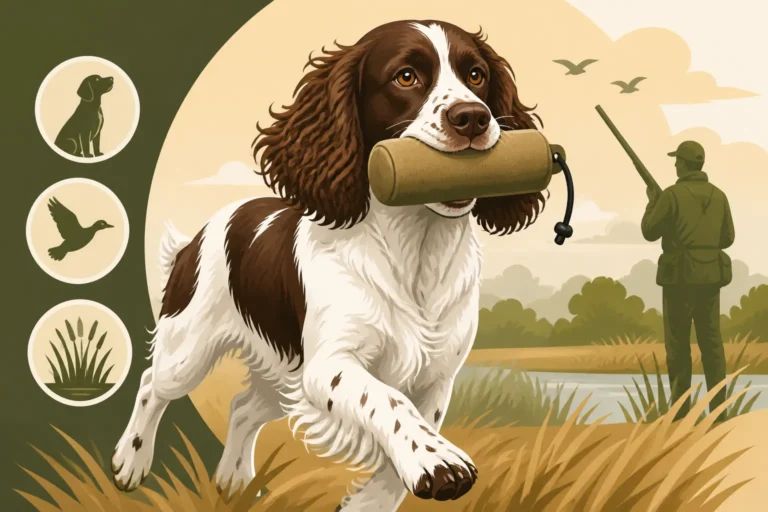
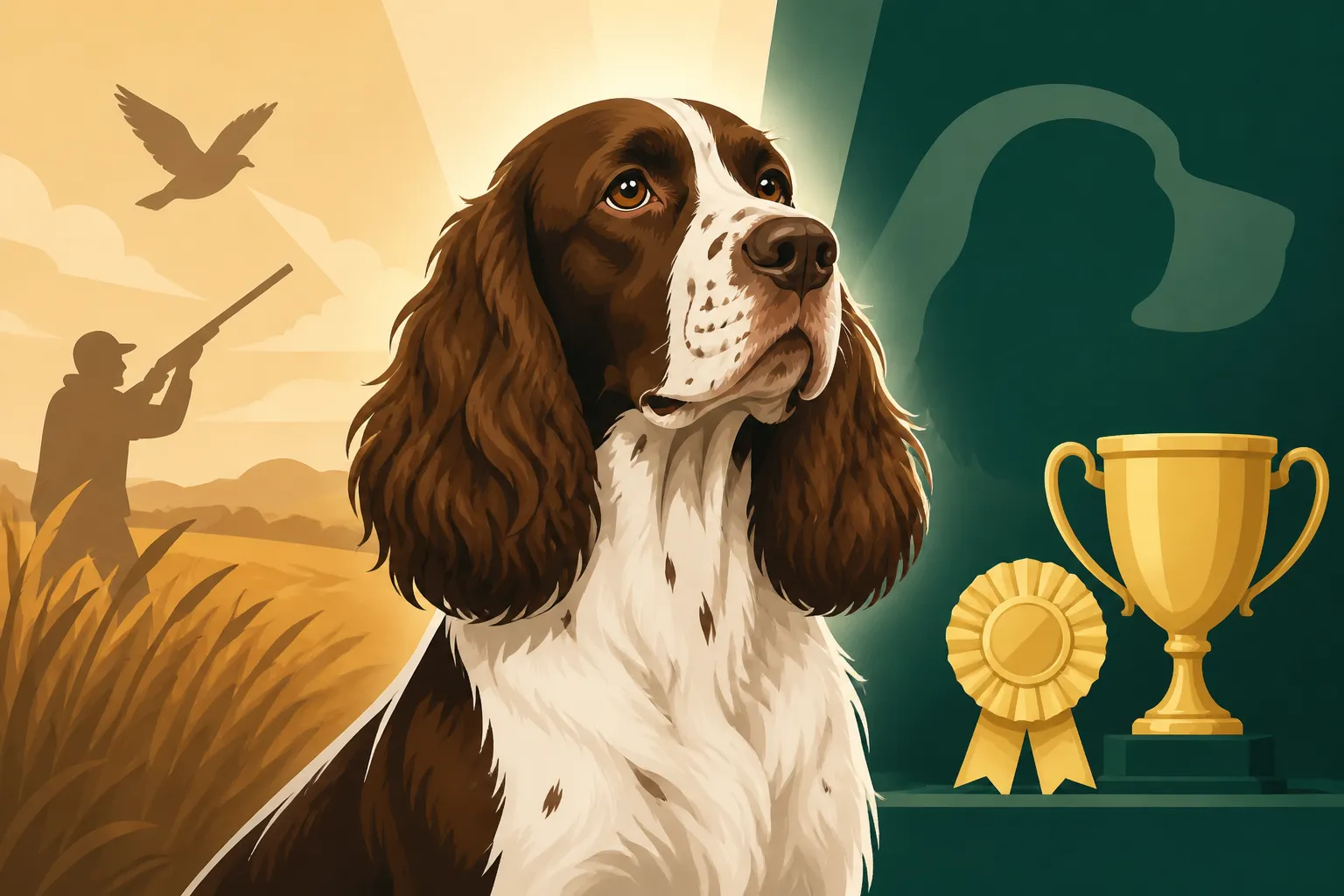
A dual champion is a dog that has earned recognized titles in both conformation and field competition. Conformation competition evaluates how closely a dog matches the breed standard, including its structure, movement, and overall appearance. Field competition tests working ability, such as finding and flushing game, responding to handling, and retrieving when required.
The combination matters because success in one arena does not automatically predict success in the other. A dog can be an accomplished show champion without having competed successfully in field trials. Likewise, an exceptional field dog may never have been shown or may not have earned a conformation title. Calling a dog a dual champion should therefore refer to documented achievements in both settings, not simply a reputation for being attractive and useful.
This distinction is especially important when reading older pedigrees, kennel histories, and discussions among Springer enthusiasts. People may use “dual purpose” to describe a dog or breeding line considered suitable for both work and the show ring. That phrase is not necessarily proof that an individual dog earned both formal championships.
Titles depend on the registry and country
The wording and requirements for championship titles vary among registries and countries. In the United States, the American Kennel Club recognizes conformation and field titles, and “Dual Champion” is a formal designation for a dog that meets the requirements in both areas. Other countries use their own title systems, competition rules, and terminology. A British Springer described as a show champion and a field trial champion, for example, should be evaluated against the relevant British records rather than assumed to hold the same title as an American Dual Champion.
It also matters which kind of field competition is being discussed. A hunt test title can show that a dog has demonstrated defined working skills, but it is not interchangeable with a field trial championship. The events have different purposes and standards. When a claim says “dual champion,” check the actual titles and the organization that awarded them rather than relying on a shortened description.
For more background on how the two sides of the breed developed, see How the Field and Show Springer Spaniel Diverged and Whether the Two Springer Spaniel Types Interbreed. Those histories help explain why a dog succeeding in both arenas is notable, but they do not change the formal title requirements.
Why people ask about the last dual champion
The field and show types have grown apart
English Springer Spaniels remain one registered breed, but many people recognize substantial differences between working-bred and show-bred dogs. Selection goals have differed over generations. Field breeders tend to prioritize working ability, stamina, responsiveness, and suitability for hunting or field competition. Show breeders place strong emphasis on conformation, coat, movement, and the written breed standard.
These are broad tendencies, not guarantees about an individual dog. A show-bred Springer can have a capable nose and enjoy field work; a field-bred dog can have qualities that appeal to a conformation judge. But when breeding populations are selected for different aims over a long period, the dogs can become less similar in appearance, style, and everyday behavior. That makes it harder to find dogs that are competitive at the highest level in both disciplines.
This wider divide is explored in The Seventy Year Gene Pool Divide Inside One Springer Spaniel Breed and How Long the Field and Show Springer Spaniels Have Been Separate. A dual champion is often treated as a symbol of a time when the same dog could bridge those priorities. The achievement is meaningful, but it does not mean that the breed was once uniform or that every earlier Springer was equally suited to both careers.
The phrase “the last” needs a precise definition
There may not be one universally accepted answer to “Who was the last dual champion Springer Spaniel?” The answer can change depending on whether the question means the last dog to earn a formal dual title in a particular registry, the last dog to win both types of competition in a particular country, or the last one widely remembered by a breed community.
A claim may also refer to the last dog that was successful at a certain level, rather than the last dog that technically qualified for the title. Those are different statements. Someone might remember a notable dual champion from a particular era while later dogs also earned the formal designation. Conversely, a dog may have shown ability in both settings but not completed the requirements for both championships.
A reliable account should name the dog, identify the registry, list the titles, and give enough information to check the record. If a source only says “the last dual” without explaining its definition, treat that wording as an informal claim rather than a settled historical fact. The same caution applies to claims about the final breeder or kennel maintaining a dual-purpose line.
| Claim being made | What needs to be established |
|---|---|
| Last formal dual champion | The registry’s title records and the dog’s completed titles |
| Last dual champion in a country | The country, governing organization, and time period |
| Last successful show-and-field dog | What “successful” means and which competitions count |
| Last dual-purpose breeding line | The definition of dual purpose and evidence about the dogs bred |
| Last dog remembered as a dual champion | Whether the claim is historical recognition rather than a formal record |
Why dual championships became harder to achieve
Each competition rewards different strengths
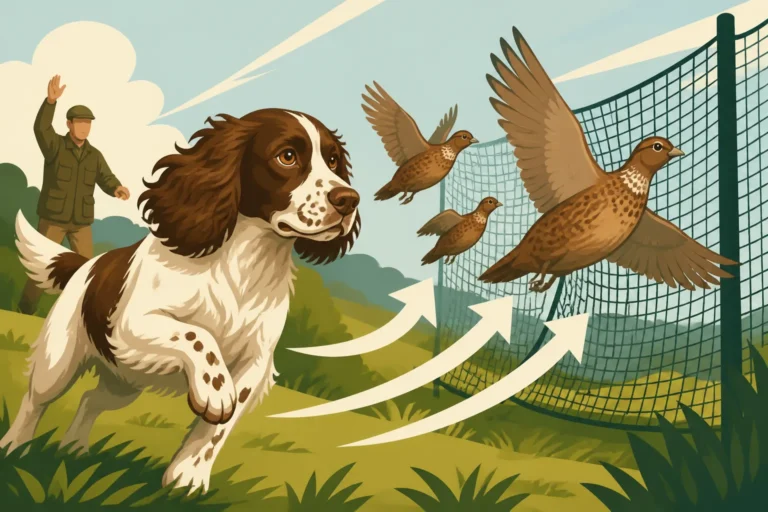
Field competition asks a dog to work in a changing environment. It must use its nose, cover ground, respond to its handler, and remain effective amid scent, terrain, other dogs, and distractions. In conformation, the dog is assessed in a controlled ring against a written standard. The judge is looking at structure and presentation rather than field performance.
Training and conditioning can also pull in different directions. Field preparation involves repeated work on practical skills and fitness. Show preparation may involve coat maintenance, ring training, and careful presentation. A dog can be trained and groomed for both, but doing so takes time, access to suitable opportunities, and handlers who understand both worlds.
The challenge is not simply that a dog must “look right” and “work hard.” It must also be competitive under separate judging systems, with breeders and handlers making choices that support both forms of success. The question of whether the divide could be bridged more often is part of the discussion in The Breeders Still Crossing the Two Springer Spaniel Types and The Effort to Reunite the Two Springer Spaniel Types.
Breeding priorities can narrow the route to success
When breeding decisions consistently favor one set of traits, it can become less common for a dog to have the combination required to excel elsewhere. This does not make one type better than the other. It reflects different goals. A breeder focused on field performance may select for qualities that matter in demanding work, while a breeder focused on the show ring may prioritize features judged in conformation.
A dual champion needs more than a suitable pedigree. It needs individual ability, soundness, temperament, training, and access to competition. The people involved must also be willing and able to pursue both careers. A promising puppy may be placed in a home that prioritizes hunting, or in one that concentrates on showing, so the dog never has the opportunity to earn titles in both.
For that reason, the rarity of dual champions cannot be explained by appearance or lineage alone. It involves breeding choices, ownership, training, opportunity, and competition results. How Different the Two Springer Spaniel Types Look offers useful context for the visible differences, while How the Divide Harms the Springer Spaniel addresses concerns people raise about the long-term effects of separate breeding priorities.
How to verify a “last dual champion” claim
Start with the dog’s full name and titles
Begin by asking for the dog’s registered name, not just a call name or kennel nickname. Then write down every title included in the claim and identify the organization that awarded each one. A dog’s name in a pedigree may include several abbreviations, so it is worth checking what each abbreviation represents rather than assuming it means a championship.
Next, confirm that the titles qualify under the relevant registry’s rules. If the claim is about a formal dual champion, verify that the dog completed both required championships. If the account instead describes a dog that competed in both arenas, keep that description separate from the formal title. This small distinction prevents an interesting achievement from being overstated.
Finally, check the date and location of the claim. “Last” is a time-sensitive word in historical records, and the latest known example in one country may not be the latest in another. If an article or family account does not provide enough details to check the title, it may still be useful as oral history, but it should not be presented as definitive proof.
Separate achievement from interpretation
Once a dog’s titles are confirmed, consider what the source is trying to show. Some accounts use a dual champion as evidence that the field and show sides of the breed were once closer. Others use the story to encourage breeders to maintain versatility. Those interpretations can be valuable, but they are not the same as the record of the dog’s actual accomplishments.
Avoid drawing broad conclusions from one famous example. A single dual champion cannot prove that all dogs of an earlier period were equally capable in both settings, nor can the absence of a recent widely recognized example prove that no dog has managed both. It is more accurate to discuss the individual achievement alongside the wider breeding and competition context.
The topic also connects to discussions of what each type can still do. For example, How a Show Springer Spaniel Fares in a Hunt Test and How a Field Springer Spaniel Fares in the Ring focus on performance across the divide. Those questions are related to dual championships, but doing reasonably well in a test or ring is not automatically the same as winning both formal championships.
What the dual champion legacy means today
A historical milestone, not a measure of every Springer
Dual champions are compelling because they embody an unusual combination of working talent and conformation success. Their stories can help explain how Springer Spaniels were bred, shown, trained, and valued in different eras. They also make the breed’s divergence easier to discuss: when people ask why there are fewer widely recognized dual champions, they are often really asking how breeding goals and competitive systems have changed.
Still, a dual title should not be treated as the only measure of a good Springer Spaniel. Families looking for a companion, hunters seeking a working dog, and breeders aiming for show success may have different priorities. A dog can be a wonderful representative of its purpose without being competitive in a second discipline. The right question is not simply whether a dog could be a dual champion, but whether its traits and needs suit the life it will actually lead.
If the historical question leads you to consider a Springer Spaniel, learn about the two broad types before choosing a breeder or puppy. Two Breeds Registered as One: the Field and Show Springer Spaniel gives a broader overview of that distinction, and Which Springer Spaniel Type Is More Common in America explores one part of the modern breed landscape. Neither a title nor a type label tells you everything about an individual dog, so ask about temperament, health, working expectations, and the breeder’s goals.
What to look for when reading breed history
The clearest historical accounts distinguish documented facts from tradition. They name the dog, specify the title system, and explain what counted as a championship. They also avoid using one famous dog as proof that the whole breed was once the same. Good history can celebrate an exceptional achievement while acknowledging that breeding populations, competition rules, and expectations change.
When you encounter the phrase “last dual champion,” look for a definition before accepting the superlative. Ask whether it means the last formal title holder in a particular registry or the last dog remembered as successful in both worlds. That question usually leads to a more useful conversation than trying to find one name stripped of context.
The enduring importance of these dogs is not just that they won titles. Their careers illustrate the challenge of preserving breadth in a breed shaped by specialized goals. Whether the label “last” is ultimately attached to a particular dog or remains disputed, the story invites a deeper look at what the Springer Spaniel was bred to do—and what different breeders and owners hope it can do now.
Disclaimer
This article is for general informational purposes only and does not constitute professional advice. Laws, prices and regulations vary by location and change over time. Consult a qualified professional for guidance on your specific situation.