Whether a Springer Spaniel Hunts Rabbits
It’s a common sight in the countryside: a blur of a dog, nose to the ground, tearing off into the brush after a flash of white tail. If you own an English Springer Spaniel, you’ve probably witnessed this intense, focused pursuit firsthand. Many owners wonder if their Springer, a breed renowned for its bird-flushing prowess, also possesses a natural inclination to hunt rabbits, and what that means for their daily walks and training efforts. This guide will explore the deep-seated instincts of your Springer Spaniel, clarifying how they interact with all kinds of small game, including rabbits, and offering insights into managing these powerful drives.
The Springer Spaniel's Predatory Instincts: Birds First, But Not Exclusively
When we talk about English Springer Spaniels, the image that most readily springs to mind is a dog quartering a field, nose high, flushing pheasants or grouse. They are, after all, flushing spaniels, bred for centuries to locate game birds, "spring" them into the air for the hunter, and then retrieve them. This specific job has shaped their physical build, their boundless energy, and their incredible scenting ability. But it's important to remember that this doesn't mean their prey drive is exclusively limited to birds.
Their Primary Purpose: Flushing Game Birds
A Springer Spaniel's entire genetic makeup is geared towards finding and flushing feathered game. Their powerful legs, deep chests, and relatively compact size allow them to navigate dense cover with ease, pushing through brambles and tall grass to get birds airborne. Their long, soft ears sweep scents from the ground, acting almost like extra antennae to funnel smells towards their incredibly sensitive noses. This intense focus on bird scent is truly remarkable. When a Springer hits a bird scent, it's like a switch flips; their body language changes, their tail flags furiously, and they become a canine guided missile. Their job isn't to chase birds down and kill them, but to get them flying and then bring them back to hand after the shot. This is a very specific, controlled form of hunting, refined over generations.
The All-Encompassing Scent Drive
While birds are their specialty, a Springer Spaniel's nose is a general-purpose marvel. They are bred to work in the field, which means encountering all sorts of wildlife. A strong scent drive doesn't differentiate between "bird scent" and "mammal scent" in terms of intensity of interest. It's more about what they are trained to do once they find a scent. If your Springer catches the scent of a rabbit, or a squirrel, or even a deer, their instinct to investigate and pursue can be just as strong as with a pheasant. It's the thrill of the chase, the puzzle of the trail, that captivates them. This is why you might see your dog put its nose to the ground and vanish, seemingly ignoring your calls, lost in the intricate world of scent. This behavior isn't about disobedience so much as it is an overwhelming instinct taking over. Why a Springer Spaniel Puts Its Nose to the Ground and Vanishes is a common scenario for many Springer owners.
When a Rabbit Crosses Paths with a Springer Spaniel
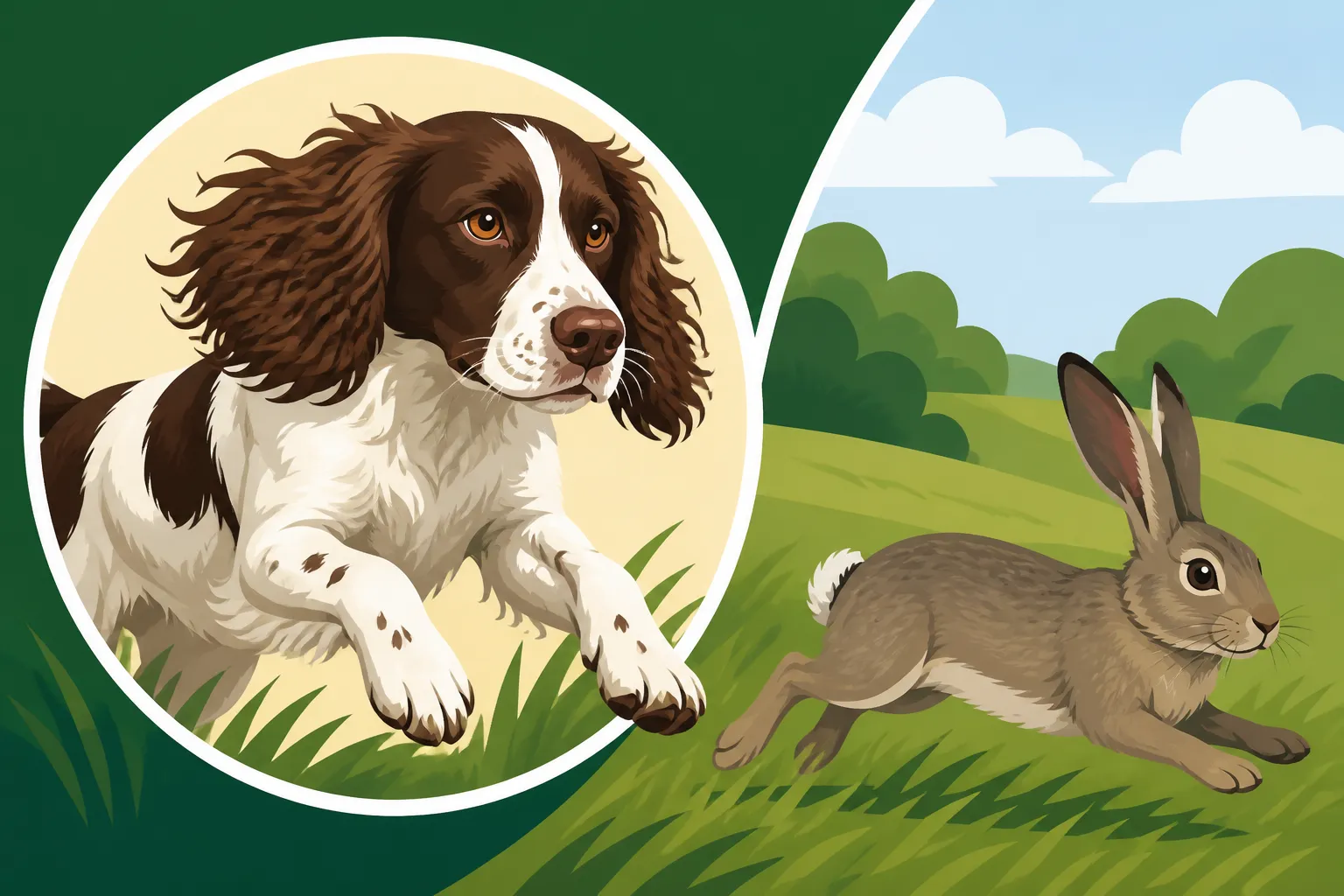
So, what happens when a rabbit suddenly bolts from under a bush right in front of your Springer? The answer is almost universally: a chase. While they aren't traditionally rabbit dogs in the same vein as Beagles or Basset Hounds, their inherent prey drive and flushing instinct makes them highly likely to pursue.
The Differences in Scent and Pursuit
Rabbit scent is very different from bird scent, but it's still a compelling trail for a dog with a powerful nose. Unlike a bird, which flies, a rabbit will typically run and then burrow or hide. A Springer trained for birds will often work in a zig-zag pattern, covering ground efficiently to flush birds. When they encounter a rabbit, the initial burst of speed will be much the same, but the follow-through might differ. They aren't going to "point" a rabbit; they're going to flush it, just like a bird, and then chase it with all their might.
A trained gundog might be taught to halt when game is flushed, waiting for the command to retrieve after a shot. However, if that game isn't a bird and the training isn't specific, all bets can be off. It's a primal instinct, hardwired, and often overrides learned behavior in the heat of the moment, especially if the dog isn't under strict whistle control. A Springer seeing a rabbit dash away is essentially seeing a fast, furry toy that needs to be "caught."
The Unintended Consequences of the Chase
The primary concern for owners when a Springer gives chase to a rabbit isn't usually whether the dog will catch it (though they certainly can if the rabbit isn't quick enough or gets cornered), but the risks associated with an uncontrolled pursuit. A Springer Spaniel on the trail of a rabbit can easily ignore boundaries, traffic, and your frantic calls. They can vanish into thick cover, become disoriented, or run far out of sight. This isn't just a hypothetical concern; it's a very real danger.
Consider a busy suburban park that borders a wooded area. A rabbit scurries across the path, and your unleashed Springer, usually so responsive, is gone in a flash. Suddenly, they're heading towards a road, or a stranger's yard, completely oblivious to your presence. This scenario highlights why a reliable recall is paramount, especially for a breed with such a keen prey drive. Whether a Springer Spaniel's Recall Can Be Trusted is a question every owner of an energetic spaniel needs to seriously consider and work on daily.
Training Your Springer Spaniel Around Small Game
Managing your Springer Spaniel's instinct to chase rabbits and other small game is less about eliminating the drive (which is impossible) and more about channeling and controlling it. The goal is to ensure your dog is safe and responsive, even when their instincts are screaming at them to pursue.
Focusing Natural Drive and Channeling Energy
Instead of seeing the prey drive as a problem, recognize it as a core part of what makes your Springer Spaniel who they are. Their energy and drive need an outlet. If they aren't engaged in actual hunting, consider other activities that tap into these instincts in a controlled way. Scent work, for example, is fantastic. You can hide treats or toys and encourage them to use their nose to find them. Agility or flyball can also provide an excellent physical and mental workout. Even advanced obedience training, especially with a positive reinforcement program like BAXTER & Bella, can build a strong foundation of focus and responsiveness that carries over to real-world scenarios.
A well-exercised and mentally stimulated Springer is a happier, more manageable dog. If they spend their days bored and under-exercised, that pent-up energy and instinct is much more likely to erupt into an uncontrolled chase at the first sign of wildlife. Whether a Springer Spaniel Needs a Job is often overlooked for pet Springers, but providing an outlet for their innate abilities is crucial for their well-being and your peace of mind.
The Absolute Necessity of a Reliable Recall
This cannot be stressed enough: a bomb-proof recall is your most important tool in managing a Springer Spaniel's prey drive. When they're off-leash, and that rabbit appears, your recall command needs to be stronger than the instinct to chase. This takes consistent, dedicated training, often starting in low-distraction environments and gradually increasing the challenge. Start in your backyard, then a quiet park, then an area with more distractions. Always reward generously when they return.
Whistle training is particularly effective for Springers because the sound carries further and cuts through distractions better than your voice. Whistle Work: The Language a Springer Spaniel Learns is a highly valuable skill for any Springer owner. Practice changing directions on the whistle, calling them back from a distance, and rewarding heavily. Many owners also find a long line incredibly useful during this training phase, allowing their dog to explore while still maintaining a physical connection and the ability to prevent a full-blown chase. You can find excellent quality long lines on platforms like Amazon.
Discouraging Unwanted Chasing
While you can't erase instinct, you can certainly discourage chasing certain animals. This often means being proactive and managing the environment.
| Aspect | Goal for Rabbit Chasing | Strategy | Tools & Training |
|---|---|---|---|
| Instinct Management | Channel prey drive safely | Provide alternative outlets for scent work and exercise. | Scent games, puzzle toys, agility, advanced obedience. |
| Recall Reliability | Instant return, even with distractions | Practice consistently in varied environments, reward heavily. | Long line, whistle, high-value treats, BAXTER & Bella program. |
| Environmental Control | Prevent opportunities for chase | Keep on leash in known rabbit habitats; use fenced areas. | Leash, GPS collar, secure yard. |
| Focus Training | "Leave It" and "Look at Me" commands | Teach strong commands to divert attention from distractions. | Focus games, immediate redirection. |
If you know you're in an area with a lot of rabbits or squirrels, keep your Springer on a leash. Consider a GPS collar for added peace of mind if you do venture into areas where they might get lost in pursuit. Even a short leash walk can be made more stimulating with Scent Games Tire a Springer Spaniel by allowing them to sniff and track within bounds. For general obedience and building that rock-solid foundation, online training platforms like BAXTER & Bella can offer structured programs that teach crucial commands like "leave it" and a reliable recall, which are invaluable for managing these powerful instincts.
Living with a Springer Spaniel's Prey Drive
For many Springer Spaniel owners, especially those who don't hunt, the goal isn't to encourage rabbit hunting, but to understand and safely manage their dog's natural tendencies. It's about finding a balance between allowing them to express their innate abilities and ensuring their safety and the safety of other creatures.
Enrichment in a Pet Home
A Springer Spaniel thrives when its mind and body are active. In a pet home, this means getting creative with enrichment. Daily walks are a must, but make them engaging. Let them sniff, explore, and use their nose. Structured playtime with fetch or hide-and-seek can be incredibly rewarding. Chew toys, especially those that dispense treats, can keep them occupied and mentally stimulated indoors.
Think about how you can replicate the "hunt" without actual hunting. A Kong filled with frozen peanut butter or a snufflemate where they have to dig for kibble can satisfy that inherent desire to forage and work for their food. These activities are critical for preventing boredom, which can lead to destructive behaviors or an even stronger urge to chase anything that moves outside.
Safety Around Wildlife and Other Small Pets
For homes with other small pets like cats, hamsters, or even very small dogs, understanding and managing your Springer's prey drive is absolutely essential. While many Springers can coexist peacefully with cats they've grown up with, a sudden flash of movement from a new, unfamiliar small animal can trigger that chase instinct. Introductions must be slow, supervised, and always prioritized with safety in mind.
It's not uncommon to hear of a Springer Spaniel chasing squirrels up trees, which is harmless enough, but Whether a Springer Spaniel Chases Squirrels should still be managed to prevent your dog from potentially running into danger or becoming lost. Always consider the potential consequences of an uncontrolled chase. If your dog has a particularly high prey drive, it might be safer to keep them leashed in areas known for abundant wildlife.
The Importance of Consistency
Whether you're teaching a strong recall, working on "leave it," or simply encouraging appropriate play, consistency is key. Every interaction, every training session, every walk is an opportunity to reinforce the behaviors you want. Don't let your Springer get away with ignoring a recall "just this once" when a rabbit runs by, because that one time can undo weeks or months of diligent training. Your Springer Spaniel is an intelligent, driven, and highly capable dog. By understanding their instincts and providing consistent, positive guidance, you can enjoy a safe and rewarding life together, even when a rabbit makes a surprise appearance.
Disclaimer
This article is for general informational purposes only and does not constitute professional advice. Laws, prices and regulations vary by location and change over time. Consult a qualified professional for guidance on your specific situation.