Whether a Springer Spaniel Rolls in Foul Things
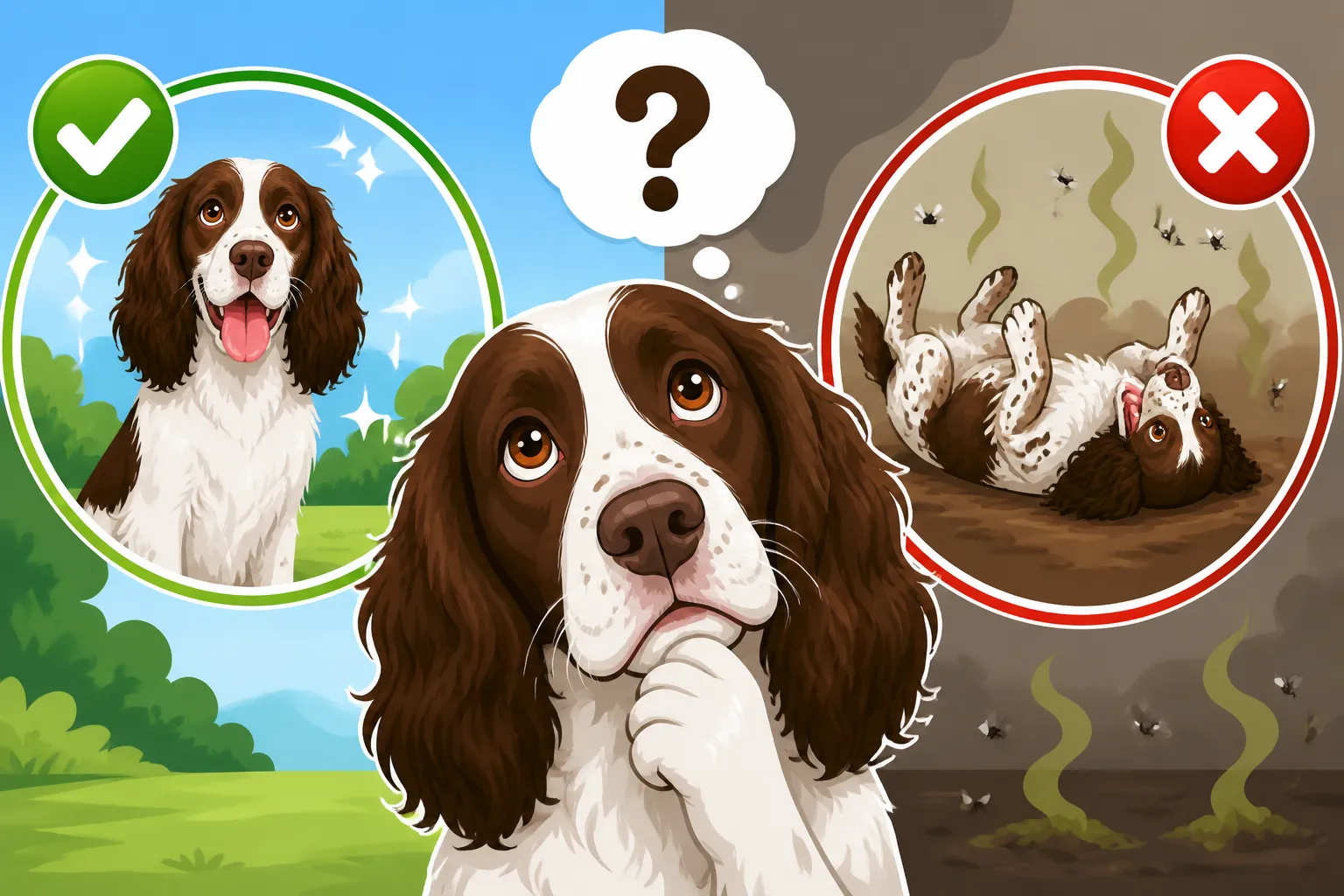
Oh, the sheer joy (and accompanying horror) of watching your beloved English Springer Spaniel find something absolutely, unequivocally disgusting in the park or yard, and then, with not a moment's hesitation, fling themselves into it for a full-body roll. If you've ever stood there, mouth agape, wondering why on earth your otherwise charming companion insists on perfuming themselves with the foulest concoctions, you are absolutely not alone. This guide is here to shed some light on this rather peculiar, yet utterly ingrained, Springer Spaniel behavior and offer some strategies to help minimize the inevitable post-roll scrubbing sessions.
Why Your Springer Spaniel Finds Gross Scents Irresistible
It’s one of the quintessential Springer Spaniel quirks, isn't it? One minute they're gracefully quartering a field, the next they're nose-deep in something you wouldn't touch with a ten-foot pole, then flailing around in it with pure, unadulterated bliss. This isn't just mischief, though it certainly feels that way when you're wrestling them into the tub later. This behavior is rooted deeply in their instincts and ancestry, something we, as their human companions, need to try and understand, even if we can't always appreciate it.
The Ancestral Drive: A Matter of Survival
Imagine a wild canine, long before the days of kibble and cozy dog beds. Survival meant hunting efficiently, avoiding predators, and communicating effectively. Rolling in strong-smelling substances played a vital role in all these aspects. For your Springer Spaniel, whose heritage is packed with centuries of working alongside humans in the field, these ancient drives are very much alive. They are hardwired to process the world through scent, and sometimes, the more pungent the better!
One theory suggests that rolling in strong-smelling animal carcasses, scat, or decaying matter served as a form of camouflage. By masking their own scent with that of another animal, they might have been able to approach prey undetected or, conversely, avoid being detected by larger predators. It's a primal instinct, a survival mechanism that has been passed down through generations. Your Springer isn't thinking, "I want to smell like dead fish today!" Instead, an ancient voice in their head is whispering, "This is good. This makes me blend in. This makes me a better hunter." Even if their biggest hunt today is for a dropped crumb under the sofa, the instinct remains. This deep-seated drive is why Why a Springer Spaniel Puts Its Nose to the Ground and Vanishes is such a common complaint among owners.
Communication and Camouflage: More Than Just Gross
Beyond simply masking their scent for hunting, there's also a social element. In a pack environment, bringing back interesting scents could be a way of sharing information with other pack members about what they've encountered. Think of it as a canine newspaper, written in stink. They're literally bringing the news home on their fur. While your modern Springer Spaniel might just be bringing the news to your carpet, the impulse comes from the same place.
Consider also the sheer sensory enrichment for a dog. Our world is very visual, but a dog's world is dominated by smell. Rolling in something truly potent is like us reading an incredibly gripping novel or watching a blockbuster movie – it’s an immersive sensory experience. They are gathering, analyzing, and even luxuriating in the olfactory information. It’s their way of exploring the world, connecting with their environment on a level we can barely comprehend. The stronger the scent, the more "interesting" the story, and the more compelled they are to roll in it. This powerful drive is also why Whether a Springer Spaniel's Nose Overrides Its Ears during walks.
Common Foul Offenders Your Springer Spaniel Loves
If you've owned a Springer Spaniel for any length of time, you likely have your own mental list of "top offenders." But let's be honest, it's often a pretty universal list among spaniel owners because these dogs seem to have a particular affinity for the truly offensive. Understanding what they're drawn to can help you anticipate and potentially prevent some of these fragrant encounters.
Animal Waste: The "Perfume" of the Wild
Ah, the classic. From deer droppings to fox scat, and yes, even other dog's waste, animal feces are often at the top of a Springer's "must-roll" list. To us, it's just plain disgusting and a vector for all sorts of parasites. To your Springer, it's a potent cocktail of information. Each pile tells a story: who was here, when they were here, what they ate, and perhaps even their health status or reproductive state.
Rolling in it allows your dog to literally wear this information. It’s like putting on a billboard that says, "I was here, I investigated, and I'm part of this wild world." For a dog with a strong hunting instinct, like a Springer Spaniel, these scents are intrinsically appealing. They are signs of potential prey or competitors. Imagine a Springer working a field. They pick up the scent of deer, and if they then roll in deer scat, they are essentially taking on a "deer camouflage," making themselves potentially less noticeable to the very animals they might be trying to locate or flush. It's an incredibly effective, if revolting, strategy from their perspective.
Rotting Delights: Decomposed Organic Matter
This category is vast and varied, encompassing everything from dead animals (squirrels, birds, fish) to decaying plant matter, fermented fruit, or even just really stagnant puddle water. If it's decomposing, it's probably emitting some seriously intriguing volatile organic compounds that your Springer finds utterly captivating. The older and more putrid, the better, it seems!
The appeal here is similar to animal waste, but often even more intense. A decaying carcass, for instance, is a goldmine of strong, natural odors. It signifies a potential food source (or a past one), attracts scavengers, and generally creates a bustling hub of olfactory activity. By rolling in it, your Springer once again becomes part of that ecosystem, absorbing and broadcasting those powerful scents. I've had Springers dive headfirst into something that smelled vaguely like an old gym sock mixed with rotten eggs, only to emerge with a look of pure contentment. It’s hard to reconcile their joy with our gag reflex, but it's important to remember they're just following their nose and ancient programming. This is also why you need to be very careful about What a Springer Spaniel Picks Up in the Field and Should Not Eat.
Practical Strategies to Deter the Delightful Roll
While we might never fully eliminate the urge, we can certainly implement strategies to reduce the frequency and impact of these "scent-enhancement" episodes. It takes vigilance, consistent training, and sometimes, a good sense of humor (and a strong stomach!).
Management and Prevention: Your First Line of Defense
Prevention truly is key. The simplest way to avoid your Springer rolling in something foul is to ensure they don't get the opportunity. This is easier said than done, especially with a dog that has such a strong scent drive and loves to explore every nook and cranny.
- Leash Management: This is your most powerful tool. When you're in an area where you know foul things might lurk—a woody trail, a park popular with wildlife, or even just a field after a recent rain—keep your Springer on a leash or a long line. This gives you direct control. As soon as you see them put their nose down with that specific, intense focus that precedes a roll, you can redirect them. A quick "leave it" command or a gentle leash correction can often prevent the full-body dive. Remember, Whether a Springer Spaniel Can Be Trusted Off Leash is a big question, especially when there are enticing smells around.
- Supervision and Awareness: Even in your own yard, constant supervision is crucial. Many a Springer has found a "treasure" right at home. Scan your environment before letting your dog off-leash. Are there any suspicious piles, dead critters, or particularly muddy/stagnant patches? A quick once-over can save you a lot of grief. If you're out hiking, keep an eye on where they're sniffing, especially in dense undergrowth.
- Fencing and Containment: If you have a yard, ensure your fencing is secure. A motivated Springer can be an escape artist if there's a fascinating smell just beyond the boundary. Regular yard cleanup is also paramount. Remove any animal droppings promptly, clear away fallen fruit, and dispose of anything rotting.
Training for a Cleaner Lifestyle
Beyond physical management, training plays a huge role. Building a strong foundation of obedience can make a real difference when those tempting scents appear.
- Reliable "Leave It" and "Come": These are non-negotiable commands for any dog, but especially a Springer Spaniel. A solid "leave it" means your dog will disengage from something they're interested in, whether it's a discarded chicken bone or a patch of fox scat. Practice this command diligently in various environments, starting with low distractions and gradually increasing the challenge. Reward heavily when they comply. Similarly, a bombproof "come" or recall is essential if they manage to find something off-leash. Start training this early and make coming back to you the most rewarding thing they can do. Consider investing in a program like BAXTER & Bella's online puppy school; while it won't specifically address rolling in gross things, it provides an excellent foundation for all the basic obedience that makes prevention easier. A strong recall means you can call them away before they commit to the roll.
- Redirection and Engagement: Instead of just saying "no," offer an alternative. If your Springer starts sniffing intensely at something dodgy, immediately engage them with a favorite toy or a high-value treat, then lead them away. Make you more interesting than the smelly discovery. Practice retrieves with clean bumpers or balls. Whether Fetch Satisfies a Springer Spaniel can be a useful way to burn energy and focus their attention on appropriate activities.
- Scent Work on Your Terms: Since your Springer loves using their nose, lean into it in a controlled way! Introduce them to scent games or nose work with treats or approved scent articles. This satisfies their natural instincts without the disgusting aftermath. This channels their powerful olfactory drive into an acceptable outlet.
Post-Roll Cleanup and Odor Removal
Okay, so despite your best efforts, it happened. The roll occurred. Now what? Preparing for the inevitable makes it a little less painful.
- Immediate Action: Don't waste time. Get them home and into the tub as quickly as possible. The longer the offending substance sits on their coat, the more deeply the odor penetrates and the harder it is to remove.
- Specialized Shampoos: Regular dog shampoo might clean the fur, but it often won't fully eradicate the stench. You'll want to invest in a good quality deodorizing or odor-neutralizing shampoo. Many brands offer formulas specifically designed to tackle skunk odors or other strong smells. Look for products that contain enzymes or odor eliminators rather than just strong perfumes that mask the smell temporarily. Amazon has a wide selection of these specialized shampoos, so you can easily find options with good reviews.
- Deep Cleaning the Coat: For particularly sticky or embedded substances, you might need to pre-treat the area. Some owners swear by a mixture of baking soda, dish soap, and hydrogen peroxide (use caution and test on a small area first, as hydrogen peroxide can lighten fur, especially on darker coats). Apply, let it sit for a few minutes, then rinse thoroughly before shampooing. Make sure you really work the shampoo down to the skin, especially in their dense undercoat and feathering. How Often a Working Springer Spaniel Needs Washing can become a weekly ritual if your dog is prone to these antics!
- Targeting the Ears: Given that Springers have those wonderful, long ears, they're often the first part to drag through something disgusting. Make sure to pay extra attention to cleaning the outside and inside (as far as safe and visible) of their ears. Why a Springer Spaniel's Ears Are Never Quite Healthy is a common concern, so you want to avoid introducing bacteria or irritating existing conditions with the foul matter.
- Drying and Finishing: Once thoroughly rinsed, dry your Springer completely. A wet, stinky dog is still a stinky dog. If their coat is prone to matting, this is also a good time to brush them thoroughly to ensure all the gunk is out and prevent tangles. Remember, Why a Springer Spaniel's Coat Holds Odor means you need to be very diligent.
| Prevention Strategy | Description | Key Benefits |
|---|---|---|
| Leash & Long Line | Maintain physical control in risky areas. | Direct immediate prevention; teaches handler awareness. |
| Vigilant Supervision | Actively watch your dog's sniffing and behavior outdoors. | Early detection of interest in foul items; redirection opportunity. |
| Yard Cleanup | Regularly remove animal waste, dead critters, rotting matter. | Reduces availability of tempting "perfumes" at home. |
| "Leave It" Command | Train dog to disengage from tempting items on cue. | Empowers owner to stop interest before a roll occurs. |
| Strong Recall ("Come") | Train dog to return immediately when called, off-leash. | Crucial for off-leash safety and preventing rolls at a distance. |
| Redirection/Engagement | Offer a toy or treat to distract from undesirable sniffing. | Positive reinforcement; channels energy into acceptable activities. |
| Scent Work (Controlled) | Engage in formal nose work or scent games. | Satisfies natural instinct in a clean, structured environment. |
When the Rolling Becomes More Than an Annoyance
While mostly a gross inconvenience, rolling in foul things can sometimes pose health risks. It's important to be aware of these potential dangers and know when to seek professional advice.
Health Concerns from Contamination
It’s not just about the smell. Many of the things Springers love to roll in can carry bacteria, viruses, or parasites.
- Bacterial and Viral Exposure: Rolling in animal feces, for instance, can expose your dog to harmful bacteria like E. coli or Salmonella, or even viruses. If your dog licks themselves after rolling, they can ingest these pathogens, leading to gastrointestinal upset, vomiting, or diarrhea.
- Parasites: Fecal matter from wild animals (or even untreated domestic animals) can contain parasitic eggs or larvae, such as roundworms, hookworms, or whipworms. These can be ingested by your Springer through licking or grooming, leading to internal parasitic infections that require veterinary treatment.
- Skin Irritation and Infection: The substances themselves can be irritating to your Springer's sensitive skin, especially if they have pre-existing allergies or skin conditions. Introducing foreign bacteria or irritating compounds can lead to hot spots, rashes, or secondary skin infections, which can be particularly troublesome under their dense feathering. The Skin Under a Springer Spaniel's Coat is something to keep an eye on.
- Toxic Substances: Less common, but sometimes a dog might roll in something that has been contaminated with chemicals, antifreeze, or other toxic materials. While they might not ingest it directly from the roll, residual amounts could be licked off later, posing a serious health risk. Always be mindful of your environment.
Seeking Professional Guidance
If you're finding the rolling behavior is persistent, despite your best training and management efforts, or if your dog is frequently finding genuinely dangerous things to roll in, it might be time to bring in professional help.
- Veterinary Check-up: If your Springer frequently gets sick after rolling incidents (e.g., persistent diarrhea, lethargy), a vet visit is essential to rule out internal parasites or other infections. Regular deworming and appropriate flea and tick prevention are also crucial, especially for dogs that spend a lot of time outdoors and interact with wild environments. This is also a good opportunity to discuss any underlying skin issues that might be exacerbated by frequent rolling.
- Professional Dog Trainer or Behaviorist: If the behavior is incredibly strong, perhaps tied to anxiety or excessive drive, a professional dog trainer or behaviorist can offer tailored strategies. They can assess your dog's specific motivations and help you develop a comprehensive training plan. Sometimes, what looks like simple naughtiness can be rooted in deeper behavioral patterns. Resources like BAXTER & Bella offer online training programs that can provide structured support for complex training challenges, giving you tools to address persistent behaviors effectively. They can help strengthen your dog's obedience cues, improve their focus on you, and perhaps even suggest ways to fulfill their scent drive in a more appropriate manner. A good trainer understands that Springers are highly driven dogs and can guide you in channeling that energy productively.
At the end of the day, a Springer Spaniel rolling in foul things is a testament to their incredibly strong natural instincts and their deep connection to the olfactory world. While it's a behavior that often tests our patience and noses, understanding its roots and implementing consistent management and training strategies can help keep your delightful companion (and your home) a little cleaner and a lot less smelly.
Disclaimer
This article is for general informational purposes only and does not constitute professional advice. Laws, prices and regulations vary by location and change over time. Consult a qualified professional for guidance on your specific situation.