How Far a Springer Spaniel Will Go on a Scent
Oh, the sheer terror of watching your beloved English Springer Spaniel put their nose to the ground, lock onto a scent, and then… vanish. It’s a common and utterly heart-stopping scenario for many Springer owners. You call, you whistle, you try to catch their eye, but they're in a world of their own, completely oblivious to your increasingly frantic pleas. This guide is all about understanding that incredible, sometimes infuriating, scent drive in your Springer, how far it can actually take them, and what you can do to manage this powerful instinct for everyone's safety and peace of mind.
The Irresistible Pull of a Springer Spaniel's Nose
For a Springer Spaniel, their nose isn't just an organ for smelling; it's their primary way of experiencing the world, a super-powered detector that can lead them on an adventure far beyond our human comprehension. When they pick up a captivating scent, it's not just a passing interest; it's a call to action, an ancient instinct kicking into overdrive.
Why Scent is King for a Springer
Let's talk about the biology for a moment, because it really helps put things into perspective. Your Springer Spaniel has an astounding number of olfactory receptors – we're talking tens, if not hundreds, of millions. Compare that to our paltry five or six million, and you start to understand the sheer intensity of their scent world. Their brains are also hardwired to process scent information, dedicating a huge proportion of their grey matter to analyzing those invisible trails. This isn't just a casual sniff; it's like reading a detailed newspaper about everything that has passed by, complete with time stamps, direction of travel, and even emotional states.
Their long, pendulous ears, while beautiful, also serve a practical purpose: sweeping scent towards their nose, concentrating those airborne molecules for an even clearer picture. It’s an evolutionary marvel. A Springer's entire purpose, historically, was to "spring" game from cover, and to do that effectively, they needed an unparalleled sense of smell to locate birds and small animals that were expertly hidden. This isn't a learned behavior; it's deeply ingrained, a part of their very DNA. So, when they drop their head and that tail starts to wag furiously, they're not being disobedient; they're simply fulfilling their genetic destiny. This intense focus is why you often find yourself asking Why a Springer Spaniel Puts Its Nose to the Ground and Vanishes.
The "Zone Out" Phenomenon
You know the look. The ears might be back, the body low, the tail a blur. Their eyes might seem glazed over, fixed on the ground ahead, but they’re not truly seeing the world around them in that moment. They’ve entered what I like to call the "scent zone," a state of complete immersion where external stimuli – including your voice – become nothing but background noise. It’s incredibly frustrating for us owners, isn't it? You could be shouting their name at the top of your lungs, doing your best impression of a crazy person, and they genuinely don't seem to hear you. It's not defiance; it's simply that the richness of the scent information has completely overridden their other senses.
Imagine trying to have a conversation with someone who's wearing noise-canceling headphones, totally engrossed in a thrilling movie. That's a bit what it's like trying to get your Springer's attention when they're on a hot trail. Their ears, despite their excellent hearing, are effectively "turned off" to your commands because their nose is screaming louder. This phenomenon truly highlights Whether a Springer Spaniel's Nose Overrides Its Ears. It’s a powerful testament to their olfactory prowess, but it’s also the root of many off-leash anxieties.
Factors Influencing a Springer's Scent Trailing Distance
The question isn't just if a Springer will follow a scent, but how far they'll go. The distance can vary wildly, from a few yards to disappearing over the horizon, and it's influenced by a whole host of interconnected factors. Understanding these can help you better predict and manage your dog's behavior.
The Type of Scent and its Potency
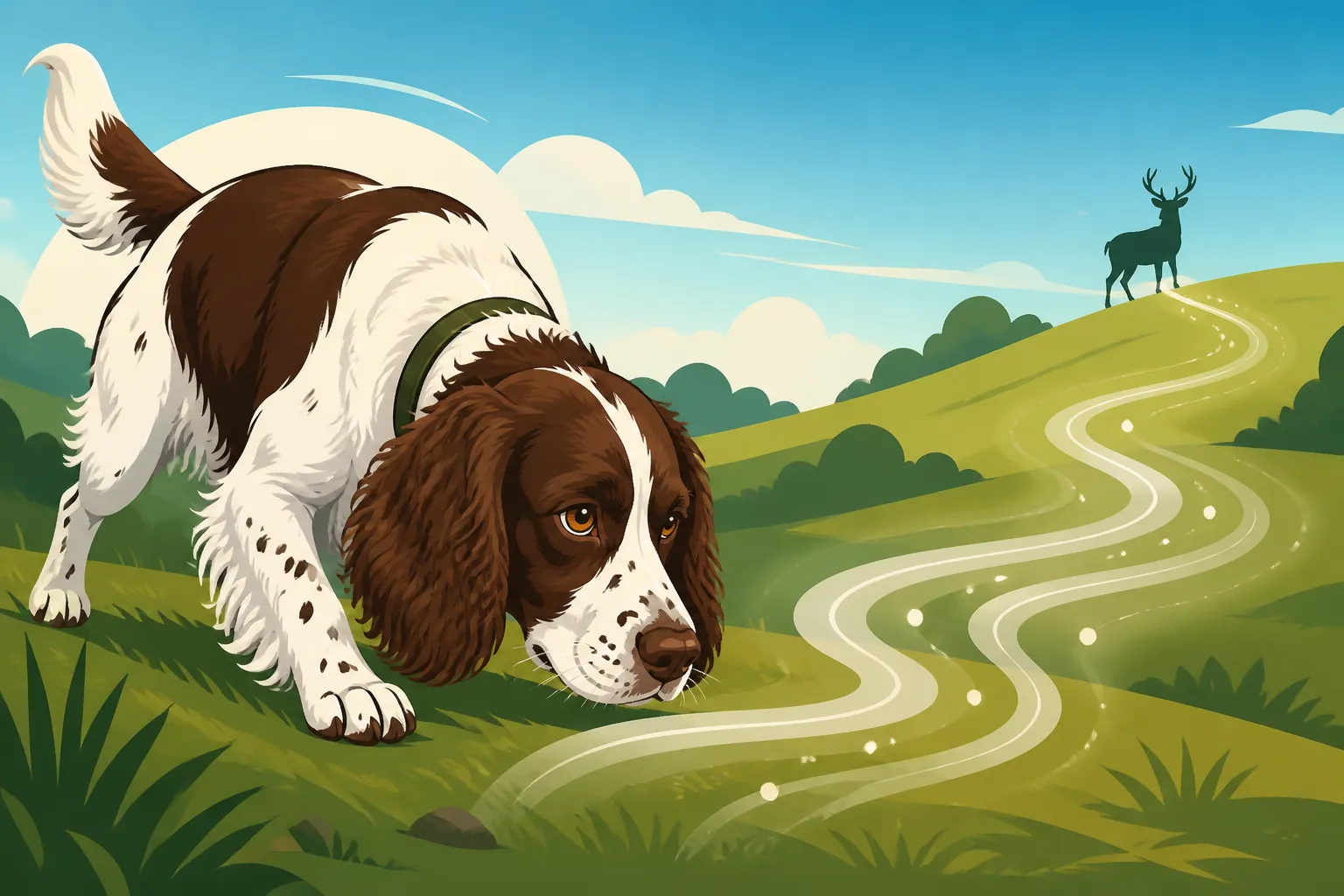
Not all scents are created equal, at least not in terms of how long they linger or how strong they call to your Springer. A fresh, hot scent trail from a rabbit that just bolted from a bush is like a neon sign for your dog. That scent is potent, recent, and highly exciting. They might follow it for hundreds of yards, completely driven by the adrenaline of the chase. In contrast, an older deer trail from hours ago, while still detectable, might not hold the same intense, irresistible pull.
Environmental conditions play a huge role here too. On a damp, still morning, scent molecules cling closer to the ground, creating a stronger, longer-lasting trail. Your Springer will find it easier to follow and might go further. On a hot, dry, windy afternoon, scent disperses quickly, making the trail fainter and harder to stick to. Think of how much harder it is for us to smell something in a strong breeze. The same applies, albeit to a lesser degree, for our dogs. A scent left on the ground, say from a startled pheasant, will behave differently than scent particles carried on the wind. Your Springer is adept at working both ground scent and air scent, piecing together the invisible puzzle.
Environmental Conditions and Terrain
The landscape itself can be your best friend or your worst enemy when it comes to scent-trailing distance. Thick, dense cover like brambles, tall grass, or marshland tends to hold scent incredibly well. The vegetation acts like a sponge, soaking up and protecting those precious scent molecules. In these environments, your Springer can follow a trail with remarkable precision and often for much longer distances, as the scent is less prone to dispersal. This is exactly what they were bred for: penetrating dense cover to flush game.
Conversely, open fields, paved paths, or areas with a lot of foot traffic are less forgiving. Scent dissipates faster, gets trodden on, or is masked by a multitude of other smells. A Springer might follow a faint trail for a shorter distance here before losing interest or picking up a new, more appealing, and stronger scent. Consider the dangers too: a rural woodland trail might be safer for a long pursuit than a path that skirts a busy road. Even water can present a challenge; while Springers love to swim and are excellent at retrieving from water, a scent trail doesn't carry across open water in the same way it does on land. A dog might follow a game trail right to the edge of a pond, lose the scent there, and then get confused.
Individual Dog's Drive and Training
Every Springer Spaniel is an individual, and their drive to follow scent can vary significantly, even within the breed. Generally speaking, field-bred Springers tend to have a much higher natural prey drive and an even more intense focus on scent. Their ancestors and often their immediate parents were bred specifically for their ability to hunt and follow game for long periods. They are built for endurance and independent work. A field Springer might go much, much further on a scent than a show-bred Springer who, while still possessing an incredible nose, might have been bred for a slightly different temperament and focus, often preferring to stay closer to their handler.
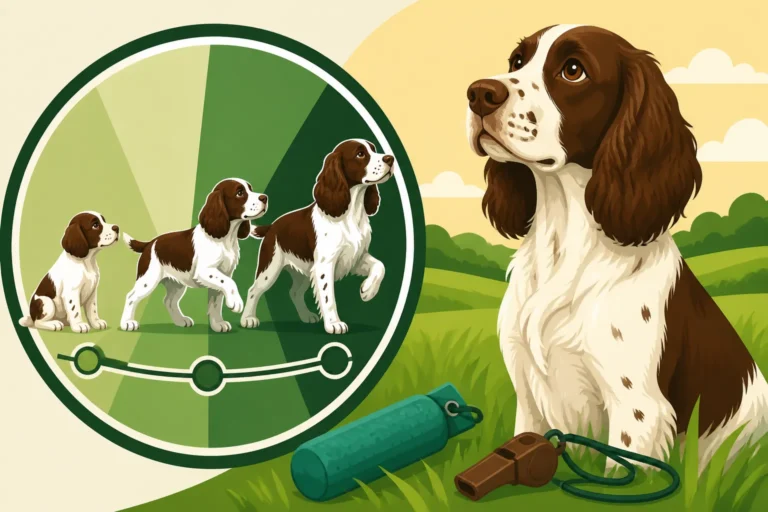
Training plays a monumental role, or lack thereof. A well-trained gundog, especially one that has been taught Teaching a Springer Spaniel to Stay in Range and to check in frequently, will have been conditioned to work within a specific distance from their handler. They learn that straying too far means missing out on the action or facing a gentle, consistent correction. A family pet, on the other hand, who hasn't had that structured training or whose owner hasn't focused on a rock-solid recall, will likely follow their nose as far as it takes them, without that built-in "off switch" or awareness of their human's location. This is where the real potential for them to get lost or into trouble lies.
Mitigating the Wanderlust: Strategies for Off-Leash Safety
Knowing why your Springer bolts on a scent is the first step; the next is implementing strategies to keep them safe and within bounds. This often involves a combination of rigorous training, smart management, and understanding their innate needs.
Building a Rock-Solid Recall
This cannot be stressed enough: a reliable recall is your absolute best defense against a disappearing Springer. It's not about yelling louder; it's about making coming back to you the most rewarding thing your dog can possibly do, even when there's a squirrel taunting them from a tree. Start recall training in a low-distraction environment, like your living room or a fenced yard. Use high-value treats (think cooked chicken or cheese, not just kibble) and enthusiastic praise. Make coming back a party!
Once they're reliably coming when called in quiet spaces, gradually introduce distractions. Practice in different locations, with other people, and eventually around tempting scents (start with something less exciting than a rabbit, like a few dropped treats in the grass). Always reward heavily when they return, even if it takes a moment. Never punish your dog for eventually coming back, even if you were frustrated; it will only teach them that returning means a bad experience. Consistency is key. Many owners struggle with Whether a Springer Spaniel's Recall Can Be Trusted, but with dedication, it's absolutely achievable. Remember, you're competing with millions of years of instinct, so your recall needs to be stellar.
Utilizing Management Tools
Even with the best recall in the world, there will be times when instinct is just too strong, or you're in an unfamiliar environment. This is where management tools become invaluable. Long lines are fantastic for giving your Springer the illusion of off-leash freedom while maintaining control. A 20 to 30-foot line allows them to explore scent trails and quarter through fields, all while you can gently guide them back or prevent them from venturing too far. This is an excellent tool for training Teaching a Springer Spaniel to Stay in Range in a safe, controlled manner. You'll quickly see Whether a Long Line Suits a Springer Spaniel for practicing recall or just giving them a good sniff-fest.
For those heart-stopping moments when they do manage to disappear, a GPS tracker is a game-changer. These small devices attach to their collar and can give you real-time updates on their location via your phone. Products available on Amazon offer various features like geofencing (alerting you if they leave a predefined safe zone) and activity monitoring. While they don't replace training, they offer invaluable peace of mind for owners of dogs with high prey drive. Consider Whether a Springer Spaniel Should Wear a GPS Collar as an essential safety net, especially if you spend a lot of time in open, unfenced areas.
Providing Appropriate Mental and Physical Outlets
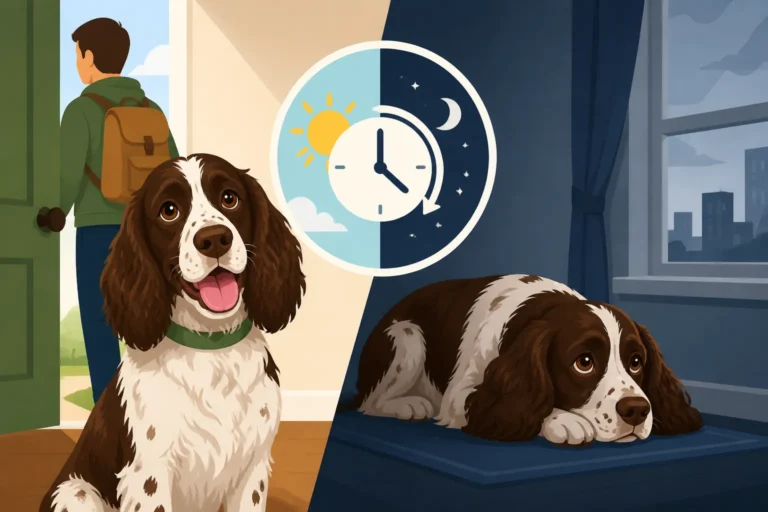
A tired Springer is a good Springer, and a mentally stimulated Springer is even better. Remember, these dogs were bred to work all day. If they're not getting enough physical exercise or mental engagement, they'll find their own "jobs," and that often involves following their nose on an extended adventure. Make sure your Springer is getting ample opportunities to run, explore, and burn off energy. How Many Hours a Field Springer Spaniel Needs Daily is significant, and even show-bred Springers need a good workout.
Beyond physical exertion, engage their incredible noses. Scent games like 'find it' with hidden treats around the house or yard can be incredibly tiring and satisfying for them. Teach them to track a specific person or object. Puzzle toys that dispense treats when manipulated can also provide mental stimulation. Consider enrolling in nose work classes; these are fantastic for Springers, allowing them to use their natural abilities in a structured, safe environment. You'll be amazed at Whether Scent Games Tire a Springer Spaniel and how much calmer they become after a good "brain drain." Online training platforms like BAXTER & Bella often offer courses on scent work and engagement games that can be done at home, providing fantastic enrichment. A Springer with a job, even if it's just finding hidden kibble, is less likely to create their own job out in the wilderness.
Realistic Expectations and Prevention
Living with a Springer Spaniel means embracing their instincts. While we can train and manage their behaviors, we can never truly eliminate their hardwired desire to follow a compelling scent. It's about finding a balance that keeps both you and your dog happy and safe.
Accepting Their Instincts
This is perhaps the hardest pill to swallow for some owners, but it's crucial for a harmonious relationship. Your Springer will follow their nose. It's not a flaw; it's a feature of the breed. Trying to fight this fundamental aspect of their being will only lead to frustration for both of you. Instead, acknowledge it, understand it, and learn to work with it. Their exceptional nose is why they are such wonderful hunting companions, detection dogs, and just generally curious, engaged pets.
Rather than viewing their scent drive as a problem, try to reframe it as an incredible superpower that just needs careful guidance. Celebrate their ability to detect a rabbit from a mile away or find that dropped treat in the tall grass. This acceptance allows you to focus on prevention and management, rather than constantly battling an intrinsic part of who your Springer is.
Creating Safe Environments for Exploration
Because of their strong scent drive, free-roaming off-leash isn't always a safe option, especially in areas with potential dangers. Fenced yards are ideal, providing a secure space for them to sniff and explore without the risk of bolting. If a fenced yard isn't available, or you live somewhere with bylaws against them, regularly checking your existing fencing for weak spots is paramount. Remember, if a mouse can get through, so can an eager Springer on a mission!
When venturing out, choose locations carefully. Dog parks, if well-maintained and securely fenced, can offer opportunities for off-leash play. Rural trails or quiet woods are also good, provided your recall is excellent and you're prepared with a long line or GPS tracker. Avoid areas close to busy roads, livestock, or known wildlife habitats unless your dog is reliably trained to work within close range. It's also wise to consider Whether a Working Springer Spaniel Needs a Docked Tail if working in dense cover, as a long tail can be prone to injury.
What to Do When They Go Missing on Scent
Despite all precautions, sometimes a Springer's nose truly does get the better of them. If your dog does disappear on a scent trail, panic is a natural first reaction, but try to stay calm. Yelling and running after them can actually make them run further, thinking it's a game or feeling stressed. Instead, try calling their name in an upbeat, happy voice, or use your whistle commands (if they are trained with a whistle). Often, if they hear a familiar, happy sound, it can break them out of their scent trance.
Retrace your steps, continuing to call. Leave an item of your clothing or their bed at the spot where they last vanished; your scent can act as a beacon. Notify local animal shelters, vets, and post on local social media groups immediately. Prevention here is truly key: always ensure your Springer has up-to-date ID tags on their collar with your phone number, and that their microchip information is current. If you have that GPS collar, you’ll know exactly where to start looking. Being prepared for this potential scenario can make all the difference in a quick and happy reunion.
| Factor | Tends to Extend Scent Trailing Distance | Tends to Limit Scent Trailing Distance |
|---|---|---|
| Scent Potency | Fresh game trail, strong odor, animal in distress | Old, faint scent, heavily diluted odors |
| Environment | Damp, still air, dense cover (forests, tall grass), low human traffic | Dry, windy conditions, open fields, paved surfaces, high human traffic |
| Terrain | Consistent ground cover (e.g., woodland floor) | Broken terrain, water crossings, sudden changes in ground cover |
| Dog's Drive | High natural prey drive (often field lines), unchanneled energy | Lower prey drive (often some show lines), well-exercised, mentally tired |
| Training | Lack of strong recall, inconsistent range training, no "check-in" cues | Rock-solid recall, consistent range work, conditioned whistle commands |
| Distractions | Few other competing scents, no perceived threats | Many cross-scents, loud noises, perceived threats |
Disclaimer
This article is for general informational purposes only and does not constitute professional advice. Laws, prices and regulations vary by location and change over time. Consult a qualified professional for guidance on your specific situation.