How Wide a Springer Spaniel Should Cast
It's incredibly frustrating when you're trying to enjoy a walk with your English Springer Spaniel, or perhaps you're out in the field, and suddenly your dog is either right under your feet or has vanished entirely. Finding that sweet spot, the "just right" distance where your Springer works efficiently and safely, often feels like chasing a moving target. This guide is all about demystifying the concept of "casting" and providing practical advice to help you teach your Springer Spaniel how wide they should range, ensuring a more harmonious and productive partnership.
Understanding "Casting" in Springer Spaniels
When we talk about a Springer Spaniel "casting," we're diving into a core aspect of their gundog heritage, but it's equally important for pet owners. It's not just a fancy term; it's about the very nature of how these dogs were bred to work.
What Does "Casting" Actually Mean?
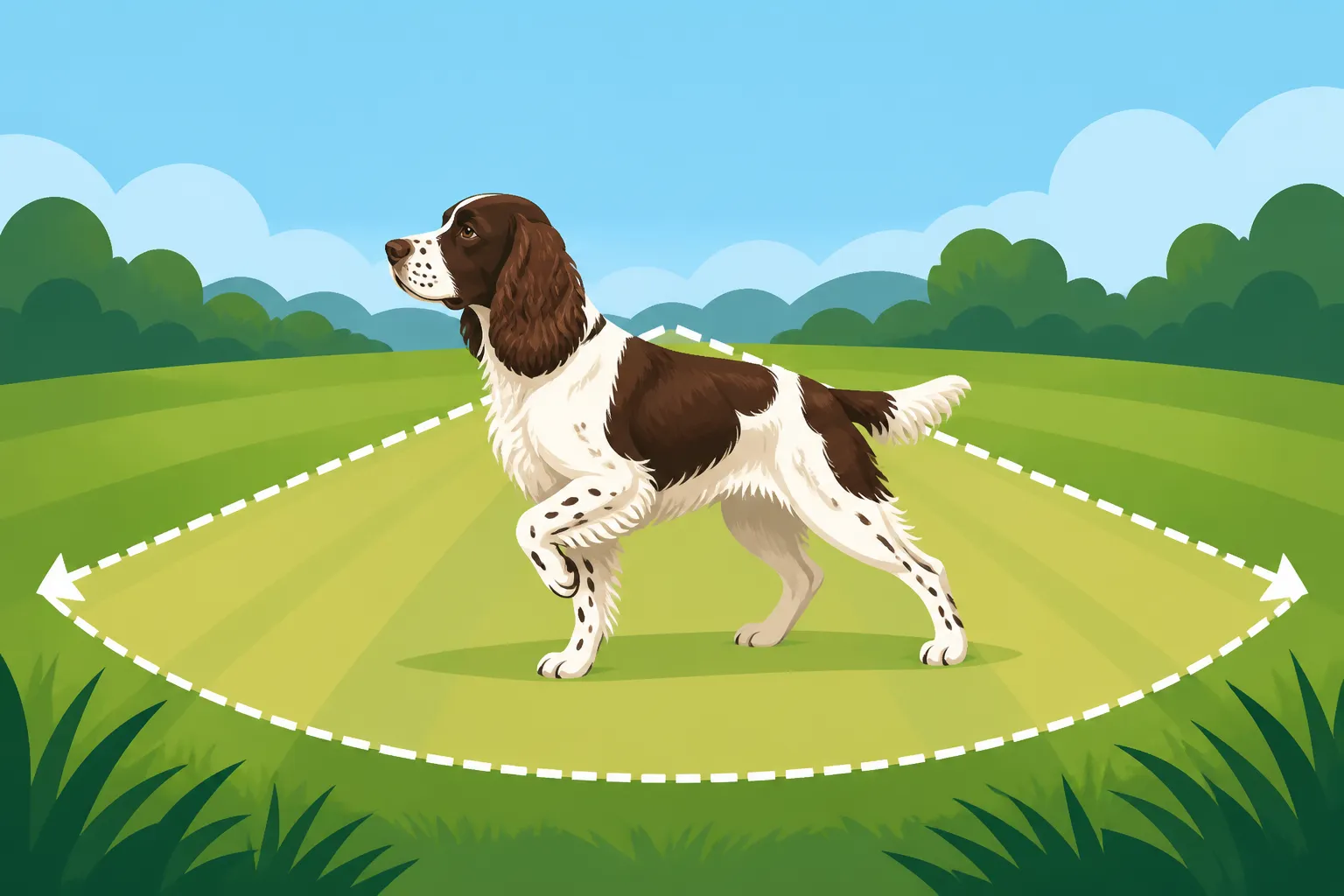
At its heart, "casting" refers to the pattern a flushing dog, like an English Springer Spaniel, makes when searching for game. Imagine a pendulum swinging back and forth in front of the handler. The dog works from side to side, covering the ground systematically to find and "spring" (flush) birds. The "width" of this cast is the distance your dog travels laterally away from you on either side as they sweep the area. A well-trained Springer will cast within a predetermined range, always staying within effective gun range if hunting, or within sight and hearing distance if simply out on a walk. This isn't just random running; it's an organized, methodical search pattern.
For a hunting dog, this close-working pattern is crucial. A Springer Spaniel isn't meant to range far afield like a pointing breed. Their job is to find game within a relatively tight radius, often no more than 20-30 yards from the gun, so that when a bird is flushed, the hunter has a clear shot. They work with the hunter, not independently far ahead. This innate desire to stay connected and work for you is a beautiful part of their temperament, but it does need channeling through consistent training.
Why Casting Width Matters for Both Hunter and Pet Owner
The importance of proper casting width extends far beyond the hunting field. For a hunter, it’s about efficiency, safety, and ultimately, success. If a dog casts too wide, it flushes game out of range, wasting effort and potentially losing birds. If it casts too narrow, it doesn't cover enough ground, leaving birds unfound. But even for those of us who simply share our lives with a Springer Spaniel as a beloved family pet, understanding and controlling casting width is incredibly valuable.
Think about a walk in a park or an open field. A Springer Spaniel that understands its casting boundaries is a dog that stays close enough to be recalled quickly, to avoid potential hazards like roads or other dogs, and to remain visible to you. It's the difference between a relaxing stroll and a constant anxiety attack, wondering where your four-legged furry projectile has disappeared to next! This controlled range builds confidence in both the dog and the owner, allowing for more freedom in safe environments. It also reinforces the idea that you are a team, a partnership, which is fundamental to the Springer's happiness. This close cooperation, where the dog looks to you for direction, is key to managing a breed known for its energy and strong hunting instincts. Many owners find that the energy levels of a Field Bred Springer Spaniel Is a Different Dog to Live With, making controlled casting even more vital for daily harmony.
Factors Influencing a Springer Spaniel's Casting Width
Not all Springer Spaniels are created equal, and their natural inclination for casting width can vary significantly. Understanding these underlying factors can help you tailor your training approach and manage your expectations.
Breed Type: Field vs. Show Lines
This is perhaps the biggest factor. English Springer Spaniels have, over many decades, diverged into two distinct types: field-bred and show-bred. This divergence isn't just about looks; it's profoundly about drive and working style.
-
Field-Bred Springer Spaniels: These dogs are bred primarily for their working ability in the field. Their natural casting width tends to be wider, and their drive to search and flush game is much higher. They are built for endurance and covering ground. A field-bred Springer will naturally want to sweep a larger area, often with incredible speed and enthusiasm. While this is fantastic for hunting, it means a pet owner needs to put in more consistent work to teach "range control" so they don't vanish over the horizon. Their ancestors were selected for their ability to find game efficiently across various terrains, and that instinct is deeply ingrained. If you have a field-bred Springer, you'll know they have an insatiable desire to be out there, nose to the ground, searching. It's a wonderful trait, but one that needs careful management. Many owners seek out comprehensive training, sometimes via online courses like those offered by BAXTER & Bella, to harness this energy effectively.
-
Show-Bred Springer Spaniels: Bred for conformation to the breed standard and often for companionship, show-bred Springers typically have a naturally tighter, closer working range. They still possess the inherent spaniel desire to hunt and flush, but their drive might be less intense, and their natural casting width often aligns more closely with what a pet owner desires for a pleasant walk. They are generally bred to be more docile and aesthetically pleasing, which often translates to a slightly less independent hunting style. However, even a show-bred Springer can get "on scent" and push their boundaries, so training for range control is still important. It's a myth that show-bred dogs don't have any hunting instinct; it's simply often less pronounced or channeled differently. You might find a show-bred Springer is quite happy to hunt (Whether a Show Bred Springer Spaniel Still Hunts) but may not have the same frantic energy as its field-bred cousin.
Individual Temperament and Drive
Beyond the broad categories of field and show lines, each Springer Spaniel has its own unique personality and level of drive. Some individuals, even within a field-bred litter, might be naturally more inclined to stay closer, while others will be bolder and want to explore further.
Factors like confidence, prey drive, and environmental curiosity all play a role. A highly confident dog with a strong prey drive might be more prone to extending its cast, especially if it catches an exciting scent. A more timid dog might prefer to stay closer to its handler for security. Early experiences and socialization also shape a dog's willingness to venture out. A puppy that was allowed to explore widely without much guidance might develop a habit of ranging further, whereas one consistently kept on a long line might be more inclined to stay closer. Understanding your individual dog's personality is paramount. Are they naturally independent, or do they constantly check in with you? This will inform how you approach training their casting width. Some Springers are very "soft" and can The Soft Springer Spaniel That Shuts Down If You Shout, meaning gentler, more positive reinforcement methods are essential for building confidence and control.
The Impact of Cover and Terrain
The environment in which your Springer Spaniel is working or exercising also heavily influences their casting width. You can't expect the same range control in every situation, and it's important to adjust your expectations and training accordingly.
-
Open Fields: In wide-open spaces with minimal cover, a Springer Spaniel will naturally want to extend its cast. There's less to break up their line of sight, fewer strong scent trails hidden by dense vegetation, and simply more room to run. This is where you'll most likely see them really stretch out their side-to-side pattern. This is often the ideal place to practice and reinforce wider casts, as long as you maintain control.
-
Dense Cover (Woods, Tall Grass, Heavy Brush): When working in thick cover, a Springer's casting width will instinctively narrow. They can't see as far, the scent is more concentrated, and moving through dense brush takes more effort. In these conditions, they will naturally work closer to you, relying more on their nose and staying within easier hearing distance. This natural tendency can be an advantage for pet owners, as the environment does some of the work for you in keeping the dog closer. For hunters, it means the dog needs to be methodical and thorough in a smaller area. This is also where things like burrs and ticks become a real issue, and a thorough After the Hunt: Checking a Springer Spaniel Over Nose to Tail is absolutely essential.
-
Water: If your Springer loves water (and most do!), their casting around water bodies will also be influenced. They might be more inclined to work the shoreline closely or, conversely, swim out further if retrieving. Training specific to water retrieves is often necessary to maintain control.
It's vital to recognize these environmental influences. What's an appropriate cast width in a forest might be too close for an open field, and vice versa. Consistency in training across varied environments helps your dog generalize the concept of "staying within range," no matter the surroundings.
Training Your Springer Spaniel for Ideal Casting Width
Achieving that perfect casting width isn't something that happens overnight; it's a gradual process built on foundational training and consistent communication.
Building a Strong Foundation: Recall and Steadiness
Before you can even begin to think about casting patterns, your Springer Spaniel needs a rock-solid foundation in basic obedience, especially recall and steadiness. These are non-negotiable for safety and control, whether you're hunting or just enjoying a walk.
-
Recall: Your dog must come back to you reliably, every single time you call, regardless of distractions. This is the ultimate "safety net" for managing their casting. If they start to range too wide, or lock onto something they shouldn't, your recall is your primary tool to regain control. Practice recall in increasingly distracting environments. Start in a quiet garden, then move to a park, then a busier trail. Make coming back to you the most rewarding thing in the world with high-value treats and enthusiastic praise. A long line (a 20-30 foot leash available on Amazon) can be an invaluable tool here, allowing you to give your dog the illusion of freedom while still having a physical means of reinforcement. Many owners constantly worry Whether a Springer Spaniel's Recall Can Be Trusted, and for good reason – their prey drive is powerful.
-
Steadiness: Steadiness, particularly to flush and shot for hunting dogs, translates to "control" for pet owners. It means your dog can stop, wait, and maintain position even when exciting things are happening around them. For casting, this translates to your dog understanding that they work with you, taking cues and not just impulsively running wherever their nose leads. Steadiness teaches patience and impulse control, which are vital when you're trying to communicate a desired working range. For a pet, this means being able to tell your dog to "wait" or "stay" even if they see a squirrel or another dog they want to investigate.
Without these foundational skills, any attempt to teach specific casting patterns will be like building a house on sand. Invest the time in these basics, and everything else will fall into place much more easily. The First Year With a Springer Spaniel Puppy is a critical time for establishing these foundational behaviors.
Introducing the Whistle and Hand Signals
The beauty of training a gundog like a Springer Spaniel is the rich tradition of communication through whistles and hand signals. These tools are incredibly effective for communicating casting width and direction, especially over distance or when voice commands might be less clear.
-
The Whistle: A gundog whistle is a powerful tool. It carries further than your voice, and its tone is consistent, unaffected by your emotions. For casting, the whistle is often used for a "stop" or "sit" command (a single pip or long blast), and a "turn" or "change direction" command (often a series of short pips). Start by teaching your dog to sit to the whistle right next to you, rewarding heavily. Then, gradually increase the distance. Once they reliably stop, you can introduce hand signals to direct them. Whistle Work: The Language a Springer Spaniel Learns is truly fascinating and incredibly effective.
-
Hand Signals: These visual cues are essential for directing your dog's cast.
- "Go Right/Left": Extend your arm in the direction you want them to go.
- "Over/Back": A sweeping motion, indicating they need to cover the ground in front of them or go further out.
- "Stop/Sit": A raised open palm.
Combine these signals with your whistle commands. For example, give a whistle pip to stop them, then a hand signal to send them in a new direction. Always make sure you are consistent with your signals. Your dog learns to associate these silent, clear cues with specific actions, allowing for seamless communication even when they are a good distance away.
Practical Drills for Range Control
Once your Springer has a grasp of recall, steadiness, and understanding whistle/hand signals, you can start putting it all together with specific drills to shape their casting width.
-
The "Pendulum" Walk: Start in an open field. Walk in a straight line, and encourage your dog to work in front of you in a zig-zag pattern. As they start to go too wide, use your whistle (e.g., a short pip to get their attention, followed by a hand signal) to turn them back in the opposite direction. If they are too close, encourage them out with a verbal cue like "Hie on!" or a pushing hand signal. The key is gentle, consistent guidance, not punishment. You are shaping their natural inclination. This is how you teach Teaching a Springer Spaniel to Stay in Range.
-
Boundary Training: Use natural or imaginary boundaries to define the desired casting width. For instance, walk along a hedgerow or fence line and encourage your dog to work parallel to it, not crossing it. In an open field, you can use cones or markers to visually define the edges of their working area. This helps them understand the concept of a "perimeter" within which they should operate.
-
Varying Terrain Practice: Practice these drills in different types of cover. As discussed, your dog's cast will naturally narrow in dense brush. Use this to your advantage to reinforce closer work, then transition to more open areas where you expect a wider cast. This teaches them to adapt their range based on the environment while still staying connected to you.
-
"Check-in" Drills: Periodically, stop walking and stand still. Encourage your dog to come back to you or at least make eye contact from a distance, reinforcing the idea that they need to be aware of your position and cues. This strengthens their bond and prevents them from getting completely absorbed in their own world. Reward these check-ins generously.
Remember, every session should be positive and end on a good note. If your dog is struggling, make the exercise easier. If they're doing well, introduce a small, manageable challenge. Consistency, patience, and positive reinforcement are your best friends in shaping the ideal casting width for your unique Springer Spaniel. You can find many training articles and tools on Amazon to assist with these drills, from long lines to specialized training dummies.
Common Challenges and Troubleshooting Casting Issues
Even with the best intentions and consistent training, you might run into common challenges when trying to regulate your Springer's casting width. Don't worry, these are typical and can be addressed with focused effort.
When Your Springer Ranges Too Wide
This is often the most common complaint from Springer Spaniel owners, especially those with field-bred dogs or individuals with a very high drive. It's frustrating when your dog is out of sight, potentially putting themselves in danger or flushing game far out of range.
-
Revisit the Long Line: If your dog is consistently pushing boundaries, go back to basics with a long line. Let them range, but when they hit the limit you desire, gently guide them back with the line while giving your whistle "turn" command. Reward them for coming back into range. This provides immediate, clear feedback without being harsh. It teaches them physically what "too far" means. You can find durable long lines in various lengths on Amazon, which are perfect for this kind of work.
-
Increase Check-ins: Actively call your dog back for frequent, short check-ins. Reward them enthusiastically and then immediately send them back out to work. This reinforces the idea that staying connected to you leads to good things and doesn't end their fun. Make it a game!
-
Introduce "Whoa" or "Stop" Command: A strong "whoa" or "stop" command to the whistle is invaluable. If your dog is ranging too wide, blow the whistle, and they should stop and turn to you for the next direction. This gives you control without having to chase them down. Practice this in controlled environments first, gradually adding distractions.
-
Change Direction Frequently: When you're walking, change your direction often. This forces your dog to pay attention to where you are going and to adjust their cast to stay in front of you. If they are consistently going too wide, they will quickly realize they've been left behind and will need to come find you. This teaches them to monitor your position.
-
Be the Most Interesting Thing: Make yourself more engaging than the distant smells. Carry high-value treats, play quick games of fetch, or have a favorite squeaky toy. If being near you is more rewarding and fun than bolting, they'll naturally want to stay closer. This ties into the advice found in resources like BAXTER & Bella, which emphasize positive reinforcement and making yourself the center of your dog's world.
When Your Springer Sticks Too Close
While less common for Springers, sometimes a dog might be too hesitant, working directly underfoot or not casting out enough to be effective. This can be due to a lack of confidence, insufficient drive, or possibly over-correction in earlier training.
-
Encourage Independence Gradually: Start by gently encouraging them to work just a few yards in front of you. Use an encouraging verbal cue like "Go on!" or "Hie on!" and make light, forward-pointing hand gestures. When they move out, even a little, reward them with praise or a thrown treat.
-
Hide and Seek: Play games of hide and seek in open areas. Let your dog move ahead, then duck behind a tree or tall bush. This encourages them to use their nose and search independently, building confidence in finding you. When they find you, huge praise! This teaches them that it's okay to not have you in their immediate line of sight at all times.
-
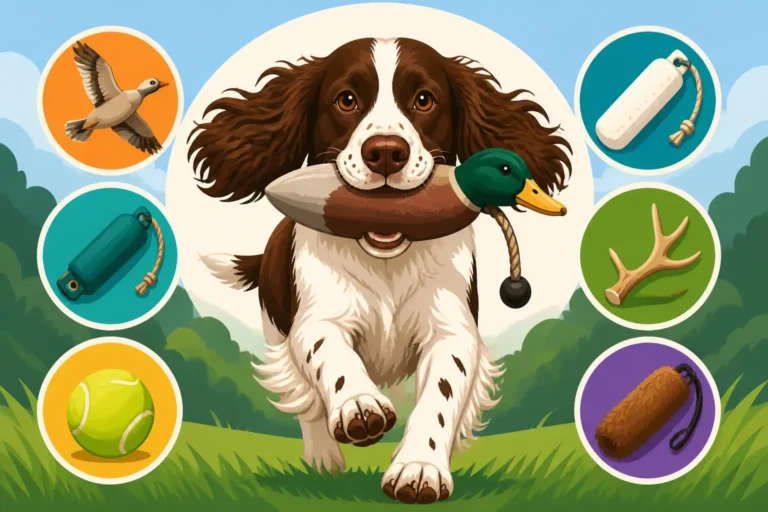
Throw a Dummy: Use a training dummy or ball to encourage them to run out further. Throw it a reasonable distance ahead and encourage them to retrieve it. This associates going out with a fun, rewarding activity. Gradually increase the distance of the throws.
-
Work with Light Cover: Start working them in very light cover (e.g., short grass, sparse bushes) where they can still see you but have to use their nose a bit more. This helps them transition from being right at your side to confidently working a bit further out.
-
Avoid Over-Correcting: If your dog is already tentative, avoid any harsh corrections for staying too close. Focus entirely on positive reinforcement for moving away from you. Building confidence is key here.
No matter the issue, patience and consistency are your greatest allies. Springers are intelligent and eager to please; they just need clear communication and the right motivation to understand what you're asking of them.
Summary of Casting Width Considerations
To summarize, here’s a quick look at how ideal casting width might vary based on your Springer Spaniel's purpose and the environment.
| Scenario | Ideal Casting Width (Approximate) | Key Training Focus |
|---|---|---|
| Hunting (Open Field) | 20-30 yards (each side) | Whistle turns, hand signals, consistent range checks |
| Hunting (Dense Cover) | 10-20 yards (each side) | Thoroughness, close quarter control, steady to flush |
| Pet Walk (Open Park) | 10-20 yards (each side) | Strong recall, frequent check-ins, whistle cues |
| Pet Walk (Wooded Trails) | 5-15 yards (each side) | Staying visible, recall from scent, "wait" commands |
| Training Exercises | Adjustable | Building confidence, clear communication of boundaries |
Ultimately, teaching your Springer Spaniel how wide to cast is about building a strong, communicative relationship. It's about understanding their instincts, providing clear direction, and reinforcing desired behaviors. Whether you're aiming for a seamless partnership in the field or a well-behaved companion on a leisurely hike, mastering casting width will make your time together far more enjoyable and productive.
Disclaimer
This article is for general informational purposes only and does not constitute professional advice. Laws, prices and regulations vary by location and change over time. Consult a qualified professional for guidance on your specific situation.