Whether a Springer Spaniel Quarters Naturally
It’s a question many of us Springer Spaniel owners ponder, especially when watching our dogs gallop across a field, nose to the ground, weaving in and out of imaginary cover. Does this breed instinctively "quarter" – that beautiful, methodical pattern of searching for game – or is it something we have to laboriously teach them? This guide will dive deep into the natural inclinations of your beloved Springer, exploring what comes built-in and what requires a bit of thoughtful guidance to truly shine.
Understanding "Quartering" in Springer Spaniels
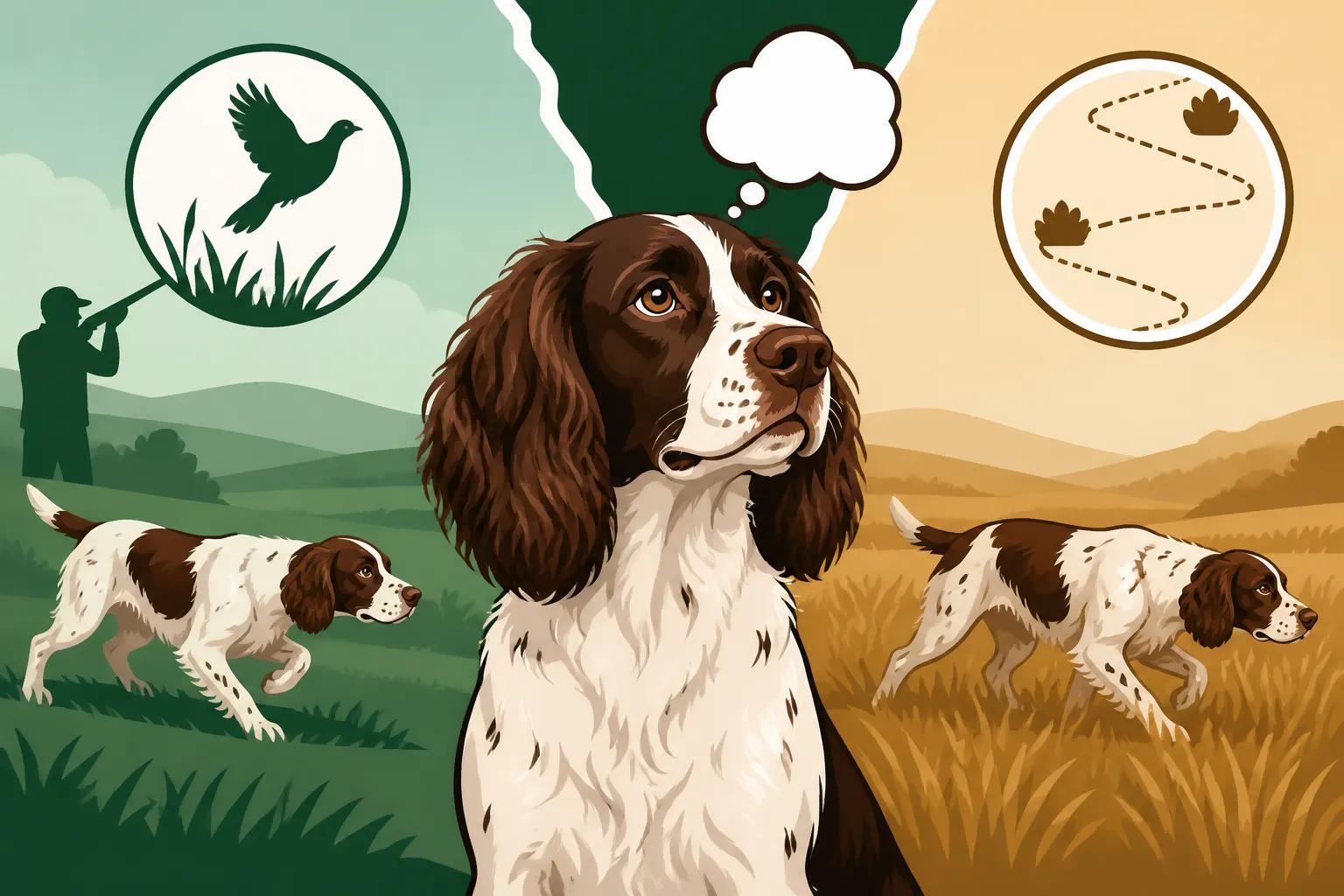
When we talk about quartering, we're referring to a very specific, efficient search pattern that gundogs, particularly flushing spaniels, use to cover ground and locate hidden game. It's essentially the dog moving back and forth in front of the hunter, systematically sweeping the area to find birds or other quarry. The goal is to cover as much ground as possible within gun range, ensuring no game is missed and that anything flushed can be shot safely.
For a Springer Spaniel, this isn't just a fancy trick; it's deeply ingrained in their heritage. These dogs were quite literally made for this job, bred over centuries to be exceptional at finding and flushing game. Their entire physical build – their energetic gait, keen nose, and unwavering focus – is perfectly adapted for this task. It’s part of what makes them such compelling and captivating companions, whether they're working in the field or just romping in the park. You can read more about What Quartering Means in a Springer Spaniel.
The Instinctive Drive to Quarter
So, does a Springer Spaniel quarter naturally? The short answer is yes, to a significant extent. Many Springer owners observe their puppies, even without any formal training, starting to develop a rudimentary quartering pattern as they explore a new environment. You might notice your young Springer zigzagging across your backyard, nose to the ground, methodically investigating every scent. They aren't consciously thinking, "I need to cover this ground efficiently." Instead, it's an intrinsic part of how they process and explore their world.
Imagine taking your Springer to an open field for the first time. Instead of just running straight out and back, many will naturally start to work from side to side, often turning back towards you when they hit a perceived boundary or lose your direct sight. This is their instinctual hunting pattern kicking in. They are born with a powerful drive to search, and their genetics guide them towards an efficient way of doing it. This drive is so strong that they will often carry things in their mouth constantly, a clear sign of their inherent retrieving and carrying instincts. This natural inclination to range and return is the foundation upon which sophisticated quartering skills are built.
Genetic Predisposition vs. Trained Behavior
While the drive to quarter is very much a part of a Springer Spaniel's DNA, there's a crucial difference between a natural inclination and a polished, reliable working behavior. Think of it like a child who has a natural talent for drawing; they might instinctively doodle beautiful shapes, but a trained artist has refined techniques, control, and consistency. Similarly, an untrained Springer might quarter, but it might be too wide, too narrow, too far out of range, or simply erratic.
The degree to which this natural quartering manifests can also depend on the dog's lineage. There's a well-known divergence within the breed itself: field-bred Springers and show-bred Springers. Field lines have been selectively bred for generations specifically for their hunting prowess, which includes strong quartering instincts and biddability. Show lines, while still Springers at heart, have often been bred with an emphasis on conformation and temperament suited for the ring and family life. While both types retain the core Springer Spaniel traits, the intensity and refinement of the quartering instinct can differ. This is a fascinating aspect of the breed, highlighting How Far Apart the Two Springer Spaniel Types Have Drifted. A field-bred Springer will often exhibit a more pronounced and systematic natural quartering pattern simply because those traits have been rigorously selected for over many generations.
The Nuances of Natural Quartering
It's tempting to think that "natural" means "perfect," but with quartering, that's rarely the case. A Springer Spaniel might show the desire and pattern of quartering, but without guidance, it’s often more enthusiastic than effective. This is where understanding the breed's natural tendencies becomes critical for shaping them into a truly useful working partner or a well-behaved companion.
The Untrained Springer Spaniel's "Quartering"
When an untrained Springer Spaniel quarters, it can be a beautiful, albeit sometimes chaotic, display of instinct. They'll sweep across the field, head down, tail wagging furiously, following every interesting scent. However, this natural pattern often lacks crucial elements for practical use, especially in a hunting scenario. The dog might cast too wide, veering far out of gun range, meaning any game they flush would be missed or present an unsafe shot. Or they might work too far ahead, disappearing into cover, making it impossible for the handler to control them or anticipate a flush.
I've seen many a new Springer owner come to me, bewildered because their dog is "quartering" beautifully, but also chasing every rabbit to the next county. That’s the challenge: the dog is fulfilling its instinct to search, but not within the parameters necessary for a controlled hunt or even a safe off-leash walk. Without guidance, their natural enthusiasm can lead to them getting lost, chasing deer, or simply ignoring your calls. It's a prime example of Why a Springer Spaniel Puts Its Nose to the Ground and Vanishes. Understanding How Wide a Springer Spaniel Should Cast is paramount in teaching them appropriate boundaries for their sweeps.
Factors Influencing Natural Quartering
Several factors can influence how a Springer Spaniel's natural quartering instinct plays out, often dictating whether it's a joy or a frustration for the owner.
- Scent Concentration: This is perhaps the biggest influencer. A Springer's nose is a powerful tool, and when it hits a strong scent, especially that of game, their natural quartering pattern can quickly unravel. They might lock onto the scent and follow it directly, ignoring their usual zigzag, or even their handler's calls. It's a clear demonstration of Whether a Springer Spaniel's Nose Overrides Its Ears. This is where training becomes essential, teaching them to work through tempting scents while maintaining their pattern and responding to commands.
- Excitement and Age: A young, exuberant Springer puppy might quarter with boundless energy but little finesse, driven primarily by sheer joy and curiosity. As they mature, their quartering might become more purposeful. However, even adult Springers can become over-excited in a stimulating environment, leading to a less controlled search. Their boundless energy means they need appropriate outlets, and a structured quartering session can be a great way to tire them out mentally and physically.
- Environmental Stimuli: The type of terrain also plays a role. In dense cover, a Springer might naturally work a tighter pattern, instinctively adapting to the limitations of visibility and movement. In an open field, they might be prone to ranging much wider if not given clear boundaries. New environments, sounds, and other distractions can all pull them off their natural, or trained, pattern.
Guiding and Refining Natural Instincts
The key to a successful partnership with a Springer Spaniel, especially concerning their quartering, is not to suppress their natural instincts but to channel them. It’s about taking that powerful, inborn drive and molding it into a precise, effective, and enjoyable behavior. This often starts long before you ever step foot in a field with a bird in mind.
Early Introduction to Quartering Concepts
Even before formal gundog training, you can lay the groundwork for good quartering habits. Start with simple directional games in your yard or a safe, fenced area. Encourage your puppy to move from side to side, praising them for checking in with you. Use verbal cues like "hup" (a traditional spaniel command for sit/stay) or a consistent "over" command to direct them. Think of it as teaching them a fun dance where you're leading. The First Year With a Springer Spaniel Puppy is filled with opportunities to build this foundation.
Positive reinforcement is crucial. Springers are notoriously "soft" dogs, meaning they are highly sensitive to tone and correction. Shouting or harsh handling can easily shut them down, making them hesitant and unwilling to try. This is why The Soft Springer Spaniel That Shuts Down If You Shout is such an important concept for Springer owners to grasp. Instead, use enthusiastic praise, tasty treats, or their favorite toy to reward even small steps in the right direction. Short, fun training sessions are far more effective than long, repetitive drills.
The Role of Whistle and Hand Signals
Once your Springer understands basic directional cues on a leash, you can transition to off-leash work using a whistle and hand signals. These are the unsung heroes of gundog training, providing clear, consistent, and silent communication over distance. A short blast on a whistle can mean "stop and look at me," while a directional arm sweep can tell them to cast left or right.
You'll want to choose a whistle tone that carries well and that your dog responds to consistently. Many handlers use a specific gundog whistle, easily found on platforms like Amazon. The beauty of whistle commands is their consistency – your voice might carry emotion, but a whistle always sounds the same. Teaching How Many Whistle Cues a Springer Spaniel Learns involves breaking down each command into small, achievable steps, pairing the whistle with the desired action and rewarding success. Teaching a Springer Spaniel Whistle Commands forms the backbone of advanced field work, but it's equally valuable for off-leash control in any setting.
Consistency and Positive Reinforcement
Refining your Springer's natural quartering instinct into a reliable skill requires immense consistency and a commitment to positive reinforcement. Every time you take your dog out, even for a casual walk, reinforce good habits. If they start to range too wide, gently bring them back in with a whistle command and reward them for returning. If they follow a nice, systematic pattern for even a short distance, let them know they've done well.
Programs like those offered by BAXTER & Bella, which focus on online dog training and positive methods, can provide excellent frameworks for general obedience and building a strong working relationship with your dog. While specific gundog training might require specialized instruction, the underlying principles of clear communication, consistent rewards, and building a confident dog are universal. These programs help owners understand how to motivate their dogs effectively, which translates beautifully into more advanced tasks like quartering.
The Benefits of a Well-Trained Quartering Dog
Investing time and effort into shaping your Springer Spaniel's natural quartering abilities yields incredible rewards, both in the field and at home. It's not just about compliance; it's about unlocking their full potential and strengthening the bond you share.
For Hunting and Field Work
For the hunting enthusiast, a well-trained quartering Springer Spaniel is an indispensable partner. Instead of haphazardly stumbling upon game, they systematically sweep the field, ensuring maximum coverage within the gun's effective range. This efficiency means fewer missed birds, more productive hunts, and a safer experience for everyone involved. The dog works with you, not just for you, creating a fluid, cooperative dance across the landscape.
Learning to quarter within gun range is a cornerstone of effective gundog work. It's about teaching your dog the boundaries of their search, understanding that game flushed too far out is useless. Teaching a Springer Spaniel to Hunt Within Gun Range transforms a dog's natural drive into a highly refined and practical skill. Furthermore, a dog that quarters reliably is a pleasure to hunt over, minimizing frustration and maximizing enjoyment. They know their job, and you can trust them to do it well.
For the Pet Home
Even if your Springer Spaniel will never see a feather shed in the field, teaching them a controlled quartering pattern offers significant benefits. It provides an incredible outlet for their abundant energy and keen intelligence, giving them a "job" that satisfies their genetic wiring. Many behavioral issues in Springers stem from boredom and lack of appropriate mental and physical stimulation. A structured quartering session, perhaps with hidden toys or treats instead of game, provides both. Whether Scent Games Tire a Springer Spaniel is a resounding "yes" – using their nose and brain in a systematic way is far more exhausting and satisfying than just mindless running.
A dog that understands and responds to directional commands and whistles is also much safer off-leash. You can guide them away from potential hazards, keep them close in busy areas, and enjoy more freedom during walks. It builds trust and reinforces your leadership in a positive way. For those dreaming of letting their Springer run free, knowing Whether a Springer Spaniel Can Be Trusted Off Leash hinges greatly on the consistency of their training, including their ability to quarter and recall. It's a fantastic way to engage with your dog, build a deeper bond, and keep them happy, healthy, and fulfilled, even if their "game" is just a favorite tennis ball.
| Aspect | Natural Quartering (Untrained) | Trained Quartering (Refined) |
|---|---|---|
| Pattern | Instinctive, often erratic, variable | Systematic, consistent, controlled |
| Range | Can be too wide or too far ahead | Stays within handler's effective range |
| Responsiveness | Easily distracted by scent, inconsistent recall | Works through distractions, reliable recall and directional cues |
| Efficiency | Hits and misses, leaves gaps in coverage | Thorough and systematic coverage of ground |
| Handler Control | Low, dog dictates search area and pace | High, handler directs search area and influences pace |
| Satisfaction (Dog) | High instinctual fulfillment, but can lead to frustration | High mental and physical fulfillment through cooperation |
| Satisfaction (Owner) | Can be frustrating, unpredictable, unsafe | Highly rewarding, productive, safe, enjoyable |
Disclaimer
This article is for general informational purposes only and does not constitute professional advice. Laws, prices and regulations vary by location and change over time. Consult a qualified professional for guidance on your specific situation.