Why an English Cocker Is Not a Small Springer Spaniel
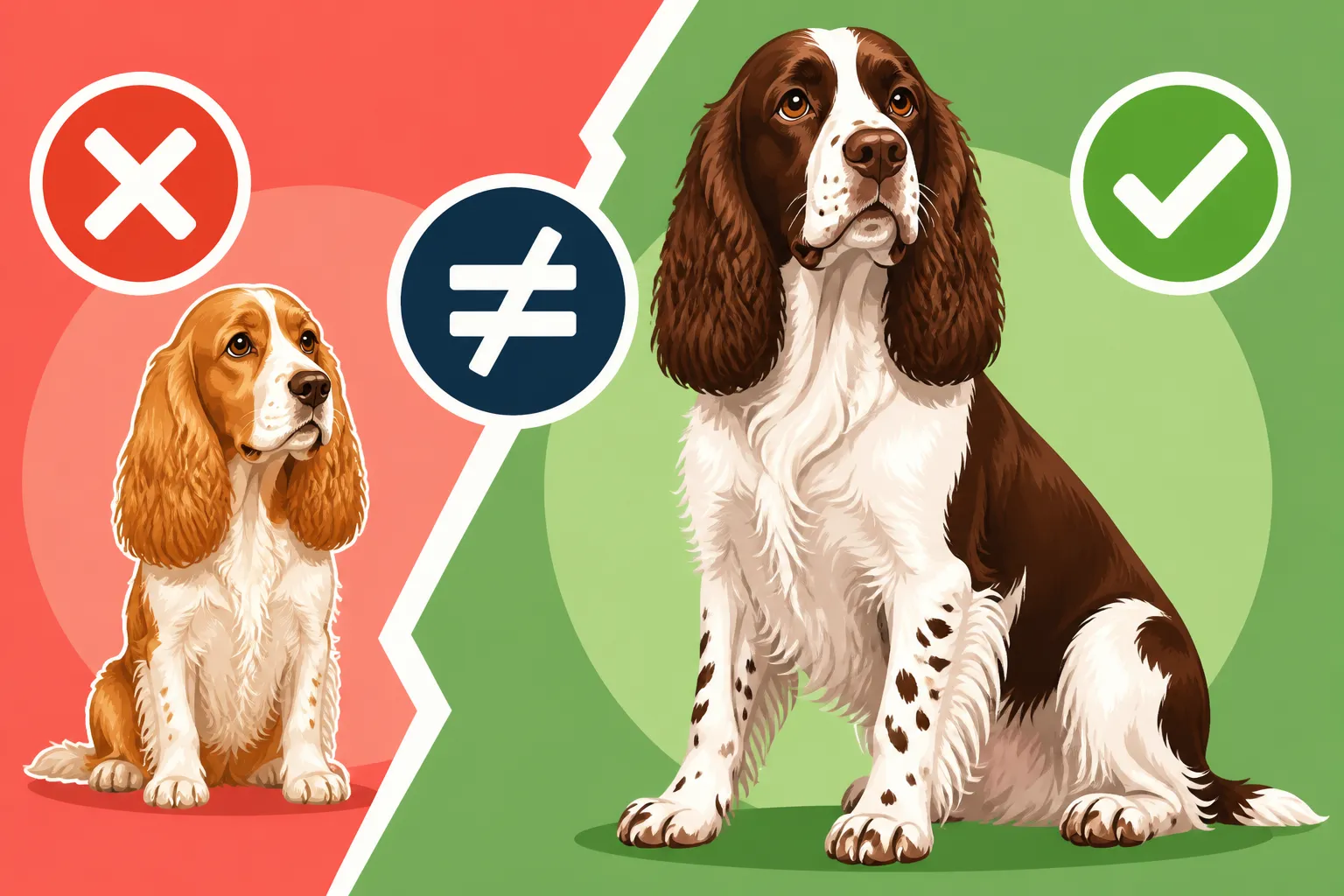
An English Cocker Spaniel may look like a Springer Spaniel in a smaller package, but that impression can be misleading. The breeds differ in size, working style, energy, coat care, and the way individual breeding lines behave. This guide explains what sets them apart so you can compare the dogs you are actually considering—not just their height or familiar spaniel looks.
Why an English Cocker Is Not Simply a Smaller Springer
English Cockers and English Springer Spaniels share a sporting background and some recognizable features: long ears, feathered coats, keen noses, and an enthusiasm for investigating the ground. But they are distinct breeds, not two size varieties of the same dog. Their histories and jobs help explain why their bodies and working styles differ.
Different breeds with related histories
Both breeds developed as hunting spaniels, flushing game for people with guns. The Springer’s job was to find and flush game so it rose into the air. The Cocker was also used to flush game, particularly woodcock—a connection reflected in the breed’s name. Their roles overlapped, but their histories did not amount to a simple division into “large Springer” and “small Cocker.”
The breeds were formally distinguished from one another in the early twentieth century. Before that separation, spaniels could be sorted partly by size and the kind of work they did. If you’re interested in that history, Why Springer and Cocker Puppies Once Came From One Litter explains how the breeds’ earlier relationship worked.
Shared ancestry does not make the dogs interchangeable. Think of two people who grew up in similar environments but developed different habits and strengths: the overlap is real, but it doesn’t tell you everything about either individual. In the same way, a Cocker and a Springer may both enjoy exploring a hedgerow, yet differ in reach, pace, stamina, and how much ground they naturally cover.
Size is only one part of the comparison
English Cockers are generally smaller than English Springers, but comparing height alone can set unrealistic expectations. A smaller dog can still be busy, athletic, persistent, and highly interested in scents. A Cocker that is compact enough to pick up easily is not automatically a low-effort companion.
Springers are often longer-legged and built to cover ground at an energetic pace. A Cocker’s smaller frame may make it easier to fit into a tighter home or transport in some situations, but it does not remove the need for exercise, training, and companionship. Both breeds can be a handful if their day consists mostly of waiting indoors for their people to come home.
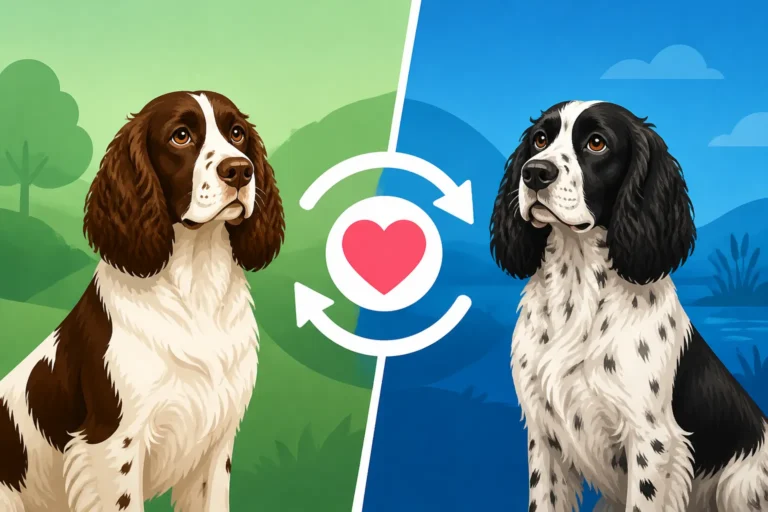
There is also meaningful variation within each breed. Working-bred and show-bred dogs can differ in build, coat, and drive. A field-bred Cocker may be far more intense than someone expects from the breed’s size, while a show-bred Springer may be less driven in the field than a working-line dog. How Far Apart the Two Springer Spaniel Types Have Drifted offers useful context on how strongly breeding purposes can shape dogs within a single breed.
How Their Working Styles and Temperaments Can Differ
People sometimes choose a Cocker because they want “a Springer, but easier.” That can work out for some households, but it is not a reliable rule. A dog’s breeding, upbringing, health, socialization, and individual temperament all matter. Breed tendencies are a starting point for questions—not a guarantee about the dog on your sofa.
A Cocker may work closer, but don’t assume it will
In broad terms, a Springer is associated with a forward, energetic flushing style and the ability to cover ground. Cockers may work at a closer range, but a Cocker with strong working instincts can still move quickly and follow a scent with serious determination. If you are choosing a dog for hunting, ask breeders about the parents’ actual work and the kind of training they need, rather than relying on breed name or size.
For a pet home, these differences may show up on ordinary walks. One dog may repeatedly check in while exploring nearby cover; another may range farther, become absorbed in a scent, or need more structured practice before off-leash freedom is safe. Neither pattern makes a dog “better.” It simply changes the kind of management and training that will help the dog succeed.
If the dog will hunt, run trails, or spend time off leash, plan for recall training from the start. A long line gives a young spaniel room to explore while helping you avoid betting your dog’s safety on an unreliable recall. Whether a Springer Spaniel's Recall Can Be Trusted discusses why a dog’s enthusiasm for scent can complicate an otherwise familiar cue.
Energy and focus depend on the individual dog
A compact Cocker may still need regular exercise and satisfying activities. Walks, short training sessions, scent games, retrieving, or supervised field activities can help channel an active dog’s attention. A Springer may suit someone who enjoys more vigorous outings and structured work, but a dog from a quieter line can have different needs from a high-drive working dog.
It’s also worth separating physical exercise from mental engagement. A long walk can be helpful, but it may not teach a dog to relax at home or make it comfortable spending time alone. Spaniels can be very people-oriented, and an under-stimulated or anxious dog may bark, chew, or struggle when separated from family. If that is part of your decision, Which Springer Spaniel Type Suits a Pet Home and Separation Anxiety in a Springer Spaniel explore considerations that can apply when assessing a spaniel’s fit for a household.
When talking to a breeder or rescue, ask for examples rather than general assurances. How does the dog settle after exercise? What happens when a bird or squirrel catches its attention? Has it been left alone gradually, and how did it cope? Specific answers give you a more useful picture than “very sweet” or “needs a lot of exercise.”
Coat Care, Grooming, and Everyday Maintenance
Both breeds have ears and coats that deserve routine attention, but grooming needs vary with coat, lifestyle, and individual dog. A dog that splashes through wet grass or swims often will usually need a different after-outing routine from one that mostly walks on dry paths. Choosing a smaller dog does not necessarily mean choosing a low-maintenance coat.
Long ears need regular attention in both breeds
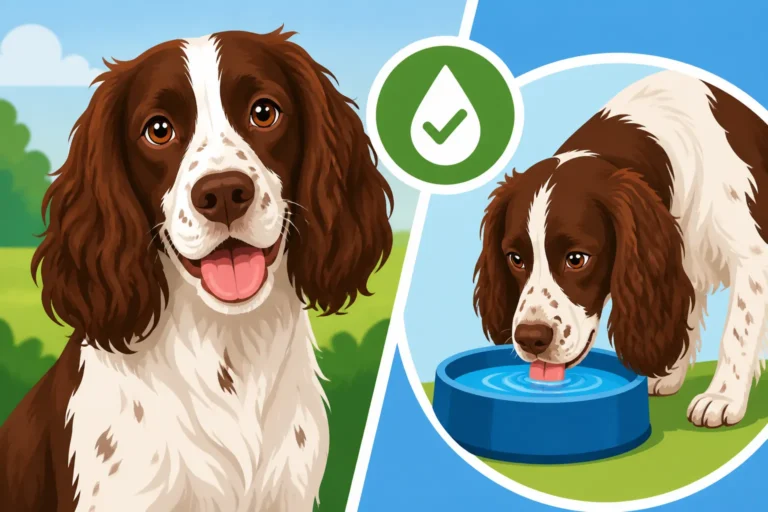
Drop ears can hold warmth and moisture, especially after a swim, bath, or rainy walk. That does not mean every Cocker or Springer will develop ear disease, but regular checks help you notice redness, odor, discharge, soreness, or repeated head shaking before a problem becomes harder to manage.
After water or wet-weather outings, gently dry the outer ear and follow your veterinarian’s advice about whether a cleaning product is appropriate. Don’t put cotton swabs deep into the ear canal, and don’t use homemade solutions or leftover medication without veterinary guidance. If an ear seems painful or smells unpleasant, a veterinary examination is a better next step than repeated cleaning.
Keeping basic supplies organized can make routine care easier. Chewy is one place owners may look for pet-safe grooming items, such as brushes or towels, but ask your veterinary team which ear products are appropriate if your dog has recurring trouble. For more on the practical issues, see Why a Springer Spaniel's Ears Are Never Quite Healthy and How Often a Drop Eared Springer Spaniel Needs Cleaning.
Feathering can collect tangles, burrs, and debris
Both breeds may have feathering that catches burrs and plant material, particularly around the ears, legs, belly, and tail. The amount of coat can vary substantially, especially between working and show lines. A quick brush after a walk can prevent small tangles from becoming tight mats that are uncomfortable to remove.
A grooming routine doesn’t need to be elaborate to be useful. Start with brief, calm sessions and check behind the ears, under the front legs, and around the feet. If your dog is uncomfortable with brushing, work in short steps, reward relaxed behavior, and ask a groomer or veterinarian to demonstrate safe handling. Trying to pull out a painful mat can make future grooming much harder.
A brush, comb, nail tools, and dog shampoo are common household supplies for spaniel owners. Chewy may be convenient for finding basic grooming equipment, but the right tools depend on the coat and the dog’s tolerance. For a deeper comparison of coat routines, Two Coats, Two Routines: Field and Show Springer Spaniel Grooming describes how breeding type can influence grooming expectations.
Choosing Between an English Cocker and an English Springer
The more useful question is not “Which one is easier because it is smaller?” It is “Which particular dog’s needs, temperament, and daily rhythm fit my home?” A thoughtful choice considers the dog’s breeding and behavior, your schedule, and the work you are willing to do consistently.
Compare the dog in front of you, not just the breed label
If you’re considering a puppy, ask whether the parents are working-bred, show-bred, or from a mix of backgrounds. Find out what health screening is recommended for the breed and what records the breeder can share. Ask how puppies are introduced to handling, household sounds, new people, and being alone for short periods. A responsible breeder should welcome practical questions about the dogs’ everyday behavior.
If you’re considering an adult dog, ask the rescue or current caregiver about its history, energy, response to other animals, and ability to settle indoors. If possible, see the dog in more than one setting. A dog who seems calm after a long outing may behave differently on an ordinary weekday when the household is busy or quiet.
For a quick comparison, use this table as a starting point, not a promise about every individual:
| Consideration | English Cocker Spaniel | English Springer Spaniel |
|---|---|---|
| General size | Usually smaller and more compact | Usually taller and longer-legged |
| Sporting background | Flushing spaniel historically associated with work such as woodcock hunting | Flushing spaniel developed to find and spring game |
| Activity needs | Can be active and scent-focused, especially in working lines | Can be energetic and driven, particularly in working lines |
| Coat and ears | Feathering and drop ears need routine care | Feathering and drop ears need routine care |
| Best way to assess fit | Ask about the individual dog’s line, habits, and settling skills | Ask about the individual dog’s line, habits, and settling skills |
Match the dog to your actual week
Picture a normal Tuesday, not just a free weekend. Who will walk the dog before work? How long will the dog be alone? Is there time for a sniffing walk, a little training, coat checks, and a calm wind-down at night? If the household is stretched, choosing a smaller dog without planning for its mental and social needs may not solve the problem you hoped it would.
A spaniel can be a wonderful companion for someone who enjoys outdoor activity and wants a dog involved in everyday life. But if you want a dog that will reliably entertain itself for long stretches or needs very little coat and ear maintenance, neither breed should be chosen based on size alone. Whether a Springer Spaniel Suits Someone Who Works Full Time is a useful prompt for thinking through schedules and support before bringing a dog home.
It can also help to set up a realistic care routine before adoption or purchase. Decide where grooming supplies will live, who will handle routine checks, and how you’ll arrange training or care when work and travel get busy. Chewy can be one option for replenishing everyday pet supplies, while a veterinarian or professional groomer can guide health-related and coat-specific choices.
A Cocker is not a small Springer in the sense of being a scaled-down version with identical needs. The breeds share sporting roots, but differ in history, build, and typical working style—and the variation between individual dogs is just as important. Meet the dog, ask detailed questions about its background, and choose for the life you can offer day after day.
Disclaimer
This article is for general informational purposes only and does not constitute professional advice. Laws, prices and regulations vary by location and change over time. Consult a qualified professional for guidance on your specific situation.