How a Welsh Springer Spaniel Differs From an English One
Choosing between a Welsh Springer Spaniel and an English Springer Spaniel can be confusing: both are energetic flushing dogs with similar names, feathered coats, and a love of the outdoors. But they are separate breeds, with noticeable differences in appearance, temperament, and availability. This guide explains what those differences mean in everyday life, so you can look beyond the name and decide which dog better fits your home.
Welsh and English Springer Spaniels Are Separate Breeds
Shared roots, different breed histories
The Welsh Springer Spaniel and English Springer Spaniel share a broad spaniel heritage and were both developed to find and flush game for hunters. Their jobs overlap, so it is no surprise that they have similar instincts: both may range ahead of a handler, investigate interesting scents, and need training to come back reliably when called.
Despite those similarities, the Welsh and English are recognized as distinct breeds. A Welsh Springer Spaniel is not simply a red-and-white English Springer Spaniel, nor is an English Springer a larger version of a Welsh. Each breed has its own standard, breeding history, and typical look. The name “springer” describes a shared kind of work, not a guarantee that two spaniel breeds are interchangeable.
It is also worth distinguishing an English Springer Spaniel’s field-bred and show-bred types from the Welsh breed. Field and show English Springers can look and behave quite differently from each other, but they are still English Springer Spaniels. The Welsh Springer is a separate breed altogether. For background on that within-breed variation, see How the Field and Show Springer Spaniel Diverged and Whether the Two Springer Spaniel Types Interbreed.
The names do not tell you everything about the dog
A breed label gives you clues, not a complete prediction of an individual dog. Welsh Springers are often described as devoted to their families and somewhat reserved with unfamiliar people. English Springers are often described as sociable and enthusiastic, though individual personalities vary, and early socialization and breeding choices matter in both breeds.
That distinction can be easy to misread. A reserved Welsh Springer may simply take a little time to warm up; it does not automatically mean the dog is fearful or unfriendly. An outgoing English Springer may greet visitors with tremendous enthusiasm, but that does not mean every English Springer is a confident extrovert. Meet dogs from the particular lines you are considering and ask breeders how their adult dogs behave at home, on walks, and around new people.
Both breeds need companionship, exercise, and patient, consistent training. Neither is a good fit for someone who wants a dog that is content to be ignored in the yard all day. If your main question is whether the English breed suits your household, Whether a Springer Spaniel Suits a First Time Owner offers a useful starting point.
The Most Obvious Differences Are Coat and Size
Color makes the breeds easy to tell apart
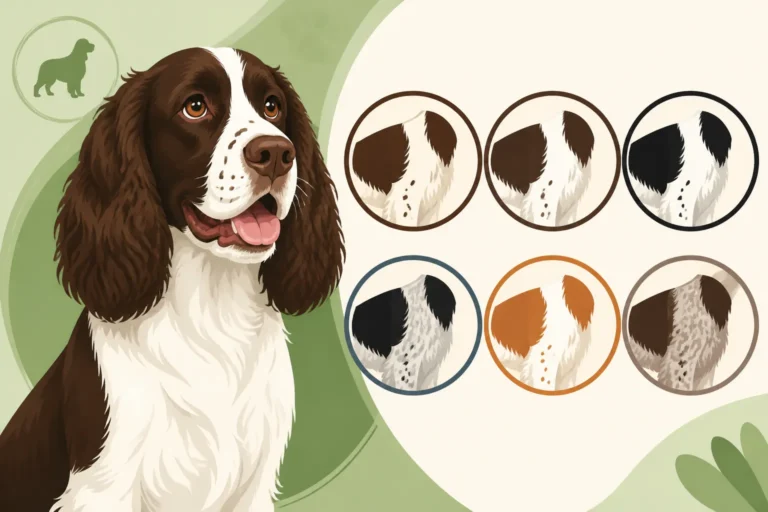
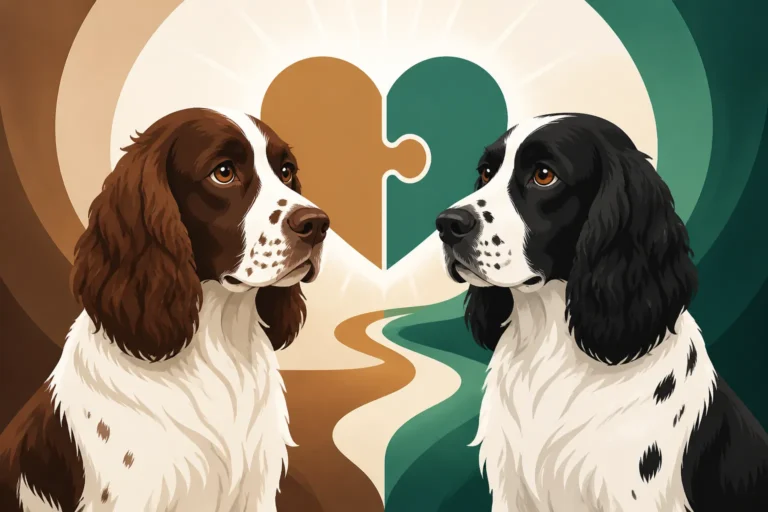
Welsh Springer Spaniels are red and white. Their white areas may be marked with red, while the amount and pattern of color can vary from dog to dog. English Springer Spaniels have a broader range of recognized colors, including liver and white and black and white, sometimes with tan markings. So if you see a red-and-white spaniel, color alone is not enough to identify it: the dog could be Welsh, or it could be an English Springer with a red-and-white pattern.
The overall outline can help, but it is not always obvious in a quick photograph. Look at the dog’s build, head, coat, and proportions together, and confirm the breed through reliable registration or breeder records. Puppy markings can also make identification tricky, especially to someone who is not familiar with the breed standards. The color comparison for English Springers is explored in Which Colors the Springer Spaniel Standard Allows.
Welsh Springers are generally smaller, but not dramatically so
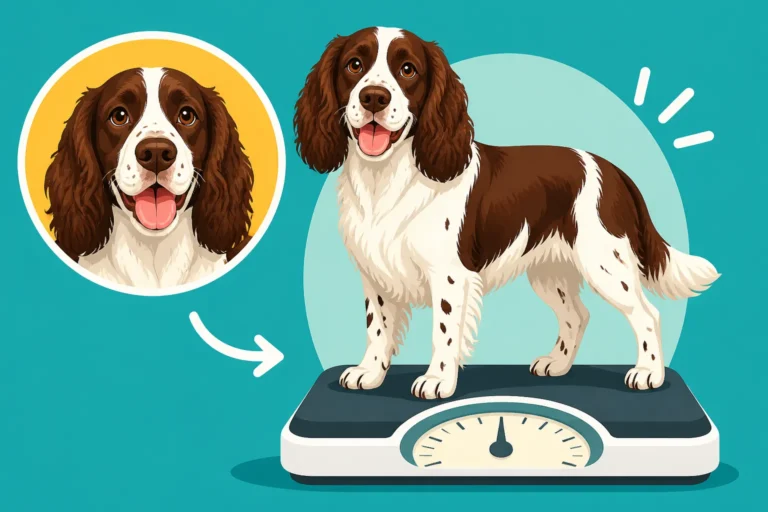
Welsh Springers are typically somewhat smaller and lighter than English Springers. That difference is real, but it should not be treated as a sharp dividing line: individual dogs vary, and size ranges can differ between breed standards and countries. A smaller English Springer and a larger Welsh Springer may overlap in size.
If you are choosing a dog because you live in a smaller home, don’t assume the Welsh will automatically need less activity or training. A compact dog can still be a keen, busy working spaniel. Ask about the parents’ adult size and build, but also ask about their energy, off-switch, and response to everyday household routines. You can compare typical English Springer proportions in How Tall a Springer Spaniel Stands and What a Springer Spaniel Actually Weighs.
Both have feathering, but coat upkeep depends on the individual
Both breeds have a coat that can include longer feathering on the ears, chest, legs, and underside. That hair can collect burrs, mud, and debris after a walk through long grass or woodland. It may also tangle where friction and moisture meet, especially behind the ears, under the legs, and around the furnishings.
The care burden depends more on coat amount, the dog’s activities, and your grooming routine than on the breed name alone. After a muddy outing, check the feathering and paws, remove tangles gently, and make sure the dog is dry. A basic grooming kit can help with routine brushing; retailers such as Chewy may be one place to compare brushes and combs, while a groomer can advise on tools that suit the coat. For broader background, see Two Coats, Two Routines: Field and Show Springer Spaniel Grooming.
Temperament and Exercise Needs Depend on More Than Breed
Welsh Springers can be reserved without being unsocial
Many Welsh Springer owners describe a close, loyal relationship with their dog. Some Welsh Springers take a more watchful approach to strangers than the typical picture of an instantly friendly spaniel. That can be a comfortable fit for a household that appreciates a dog who bonds closely with family, but the dog still needs positive introductions and ordinary social experiences.
A puppy who has only met family members may find busy places, visitors, or unfamiliar dogs overwhelming. Introduce new people and environments gradually, allow the dog to observe without being pushed into contact, and reward calm curiosity. A responsible breeder should be able to discuss how their dogs behave with visitors and what kinds of homes have suited puppies from earlier litters.
English Springers often bring an eager, sociable style
English Springer Spaniels are commonly known for their enthusiasm and willingness to engage with people. Many are affectionate, energetic, and keen to join household activities. The same eagerness can feel like a lot when the dog is young: an English Springer may bounce up to visitors, tug toward a scent, or struggle to settle after a short walk if its day has not included enough physical and mental activity.
That picture is not universal. Field-bred and show-bred English Springers can differ in drive and day-to-day intensity, and temperament varies within lines. Spend time with adult dogs from the line you are considering, not just puppies, and ask what a normal weekday looks like for them. How a Field Bred Springer Spaniel Differs in Drive explains why “English Springer” alone may not tell you how active a particular dog will be.
Both breeds need more than a quick walk around the block
Welsh and English Springers were developed for active work, so most need daily exercise and opportunities to use their brains. A walk is valuable, but sniffing, retrieving, field-style games, training practice, and safe exploration can make the day more satisfying. The right balance depends on the individual dog’s age, health, and energy.
A common frustration is that a dog comes home from a long walk and still seems restless. Often, the outing has provided movement but little engagement. Try a short scent game, a few recall exercises on a long line, or a calm search for treats at home. Build activity gradually, especially for a puppy or a dog returning to exercise after a break. For practical expectations, see How Much Exercise a Show Bred Springer Spaniel Needs and Whether a Springer Spaniel Needs a Job.
| Feature | Welsh Springer Spaniel | English Springer Spaniel |
|---|---|---|
| Breed status | Separate recognized breed | Separate recognized breed |
| Typical color | Red and white | Several combinations, including liver and white and black and white |
| General size | Usually somewhat smaller | Usually somewhat larger, though sizes can overlap |
| Typical social impression | Often loyal and may be reserved with strangers | Often enthusiastic and sociable, with individual variation |
| Working background | Flushing spaniel | Flushing spaniel |
| Coat care | Brushing and checks for debris in feathering | Brushing and checks for debris in feathering |
| Exercise | Regular activity, training, and enrichment | Regular activity, training, and enrichment |
Choosing the Right Breed for Your Household
Compare the individual dogs and the lines
A useful comparison starts with the dog in front of you, not with a broad breed stereotype. Ask to meet adult relatives where possible. Watch how they respond when someone new enters, whether they can settle indoors, and what happens when they encounter an interesting scent outdoors. Ask the breeder about health screening, common health concerns in the line, and how they match puppies to homes.
It also helps to describe your routine honestly. If you work away from home, have young children, live in an apartment, or rarely get outside, say so. A careful breeder should be willing to discuss whether the puppy’s likely needs fit your life. If a breeder focuses only on color or availability and avoids questions about temperament and health, take that as a reason to slow down.
Consider grooming, outdoor exposure, and household rhythms
Both breeds can bring mud and plant material inside, especially after walks through fields, wooded trails, or wet grass. Their ears and feathering deserve regular checks. After swimming or a damp outing, dry the dog as needed and watch for persistent odor, redness, scratching, or head shaking. A routine check is not a substitute for veterinary care if the ear seems painful or infected.
Set up a simple care area at home with a towel, comb, and supplies your veterinarian recommends. Chewy may be useful for comparing everyday grooming or cleaning supplies, but choose ear products with veterinary guidance rather than putting a home remedy into a sore ear. If recurring ear trouble is a concern, Why a Springer Spaniel's Ears Are Never Quite Healthy provides more detail about the English breed’s ear-care challenges.
Make the decision based on fit, not a single trait
The Welsh Springer may appeal if you prefer its red-and-white appearance and are comfortable with a dog that may be more reserved around unfamiliar people. The English Springer may appeal if you are drawn to its broader color range and its commonly sociable, eager manner. Neither description should replace meeting dogs and discussing their breeding and upbringing.
Think about the practical week you can offer. Can you provide daily movement, training, companionship, and coat care? Can you manage an enthusiastic dog around visitors, or patiently help a cautious one feel secure? Can you keep a dog safely engaged when wildlife scents compete with your recall cue? Those answers matter more than choosing the breed that sounds best in a short description.
Before deciding, meet both breeds if you can, speak with reputable breeders and breed clubs, and ask about health screening and adult temperament. If you are comparing English Springer lines specifically, The Health Tests Both Springer Spaniel Parents Should Have can help you prepare questions for a breeder. The best choice is the dog whose needs and personality you can genuinely support—not simply the one that looks most familiar.
Disclaimer
This article is for general informational purposes only and does not constitute professional advice. Laws, prices and regulations vary by location and change over time. Consult a qualified professional for guidance on your specific situation.