Showing an Undocked Springer Spaniel
Preparing an undocked English Springer Spaniel for the show ring can feel confusing when breed standards, tail rules, and local laws do not all say the same thing. The good news is that a natural tail does not automatically make a dog unsuitable for showing. What matters is the registry and show rules where you plan to compete, your dog’s overall conformation, and how confidently you present them.
Can an undocked Springer Spaniel enter a dog show
Check the rules where you plan to compete
There is no single answer that applies to every show. Rules depend on the country, registry, and sometimes the specific event. A breed standard may describe a traditionally docked tail, while local law restricts docking or permits it only in particular circumstances. Show organizers then apply the rules that govern their events.
Before entering, check the current breed standard and entry requirements for the registry and show you have in mind. If anything is unclear, ask the show secretary or the relevant breed club directly. Be specific: explain that your Springer Spaniel has a natural, undocked tail and ask whether the dog is eligible and whether any documentation is needed.
This is especially important if your dog was born in one country and you plan to show in another. Rules may differ, and an entry form may ask questions about a dog’s registration, identification, or tail status. Sorting that out early is much less stressful than discovering a problem at the show grounds.
If you are trying to understand how tail customs vary by location, Whether a Springer Spaniel's Tail Is Docked in America and Britain's Ban on Docking Springer Spaniel Tails provide useful background. Keep in mind that legal requirements and show regulations are related but not interchangeable: being legally permitted to own a dog with a natural tail does not, by itself, answer every question about show eligibility.
A natural tail does not tell you everything about show quality
A tail is one detail in the picture judges assess. They also look at the dog’s balance, movement, coat, condition, expression, and how well the dog represents the breed. A natural tail may be more noticeable simply because people are accustomed to seeing docked Springer Spaniels, but noticeable is not the same as disqualifying.
The important distinction is between eligibility and evaluation. A dog may be allowed to enter but still be judged against the applicable breed standard. Standards can differ in how they describe tails, so read the one used at your event rather than relying on what a friend remembers from a show elsewhere.
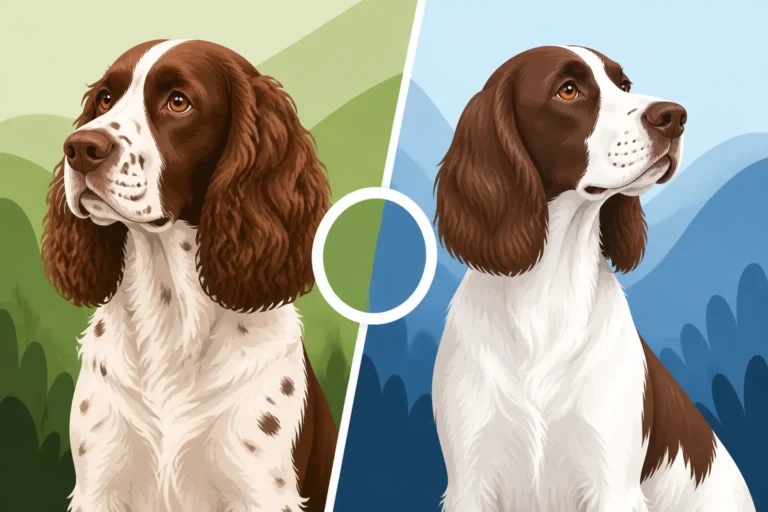
If you are new to conformation, it can help to watch several shows and speak with experienced Springer Spaniel exhibitors. Notice how handlers present their dogs, how judges assess movement, and how different types of Springer Spaniel are groomed. For a broader look at the differences that may affect presentation, see How Different the Two Springer Spaniel Types Look and How a Field Springer Spaniel Fares in the Ring.
How to prepare an undocked Springer Spaniel for the ring
Learn how the tail moves and looks on your dog
A natural tail is not a feature you need to hide. Your job is to present your dog as they are, while keeping the tail clean, healthy, and well cared for. Get comfortable examining it during normal grooming. Check the skin and coat for tangles, debris, irritation, or tenderness, particularly after walks through long grass or brush.
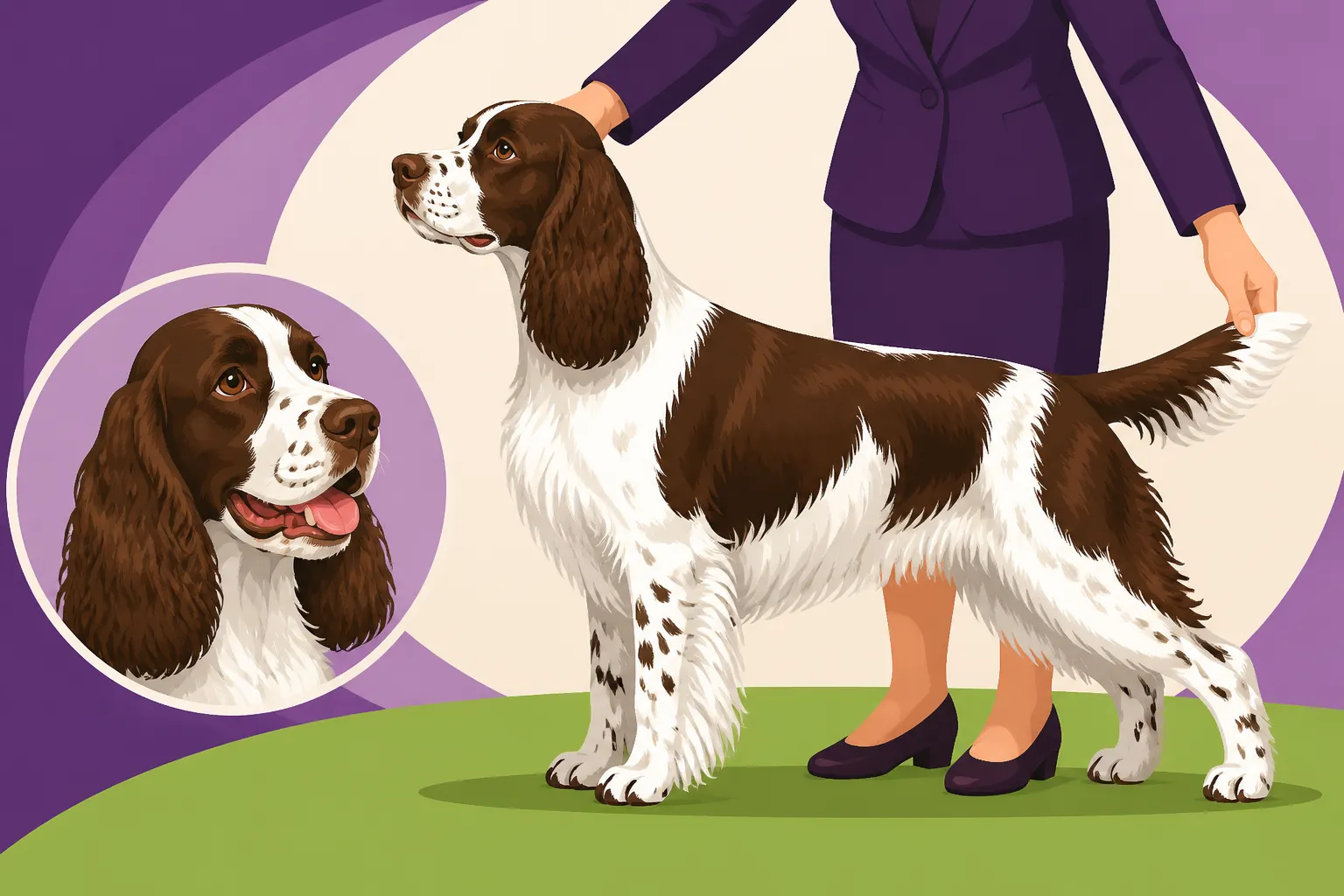
Movement matters, too. Watch your dog walk and trot from the side and from behind. This helps you understand their natural carriage and gives you a chance to practise handling without fussing over the tail. Ask a knowledgeable breeder, handler, or breed-club member to watch your dog move and offer feedback on the whole presentation.
Avoid trying to make the tail look different with products or styling that are not allowed by the show rules. If you are unsure whether a particular grooming method is permitted, ask before show day. The goal is a tidy, comfortable dog—not an elaborate disguise.
Practise handling before the show
Show-ring confidence grows through repetition. Practise having your dog stand calmly, accept a gentle examination, and move on a lead at a steady pace. Keep early sessions short and upbeat. If your Springer Spaniel is unsure about being handled, make the experience easier rather than forcing a long practice session that leaves them worried.
At home, practise in a quiet space first. Then gradually add distractions: a different room, a friend acting as an examiner, or a short session outside. Bring the same lead and small rewards you expect to use at the show, so those objects feel familiar. A soft, encouraging approach often suits a dog that is sensitive to pressure.
You can also visit a local conformation class or ask an experienced exhibitor to coach you. This gives you a chance to practise ring routines and learn what to expect when the judge approaches. If your dog needs a little more grooming preparation, everyday tools such as a comb, brush, or towel are easier to use when you and your dog are already accustomed to them. Chewy is one place owners may look for routine pet supplies, but choose tools that suit your dog’s coat and follow the show’s grooming rules.
Grooming and presentation for a natural tail
Keep grooming breed-appropriate and comfortable
An undocked tail may have more visible feathering, depending on the individual dog. Brush it gently and regularly, checking for knots where the hair meets the tail and along the underside. If you find a small tangle, work through it gradually rather than pulling. A dog that learns grooming is comfortable is more likely to stand calmly for preparation and examination.
The rest of the coat matters just as much. Springer Spaniels can collect burrs, mud, and loose hair, especially in feathering around the legs, chest, and ears. A practical grooming routine helps you catch mats early and keeps your dog comfortable between shows. For grooming context, see How Often a Show Springer Spaniel Needs Trimming and How Show Springer Spaniel Ears Differ.
Do not assume that more trimming means a better show presentation. Breed-specific grooming conventions vary, and what is appropriate for one type or registry may not suit another. Ask an experienced Springer Spaniel exhibitor or groomer who knows the rules for your event. Chewy may carry general grooming supplies, but a product being available does not mean it is appropriate for every coat or permitted in every ring.
| Preparation area | What to practise or check | Why it helps |
|---|---|---|
| Eligibility | Confirm rules with the registry and show organizer | Prevents avoidable entry surprises |
| Tail and coat | Check for tangles, debris, irritation, or tenderness | Keeps the dog comfortable and tidy |
| Stacking | Practise standing calmly in a natural position | Makes examination less stressful |
| Movement | Walk and trot on lead in a controlled, steady way | Helps you present your dog clearly |
| Handling | Practise a gentle examination with a familiar person | Builds confidence around the judge |
| Grooming | Follow breed and event guidance | Avoids unnecessary or unsuitable styling |
Pack for comfort rather than perfection
Show days can involve waiting, noise, unfamiliar dogs, and long stretches of standing around. Pack water, a bowl, a familiar mat, waste bags, grooming basics, and treats your dog tolerates well. A small towel is handy if the coat gets damp or muddy on the way in. Chewy may be a convenient place to browse for general travel or grooming items, but use familiar supplies rather than introducing a new product on the morning of a show.
Plan a calm arrival. Give your dog time to settle, take a toilet break, and get used to the environment before you start practising. If your Springer Spaniel is overwhelmed, step away from the crowd and let them decompress. A relaxed dog is easier to handle and more likely to show their usual movement and temperament.
It is also worth remembering that one show is only one experience. Your dog may be distracted, tired, or simply not at their best that day. That does not mean you have failed, and it does not define the dog’s quality or potential. Build experience gradually and keep the dog’s wellbeing ahead of ribbons.
Choosing the right show path for your Springer Spaniel
Match the event to your dog and your goals
Some owners want to compete seriously; others are curious, enjoy meeting fellow Springer Spaniel people, or want to learn how conformation works. Both are reasonable ways to begin. Start by finding out which events are open to your dog and what paperwork or preparation they require. Then attend as a spectator if possible, so the setting feels less unfamiliar.
If your dog comes from a working background, that does not automatically rule out showing. However, field-bred and show-bred Springer Spaniels can differ in appearance and presentation, and judges assess dogs according to the standard used at the event. Reading about the divide between the types can help set realistic expectations; Whether Any Registry Separates the Two Springer Spaniel Types explains one part of that broader picture.
Talk with people who show dogs in the same region and under the same rules you plan to follow. Ask what they look for in a beginner’s first show, how they prepare their dogs, and what they wish they had known earlier. Practical guidance from a local exhibitor can clarify details that are easy to misread when you are only comparing standards online.
Treat the first show as a learning day
For a first outing, success can be as simple as arriving calmly, completing the ring routine, and helping your dog have a positive experience. You may forget a step or feel awkward with the lead. That is normal. Most exhibitors have had a first show where they were unsure where to stand or when to move.
Afterward, note what went smoothly and what you would change. Perhaps your dog needed more practice standing still, or you could have brought a water bowl that was easier to use. Make one or two adjustments before the next event rather than trying to overhaul everything at once.
Most importantly, do not let uncertainty about an undocked tail overshadow the dog in front of you. Confirm the rules, prepare thoughtfully, and present your Springer Spaniel with confidence. A natural tail is part of your dog’s appearance; it does not replace the broader questions of health, temperament, movement, and suitability that make a show experience worthwhile.
Disclaimer
This article is for general informational purposes only and does not constitute professional advice. Laws, prices and regulations vary by location and change over time. Consult a qualified professional for guidance on your specific situation.