Whether a Springer Spaniel Can Have a Liver Nose
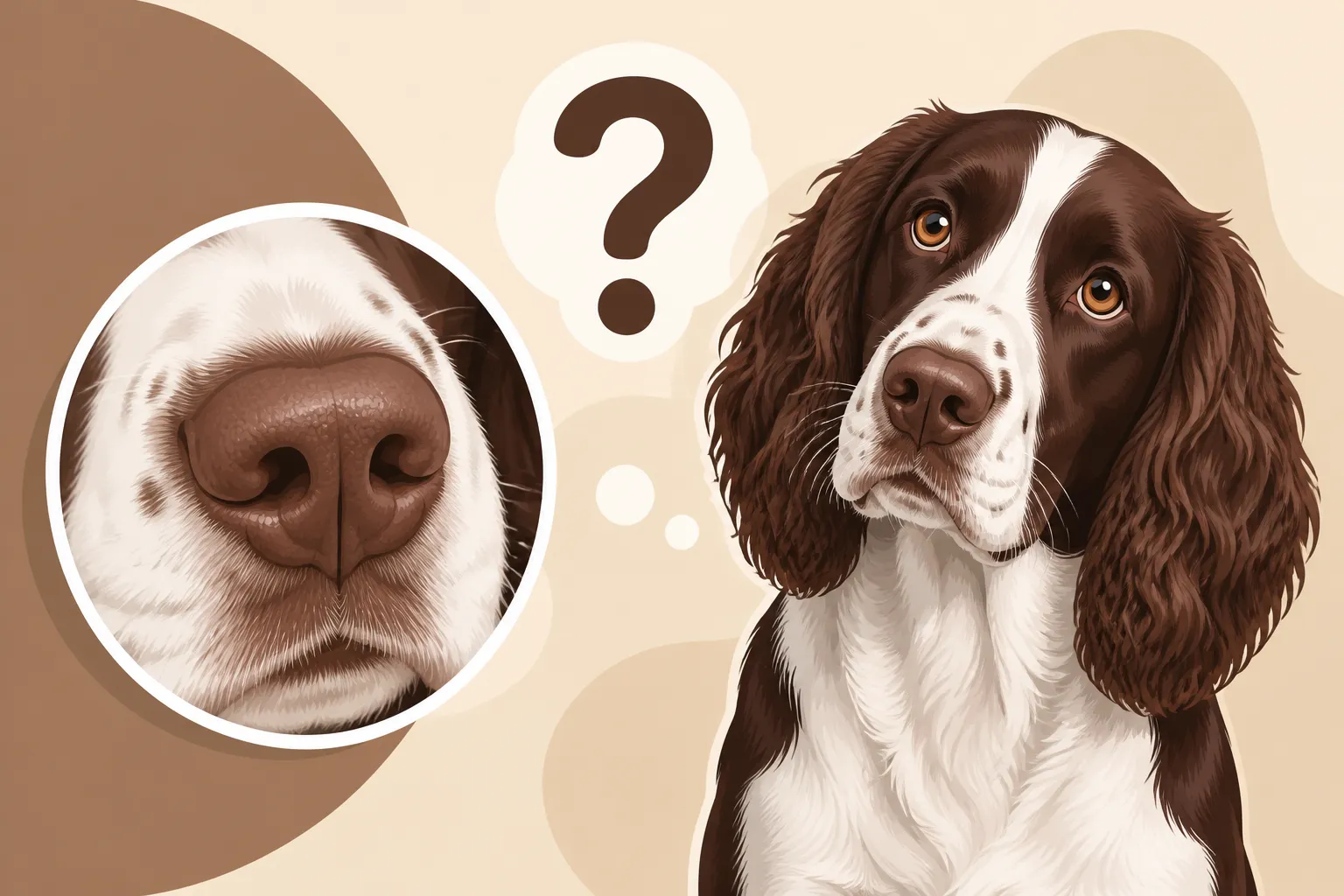
A liver nose on an English Springer Spaniel is usually a normal brown nose pigment, not a sign of liver disease. It often appears with a liver-and-white coat, though a dog’s coat and nose color do not always match as neatly as people expect. This guide explains what a liver nose looks like, how it relates to coat color, and when a change in nose pigment deserves veterinary attention.
What a liver nose looks like on a Springer Spaniel
Brown pigment is different from a pink nose
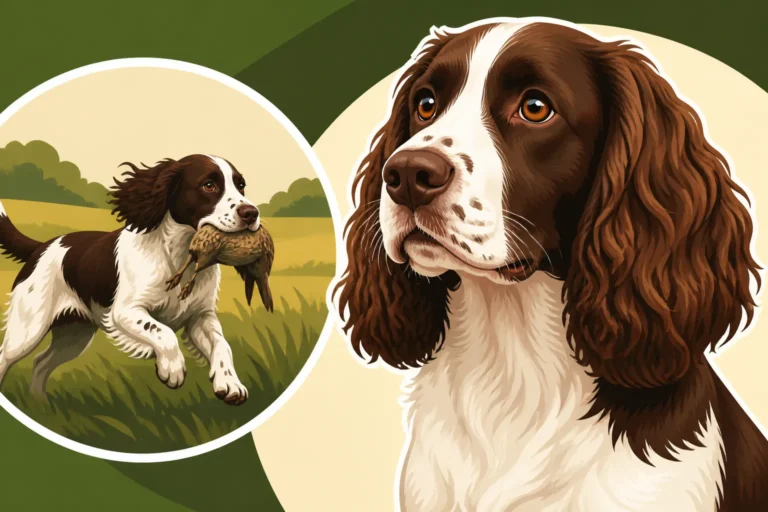
A liver nose is brown, often somewhere between warm chocolate and a deeper reddish brown. The shade can vary from dog to dog, and lighting can make the pigment look lighter or darker in photographs. What matters is that the nose has brown pigment rather than the solid black pigment commonly seen on black-and-white Springers.
A pink area on the nose is different. It may be a small patch of reduced pigment, a temporary change, or a sign of irritation, depending on its appearance and how it developed. A young puppy’s nose can also change as pigment develops, so a pale nose in a very young dog is not always the final color. If a patch appears suddenly, grows, becomes sore, or is accompanied by crusting or swelling, it is worth asking a veterinarian rather than assuming it is simply a color variation.
The word “liver” describes a coat and pigment color in dogs. It does not mean the Springer Spaniel has a problem with its liver. A healthy dog with a liver-colored nose can have perfectly normal liver function.
The nose and coat color often go together
English Springer Spaniels commonly come in black-and-white or liver-and-white combinations, and their noses often harmonize with the darker color in the coat. A black-and-white dog will generally have a black nose, while a liver-and-white dog commonly has a brown or liver-colored nose. Breed standards describe nose pigment in relation to coat color, though the exact wording and preferences can vary between registries and countries.
The coat and nose do not always look like a perfectly matched set. White markings, ticking, roan patterning, and tan points can make a dog’s overall coloring more complex. A Springer may have a mostly white face, for example, while still carrying liver pigment on the nose. The nose is a separate area of visible pigment; it is not simply a patch of coat color that continues onto the muzzle.
For a closer look at the different recognized coat patterns, see The Colors a Springer Spaniel Comes In and Which Colors the Springer Spaniel Standard Allows. These topics help explain why two dogs can both be correctly colored Springers while looking quite different.
A liver nose is a normal color variation
A brown nose by itself is not a health problem, and it does not make a dog less of an English Springer Spaniel. It is a normal pigment variation associated with liver coloring. A dog’s nose color also does not tell you whether the dog is field bred or show bred, how energetic it will be, or what its temperament will be.
People sometimes worry because a liver nose can look unusual beside the familiar black nose of another Springer. That concern is understandable, especially if the dog’s nose looks lighter in winter or changes shade as it grows. But color alone is not a diagnosis. The important distinction is between a stable, naturally brown nose and a new change in the skin’s condition or pigmentation.
If you are comparing puppies or looking at breed descriptions, What Liver and White Looks Like on a Springer Spaniel gives useful context for how liver coloring appears across the coat. Nose color is one piece of that picture, not a reliable shortcut for judging a dog’s overall health or breed quality.
Why a Springer Spaniel has a liver-colored nose
Pigment genes influence brown coloring
The brown pigment commonly called liver is related to the way a dog produces and distributes dark pigment. In simplified terms, genetic differences can change dark pigment that would otherwise appear black into brown. That can affect the coat, nose, lips, and eye rims, although the visible pattern depends on the dog’s inherited combination of traits.
This is why liver-and-white Springers often have brown noses: the same general pigment family that gives the coat its liver patches can also appear on the nose. However, genetics are not a simple paint-by-numbers process. A dog’s markings and pigment are shaped by more than one factor, and photographs, lighting, and age can make the color harder to judge.
A breeder may describe a puppy as liver and white, black and white, or tricolor. Those descriptions refer to coat color and markings, not to a health test. If you want to understand how those patterns develop, How Ticking Develops on a Springer Spaniel Puppy explains why a puppy’s coat can look different as it matures.
Nose shade can vary between individual dogs
Not every liver nose is exactly the same shade. Some are deep brown; others look softer or more reddish. The edges of the nose, the amount of pigment around the nostrils, and the lighting in a photo can all affect the impression. A wet nose may also reflect light differently from a dry one.
Puppy noses can take time to develop their adult appearance. A puppy may have less intense pigment early on, and the shade can become clearer as it grows. If you are choosing a puppy, it is reasonable to ask the breeder what they expect the adult coloring to look like, but a small difference in shade is not, on its own, a reason to worry.
For an adult dog, a stable brown nose that has looked much the same for years is usually just part of that dog’s natural appearance. A nose that becomes patchy, pale, raw, or uneven over a short period is a different situation and should be assessed based on the whole picture, not just the color.
Nose color is not a dependable way to identify a dog’s background
A liver nose can support what you see in a dog’s coloring, but it cannot confirm a dog’s pedigree or predict its lineage. A dog’s registration records, breeder documentation, and overall characteristics are more relevant when establishing ancestry. Likewise, nose color does not reveal whether a Springer comes from a particular working or show line.
The breed’s field and show types can differ in build, coat, and working style, but both may carry the familiar liver-and-white coloring. For a broader explanation of the differences, read Two Breeds Registered as One: the Field and Show Springer Spaniel. Color is only one visible feature among many, and it does not tell you how a dog will behave at home or in the field.
When a liver nose may need attention
A lifelong brown nose is not the same as pigment loss
A liver nose that has always been brown and looks healthy is different from a black or brown nose that is losing pigment. A gradual lightening can sometimes be harmless, but new or spreading depigmentation can also occur alongside skin irritation or other conditions. The timing and appearance matter.
Look at the nose as a whole. Is the surface smooth and intact? Is the change symmetrical or limited to one small area? Is your dog rubbing its muzzle, sneezing, pawing at its face, or acting uncomfortable? These details help a veterinarian distinguish a cosmetic variation from a problem that needs examination.
It can help to take a clear photo in natural light and compare it with older pictures. A photo record can show whether a change is genuinely progressing or whether the nose simply looks different under indoor lighting. Avoid repeatedly scrubbing or applying human skincare products to check whether the pigment comes off; that can irritate delicate skin and will not establish the cause.
Watch for sores, crusting, swelling, or discomfort
A color change deserves more attention when it comes with physical changes. Contact your veterinarian if you notice cracks, bleeding, persistent crusts, ulcers, swelling, discharge, or tenderness. Also seek advice if the dog seems bothered by the nose or if the affected area is expanding.
Some skin conditions can affect the nose, but a description or photo alone cannot identify the cause. Sun exposure, inflammation, infection, injury, and immune-related conditions can produce overlapping signs. The right response depends on an examination and, when needed, testing. Do not assume that every pale patch is harmless seasonal change, and do not assume that every change is serious disease.
If your veterinarian recommends a particular dog-safe product for the nose, you could compare options at a pet retailer such as Chewy, while checking the label and confirming that the product is appropriate for your dog. Avoid applying balms, oils, or medicated creams without veterinary guidance, especially if your Springer is likely to lick them off.
Seasonal lightening can look different from a concerning change
Some dogs experience seasonal variation in nose pigment, sometimes called “snow nose,” where pigment becomes lighter during part of the year and later darkens again. It is usually a change in color rather than a wound: the surface remains smooth, and the dog is not obviously uncomfortable. Not every seasonal pale nose is snow nose, though, so a new change should be discussed with a veterinarian if you are unsure.
Compare the pattern over time. A subtle, even shift that comes and goes is different from a growing irregular patch with redness or damaged skin. A short written note alongside dated photos can be useful, especially if the change is gradual and easy to miss from one week to the next.
If a veterinarian advises gentle protection from sun exposure, ask what type is safe for your dog and how to use it. Chewy may be one place to look for a veterinarian-recommended, dog-safe sunscreen or nose-care product, but the product should be chosen for the specific advice you have received rather than because it is marketed for general use. Chewy can also be a convenient place to compare basic grooming supplies, but routine nose care should not involve harsh cleaners or unapproved treatments.
How to assess your Springer Spaniel’s nose
Use a simple, calm check
You do not need to inspect your dog’s nose obsessively. During ordinary grooming or a weekly health check, take a moment to look for changes in color, texture, and comfort. A quick, gentle check is more useful than repeatedly handling the nose, which can make a sensitive dog wary.
Use this simple sequence:
- Look at the nose in natural light.
- Check whether the color is stable or newly changed.
- Notice whether the surface is smooth, cracked, crusted, or swollen.
- Watch for rubbing, pawing, discharge, or signs of discomfort.
- Take a photo if you want to track a change over time.
- Contact your veterinarian if the change is sudden, worsening, painful, or accompanied by sores.
A healthy liver-colored nose may be brown across most of the nose leather, with a moist appearance after sniffing or drinking. Moisture alone is not a measure of health, and a dry nose by itself does not automatically mean a dog is ill. Look for the broader pattern rather than relying on one feature.
Ask the breeder or veterinarian the right questions
If you are considering a puppy, ask the breeder what coat color and nose pigment they expect, and whether the puppy’s markings have changed as it has grown. A responsible breeder should be able to discuss the puppy’s coloring without presenting a liver nose as a special health advantage. If you are buying a dog mainly as a companion, focus on health, temperament, fit with your household, and the breeder’s care practices rather than nose shade.
For a dog whose nose has changed, give your veterinarian a clear timeline. Mention when you first noticed it, whether it is spreading, whether it comes and goes, and whether your dog has been rubbing or licking the area. Bring photos if you have them. That practical information is often more useful than trying to name the condition yourself.
If you are comparing a dog’s color with formal breed descriptions, How a Springer Spaniel's Markings Change With Age can help explain why markings may become more apparent as a puppy matures. For general breed background, Whether the Springer Spaniel Is in the Sporting Group adds context, but neither coat nor nose color should replace a health evaluation when symptoms are present.
Keep color separate from health decisions
A liver nose is a normal variation, not a medical label. A dog with a brown nose can be healthy, active, and well suited to a family or working home. Conversely, a dog with a black nose is not automatically healthier. Pigment color should not be used as a substitute for routine veterinary care, screening appropriate to the dog, or a careful assessment of visible symptoms.
It is also helpful to separate a nose-color question from other health concerns. If a Springer has recurring ear trouble, for instance, that deserves its own discussion with a veterinarian; it is not explained by having a liver nose. See Why a Springer Spaniel's Ears Are Never Quite Healthy for more on the breed’s ear-care concerns.
For uncomplicated, stable brown pigment, there is usually nothing to treat. If the nose becomes sore, changes quickly, or looks abnormal in a way that concerns you, ask your veterinarian to examine it. Chewy can be useful for finding routine pet-care supplies when you already know what you need, but it cannot replace a diagnosis or a treatment plan from your veterinary team.
Disclaimer
This article is for general informational purposes only and does not constitute professional advice. Laws, prices and regulations vary by location and change over time. Consult a qualified professional for guidance on your specific situation.