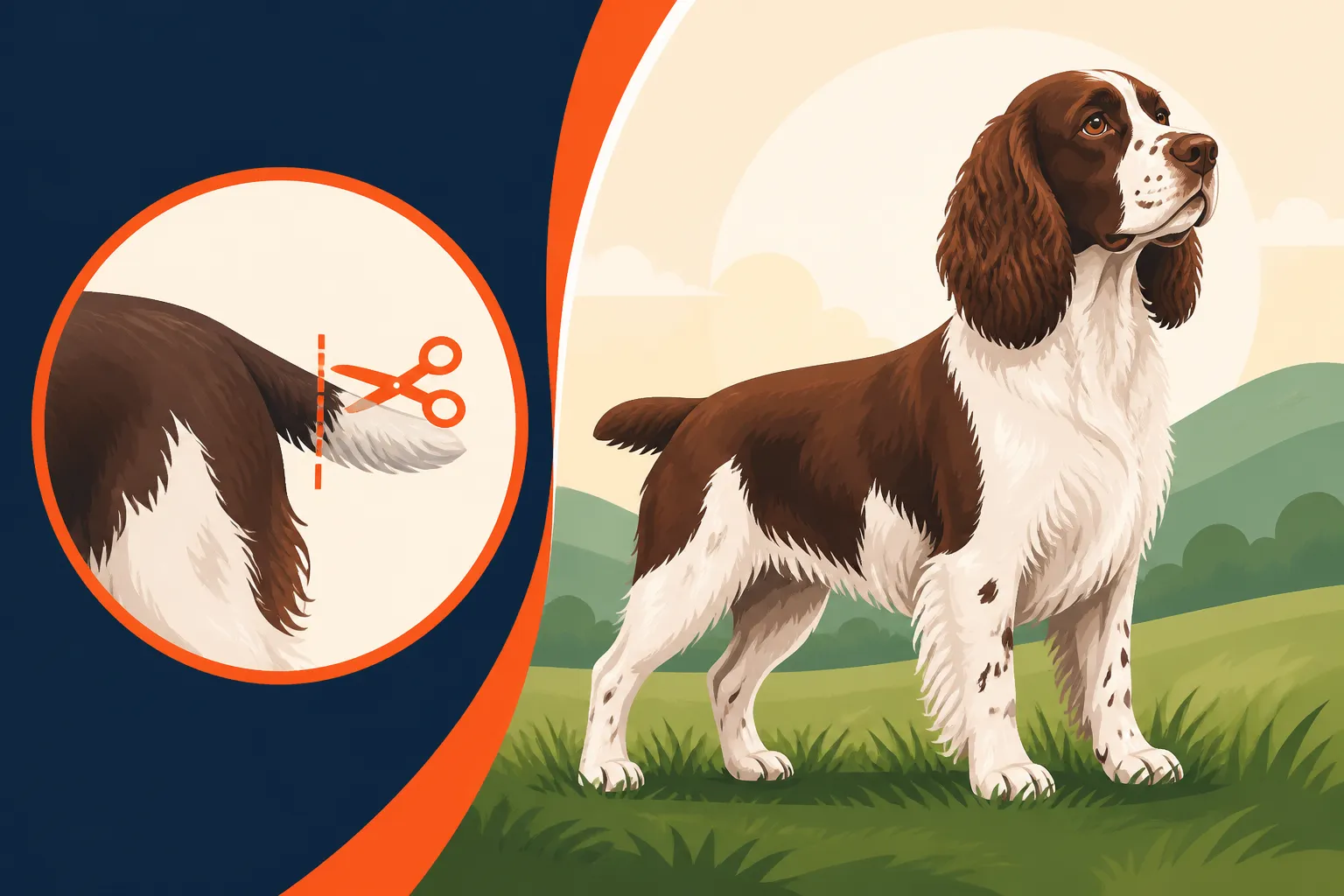
Tail Docking in Field Springer Spaniels
A field Springer Spaniel’s tail may be docked because of tradition, working-dog expectations, or concern about injuries in dense cover—but none of those reasons makes docking necessary for every dog. This guide explains why some field-bred Springers have short tails, what the procedure involves, how laws vary, and how to think through the decision for an individual dog.
Why some field Springer Spaniels have docked tails
Working history and injury concerns
English Springer Spaniels were developed to find and flush game, often working through thick vegetation. Their tails move constantly as they hunt, and a dog working in brambles or other dense cover can sometimes injure its tail. Repeated impacts may lead to cuts or wounds that are difficult to keep clean, particularly if a dog works frequently.
That risk is real, but it does not mean every working Springer will injure its tail. The likelihood can depend on the dog’s work, the cover, how often it hunts, and its individual habits. A spaniel that accompanies its owner on occasional outings has a different exposure from a dog working regularly in dense, rough ground.
People sometimes describe docking as preventive care for working dogs. But a possible future injury is not the same as an existing medical problem, and the benefits and risks should be considered for the individual dog. A short tail may also affect how clearly a dog communicates through tail movement. You can read more about the breed’s working background in Springing Game: What the Springer Spaniel Name Describes.
Tradition and working-dog appearance
Docked tails have become associated with some working Springer Spaniel lines. That association can make a short tail seem like an essential part of a field dog’s appearance, even though a dog’s ability to hunt is not determined by tail length alone.
A field-bred Springer with a full tail can still work. Likewise, a docked tail does not guarantee that a dog will avoid injury. Breeding, training, fitness, experience, and the terrain all matter. It helps to separate what is customary in a particular working circle from what is medically necessary for a particular dog.
Field and show Springers have developed different appearances and priorities, but tail length is only one small part of the broader distinction. For background on those differences, see Two Breeds Registered as One: the Field and Show Springer Spaniel.
How docking is done and what to consider
Docking puppies is different from treating an injury
Tail docking is the shortening of a dog’s tail. When it is done on puppies, it is generally performed when they are very young; rules about who may perform it, how it may be done, and whether it is allowed vary by location. A veterinarian may also amputate part or all of an older dog’s tail to treat a serious injury or disease. That is a medical procedure intended to address a problem, not elective docking for appearance or anticipated work.
These situations should not be confused. If an adult Springer has a cut, swelling, bleeding, or a wound that repeatedly opens, a veterinarian can assess the damage and recommend treatment. Depending on the injury, care may involve cleaning, medication, bandaging, or surgery. Do not try to shorten or treat a tail wound at home without veterinary guidance.
If a dog has a planned veterinary procedure, ask the clinic what aftercare supplies are appropriate. A recovery collar, washable bedding, and cleaning supplies may be useful, but the right choices depend on the wound and the dog. Retailers such as Chewy may carry general pet-care items, though your veterinarian should guide decisions about anything that touches or protects the surgical site.
Possible benefits and trade-offs
The main argument for docking a working dog’s tail is reducing the chance of certain injuries in particular conditions. The practical value of that argument depends on the dog’s actual work and environment. It is not a blanket guarantee against injury, and it does not establish that every field Springer needs a docked tail.
The trade-offs include the procedure itself, the possibility of pain or complications, and the loss of some tail length that would otherwise contribute to body language. Because the tail is part of how dogs signal excitement, uncertainty, and other states, shortening it can affect the visibility of those signals. A dog can still communicate in many other ways, including posture, facial expression, and vocalization, but tail movement is one useful part of the picture.
| Question | What to weigh |
|---|---|
| Does the dog work regularly in dense cover? | Frequent exposure may make tail injury a more relevant concern than occasional outings. |
| Is there an existing tail injury? | A veterinarian should assess an injury; medical treatment is different from elective docking. |
| Is docking legal where the dog lives? | Laws and exceptions vary by jurisdiction, so check the applicable local rules. |
| Is the decision based mainly on appearance or tradition? | Those reasons do not establish a medical need for the individual dog. |
| Could the dog work with a full tail? | Many dogs can; training, conditions, and individual risk matter. |
For additional context about the working dog’s role, see How a Springer Spaniel Worked Before Firearms. If you are comparing field and show dogs, How Different the Two Springer Spaniel Types Look can help explain why appearance and breeding priorities may differ.
Laws and differences between regions
Rules are not the same everywhere
Tail-docking laws vary among countries and, in some places, among states or other local jurisdictions. Some areas prohibit cosmetic docking, while others allow limited exceptions for specified working dogs under particular conditions. There may also be rules about the dog’s age, who performs the procedure, veterinary certification, or proof of intended work.
Do not assume a practice is legal simply because a breeder, club, or working group commonly follows it. Before arranging any procedure or buying a puppy with a docked tail, check the rules that apply where the dog is bred and where it will live. If the requirements are unclear, ask a veterinarian or the relevant animal-welfare authority.
In Britain, rules and exceptions differ across the nations, and working-dog exceptions are not a general permission to dock any spaniel. Britain's Ban on Docking Springer Spaniel Tails offers a more focused discussion of this issue. In the United States, practice and restrictions also vary by location; Whether a Springer Spaniel's Tail Is Docked in America addresses that regional question.
Ask for clear, specific information
If you are considering a puppy whose tail has already been docked, ask the breeder when it was done, who performed the procedure, why it was done, and what documentation is available. The answers should be straightforward. If a breeder cannot explain the circumstances or is vague about the applicable rules, pause and seek independent guidance before moving forward.
If you are choosing between a docked and undocked dog, ask how the breeder’s dogs are actually used. “Working line” can refer to breeding and training priorities; it does not automatically tell you how often a puppy’s parents work in heavy cover or whether a particular puppy will face the same conditions. Ask about health, temperament, and the expected home as well as tail length. The broader health questions are covered in The Health Tests Both Springer Spaniel Parents Should Have.
Living and working with an undocked Springer Spaniel
Managing injury risk without assuming docking is required
An undocked Springer can work and live normally, but owners should be attentive to tail injuries when the dog spends time in rough cover. After an outing, check the tail along with the rest of the dog: look for cuts, swelling, tenderness, blood, or a patch of hair that has become wet or matted. A dog that repeatedly turns to lick or guard its tail may be uncomfortable even if the wound is hard to see.
If you find an injury, contact your veterinarian for advice, especially if bleeding continues, the wound is deep, the tail is swollen, or the dog seems painful. Tail wounds can be frustrating because wagging may reopen them. A vet can help determine whether home care is appropriate or whether the dog needs treatment and temporary changes to its activity.
Owners can also adapt outings to the dog and conditions. Avoiding particularly hazardous cover, checking the dog promptly after work, and taking a break when a tail is sore are practical steps. They do not remove every risk, but they make it easier to notice trouble early. For a broader post-outing routine, see After the Hunt: Checking a Springer Spaniel Over Nose to Tail.
Choosing what suits the individual dog
For a pet Springer who does not work in dense cover, the case for preventive docking may be quite different from the case made for a dog that works frequently in challenging terrain. Even in working homes, the decision involves the dog’s likely exposure, local rules, welfare considerations, and veterinary advice. There is no single answer that fits every field-bred Springer.
If you are looking at an undocked dog for the show ring, the rules and expectations of the relevant registry or event may matter. Read Showing an Undocked Springer Spaniel for that specific concern. For a working home, Whether a Working Springer Spaniel Needs a Docked Tail explores the question from the dog’s practical needs rather than appearance alone.
If your dog has a tail injury or you are unsure whether a procedure is permitted, speak with a veterinarian before making a decision. For general post-operative supplies, Chewy may be one place to look for items such as washable bedding or a recovery collar, but use the clinic’s recommendations to choose products and keep anything from rubbing or disturbing the affected area. Chewy is a retailer, not a substitute for veterinary assessment; if your dog’s wound changes or appears painful, contact the clinic rather than relying on supplies alone.
Disclaimer
This article is for general informational purposes only and does not constitute professional advice. Laws, prices and regulations vary by location and change over time. Consult a qualified professional for guidance on your specific situation.