How a Springer Spaniel Drove Game Into Nets
Many Springer Spaniel owners today adore their dogs for their boundless energy, their enthusiasm for retrieving, and their happy-go-lucky nature, often picturing them flushing pheasants or ducks in open fields. However, few realize that the roots of this beloved gundog stretch back to a time long before shotguns, when their ancestors played a crucial role in a very different kind of hunt: driving game directly into nets. This guide will take you on a journey back through history to uncover how these incredible dogs performed their ancient task, revealing the deep-seated instincts that continue to define the breed.
The Ancient Origins of the Springer Spaniel's Hunting Role
It's easy to assume that gundogs, like our wonderful Springer Spaniels, have always been associated with guns. But the truth is far more ancient and, frankly, quite fascinating. Long before the invention of firearms made wing-shooting popular, people hunted game birds and small mammals using a variety of ingenious methods, and dogs were absolutely integral to these practices. The concept of "springing" game, which gives the Springer Spaniel its very name, was perfected for centuries using tools like nets and even falcons.
Pre-Firearms Hunting Techniques
Imagine a world where hunting wasn't about the boom of a shotgun, but the quiet, strategic deployment of nets or the swift dive of a trained hawk. This was the reality for centuries across Europe, including England, where spaniel types were already well-established. These early hunters weren't looking to shoot birds out of the sky; they were looking to capture them alive, or at least ensnare them, for food or sport. Dogs were essential for locating game that was hidden deep within thickets, tall grasses, or marshy areas – places where a human hunter would struggle to navigate or even spot their quarry. The dog's keen nose and ability to penetrate dense cover were invaluable, much as they are today. How Springer Spaniels Worked Before Guns delves deeper into these early methods.
The Role of Early Spaniels
The ancestors of today's English Springer Spaniel were simply referred to as "land spaniels" or sometimes "springing spaniels" based on their job. Their primary function was to "spring" or "flush" game from its hiding places. Unlike pointers or setters, who indicate game by freezing, these spaniels were bred to actively roust the birds into the air or move them from cover. This action, whether it was bursting into a covey of partridges or pushing a rabbit from a briar patch, was the crucial first step in many ancient hunts. The size of the spaniel often dictated its specific role; smaller ones might have been called "cockers" for their ability to hunt woodcock, while larger ones were "springers" for flushing larger game.
Net Hunting: A Detailed Look at the Technique
The art of net hunting was a sophisticated endeavor that required cooperation, skill, and, most importantly, highly trained dogs. It wasn't a haphazard chase; it was a carefully orchestrated event designed to maximize the catch. The Springer Spaniel's natural instincts made them uniquely suited to this ancient form of predation.
Setting the Scene and the Nets
Picture a medieval or early modern hunting party. They'd often scout an area known for game birds like partridge, pheasant, or even hares. Once a promising spot was identified – perhaps a field with good cover bordering a more open space – the nets would be deployed. These weren't small, hand-held nets, but often large, finely woven meshes, sometimes several yards long, carefully spread flat on the ground or strung up subtly to create a funnel or barrier. The goal was to guide the game directly into these traps. The hunters themselves would often be hidden, waiting patiently for their dogs to do their work. The Medieval Records That Mention Springer Spaniels offer glimpses into these historical practices.
The Springer Spaniel's Strategic Drive
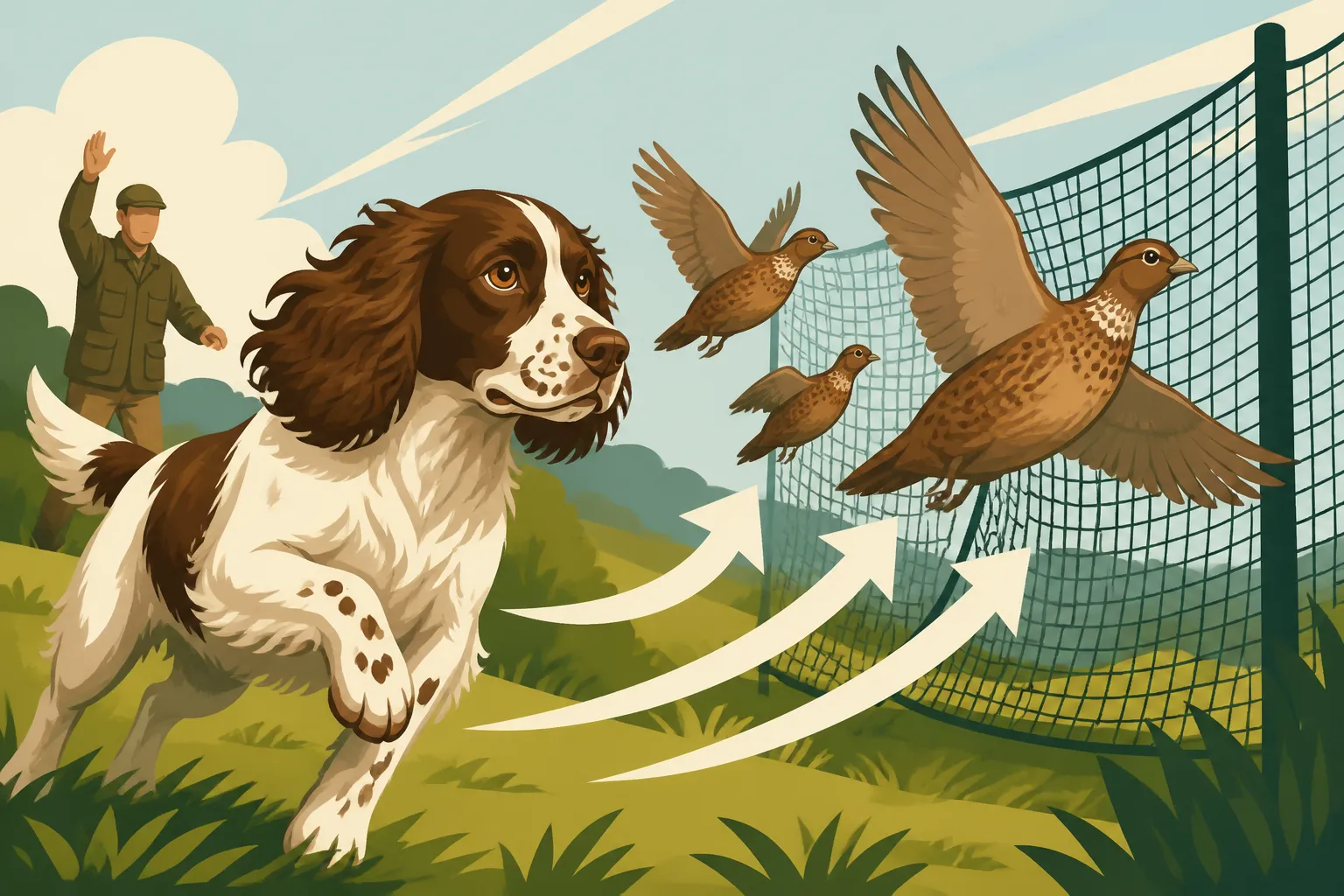
This is where the Springer Spaniel truly shone. The dogs weren't just running wild; they were working a systematic pattern, much like the quartering pattern we see in field-bred Springers today. They would range back and forth in front of the hunter, using their incredible noses to pick up scent and methodically cover the ground. The key was to "drive" the game towards the nets, not away from them, and certainly not to catch or kill it themselves.
Imagine a line of perhaps two or three spaniels, working under the silent direction of their handler, moving through a field. They would push birds that were hunkered down in the grass. The birds, rather than flying off immediately in all directions, would often try to run along the ground, seeking more cover. The dogs, by maintaining pressure and working a strategic sweep, would encourage this ground movement, slowly but surely herding the birds towards the waiting nets. It required immense discipline and biddability from the dogs, ensuring they didn't break pattern or flush too soon.
The Instincts That Made Them Net-Hunters
The success of net hunting relied heavily on the inherent traits of the Springer Spaniel. These weren't merely trained behaviors; they were amplified instincts, honed over generations, that made them perfect partners for this specific type of hunting. Even today, echoes of these ancient jobs can be seen in our modern companions.
The Power of the Nose and Relentless Drive
A Springer Spaniel's nose is a marvel, and it has been for centuries. For net hunting, this meant they could pinpoint game hidden even in the thickest cover, where a human eye would see nothing. But it wasn't just finding; it was the drive to keep working that cover. These dogs are not easily discouraged by dense brambles or heavy reeds. They push through, often with their heads down, completely focused on the scent cone. This relentless energy and focus were paramount in flushing game that preferred to run rather than fly, ensuring they were moved consistently towards the nets. Today, we might observe this drive when a Springer meticulously sniffs every blade of grass in the park, or relentlessly searches for a dropped toy.
The Quartering Pattern: A Genetic Blueprint
One of the most remarkable aspects of the Springer Spaniel's working style is their natural tendency to "quarter" – to work in a zigzag pattern across the ground, ensuring no patch of cover is missed. This isn't something entirely taught; it's a genetic blueprint, deeply ingrained. For net hunting, this systematic coverage was crucial. It ensured that all game in a given area was found and pushed in a predictable direction. A dog that just ran in a straight line or randomly chased wouldn't be effective. The quartering kept the game contained and moving toward the desired location. Think about your own Springer in the backyard; even without conscious training, they might naturally work back and forth across the lawn, exploring every corner. Why a Springer Spaniel Quarters Your Yard Without Being Asked elaborates on this fascinating behavior.
Biddability and Control
For such a cooperative hunt, biddability was non-negotiable. The dogs had to respond to subtle commands, often given by whistles or hand signals, to adjust their range, turn, or hold their position. A dog that ignored its handler would ruin the entire operation. This trait, of being eager to please and highly trainable, is still a hallmark of the breed today. It's why they excel in various dog sports and make such wonderful, attentive companions, provided their needs for mental and physical stimulation are met. Even when selecting a premium food from a retailer like Chewy, modern owners are seeking to support their dog's overall well-being, including their mental sharpness.
From Nets to Guns: The Evolution of the Springer Spaniel's Work
The advent of reliable firearms gradually changed the face of hunting, but the Springer Spaniel's core abilities remained incredibly valuable, simply adapting to the new technology. This evolution highlights their versatility and enduring role as a premier gundog.
The Rise of Wing Shooting
As firearms became more widespread and effective, the focus shifted from capturing game in nets to shooting birds on the wing. This meant dogs no longer needed to drive game into a stationary trap but instead needed to flush birds into the air, allowing the hunter a clean shot. The Springer's instinct to spring game from cover was still perfectly suited for this, now with the added requirement of being "steady to flush" – meaning they wouldn't chase the bird immediately, allowing the hunter to shoot. This also meant that a soft mouth for retrieving shot game became increasingly important. Springing Game: What the Springer Spaniel Name Describes perfectly captures this transition.
The Modern Working Springer Spaniel
Today, the field-bred English Springer Spaniel is highly prized for its ability to work close to the gun, flush game with enthusiasm, and retrieve quickly and efficiently. While net hunting is a historical footnote for the breed, the underlying traits—the keen nose, the tireless quartering, the biddability, and the drive to work—are still very much alive and well. These qualities make them superb partners for modern hunters, and equally fantastic, albeit energetic, companions for active families. Whether sourcing specialized training equipment or just everyday essentials, many owners rely on platforms like Chewy to support their working dogs.
When you look at a Springer Spaniel today, whether they're patiently waiting for a retrieve, zigzagging through a field, or even just sniffing every blade of grass in your garden, remember their long and storied history. These aren't just pretty faces; they are living links to an ancient hunting tradition, carrying within them the instincts that once helped hunters fill their larders using nothing more than a well-placed net and a truly exceptional dog. The journey from pushing game into nets to retrieving shot birds has only cemented their legacy as one of the most capable and beloved gundog breeds.
| Hunting Era | Primary Goal | Springer Spaniel's Key Role | Tools Used |
|---|---|---|---|
| Pre-Firearms | Capture game (alive) | Drive game into nets | Nets, trained birds of prey |
| Early Firearms | Shoot game on the wing | Flush game, retrieve downed birds | Early shotguns, limited range |
| Modern Gundog | Flush & retrieve | Quarter, flush, mark, retrieve (land/water) | Modern shotguns, whistle, e-collar |
Even though their specific methods have changed over the centuries, the core essence of the Springer Spaniel remains: a dedicated, energetic, and highly intelligent partner in the field. Understanding their history, especially How a Springer Spaniel Drove Game Into Nets, gives us a richer appreciation for these incredible dogs and the incredible bond they share with humans. Today, many owners invest in quality nutrition and care, often finding a wide array of options at stores like Chewy, to ensure their Springer Spaniels remain as robust and energetic as their ancestors.
Disclaimer
This article is for general informational purposes only and does not constitute professional advice. Laws, prices and regulations vary by location and change over time. Consult a qualified professional for guidance on your specific situation.