How Tall a Springer Spaniel Stands
It's completely normal to wonder how big your Springer Spaniel will get, whether you're bringing home a tiny puppy or welcoming an adult rescue into your family. Understanding their typical height isn't just about curiosity; it helps you prepare for everything from crate size to how much counter-surfing you might face. This guide will walk you through the various factors that influence a Springer's stature, from breed standards to the real-world differences between lines, so you know exactly what to expect.
The Official Breed Standard and Springer Spaniel Height
When we talk about a dog's "ideal" size, we're often referring to what the breed clubs, like the American Kennel Club (AKC) or The Kennel Club (KC) in the UK, have outlined in their breed standards. These aren't just arbitrary rules; they're historical documents that describe the dog's physical characteristics best suited for its original purpose, in our Springer Spaniel's case, a flushing gundog.
What the Standards Say
Both the AKC and KC standards for the English Springer Spaniel provide a clear picture of the desired height. The AKC, for instance, typically states that an ideal male Springer Spaniel should stand about 20 inches tall at the withers, with females being slightly smaller at around 19 inches. These are average figures, of course, and there's usually a small range on either side that's still considered acceptable, often 19-21 inches for males and 18-20 inches for females.
The Kennel Club in the UK echoes similar sentiments, describing the breed as a medium-sized dog with specific proportions. While they might use slightly different wording or emphasize certain aspects, the overall goal is a dog that is balanced, sturdy, and capable. These standards really aim for a functional form, ensuring the dog isn't too leggy or too squat, which could hinder its ability to move efficiently in the field. They're guidelines that good breeders aim for, reflecting centuries of careful development.
Why Height Matters in the Standard
You might wonder why a couple of inches here or there makes a difference, but for a working gundog like the Springer Spaniel, height is intrinsically linked to their job. A dog that is too tall might struggle to penetrate dense cover or navigate thick undergrowth, potentially tiring out faster or even injuring itself trying to force its way through. Imagine a dog trying to push through a thorn bush – if it's too high off the ground, its belly and legs are more exposed.
Conversely, a dog that is too short might lack the stride or the leverage to cover ground effectively, slowing down the hunter and the retrieve. The ideal height allows for the perfect combination of agility, power, and endurance, enabling the Springer to quarter fields tirelessly, flush game, and retrieve efficiently without being cumbersome or delicate. Deviations from this ideal can sometimes lead to conformational issues that impact a dog's long-term health and mobility, which is something dedicated breeders meticulously work to avoid.
Field Bred vs. Show Bred Springer Spaniel Heights
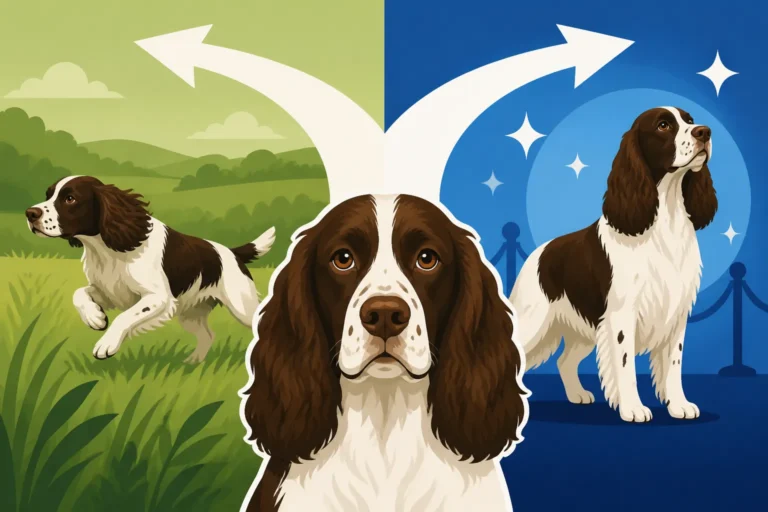
One of the most significant factors influencing a Springer Spaniel's height, and indeed their entire build, is whether they come from field (working) lines or show (conformation) lines. While officially the same breed, these two types have diverged considerably over many decades due to different breeding priorities. If you're looking at a puppy, this distinction is crucial for predicting their adult size and overall presence. How Different the Two Springer Spaniel Types Look can really surprise first-time owners.
How the Two Types Diverged in Size
The divergence began when breeders started to specialize, focusing either on producing dogs that excelled in field trials and hunting or dogs that met the aesthetic demands of the show ring. Field-bred Springer Spaniels were selected for attributes like speed, agility, endurance, and an intense desire to hunt. This often led to a slightly lighter bone structure, a less dense coat, and typically a slightly more compact, leaner physique, which can translate to a marginally shorter stature or a less "heavy" appearance. They are built for efficiency and tireless movement.
Show-bred Springer Spaniels, on the other hand, were selected for qualities described in the breed standard related to appearance, such as coat texture, color, head shape, and overall "substance" or bone. This often resulted in a dog with a more substantial frame, heavier bone, and a thicker, more abundant coat. While still within the breed standard for height, they can often appear taller and certainly more imposing due to their broader build and deeper chest. The emphasis here is on a robust, elegant outline.
Practical Differences in Their Stature
These subtle differences in stature can have very real practical implications for owners. A field-bred Springer, with its typically leaner and perhaps slightly shorter build, might be more nimble in tight spaces, fitting comfortably into smaller crates or being easier to lift in and out of a car. Their streamlined bodies are often less prone to collecting burrs and debris in dense cover, simply because there's less "fluff" to get tangled. You might notice their narrower chests make harnesses fit a little differently. How Much Smaller a Field Springer Spaniel Runs in general physique is quite noticeable when you see the two types side-by-side.
Conversely, a show-bred Springer's more substantial frame and deeper chest might require a larger crate, and their heavier build can make them a bit more challenging to maneuver if you need to lift them frequently. Their fuller coats, while beautiful, demand more grooming attention and can certainly add to their perceived size. For instance, finding a well-fitting, comfortable car harness or a robust dog bed might involve looking at options designed for slightly larger or sturdier breeds, ensuring there's ample room for their broader shoulders and deeper chest.
Factors Influencing a Springer Spaniel's Growth and Final Height
While the breed standard gives us an ideal range and the type (field or show) provides a general expectation, several other factors play a critical role in determining your individual Springer Spaniel's ultimate height. It’s a fascinating blend of nature and nurture, where genetics lay the foundation and environmental factors build upon it.
Genetics and Lineage
Without a doubt, genetics are the most powerful predictor of a Springer Spaniel's adult height. Just like in humans, puppies inherit their potential size from their parents and ancestors. If both parents are on the smaller side of the breed standard, their offspring are highly likely to follow suit. Similarly, if you're looking at a puppy from two taller, more robust show lines, you can expect a more substantial adult.
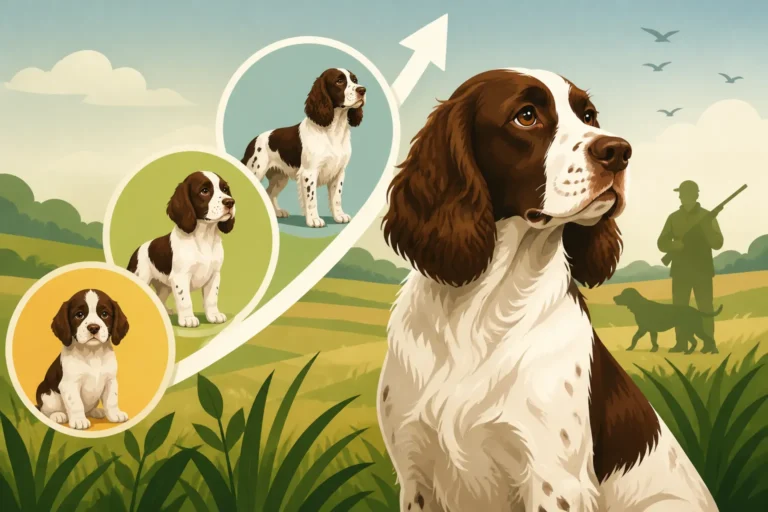
Reputable breeders will be transparent about the size of their breeding stock and can often give you a good estimate of a puppy's likely adult height based on previous litters. It's not an exact science, as there can always be a "runt" or a surprisingly large pup, but the genetic blueprint is incredibly strong. The Age a Springer Spaniel Stops Growing is generally around 12-18 months, but their genetic potential for height is largely set much earlier.
Nutrition and Environmental Impact
While genetics set the maximum potential height, proper nutrition plays a vital role in allowing a puppy to reach that potential in a healthy way. Poor nutrition, especially during critical growth phases, can lead to stunted growth. Conversely, overfeeding a puppy, particularly with a diet too rich in calories or calcium, can lead to excessively rapid growth. This isn't necessarily about making a dog taller than its genetic predisposition, but rather about causing skeletal issues.
Too rapid growth can put undue stress on developing bones and joints, contributing to orthopedic problems like hip or elbow dysplasia later in life. It's a delicate balance. A high-quality puppy food, appropriate for large or medium breeds, fed in controlled portions, is essential. Look for brands that offer balanced nutrition, and you can often find excellent options and advice on portioning on pet supply sites like Chewy. They often have resources to help you choose the right food for your growing pup. Always consult your vet for specific dietary recommendations. The Feeding Chart a Springer Spaniel Puppy Follows should be adhered to carefully.
Health and Early Development
A puppy's overall health during its formative months also influences its growth trajectory. Puppies suffering from chronic illnesses, severe parasitic infestations, or malnutrition will allocate their energy to fighting off disease or coping with deficiencies, rather than to optimal growth. This can result in a smaller-than-expected adult size, not because of genetics, but because their body was simply too busy dealing with other issues.
Stress in early life, inadequate living conditions, or lack of proper veterinary care can also indirectly impact development. While a healthy, well-cared-for puppy might not exceed its genetic height potential, it will certainly have the best chance to achieve it without growth-related complications. Ensuring regular vet check-ups, appropriate vaccinations, and timely deworming are all part of supporting healthy growth.
How to Accurately Measure Your Springer Spaniel's Height
Getting an accurate height measurement for your Springer Spaniel might seem straightforward, but there's a specific method to ensure you're getting a consistent and correct reading, especially if you're comparing it to breed standards or other dogs. It’s all about finding the right point on their body.
The 'Wither' Measurement
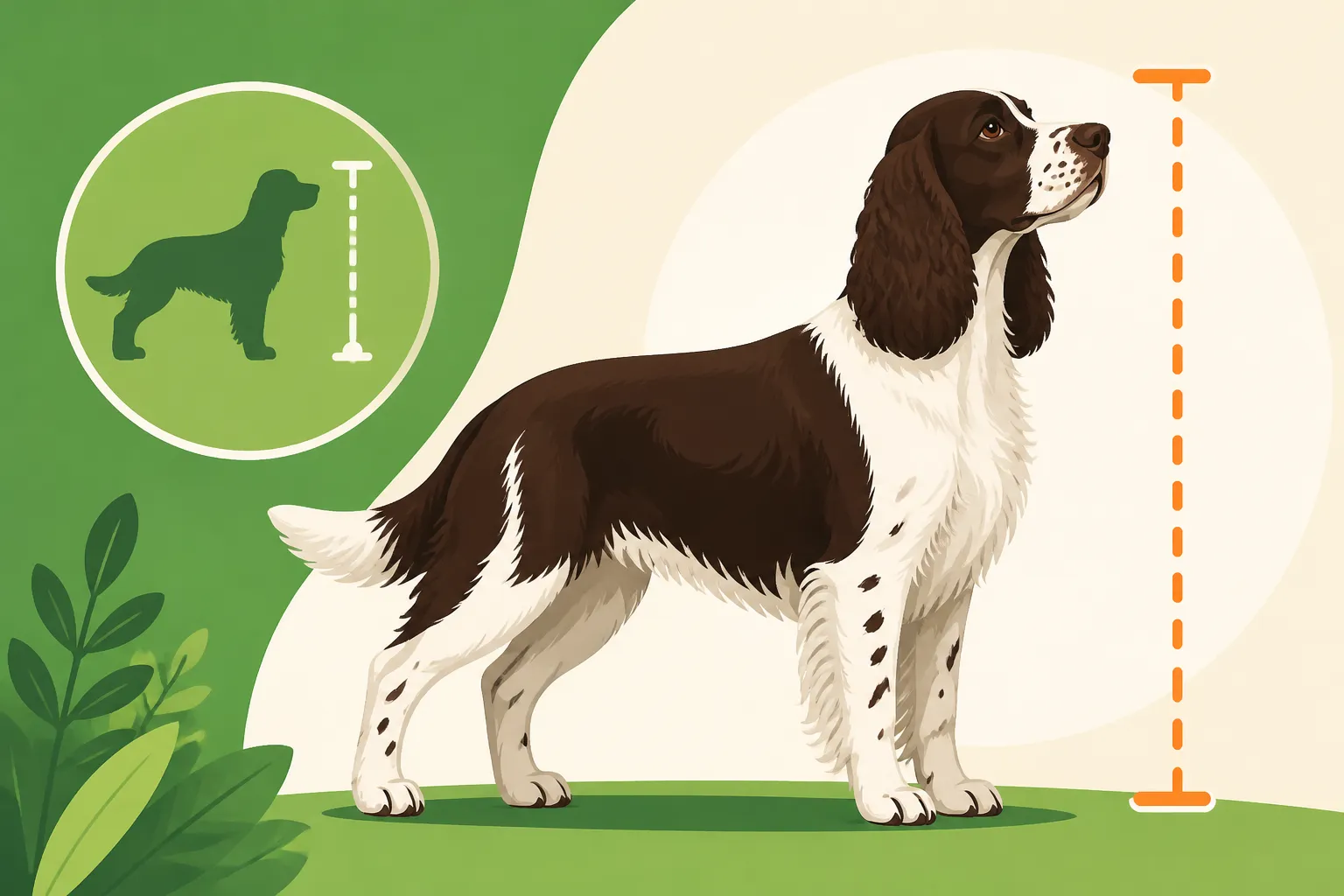
When breed standards or vets refer to a dog's height, they're always talking about the measurement "at the withers." The withers are the highest point of the shoulder blades, where the neck meets the back. It's a stable point of reference because it doesn't move up and down with head posture like the top of the skull would. Measuring to the top of the head would give you an inconsistent and often misleading number, as a dog can raise or lower its head significantly.
The withers are relatively easy to locate; they're the bony prominences you feel just above and between the shoulder blades. This measurement gives a true indication of the dog's frame height, regardless of whether they're looking up, down, or sideways. It’s the globally accepted standard for canine height.
Step-by-Step Measuring Guide
To get the most accurate measurement of your Springer Spaniel's height at the withers, follow these steps:
- Preparation is Key: Get your dog accustomed to standing still and square. This means all four paws should be directly under their body, not stretched out or tucked in. A treat or a favorite toy can work wonders here to keep them focused and calm. Make sure you're on a flat, level surface, ideally against a wall.
- Tools You'll Need: A carpenter's square, a level, or a dog measuring stick (a "wicket") are ideal. If you don't have one, a long ruler or tape measure combined with a spirit level or even a flat piece of cardboard can work in a pinch.
- Positioning Your Dog: Have your Springer stand perfectly still, with their head in a natural, comfortable position, neither stretched up nor bowed down. Their spine should be horizontal. This might take a few tries, so be patient and offer plenty of praise.
- Taking the Measurement:
- Place the measuring tool (or the flat edge of your level/cardboard) horizontally across the dog's withers.
- Ensure the tool is truly level.
- Measure straight down from the bottom of your horizontal tool to the ground. If using a wall, mark where the level hits the wall, then measure from that mark to the floor.
- Take a couple of measurements to ensure consistency.
Remember, patience is crucial. Your dog might not be thrilled about standing perfectly still for a measuring session, so make it a positive experience with treats and gentle handling.
Living with a Springer Spaniel: Height and Lifestyle Considerations
Beyond just numbers and breed standards, your Springer Spaniel's height (and overall size) will have a real impact on your daily life together. From the gear you buy to how you interact with them, their physical stature influences many practical aspects of pet ownership.
Impact on Equipment and Space
A Springer Spaniel's height directly dictates the size of many essential items you'll need. For instance, a crate needs to be tall enough for them to stand comfortably without their head touching the top, and long enough for them to lie down fully extended. If your Springer is on the taller side, you might need to size up compared to a more compact individual. The same goes for car harnesses or seatbelt restraints – you need one that fits their body comfortably and safely. You'll find a great selection of appropriately sized items on sites like Chewy, offering various dimensions for different breeds.
Consider also their feeding bowls. While not strictly about height, a taller dog might benefit from slightly elevated bowls to promote better digestion and reduce strain on their neck and joints, especially as they age. Conversely, a smaller Springer might be easier to manage in a smaller living space or be less likely to reach items on kitchen counters, though many Springers are notorious for their counter-surfing abilities regardless of height!
Agility, Mobility, and Joint Health
A Springer Spaniel's height and build are closely linked to their natural athleticism and potential for certain health issues. A well-proportioned dog within the breed standard is typically agile and capable, built for endurance and quick bursts of speed. Deviations can sometimes impact this. For example, an overly tall dog might be more prone to certain joint stresses, while a dog that is too short might lack the efficient stride for sustained activity.
While height doesn't cause Hip Dysplasia in a Springer Spaniel or elbow dysplasia, being within a healthy, proportionate range for the breed can contribute to better joint health throughout their lives. As they age, an arthritic Springer Spaniel might find it harder to jump into cars or climb stairs, so a dog of moderate height might have an easier time navigating obstacles. This is why paying attention to healthy growth as a puppy and providing appropriate exercise is paramount for their long-term mobility. Arthritis in an Older Springer Spaniel is something many owners face, and a dog's size can affect how you manage it.
Comparing Springer Spaniel Height to Other Sporting Breeds
Understanding how the English Springer Spaniel measures up against other popular sporting breeds can give you a better perspective on their typical size and what makes them unique. They fall squarely into the medium-sized dog category, a versatile build that allows them to excel in their work.
Springer vs. Other Spaniels (Cocker, Field, Welsh)
The English Springer Spaniel is often considered the archetypal "medium" spaniel, balancing size with agility. When you compare them to their close relatives, the differences become quite clear:
- English Cocker Spaniel: Significantly smaller than the Springer. English Cockers typically stand between 15 and 17 inches for males, and 14 to 16 inches for females. They are more compact and lower to the ground, designed for flushing game in even denser, tighter cover. The Springer Spaniel Against an English Cocker Spaniel highlights these distinct roles.
- Field Spaniel: While they share a similar name and heritage, Field Spaniels are generally a bit heavier-boned and often slightly shorter than Springers, usually around 17-18 inches at the withers. They have a more sedate, less energetic presence than the bustling Springer.
- Welsh Springer Spaniel: Very similar in size to the English Springer, with males typically ranging from 18-19 inches and females 17-18 inches. The main differences are often in their rich red and white coats and distinct head shapes, rather than a significant height disparity. The Springer Spaniel Against a Welsh Springer Spaniel shows how close they are in stature.
Springer vs. Retrievers (Labrador, Golden)
When you look at the retrieving breeds, you'll notice a considerable jump in size. Retrievers are generally larger, built for carrying heavier game and working in open water, requiring more substantial frames.
- Labrador Retriever: A much larger and heavier dog than the Springer Spaniel. Male Labradors typically stand between 22.5 and 24.5 inches, with females slightly less at 21.5 to 23.5 inches. They possess a much more robust, powerful build.
- Golden Retriever: Similar in size to the Labrador, with males averaging 23-24 inches and females 21.5-22.5 inches. Goldens have a slightly more elegant frame than Labs but are still considerably larger than Springers.
This comparison clearly positions the English Springer Spaniel as a true medium-sized gundog, smaller and more agile than the dedicated retrievers, yet larger and more powerful than the smaller cockers, perfectly suited for its "springing" role.
| Breed | Average Male Height (at Withers) | Average Female Height (at Withers) | General Build | Typical Weight Range |
|---|---|---|---|---|
| English Springer Spaniel (Field) | 19-20 inches | 18-19 inches | Lean, athletic | 40-50 lbs |
| English Springer Spaniel (Show) | 19-21 inches | 18.5-20 inches | Sturdier, heavier | 45-65 lbs |
| English Cocker Spaniel | 15-17 inches | 14-16 inches | Compact, sturdy | 26-34 lbs |
| Welsh Springer Spaniel | 18-19 inches | 17-18 inches | Athletic, well-boned | 35-55 lbs |
| Labrador Retriever | 22.5-24.5 inches | 21.5-23.5 inches | Muscular, powerful | 55-80 lbs |
| Golden Retriever | 23-24 inches | 21.5-22.5 inches | Robust, elegant | 55-75 lbs |
As you can see, the Springer Spaniel occupies that wonderful middle ground, offering a fantastic combination of size, agility, and presence. Whether you have a bustling field dog or a stately show dog, their height is just one aspect of what makes them such remarkable companions. Ultimately, The Household a Springer Spaniel Was Built For can accommodate a dog of this size with ease, provided their energy needs are met. For more information on How Much a Male Springer Spaniel Weighs or How Much a Female Springer Spaniel Weighs, you can find further details in our other articles. Understanding What a Springer Spaniel Actually Weighs helps complete the picture of their overall size and structure.
Disclaimer
This article is for general informational purposes only and does not constitute professional advice. Laws, prices and regulations vary by location and change over time. Consult a qualified professional for guidance on your specific situation.