How Springer Spaniels Were Sorted by Size Before 1902
Before the English Springer Spaniel was formally recognized as a distinct breed, and even before the clear division into "Springer" and "Cocker" we know today, owners and breeders faced a very practical challenge: how to categorize the litters of spaniel puppies born from the same parents. It wasn't about genetics or breed standards as we understand them now; it was largely about physical size and perceived aptitude for a specific job in the field. This guide dives deep into the fascinating, if somewhat haphazard, methods by which these lively spaniels were sorted based on their stature before the pivotal year of 1902.
The Early Days of Spaniel Breeding: A Shared Gene Pool
Imagine a time when the terms "Springer" and "Cocker" weren't fixed breed names but descriptive labels applied to dogs from the very same litter. This might seem completely alien to modern dog enthusiasts who buy specialized foods from places like Chewy for their clearly defined breeds, but it was the reality for centuries. Early land spaniels, which included the ancestors of today's English Springer Spaniels and English Cocker Spaniels, were all part of a largely undifferentiated gene pool. Their primary purpose was to assist hunters in flushing game from cover, and their physical attributes were judged solely on their utility in the field.
One Litter, Many Potentials
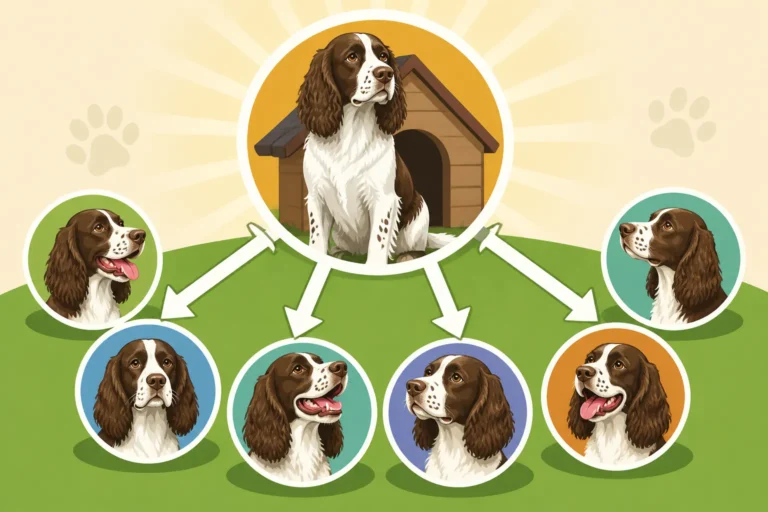
It's truly wild to think about, but a single litter of spaniel puppies, born to the same dam and sire, could produce dogs destined for two very different roles based on their eventual size. There was no specific "Cocker" parent or "Springer" parent; it was all about the luck of the draw. The smaller, more compact puppies were deemed suitable for woodcock hunting, a demanding pursuit requiring them to navigate dense undergrowth and flush game, hence the "Cocker" designation. Their larger, leggier siblings, on the other hand, were better suited to "springing" or "flushing" heavier game like pheasants and hares from thicker cover, often over a wider range. This concept is explored further in Why Springer and Cocker Puppies Once Came From One Litter.
The Functional Imperative Over Aesthetic Standards
Unlike today, where breed standards dictate precise measurements, coat colors, and head shapes, the driving force behind early spaniel breeding was purely functional. A dog was valued for its ability to do a job, not for conforming to an arbitrary ideal of beauty. If a spaniel was small enough to push through thickets after woodcock, it was a "cocker." If it was large enough to burst through heavy cover for pheasants, it was a "springer." This pragmatic approach meant that breeders were less concerned with consistency in appearance across litters and more focused on producing dogs that could perform their tasks efficiently. This made things much simpler for the owner, but it meant a dog could be called a cocker one day and a springer the next depending on who was describing it and for what purpose.
Size as the Sole Determinant: The Weigh-In Tradition
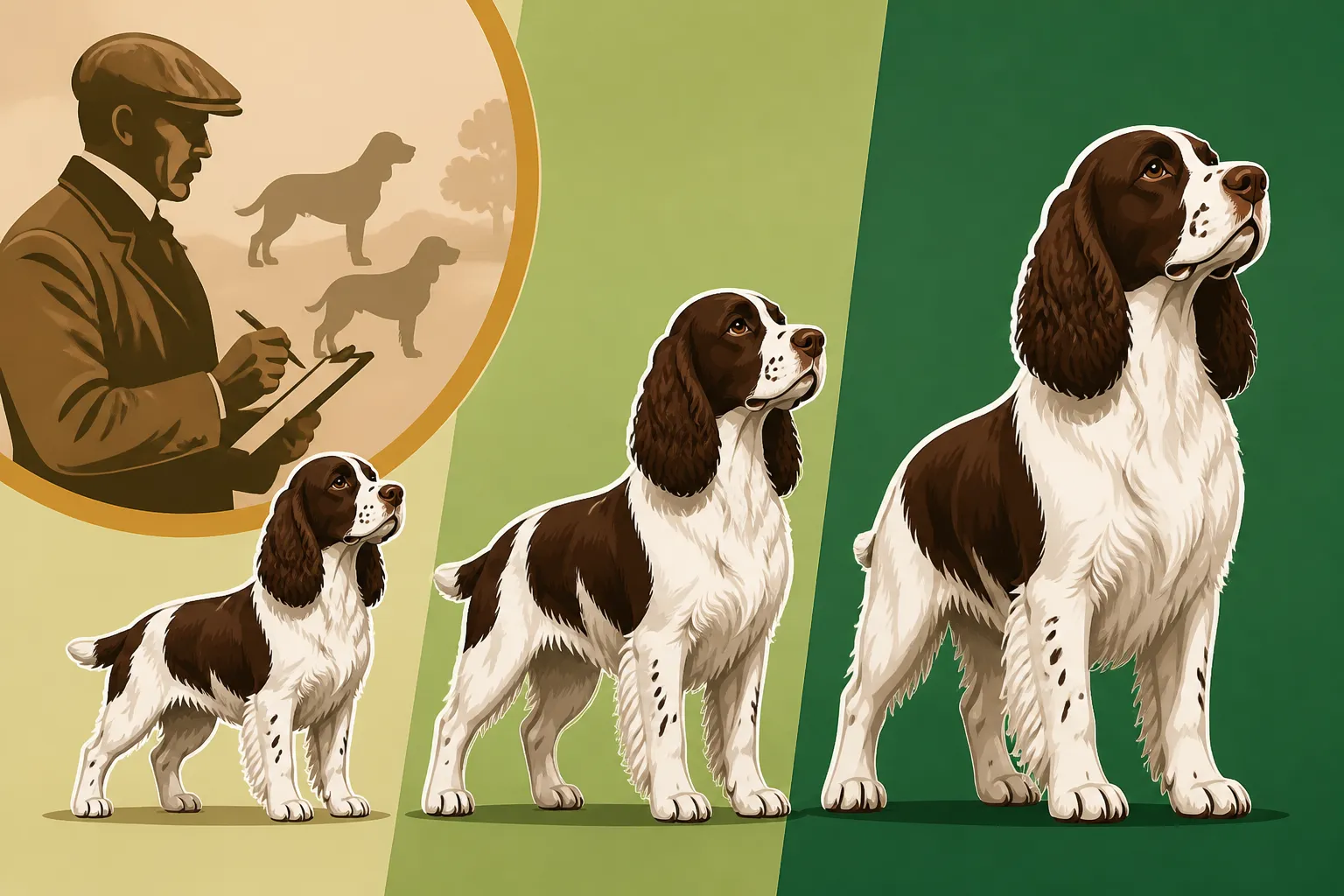
The most direct and primary method of distinguishing between a "cocker" and a "springer" in the pre-1902 era was a simple weigh-in. This wasn't a formal scientific process, but a practical method employed by breeders and hunters to sort their litters. There was a generally accepted weight threshold that served as the dividing line, separating the lighter, smaller dogs from their heavier, larger littermates.
The Historic Weight Threshold
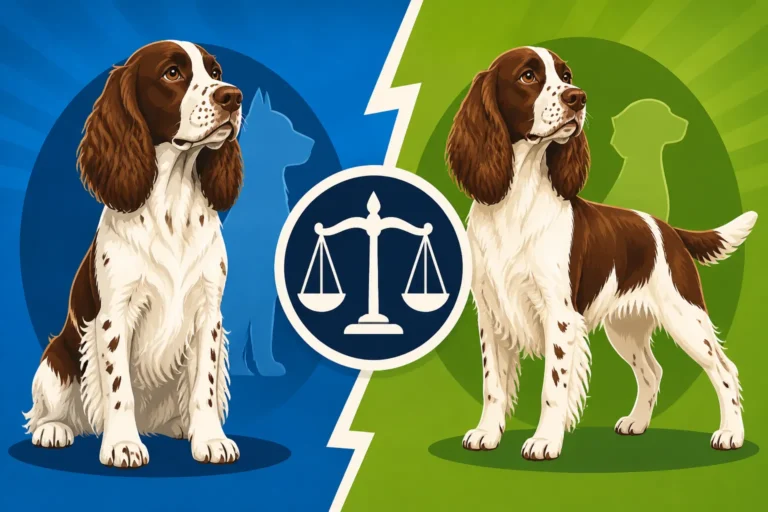
For generations, spaniels were classified based on a rough weight limit, typically around 25 pounds. Dogs that matured to be under this weight were generally considered "cockers," while those exceeding it were labeled "springers." This wasn't a hard and fast rule set in stone by an official body, but more of a widely understood convention among those who worked with these dogs. It was a gentleman's agreement, a practical guide rather than a strict mandate. Imagine the tension as a young spaniel approached maturity, its fate as a "cocker" or "springer" hanging in the balance of a simple scale reading. For more on this historical measurement, see What Weight Divided a Cocker From a Cocker.
| Spaniel Type (Pre-1902) | Primary Classification Criterion | Approximate Weight (Mature) | Primary Hunting Role |
|---|---|---|---|
| Cocker | Smaller size, lighter build | Under ~25 pounds | Flushing woodcock |
| Springer | Larger size, heavier build | Over ~25 pounds | Flushing larger game |
Beyond the Scale: Subtle Indicators of Role
While weight was the primary determinant, experienced breeders and hunters also looked for other physical characteristics that often correlated with size and suitability for a particular role. A "cocker" might have appeared more compact, with a shorter back and legs, designed for agility in dense undergrowth. A "springer," on the other hand, would often show longer legs, a more athletic build, and perhaps a slightly longer muzzle, indicative of greater speed and reach in open fields. These visual cues, while less definitive than a weigh-in, reinforced the practical classifications. It was less about specific conformation points and more about an overall impression of how the dog would move and work.
The Formal Recognition and the 1902 Divide
The turn of the 20th century marked a significant shift in the world of dog breeding. As kennel clubs gained prominence and the concept of standardized breeds took hold, the informal, size-based classification of spaniels became increasingly unsustainable. Breeders, eager for their dogs to be recognized and compete in shows, pushed for clearer definitions.
Kennel Club Intervention
The English Kennel Club, founded in 1873, played a pivotal role in formalizing dog breeds. As the century drew to a close, the lack of a distinct standard for "cockers" and "springers" from shared litters became an administrative headache. How could you judge a show dog if its very classification was fluid? This led to the momentous decision to officially separate the two types into distinct breeds. The year 1902 is often cited as the watershed moment when this formal split occurred, changing the landscape of spaniel breeding forever. The process of separation is detailed in The 1902 Split That Separated Springer From Cocker.
From Practicality to Pedigree: The Impact of Separation
Once separated, the focus shifted dramatically. No longer were puppies sorted by weight to determine their role; now, they were bred specifically to conform to the emerging breed standards for either the English Cocker Spaniel or the English Springer Spaniel. This meant distinct breeding lines began to emerge, with breeders specializing in one type or the other. The informal "cocker" and "springer" labels became official breed names, each with its own specific physical and temperamental ideals. This formalization, while bringing order, also set these two once-interchangeable types on entirely different developmental paths.
Life Before the Split: The Working Spaniel's Reality
To truly understand how these spaniels were sorted, one must appreciate the context of their daily lives. These were working dogs through and through, companions to hunters who relied on their abilities for their livelihood or sport. Their physical attributes, particularly size, directly influenced their effectiveness in the field.
Hunting Different Game in Varying Terrain
The choice between a "cocker" and a "springer" wasn't arbitrary; it was dictated by the type of game being hunted and the terrain. A smaller "cocker" would be invaluable for pushing through thorny bushes and dense cover, such as hawthorn hedges or bramble patches, to flush out woodcock, a small, elusive bird. These environments favored a dog with a compact build, enabling it to navigate tight spaces without getting bogged down.
Conversely, a larger "springer" was better suited for "springing" game like pheasants, partridge, and hares from taller, more open cover, such as stubble fields or hedgerows. Their longer legs and greater stamina allowed them to cover more ground quickly and energetically, driving the game towards the waiting guns. This historical division of labor highlights the pragmatic origins of the breed distinctions. For more on their early working life, read How Springer Spaniels Worked Before Guns.
The Master's Eye: A Hunter's Intuition
Beyond the simple weigh-in, a skilled hunter or gamekeeper often had an intuitive understanding of a puppy's potential. Observing a litter, they might notice a certain puppy's eagerness to penetrate thick cover, its agility, or its overall robustness. These observations, combined with the weight, guided their decision on whether a particular dog would make a better "cocker" or "springer." It was a blend of objective measurement and subjective experience, honed over generations of working with these versatile dogs. This deep connection between dog and handler was paramount, and unlike today where we might check reviews on Chewy for the best training treats, these early partnerships were built on pure observation and tradition.
Challenges and Inconsistencies of the Old System
While the size-based sorting system was practical for its time, it wasn't without its challenges and inherent inconsistencies. This fluidity in classification eventually made formal breed recognition a necessity, but before that, it led to a somewhat chaotic, if charming, approach to spaniel identification.
The Ambiguity of "In-Betweeners"
What about the dogs that fell right on the cusp of the 25-pound mark? Or those that, despite their size, exhibited traits more aligned with the "other" category? These "in-betweeners" were a constant source of ambiguity. A dog might be labeled a "cocker" as a young adult, only to gain a few extra pounds and find itself functionally, if not officially, becoming a "springer." This fluidity highlights the informal nature of the classification and the absence of strict, universally applied standards. It also meant that descriptions of dogs could vary wildly depending on who was doing the describing.
Geographical Variations and Local Practices
Before centralized kennel clubs and uniform standards, practices varied significantly from one region to another. A "cocker" in one county might be considered a "springer" in another, simply because local hunting traditions or preferred game types influenced the ideal size and build. There was no single, overarching authority dictating these classifications. This regionalism contributed to the genetic diversity within the broader spaniel type but also made it challenging to establish a cohesive identity for what we now know as the English Springer Spaniel. This kind of regional variation is part of why the specific lines like The Norfolk Spaniel and the Springer Spaniel became important.
The Genetic Reality: Shared Ancestry and Divergence
It's crucial to remember that despite the size-based sorting, all these early spaniels shared a common genetic heritage. The "cocker" and "springer" distinction was phenotypic – based on observable traits – rather than genotypic – based on underlying genetic differences. The genes for both smaller and larger sizes, and for the various physical attributes that suited different hunting roles, were present in the same population.
The Phenomenon of "Split" Litters
The concept of a "split" litter, where puppies from the same parents could be classified as both "cockers" and "springers," is perhaps the most striking illustration of their shared genetic background. This wasn't a rare occurrence but a common reality. It meant that even a breeder aiming for "springers" might find smaller, "cocker"-type puppies in their litter, and vice-versa. This further complicates the notion of distinct breeds before 1902 and underscores the importance of the eventual formal separation. Which Littermates Became Cockers and Which Springers delves into this fascinating aspect of their history.
What the Split Achieved
The formal split into distinct breeds like the English Springer Spaniel and the English Cocker Spaniel allowed for focused breeding programs. Breeders could then selectively breed for the desired size, conformation, and working traits specific to each new breed. This led to the more standardized, recognizable types we see today, whether they're the active Field Bred Springer Spaniels or the more heavily coated Show Springer Spaniels, both needing good nutrition often sourced from places like Chewy. This divergence, while initially based on practical working needs, eventually led to the distinct physical characteristics we associate with each breed. Today, when you compare How Different the Two Springer Spaniel Types Look, you can see how far they've come from their shared roots.
Conclusion
The journey of the English Springer Spaniel, and its close cousin the English Cocker Spaniel, from a single, size-sorted land spaniel type to two distinct breeds is a fascinating chapter in canine history. Before 1902, the sorting of these dynamic dogs was a matter of practical utility, with a simple weigh-in often determining whether a puppy would be a "cocker" or a "springer." This informal system, driven by the demands of hunting and the realities of game management, highlights a time when form truly followed function in dog breeding. The eventual formal recognition by kennel clubs brought order to this fluid world, solidifying the identities of these beloved spaniel breeds and setting them on their individual paths.
Disclaimer
This article is for general informational purposes only and does not constitute professional advice. Laws, prices and regulations vary by location and change over time. Consult a qualified professional for guidance on your specific situation.