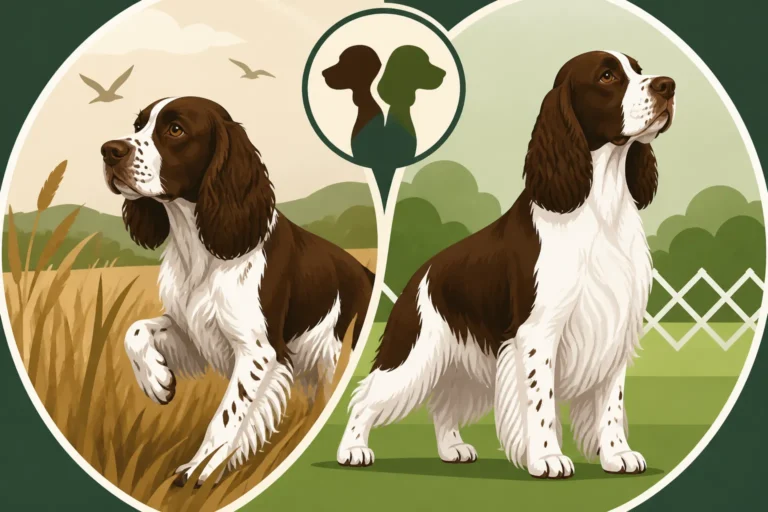
The Seventy Year Gene Pool Divide Inside One Springer Spaniel Breed
Many prospective English Springer Spaniel owners stumble into a curious predicament: they envision one type of dog, only to discover there are two distinct variations. It can be incredibly frustrating to realize the adorable puppy you brought home has entirely different needs or looks than you anticipated. This comprehensive guide will unravel the fascinating, yet sometimes confusing, seventy-year gene pool divide within the English Springer Spaniel breed, helping you understand their differences and make an informed choice.
The Genesis of a Divide: How One Breed Became Two
It’s truly a unique situation, isn't it? To have a single breed recognized by kennel clubs, yet within that breed, two dramatically different types have emerged and thrived. This isn't just a slight variation in appearance; we're talking about dogs that, if you didn't know better, you might mistake for entirely separate breeds. This divergence didn't happen overnight, and it's certainly not without its historical roots, tracing back to the very origins of what we now call the English Springer Spaniel.
Before the Split: One Spaniel, Many Jobs
Before formal breed clubs and registries became the norm, "spaniels" were generally grouped by their size and the type of game they were best suited to hunt. There wasn't a strict demarcation between what we now know as a Cocker or a Springer. In fact, it wasn't uncommon for a single litter to produce puppies that would grow up to be classified as either a Cocker or a Springer, depending solely on their adult weight. This seems almost unthinkable today, but it was the practical reality for hunters who needed dogs to flush game from various types of cover. A smaller dog might be better for dense brush, while a larger one could "spring" larger game. Why Springer and Cocker Puppies Once Came From One Litter delves deeper into this fascinating shared heritage.
These early spaniels were true all-rounders, equally adept at flushing game for nets, hawks, or the emerging flintlock guns. Their purpose was clear: to locate game and drive it into the open. They were valued for their tireless energy, keen nose, and willingness to work closely with their human partners. The idea of breeding specifically for a particular "look" was secondary, if it existed at all; utility was paramount.
The Formal Recognition and the Fork in the Road
The pivotal moment for the English Springer Spaniel, and indeed for many dog breeds, arrived with the establishment of formal kennel clubs and the concept of a breed standard. In the early 20th century, specifically around 1902, the English Kennel Club officially recognized the English Springer Spaniel as a distinct breed. This was a crucial step, as it meant breeders began to focus on specific characteristics that defined the "ideal" Springer. However, this formalization also sowed the seeds of the divide we see today.
Breed standards often include both functional traits (like soundness for work) and aesthetic ones (like coat texture, head shape, or ear set). As dog showing gained popularity, some breeders began to prioritize the latter, selecting for dogs that excelled in the conformation ring. These dogs were bred to meet the specific visual criteria of the standard, sometimes at the expense of the raw, untamed hunting drive that defined their ancestors. It was a subtle shift at first, but one that gradually pulled the breed in two directions.
When the Show Ring Met the Field Trial: Diverging Ideals
The divide deepened significantly as competitive dog sports evolved. On one side, you had the growing world of dog shows, where judges evaluated dogs based on their physical adherence to the breed standard. On the other, the emergence of field trials provided a competitive outlet for gundogs, where a dog's hunting prowess—its nose, drive, quartering pattern, and retrieving ability—was tested and celebrated. It became increasingly difficult for a single dog to excel in both arenas. A dog bred to win in the show ring might lack the intense drive and lighter build needed to cover vast amounts of ground tirelessly in a field trial, and vice versa.
This created a natural separation in breeding programs. Breeders focused on field trials selected for attributes like extreme stamina, acute scenting ability, and a very strong prey drive. Their dogs might not have the heavy bone or abundant feathering favored in the show ring, but they were phenomenal hunting machines. Conversely, show breeders prioritized the elegant appearance, lush coat, and more moderate temperament that appealed to judges and pet owners looking for a visually striking companion. How the Field and Show Springer Spaniel Diverged truly highlights this critical turning point, emphasizing how two distinct breeding philosophies created what we now observe as two types within one breed.
The Field Springer Spaniel: Built for Purpose
When you encounter a true Field Bred English Springer Spaniel, there's an undeniable intensity about them. They are not merely dogs; they are finely tuned athletes, bred for centuries with a singular purpose in mind: to hunt. Everything about them, from their physical build to their unwavering focus, screams "working dog."
Lean, Driven, and Unrelenting: Physical and Temperamental Traits
Physically, Field Springers typically possess a lighter bone structure and a leaner, more athletic build than their show-bred cousins. Their coats are generally shorter, coarser, and have significantly less feathering, which is a practical adaptation for tearing through dense cover without collecting too many burrs or thorns. This lighter coat requires less extensive grooming, although regular checks for ticks and burrs are still essential, especially after a day out. Their tails, traditionally docked for safety in the field, are constantly in motion, reflecting their boundless energy.
Temperamentally, these dogs are absolute powerhouses. They possess an incredibly high drive, a relentless work ethic, and an almost insatiable desire to be doing something. They are intelligent, eager to please, but also incredibly tenacious, especially when on a scent. This means they can be single-minded and, if not properly channeled, this drive can manifest as destructive behaviors in a pet home. They are often described as "soft" to harsh correction, meaning they respond best to positive reinforcement and gentle guidance, despite their strong will. Understanding How a Field Bred Springer Spaniel Differs in Drive is key to appreciating their unique needs.
The Instigator of the Hunt: Working Style and Instincts
The Field Springer's working style is iconic. They are bred to "quarter," moving in a systematic, zigzag pattern ahead of the hunter, covering every inch of ground to find and flush game birds. Their noses are phenomenal, capable of picking up the faintest scent, and their ability to follow a trail is nothing short of remarkable. Once game is found, they "spring" it into the air, allowing the hunter to take a shot, then they eagerly retrieve the fallen bird, bringing it back gently with a "soft mouth." This entire sequence is ingrained in their DNA.
Their instincts are incredibly strong. Even a Field Springer raised solely as a pet will often exhibit natural quartering patterns in a field or backyard, and they are usually natural retrievers. This intense prey drive, while invaluable in the field, can be a challenge in suburban environments. A squirrel or rabbit crossing their path can easily override even the most solid recall, sending them off on a thrilling chase. This is where a robust training program, often involving specialized gundog training, becomes not just beneficial but absolutely necessary for a harmonious life together.
Life with a Field Springer: Exercise, Training, and Mental Stimulation
Living with a Field Springer is a commitment to an active lifestyle. These dogs need a tremendous amount of physical exercise, far more than a simple walk around the block. We're talking hours of vigorous activity daily – running, retrieving, hiking, or swimming. Without adequate outlets for their energy, they can quickly become bored and destructive. A secure yard is a must, but even that isn't enough; they need to get out and do things. How Many Hours a Field Springer Spaniel Needs Daily gives a good sense of the commitment involved.
Beyond physical exertion, their sharp minds also require constant mental stimulation. Training sessions, puzzle toys, scent work, and interactive games are all crucial. They thrive on having a "job" to do, whether it's formal gundog training, agility, or even just being your devoted hiking partner. Their food, like the high-energy formulas available on Chewy, needs to support their active metabolism, and it's something to factor into your budget. Consistent, positive reinforcement training from a young age is vital to harness their intelligence and drive, shaping them into well-behaved companions despite their strong instincts.
The Show Springer Spaniel: Elegance and Companionship
In stark contrast to their field-bred counterparts, Show English Springer Spaniels are often the image that first comes to mind for many people when they hear "Springer Spaniel." These are the dogs gracing magazine covers, winning ribbons in the conformation ring, and often found as beloved family companions in homes across the country.
A Vision of Grace: Physical Characteristics and Standard
The Show Springer Spaniel is bred to embody the breed standard's aesthetic ideals. They typically have a more substantial bone structure, a fuller, more substantial coat, and generous feathering on their legs, chest, and belly. Their heads are often broader, with a softer, more refined expression. They are generally heavier and can appear more "solid" than Field Springers. While they are still athletic dogs, their build is often perceived as more elegant and less overtly "hard-working" than a field dog. How Different the Two Springer Spaniel Types Look provides a fantastic visual breakdown of these distinctions.
The beauty of their coat is a hallmark of the show type. The long, flowing feathering is undeniably gorgeous, giving them a regal appearance. This beautiful coat, however, comes with its own set of responsibilities. It's designed to be shown in peak condition, which means meticulous grooming is a constant consideration. Their tails are usually docked for traditional reasons, though an undocked tail might also be seen in regions where docking is restricted.
The Gentle Soul: Temperament for the Home
Temperamentally, Show Springers are often described as being more relaxed and adaptable than Field Springers, making them wonderful family pets. They retain the classic Springer Spaniel affability and eagerness to please, making them highly trainable for general obedience and various dog sports. They are typically very affectionate, thriving on human companionship and often forming strong bonds with their families. They are generally good with children and other pets, provided they are properly socialized from a young age.
While they still possess a good amount of energy – they are spaniels, after all! – their drive is usually more moderate and manageable for a typical pet home. They enjoy walks, playtime, and mental challenges but don't typically have the same insatiable need for intense, sustained work that characterizes a Field Springer. This isn't to say they are lazy; far from it. They simply express their energy in a way that is often more compatible with suburban living.
The Art of the Show Coat: Grooming Demands
The stunning coat of a Show Springer Spaniel is a true labor of love. Unlike the practical, low-maintenance coat of a field dog, the show coat requires diligent and regular grooming to prevent matting, keep it clean, and maintain its flowing appearance. Brushing needs to be a daily ritual, especially concentrating on the feathering behind the ears, on the chest, and along the legs, which are notorious for tangles.
Professional grooming is often a regular expense for Show Springer owners. The coat needs to be trimmed, stripped, and shaped to adhere to the breed standard, a skill that most pet owners aren't equipped for. This can add a significant cost to owning a Show Springer. The Show Springer Spaniel Coat That Adds a Groomer to Your Budget offers a realistic look at the financial commitment involved. Even with professional help, owners will still need a good quality slicker brush, comb, and maybe some thinning shears (all readily available on Chewy, for example) for daily upkeep. Regular baths with appropriate shampoos and conditioners are also essential to keep the coat healthy and clean.
Health and Heredity: The Hidden Costs of Separation
It's a common misconception that all dogs of the same breed share the exact same health profiles. While some conditions are indeed prevalent across the entire English Springer Spaniel breed, the seventy-year gene pool divide has subtly, and sometimes not so subtly, influenced the prevalence and focus of health screening in each type. This means that while you're getting a Springer Spaniel, the specific health considerations can vary.
Disparate Breeding Focus: Implications for Genetic Health
The very act of dividing the breeding lines, even within the same recognized breed, means that different genetic traits are emphasized or inadvertently minimized. Field breeders, for example, have historically focused on performance and soundness for intense physical work. This means they are selecting for dogs with robust joints, excellent stamina, and keen senses. While they certainly care about overall health, the pressures of producing top-tier working dogs can sometimes mean that less overtly impactful genetic conditions might receive less attention than they would in a show-focused line where aesthetic perfection and pet longevity are paramount.
Conversely, show breeders are selecting for specific conformational traits. While reputable show breeders also screen for health, the emphasis on aesthetics can sometimes lead to an inadvertent narrowing of the gene pool for certain traits, potentially concentrating certain genetic predispositions. This isn't a critique of either side, but rather an observation of how different breeding goals can have different genetic outcomes. Both types of breeders are trying to produce the best possible dog within their respective frameworks.
Common Ailments: Are Some More Prone Than Others?
Certain health issues are unfortunately common across the English Springer Spaniel breed as a whole. Ear infections are practically a rite of passage for any Springer owner, regardless of type, due to their long, floppy ears that trap moisture. Hip and elbow dysplasia are also concerns in both lines, though the emphasis on robust joint health in working lines might mean a slightly different prevalence or severity. Eye conditions, such as Progressive Retinal Atrophy (PRA) or retinal dysplasia, are also found in both types.
However, anecdotal evidence and some studies suggest differences. For instance, field Springers, due to their active lifestyle, are perhaps more prone to injuries from sharp objects in cover, sprains, or strains. Show Springers, with their denser coats, might experience more skin issues or matting-related problems if grooming is neglected. There can also be variations in the prevalence of conditions like PFK Deficiency (phosphofructokinase deficiency) or Fucosidosis, depending on the specific lines and the historical health testing practices of the breeders involved. How Health Problems Differ Between Springer Spaniel Types sheds more light on these nuances.
The Importance of Responsible Breeding and Health Testing
Given these subtle differences, choosing a reputable breeder is paramount, regardless of whether you're seeking a field or show type. Responsible breeders, on both sides of the divide, will conduct thorough health testing on their breeding stock. This includes OFA (Orthopedic Foundation for Animals) certifications for hips and elbows, eye examinations by board-certified veterinary ophthalmologists, and DNA tests for known genetic conditions relevant to the breed, such as PFK Deficiency and Fucosidosis. The Health Tests Both Springer Spaniel Parents Should Have provides a detailed list of what to look for.
A transparent breeder will be eager to share these results and discuss the health history of their lines. They understand that while perfection is unattainable, minimizing the risk of inherited diseases is a fundamental responsibility. Don't be shy about asking for proof of these tests, as it's the strongest indicator that a breeder is truly prioritizing the long-term health and well-being of their puppies, rather than just looks or immediate performance.
Living with Both Sides of the Coin
Bringing an English Springer Spaniel into your home, regardless of its type, is a joyful and often exhilarating experience. However, understanding the distinctions between the field and show lines is not just academic; it profoundly impacts the daily reality of living with these wonderful dogs. Making an informed choice tailored to your lifestyle can be the difference between a harmonious relationship and a frustrated one.
Lifestyle Matching: Understanding Your Needs
This is perhaps the most critical step when considering an English Springer Spaniel. Do you lead an incredibly active lifestyle, enjoying long hikes, running, or actual hunting? Do you have the time and dedication for extensive training and mental stimulation? If so, a Field Springer might be your perfect match. They thrive on activity and a "job," and they will bond fiercely with an owner who can meet their needs. They are tireless companions for the outdoor enthusiast, often found happily retrieving bumpers or exploring new trails.
On the other hand, if you're looking for an affectionate, intelligent companion who enjoys daily walks, playtime in the yard, and cozy evenings on the sofa, a Show Springer might be a better fit. While still energetic, their exercise requirements are generally more manageable for a family with a typical suburban schedule. They adapt well to various household dynamics and often excel in obedience or even less intense dog sports like rally or therapy work. Which Springer Spaniel Type Suits a Pet Home explores this decision in detail, helping you weigh the pros and cons for your specific situation.
Finding a Reputable Breeder in a Divided World
Once you've determined which type of Springer Spaniel aligns best with your lifestyle, the next challenge is finding a reputable breeder. This is crucial. A good breeder will prioritize health, temperament, and responsible practices, regardless of whether they breed for the field or the show ring. Start by researching breed clubs for both types – often there are specific field trial clubs and conformation clubs. These organizations usually have breeder directories and codes of ethics.
Don't be afraid to ask a breeder extensive questions about their dogs, their breeding philosophy, and the health testing they perform. A good breeder will also interview you thoroughly, ensuring their puppies are going to appropriate homes. Expect waiting lists, as responsible breeders only have litters periodically. Also, be wary of breeders who don't specialize in one type or the other, or who claim their dogs are "dual purpose" without clear evidence of achievement in both disciplines, as this can sometimes indicate a less focused breeding program. Remember, a puppy from a reputable breeder is an investment in a healthy, well-adjusted companion. What a Field Bred Springer Spaniel Puppy Costs or What a Show Bred Springer Spaniel Puppy Costs will give you an idea of the initial financial commitment.
The Reality of Ownership: Unexpected Challenges
Even with careful planning, owning an English Springer Spaniel comes with its own set of charming quirks and challenges. Both types are generally intelligent and eager to please, but they are also known for their independent streak and their strong noses. Expect to be followed around the house; Springers are notorious for being "velcro dogs" and thrive on being part of the family action. Separation anxiety can be a concern for some, especially if they are left alone for extended periods without adequate mental and physical exercise.
Grooming, while more intensive for the show type, is a necessity for both. Those long ears mean routine cleaning and vigilance against ear infections, a common woe for Springer owners. Regular vet check-ups are also crucial, and you'll want to budget for quality food and preventative care items available on Chewy, like flea and tick treatments. Regardless of the type, Springers are generally jovial, devoted, and endlessly entertaining companions who, with the right understanding and care, will enrich your life profoundly.
The Future of the Springer Spaniel: Reconciliation or Further Division?
The seventy-year divide within the English Springer Spaniel breed is not just a historical curiosity; it's an ongoing topic of discussion and, for some, a source of concern. As breed enthusiasts look to the future, questions inevitably arise about the implications of this separation and whether there's a path forward that benefits the breed as a whole.
The Ongoing Debate: One Breed or Two?
For decades, there has been an underlying debate among fanciers: should the English Springer Spaniel officially be split into two distinct breeds? Proponents of separation argue that the physical and temperamental differences between the field and show lines are now so profound that they effectively function as two different breeds already. They believe formal separation would allow each type to have its own distinct breed standard, tailoring health concerns, breeding goals, and judging criteria more precisely. This could lead to healthier, more predictable dogs within each type, eliminating the confusion for prospective owners.
Conversely, many argue vehemently against splitting the breed. They contend that despite their differences, both types are still English Springer Spaniels, sharing a common history, core traits, and genetic heritage. They fear that formal separation could further narrow already limited gene pools, potentially increasing the risk of inherited health problems. They also worry about losing the "bridge" that still exists, albeit rarely, where a dog might carry traits from both lines. The ideal of a "dual champion" – a dog that excels in both conformation and field trials – while incredibly rare today, still represents a pinnacle for some and a reminder of their shared past. Whether the Springer Spaniel Should Be Split Officially details the nuances of this complex argument.
Preserving the Best of Both Worlds
Whether the breed formally splits or not, the challenge for all dedicated Springer Spaniel owners and breeders is how to preserve the best qualities of both types. For field lines, this means maintaining their unparalleled working ability, their stamina, and their keen intelligence, while continuing to prioritize robust health and sound temperament. For show lines, it's about upholding their elegant conformation and gentle, companionable nature, while ensuring they remain structurally sound and free from debilitating genetic diseases.
There's a growing awareness of the need for health testing across both types to ensure genetic diversity and reduce the incidence of inherited conditions. This includes collaborative efforts between field and show enthusiasts to share health data and perhaps even occasionally outcross lines where it benefits the overall health of the breed. Organizations like the English Springer Spaniel Field Trial Association and regional breed clubs play a vital role in guiding these efforts, emphasizing responsible breeding practices and educating the public.
The Role of Enthusiasts and Organizations
Ultimately, the future of the English Springer Spaniel rests in the hands of its dedicated enthusiasts. Responsible breeders, committed owners, and supportive breed organizations are the custodians of this wonderful breed. By continuing to educate prospective owners about the existing divide and the distinct needs of each type, they can help ensure that more Springers find homes where their unique qualities are understood, appreciated, and nurtured.
The journey of the English Springer Spaniel, from its origins as an undifferentiated spaniel to its current state of two distinct types under one name, is a testament to both human selection and the breed's incredible versatility. Understanding this history and the current realities allows us to make better decisions for these dogs, ensuring they continue to thrive, whether they are flushing pheasants in the field or gracefully greeting guests in a loving family home. It's a breed that offers so much, provided we take the time to truly know which Springer Spaniel we are welcoming into our lives.
| Feature | Field Springer Spaniel | Show Springer Spaniel |
|---|---|---|
| Primary Purpose | Hunting, flushing, retrieving | Conformation, companionship |
| Appearance | Lighter bone, finer coat, less feathering, often smaller | Heavier bone, denser coat, abundant feathering, often larger |
| Coat Care | Lower maintenance, less trimming, practical for cover | Extensive grooming, regular trimming, prone to matting |
| Energy Level | Extremely high, requires significant daily exercise/work | High, but generally more adaptable to pet home exercise |
| Temperament | Intense focus, high drive, tenacious, sensitive to correction | Affectionate, eager to please, calmer, can be more reserved |
| Training Needs | Requires consistent gundog training, strong prey drive | Benefits from obedience, agility, enjoys mental challenge |
| Common Health Concerns | Injuries from work (cuts, strains), ear infections | Ear infections, hip/elbow dysplasia, eye conditions |
Disclaimer
This article is for general informational purposes only and does not constitute professional advice. Laws, prices and regulations vary by location and change over time. Consult a qualified professional for guidance on your specific situation.