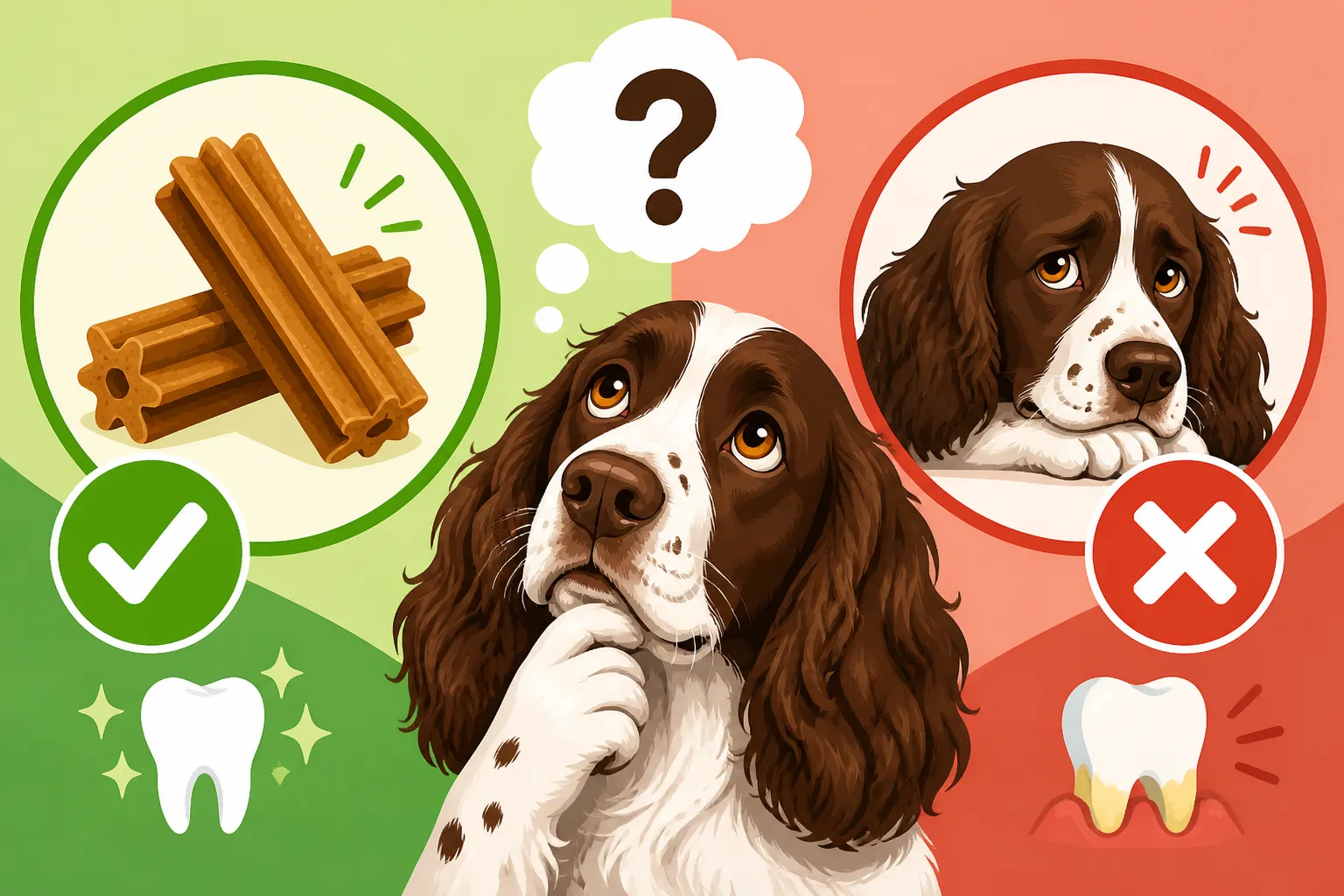
Whether Dental Chews Help a Springer Spaniel
It’s a common frustration among Springer Spaniel owners: you love their soft mouths and how they gently carry toys, but you also notice their breath isn't always the freshest, and those back teeth are starting to look a little… fuzzy. You might wonder if those tempting dental chews you see advertised everywhere are actually a viable solution for keeping your beloved companion's mouth healthy without the struggle of daily brushing. This guide is here to unravel the truth about dental chews and how they fit into a comprehensive dental care strategy for your Springer.
The Silent Threat: Understanding Your Springer Spaniel's Dental Health
Many of us don't really think about our dog's teeth until there's a problem. A whiff of bad breath or a visible brown stain is often the first sign, but by then, a lot of damage might already be done. For a breed like the Springer Spaniel, who loves to use their mouth, whether it's gently retrieving a bumper or just carrying their favorite squeaky toy around the house, good dental hygiene is more important than we might realize.
Plaque, Tartar, and the Road to Periodontal Disease
It all starts with plaque. Just like in humans, a sticky film of bacteria, saliva, and food particles constantly forms on your Springer Spaniel's teeth. If this plaque isn't removed regularly, it begins to harden and mineralize, turning into tartar (calculus). Once tartar forms, you can't simply brush it away at home; it's rock-hard and adheres firmly to the tooth surface, often extending under the gum line.
This buildup of plaque and tartar creates a perfect breeding ground for more bacteria, leading to inflammation of the gums, known as gingivitis. You might notice your Springer's gums looking red or swollen, or they might even bleed a little when they chew on something hard. If left unchecked, gingivitis progresses to periodontal disease, a much more serious condition where the infection spreads to the bone and supporting structures of the teeth. This can be incredibly painful for your dog, leading to loose teeth, abscesses, and even systemic health issues affecting organs like the heart, liver, and kidneys. It’s a silent, insidious process that can significantly impact The Twelve to Fourteen Years a Springer Spaniel Lives.
The Challenges of Canine Dental Care for Owners
Let's be honest, brushing a dog's teeth isn't exactly a walk in the park for most owners. Dogs aren't naturally keen on having their mouths prodded, and trying to get into those far-back molars can feel like wrestling an alligator. Many owners feel guilty because they know dental care is important, but they struggle to implement a consistent routine. Add to that the fact that dogs are masters at hiding pain, especially chronic discomfort. Your Springer might be suffering from dental pain and you wouldn't even know it, only perhaps noticing a slight decrease in appetite for hard kibble or a reluctance to chew on their favorite bones.
Then there's the cost. Professional dental cleanings at the vet involve anesthesia, which naturally adds to the expense. This can make owners hesitant, pushing them to seek alternative, seemingly simpler solutions like dental chews. It’s a completely understandable instinct to look for an easier way to provide good care.
Unpacking Dental Chews: What They Can (and Can't) Do
Dental chews are a popular product for a reason: they promise an easy, often enjoyable way to improve your dog's oral hygiene. But it's crucial to understand their mechanics and, more importantly, their limitations.
How Dental Chews Offer a Helping Hand
The primary way most dental chews work is through mechanical abrasion. As your Springer Spaniel chews, gnaws, and scrapes at the chew, its textured surface physically rubs against the teeth. This abrasive action can help dislodge and reduce the accumulation of plaque on the tooth surface. Think of it like a gentle scouring pad for their teeth.
Many dental chews are designed with specific shapes, ridges, or nubs to maximize this contact and reach different tooth surfaces. Some even contain active ingredients like enzymes, chlorophyll, or zinc compounds, which are believed to help break down plaque or reduce bacteria in the mouth. When selecting a dental chew, a good indicator of its potential efficacy is the Veterinary Oral Health Council (VOHC) seal of acceptance. This means the product has undergone rigorous testing and has been scientifically proven to reduce plaque and/or tartar. You can often find a wide selection of VOHC-approved chews on platforms like Chewy or Amazon, making it easier to choose wisely.
The Realistic Limitations of Dental Chews
While dental chews can be a valuable part of an oral hygiene routine, they are not a magic bullet. It's important to have realistic expectations:
- Plaque vs. Tartar: Dental chews are most effective at reducing plaque, the soft, sticky film. Once plaque hardens into tartar, chews have very limited, if any, ability to remove it. Tartar typically requires professional scaling under anesthesia by a veterinarian.
- Surface Cleaning Only: Most chews only address the outer surfaces of the teeth, primarily where the dog chews. They aren't going to get into those tight crevices, below the gum line where periodontal disease often begins, or clean every single tooth surface comprehensively. This is particularly true for Dental Care for a Springer Spaniel That Carries Birds, where food particles and debris can become lodged in hard-to-reach areas.
- Calorie Content: Many dental chews are essentially treats and can be quite high in calories. If you're giving one daily, you need to factor this into your Springer's overall diet to prevent unwanted weight gain, especially for Caring for a Springer Spaniel Past Nine or less active dogs.
- Chewing Style Varies: Some dogs are aggressive chewers who will make good use of a dental chew. Others might gulp it down almost whole, which negates the abrasive action and can even pose a choking hazard. Observe your Springer's chewing habits carefully.
- Potential for Injury: While less common with reputable, softer dental chews, extremely hard chews (like some natural bones or antlers) can lead to fractured teeth. This is an incredibly painful injury that often requires costly veterinary intervention, sometimes even extractions. It's always a good idea to supervise your dog when they're enjoying a chew.
Choosing the Right Dental Chew for Your Springer Spaniel
Given the variety on the market, selecting the best dental chew for your Springer can feel overwhelming. Focusing on a few key criteria will help you make an informed decision.
The Importance of the VOHC Seal
When you're browsing for dental chews, the most important thing to look for is the Veterinary Oral Health Council (VOHC) seal of acceptance. This seal isn't just a marketing gimmick; it signifies that a product has met predetermined standards for plaque and/or tartar retardation in scientific studies performed on real dogs. It's the closest thing you'll get to a guarantee that the chew actually does what it claims. Without this seal, a product's "dental" claims are largely unregulated and may not be backed by scientific evidence. Prioritize VOHC-approved products to ensure you're spending your money wisely.
Size, Texture, and Ingredients: A Closer Look
Beyond the VOHC seal, consider these factors specific to your Springer Spaniel:
- Size Matters: It's critical to choose a chew that is appropriate for your Springer's size and weight. A chew that's too small might be swallowed too quickly, offering no dental benefit and potentially posing a choking risk. One that's too large might be difficult or unappealing for them to chew effectively. The packaging will usually indicate the recommended weight range.
- Texture and Durability: You want a chew that offers sufficient abrasive action without being so hard that it risks fracturing teeth. Generally, if you can't easily indent it with your thumbnail, it's probably too hard. Look for textures with ridges, nubs, or a slightly porous structure that can really get into the tooth surfaces as your dog chews. The chew should be durable enough to last for a good chewing session, but ultimately digestible. Avoid anything that feels like rock or bone.
- Digestibility and Ingredients: Choose chews made from digestible ingredients. Many popular dental chews are starch-based. If your Springer Spaniel has known food sensitivities or allergies, scrutinize the ingredient list carefully. Common allergens like chicken, beef, or grain might be present. Some brands, like those you might find on Ollie (though primarily a fresh food provider, they often carry complementary health products), emphasize natural or limited ingredients. Always introduce new chews gradually and monitor for any digestive upset, especially if How Settled a Springer Spaniel's Stomach Is is a concern for your dog. You might also find chews with added ingredients like probiotics or prebiotics, which can be beneficial if your vet recommends Whether a Springer Spaniel Needs a Probiotic for overall gut health.
Integrating Dental Chews into a Comprehensive Care Plan
Dental chews alone won't give your Springer Spaniel pristine teeth. They are best viewed as a supplementary tool within a broader, multi-faceted approach to oral health.
The Unrivaled Importance of Brushing and Veterinary Care
Let's be clear: daily toothbrushing is the single most effective thing you can do at home to prevent plaque and tartar buildup. Nothing beats the mechanical action of bristles reaching every tooth surface and beneath the gum line. It takes commitment, patience, and often a lot of positive reinforcement, but it's the gold standard for home dental care. Starting early with your Springer Spaniel puppy can make a huge difference in their acceptance of brushing as they grow.
Equally critical are regular veterinary dental check-ups and professional cleanings under anesthesia when recommended. Just like you see your dentist, your dog needs their teeth examined, scaled, and polished by a professional. This allows the vet to remove tartar that home care can't touch, address any developing issues, and check for painful conditions that you might not notice. This is particularly important because What a Springer Spaniel's Dental Costs Under Anesthesia can be a significant expense, but it's an investment in their long-term health and comfort.
Building a Multi-pronged Defense Against Plaque and Tartar
A truly effective dental health routine for your Springer Spaniel will employ a combination of strategies. Think of it as a multi-pronged attack:
- Daily Brushing (The Foundation): Aim for daily brushing with a dog-specific toothbrush and toothpaste. Even a few times a week is better than nothing.
- VOHC-Approved Dental Chews (The Supplement): Offer a VOHC-approved dental chew once a day or a few times a week as a treat that also provides dental benefits. This is an easy way to help reduce plaque between brushings.
- Oral Rinses and Water Additives (The Boost): Your vet might recommend a veterinary-approved oral rinse or a water additive that contains ingredients designed to reduce bacteria or plaque. These are easy to incorporate into The Daily Routine a Springer Spaniel Actually Needs and can provide an extra layer of protection. You can find a wide variety of these products, along with specialized toothbrushes and toothpastes, on Amazon.
- Regular Vet Check-ups and Professional Cleanings (The Essential Back-up): Schedule annual veterinary check-ups where your vet can assess your Springer's dental health and recommend professional cleanings as needed. Catching issues early can prevent more serious problems down the line. Remember, dental disease isn't just about bad breath; it's about preventing pain and systemic health issues. Just as Whether a Springer Spaniel Needs a Yearly Eye Exam is vital, so too is a thorough dental exam.
By combining these methods, you give your Springer Spaniel the best chance at a healthy, comfortable mouth throughout their life. It might seem like a lot of effort, but preventing dental disease is always less painful and often less expensive than treating it once it becomes severe. What Changes in an Old Springer Spaniel's Care often includes more intensive dental management, so starting good habits early pays dividends for their senior years.
| Method | Primary Benefit | Recommended Frequency | Pros | Cons |
|---|---|---|---|---|
| Daily Brushing | Plaque removal, gum health | Daily | Most effective at home, reaches all surfaces | Can be challenging, requires consistency |
| VOHC Dental Chews | Plaque reduction | Daily to a few times a week | Enjoyable for dog, some plaque removal | Limited on tartar, calories, choking risk |
| Water Additives/Rinses | Bacterial reduction | Daily | Easy to administer | Less effective than brushing/chews |
| Professional Cleaning | Tartar removal, sub-gum care | As needed (yearly for many) | Removes hardened tartar, addresses deep issues | Requires anesthesia, higher cost |
Disclaimer
This article is for general informational purposes only and does not constitute professional advice. Laws, prices and regulations vary by location and change over time. Consult a qualified professional for guidance on your specific situation.