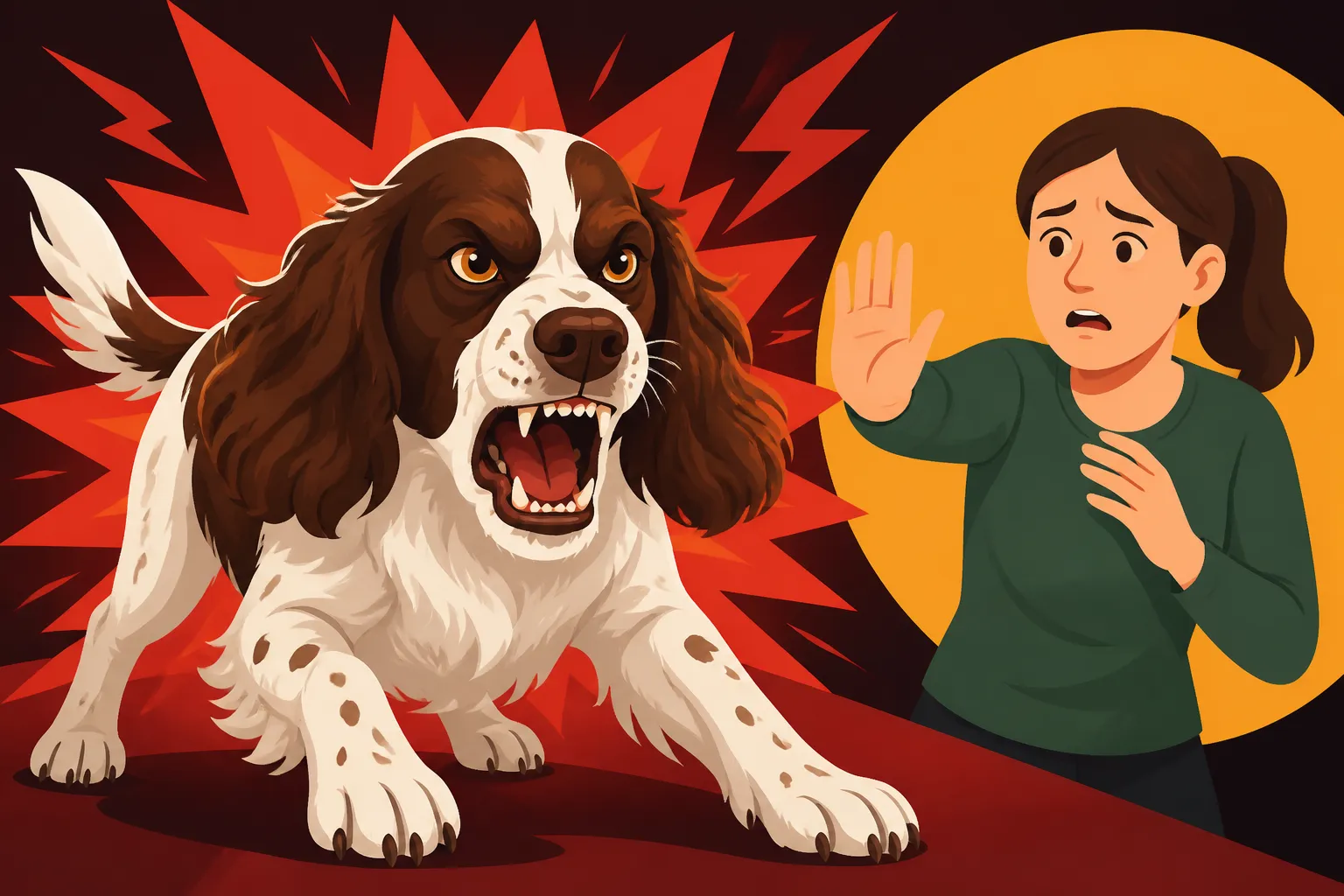
Rage Syndrome in an English Springer Spaniel
Finding out your beloved English Springer Spaniel might be suffering from "Rage Syndrome" can be incredibly frightening and confusing. One minute you have a loving companion, the next they're lunging or biting without warning, often leaving you feeling heartbroken and terrified. This isn't just a misbehaving dog; it's a profound and disturbing change in temperament that leaves many owners wondering what went wrong. This guide aims to shed light on this complex condition, help you understand its manifestations, explore diagnostic paths, and discuss ways to manage life with a Springer Spaniel affected by rage.
Understanding the Alarming Reality of Rage Syndrome in Springer Spaniels
Rage Syndrome, sometimes referred to as Sudden Onset Aggression (SOA), is a particularly distressing condition because it appears to come out of nowhere, often in dogs that have previously shown no signs of aggression. It's a genuinely terrifying experience for owners and often leaves them feeling isolated, confused, and deeply concerned for their dog's well-being and the safety of others. It’s important to understand that this isn’t a dog choosing to be aggressive; it’s a neurological event.
The Sudden, Unprovoked Nature of Attacks
What truly sets Rage Syndrome apart from other forms of aggression is its abrupt, seemingly unprovoked onset and the almost trance-like state the dog appears to be in. Owners often describe their Springer Spaniel transitioning instantly from a calm, normal state to a violent outburst, sometimes in response to a very minor trigger or no discernible trigger at all. The dog might be sleeping soundly, and then suddenly wake up and attack someone nearby, or be playing happily and then snap at a family member.
These attacks are typically characterized by their extreme intensity and a lack of the usual warning signals (like growling or snarling) that precede other types of aggression. The dog often seems to "black out" during the episode, showing no recognition or memory of the event afterward, which can be even more bewildering for owners. The randomness and ferocity of these incidents make them incredibly dangerous and difficult to predict, turning daily life into a minefield of anxiety.
The Genetic Predisposition in Certain Lines
While any dog could theoretically develop a neurological issue leading to aggression, English Springer Spaniels are one of the breeds specifically highlighted in discussions about Rage Syndrome, alongside certain other breeds like Cocker Spaniels and some bull breeds. This breed-specific association strongly suggests a genetic component. It's not something that just happens by chance in Springers; there's a suspected hereditary link that researchers continue to investigate.
This genetic predisposition means that even if a dog's parents appear outwardly normal, they might carry genes that could express as Rage Syndrome in their offspring. This is a crucial point for potential puppy buyers to consider and why it's so important to research a breeder's lines thoroughly. While no specific "rage gene" has been definitively identified, anecdotal evidence and veterinary observations point to certain lines carrying a higher risk. This concern highlights the ongoing debate about Whether Rage Syndrome Runs in Springer Spaniel Lines.
The Impact on the Dog and Family
Living with a Springer Spaniel affected by Rage Syndrome takes an immense emotional toll on the entire family. Beyond the physical danger of bites, there's the heartbreak of seeing your beloved pet transformed, even momentarily, into something terrifying. Trust is eroded, and the once joyful bond can become strained under a cloud of fear and vigilance. Families often feel isolated, unable to have guests over or even relax in their own home, constantly on edge.
Children are particularly vulnerable, and the safety risks are paramount. The financial burden can also be substantial, with repeated vet visits, specialist consultations, and potential medication costs. Many owners struggle with the agonizing decision of what is best for their dog and their family, often facing judgment or misunderstanding from those who don't grasp the true nature of the condition. It’s a profound and devastating situation that affects every aspect of family life.
What Does a "Rage Episode" Actually Look Like in an English Springer Spaniel?
The term "rage" might sound dramatic, but it accurately describes the sudden, explosive, and often terrifying nature of these episodes. Unlike typical aggression, which often has clear triggers and warning signs, a rage episode in a Springer Spaniel is usually characterized by its abruptness and the dog's apparent inability to control itself. It’s a stark contrast to their otherwise affectionate and enthusiastic nature.
Recognizing the Pre-Attack Signs and Triggers
One of the most insidious aspects of Rage Syndrome is the scarcity of obvious warning signs before an attack. With typical aggression, you might see growling, lip curling, stiff body language, or a direct stare. With rage, these can be completely absent. The dog might be relaxed, even sleeping, only to erupt violently moments later. However, some owners report subtle, almost imperceptible shifts: a slight stiffening, a fixed gaze, or a sudden quietness that might precede the explosion.
Common reported triggers, though not always present, include being disturbed while sleeping, being startled, having certain body parts (like ears or tail) touched, or even just a change in routine or environment. The challenge is that these triggers are often so minor that they wouldn't provoke a response in a normal dog, or they vary so much that they're nearly impossible to predict. The key is that the reaction is disproportionate and out of character. This makes it incredibly hard to manage, as you're constantly trying to anticipate an unseen switch.
The Swift, Intense Aggression
When a rage episode hits, it's typically an explosion of intense aggression. The dog might lunge, snap, bite, and attack without hesitation, often targeting the nearest person or animal. The aggression is often described as "blind" or "feral," with the dog seemingly unresponsive to commands or attempts to interrupt the attack. The focus is singular and ferocious, and it can be extremely difficult to de-escalate the situation safely. This is What Sudden Onset Aggression Looks Like in a Springer Spaniel, and it's unlike any other behavior you're likely to witness.
The intensity can last anywhere from a few seconds to a few minutes, feeling like an eternity to the person enduring it. The bites can be severe, causing significant injury. It’s not just a warning nip; it's a full-on attack intended to inflict harm. This severity is why owners often describe feeling profound fear, as the dog they know and love momentarily transforms into a dangerous animal. The suddenness and severity distinguish it dramatically from typical behavioral issues.
Post-Episode Confusion and Amnesia
Perhaps one of the most heartbreaking and telling signs of Rage Syndrome is the dog's behavior immediately after an episode. Once the outburst subsides, the Springer Spaniel often appears confused, disoriented, or even loving, as if nothing has happened. They might lick the hand they just bit, wag their tail, or try to cuddle. This "amnesia" is a critical indicator of a neurological rather than behavioral problem.
This post-episode behavior reinforces the theory that the dog is not consciously choosing to be aggressive. It seems to have no memory of the event, which further solidifies the idea that it's akin to a focal seizure rather than intentional malice. For owners, this can be incredibly disorienting and painful, as they reconcile the memory of the terrifying attack with the loving, confused dog now seeking affection. This characteristic helps answer the question of Whether a Springer Spaniel Remembers a Rage Episode.
Distinguishing Rage Syndrome from Other Aggressive Behaviors
It’s absolutely crucial to differentiate Rage Syndrome from other, more common forms of aggression in dogs. Misdiagnosis can lead to ineffective and potentially harmful training methods, or worse, overlooking a serious underlying medical condition. Many behaviors that look like aggression might actually be rooted in fear, pain, or resource guarding. A thorough diagnostic process is essential to avoid mistakes.
Ruling Out Fear, Resource Guarding, or Territorial Aggression
Before considering Rage Syndrome, a veterinarian and a certified professional dog behaviorist will typically work to rule out other, more common reasons for aggression. Fear aggression, for instance, occurs when a dog feels threatened and acts defensively. Resource guarding happens when a dog protects food, toys, or even a person from others. Territorial aggression is displayed when a dog perceives intruders on its property. These types of aggression usually have clear triggers, warning signs, and a predictable pattern.
A dog with fear aggression might cower, try to escape, and only lash out when cornered. A resource guarder might stiffen over a toy, growl, and then snap if approached. These behaviors, while serious, are often manageable with consistent training and behavior modification aimed at addressing the underlying motivation. The key difference is the presence of clear communication signals and a discernible reason for the aggression, which are often absent in true rage episodes. This is why careful observation and detailed history are so important.
Behavioral Assessment vs. Neurological Origin
A critical step in diagnosis involves a comprehensive behavioral assessment, often conducted by a veterinary behaviorist. They will gather a detailed history of the aggressive incidents, including timing, triggers, the dog's body language before, during, and after the event, and any other symptoms. This helps paint a picture of whether the aggression is learned, situational, or potentially neurological.
If the aggression doesn't fit the patterns of typical behavioral issues—meaning it's truly sudden, unprovoked, disproportionate, and accompanied by post-episode confusion—then a neurological cause becomes much more likely. Behavioral aggression responds to intervention, whereas rage syndrome often does not, or only minimally, to traditional training methods. Understanding this distinction is vital, as it shifts the focus from "fixing" a behavior to treating a potential medical condition.
Why a Springer Spaniel's Thyroid Should Be Checked for Aggression
It might seem strange, but a common medical check for any dog displaying aggression, including potential Rage Syndrome, is a full thyroid panel. Hypothyroidism, an underactive thyroid, can manifest in a surprising array of symptoms, including behavioral changes. Dogs with hypothyroidism can become irritable, anxious, aggressive, or develop other personality shifts that mimic more serious conditions.
While a low thyroid isn't the cause of Rage Syndrome, it's a treatable condition that can exacerbate or contribute to aggressive outbursts. Ruling it out is a crucial step in the diagnostic process. If a dog has low thyroid hormones, supplementation can often resolve or significantly improve the behavioral issues. This simple blood test can provide valuable information and potentially spare a dog from misdiagnosis and inappropriate treatment. Ensuring all bases are covered from a health perspective is paramount, and many pet insurance providers, like Healthy Paws, recognize the importance of these comprehensive diagnostic steps in their coverage.
The Elusive Causes and Genetic Links of Springer Spaniel Rage
The exact cause of Rage Syndrome remains somewhat of a mystery, making diagnosis and treatment challenging. However, the prevailing theory points towards a neurological basis, often likened to a form of epilepsy. The strong breed predisposition in English Springer Spaniels further strengthens the argument for a genetic component.
Theories on Neurological Basis (e.g., partial seizures)
The most widely accepted scientific theory behind Rage Syndrome posits that it's a form of epilepsy, specifically a complex partial seizure disorder affecting the limbic system of the brain, which controls emotions like fear and aggression. During such a seizure, the dog may experience an uncontrolled burst of aggression, appearing "out of its mind" and unable to respond to external stimuli. This explains the sudden onset, the lack of warning signs, the intensity of the attack, and the post-episode amnesia.
Unlike generalized seizures where a dog might collapse and convulse, partial seizures can manifest in various ways, including behavioral changes. The brain activity during a rage episode is believed to be abnormal, similar to an epileptic fit, rather than a conscious decision to attack. This understanding is critical for owners because it shifts the blame from the dog's "temperament" to a medical condition. This theory is why many vets will consider Whether Rage Syndrome Is Epilepsy in a Springer Spaniel during diagnosis.
Whether Rage Syndrome Runs in Springer Spaniel Lines
There is compelling anecdotal and observational evidence suggesting that Rage Syndrome does indeed run in certain English Springer Spaniel lines. Breeders and owners have reported patterns of the condition appearing in related dogs, indicating a hereditary link. While no specific gene has been isolated and identified as the sole cause, the prevalence within specific family trees is a significant concern for responsible breeders.
This genetic predisposition means that a puppy from parents or grandparents with a history of Rage Syndrome might be at a higher risk, even if the parents themselves never showed signs. It underscores the importance of transparent health testing and disclosure from breeders, allowing prospective owners to make informed decisions. While it's not present in all Springer Spaniels, the breed as a whole does carry this higher statistical risk compared to many others.
The Debate Over Solid Colors and Predisposition
For many years, there has been a persistent belief among some owners and breeders that solid-colored English Springer Spaniels (e.g., solid black or solid liver) are more prone to Rage Syndrome than their parti-colored (black and white or liver and white) counterparts. This theory is particularly prominent in English Cocker Spaniels, where "Cocker Rage" is also a recognized concern, and solid colors have historically been linked to it.
However, scientific evidence to definitively prove this link in English Springer Spaniels is largely inconclusive. While some individual cases might align with this observation, it's not a universal rule, and many solid-colored Springers lead perfectly normal, non-aggressive lives. It's more likely that if a correlation exists, it's not due to the color itself, but rather that certain breeding lines, which may have produced more solid-colored dogs, inadvertently carried the genetic predisposition. The discussion around Whether Solid Colored Springer Spaniels Are More Affected often brings up this long-standing debate.
The Diagnostic Journey: Confirming Rage Syndrome in Your Springer
Diagnosing Rage Syndrome is a process of elimination and careful observation. There isn't a single definitive test that says "yes, this is rage." Instead, veterinarians and specialists piece together a puzzle using the dog's history, ruling out other conditions, and observing the characteristic patterns of aggression. This can be a lengthy and often frustrating journey for owners.
The Importance of Detailed Behavioral History
The cornerstone of diagnosing Rage Syndrome is an exhaustive behavioral history provided by the owner. You'll need to recall every detail of the aggressive incidents: when they started, how frequently they occur, what happened immediately before, during, and after each episode, the specific actions of the dog, and any unique circumstances. Video recordings, if safely obtained, can be incredibly helpful for the veterinary behaviorist to observe the aggression firsthand.
This detailed account helps the specialist identify patterns unique to Rage Syndrome, such as the suddenness, the lack of traditional warning signs, the extreme intensity, and the post-episode confusion. Without this meticulous record, it's nearly impossible to differentiate rage from other forms of aggression. Honesty and thoroughness from the owner are absolutely vital, even if the details are painful to recount.
Whether an EEG Diagnoses Springer Spaniel Rage
Given the theory that Rage Syndrome is a form of epilepsy, it stands to reason that an electroencephalogram (EEG) might be used for diagnosis. An EEG measures electrical activity in the brain and can detect abnormal patterns indicative of seizure activity. In theory, if a rage episode is a seizure, an EEG performed during or immediately after an episode might show evidence of this.
However, performing an EEG on a dog, especially one prone to sudden aggression, is challenging. It often requires sedation, which can interfere with brain activity, and it's extremely difficult to capture an actual rage episode while hooked up to the equipment. Therefore, while theoretically useful, in practice, Whether an EEG Diagnoses Springer Spaniel Rage is often difficult to confirm. It's not a commonly used or reliable diagnostic tool for Rage Syndrome in most veterinary settings, though it might be considered by a specialist in certain complex cases.
Comprehensive Veterinary Examination and Exclusion
Before a diagnosis of Rage Syndrome is made, your veterinarian will conduct a comprehensive physical and neurological examination to rule out any other medical conditions that could cause or contribute to aggressive behavior. This includes blood tests to check for metabolic issues, infections, or organ dysfunction, as well as a thyroid panel, as mentioned earlier. Imaging, such as an MRI of the brain, might be recommended to look for structural abnormalities, tumors, or inflammation.
The process is one of exclusion: if all other potential causes (pain, hormonal imbalances, brain lesions, etc.) are ruled out, and the behavioral pattern strongly aligns with Rage Syndrome, then that diagnosis becomes more likely. This thorough approach ensures that no stone is left unturned in trying to find a treatable cause for the aggression, and it's where comprehensive pet insurance like Healthy Paws can be invaluable, helping to cover the costs of advanced diagnostics.
Living With and Managing Rage Syndrome: Strategies for Owners
Once a diagnosis of Rage Syndrome is made, the focus shifts to management. While there's no cure, the goal is to minimize the frequency and severity of episodes, ensuring the safety of everyone in the household, and improving the dog's quality of life. This requires a multi-faceted approach involving environmental management, medication, and careful behavioral strategies.
Creating a Safe and Predictable Environment
One of the most immediate and critical steps is to create a safe and predictable environment for your Springer Spaniel and everyone living with them. This means identifying and eliminating as many potential triggers as possible. If being startled while sleeping is a trigger, ensure your dog has a quiet, undisturbed sleeping area. If certain touches provoke an episode, those should be avoided at all costs. Children should be taught strict rules about interacting with the dog, or even kept completely separate if the risk is too high.
A predictable routine can also reduce stress and anxiety, which might contribute to episodes. Consistency in feeding, exercise, and quiet times can provide a sense of security. Consider using crates or secure rooms to separate your dog from visitors or during times when you cannot supervise them directly. The goal is to minimize surprises and reduce opportunities for attacks, which often means significant adjustments to daily life.
Whether Medication Controls a Springer Spaniel's Rage
Since Rage Syndrome is believed to have a neurological basis similar to epilepsy, anti-seizure medications are often the primary line of treatment. Medications like phenobarbital, potassium bromide, or levetiracetam (Keppra) can help stabilize brain activity and reduce the frequency and intensity of episodes. Antidepressants or anti-anxiety medications might also be used in conjunction to help manage underlying anxiety or impulsivity.
The effectiveness of medication varies from dog to dog. Some Springers respond very well, with a significant reduction in episodes, while others may only see partial improvement, or require a combination of drugs. Finding the right medication and dosage is often a trial-and-error process that requires close monitoring by your veterinarian. This is Whether Medication Controls a Springer Spaniel's Rage: it can help, but it's not a guaranteed "fix," and managing side effects is also a consideration. Regular vet check-ups and blood work are crucial to monitor medication levels and liver function.
Behavioral Modification and Management Techniques
While traditional behavior modification might not "cure" Rage Syndrome, it plays a vital role in managing the condition, especially in conjunction with medication. The focus is on management rather than training the aggression away. This includes teaching your dog to generalize a "place" command, so they can retreat to a safe zone when feeling overwhelmed, or conditioning them to accept certain handling procedures more calmly.
Positive reinforcement is key. Avoid any aversive training methods, harsh corrections, or punishment, as these can increase anxiety and potentially trigger an episode. Instead, focus on rewarding calm behavior and creating positive associations with situations that might have previously been challenging. However, it’s critical to understand that these techniques are secondary to medical management for true Rage Syndrome and primarily serve to reduce overall stress and improve the dog's ability to cope, rather than addressing the neurological core of the problem.
The Prognosis and Ethical Considerations for a Springer Spaniel with Rage
The diagnosis of Rage Syndrome brings with it a complex set of emotions and difficult decisions for owners. The prognosis can vary significantly, and the ethical considerations surrounding the dog's future, as well as the safety of others, are profound.
Long-Term Outlook for Affected Dogs
The long-term outlook for a Springer Spaniel diagnosed with Rage Syndrome is highly variable. For some dogs, with careful management and the right combination of medication, episodes can be significantly reduced, allowing them to lead a relatively normal, safe life within their carefully controlled environment. These dogs might still have occasional "blips," but they are less frequent and less severe.
However, for other Springers, the condition can be refractory to treatment, meaning medications don't offer sufficient control. The episodes might remain frequent, intense, and unpredictable, posing an ongoing severe risk. In these cases, the quality of life for both the dog and the family can be severely compromised. It's a spectrum, and constant vigilance and adaptation are typically required, even in the best-case scenarios.
Whether a Springer Spaniel With Rage Can Be Kept
This is arguably the most heartbreaking question an owner faces. Whether a Springer Spaniel with Rage Syndrome can safely remain in a home depends on several factors: the severity and frequency of the episodes, the dog's response to treatment, the living situation (e.g., presence of children, other pets), and the owner's ability and willingness to manage the risks.
If episodes are frequent, severe, and unpredictable, and particularly if there are children or vulnerable individuals in the home, the risk can become unmanageable. The emotional and physical toll on the family can be immense. While deeply painful, sometimes the most responsible and compassionate decision for the dog and for human safety is euthanasia. This is Whether a Springer Spaniel With Rage Can Be Kept, and it's a decision that weighs heavily on every owner. There's no shame in making a difficult choice to protect everyone involved.
Supporting Families Facing Difficult Decisions
No owner ever wants to consider euthanasia for their beloved pet, especially when the dog is otherwise healthy and loving outside of these episodes. The guilt, grief, and emotional turmoil associated with such a decision when dealing with Rage Syndrome are profound. It's not a decision made lightly, and families often need immense support during this time.
Veterinary professionals, especially veterinary behaviorists, can provide counseling and guidance, helping families explore all options and understand the nuances of the condition. Support groups, either online or in-person, can also offer a vital lifeline, connecting owners with others who have faced similar challenges. Remember, you are not alone in this struggle, and prioritizing safety while minimizing suffering is the ultimate goal. Pet insurance like Healthy Paws, while not covering euthanasia in all cases, can ease the financial burden of the extensive diagnostic work-up and ongoing medical management that precedes such painful decisions.
Prevention and Responsible Breeding Practices
While Rage Syndrome is a complex genetic condition, there are steps that responsible breeders and prospective owners can take to minimize its occurrence and impact. Prevention primarily revolves around careful breeding choices and transparency.
The Role of Health Screening in Breeding
Currently, there is no specific DNA test for Rage Syndrome in English Springer Spaniels, which makes health screening challenging. However, responsible breeders should maintain meticulous records of temperament and health issues within their breeding lines for several generations. This means being honest about any instances of unexplained aggression, even if they are infrequent or appear minor.
Breeders should only breed dogs with stable, sound temperaments and no history of sudden, unprovoked aggression. They should be transparent with prospective puppy buyers about any known instances of Rage Syndrome or similar unexplained aggression in their dogs' pedigrees. While it's impossible to guarantee a dog will never develop such a condition, ethical breeding practices significantly reduce the risk.
Selecting a Puppy from Reputable Breeders
For prospective owners, choosing a reputable breeder is paramount. A truly responsible breeder will:
- Be knowledgeable about the health concerns in the breed, including Rage Syndrome.
- Be transparent about the health history and temperament of their breeding dogs and their ancestors.
- Allow you to meet the puppy's parents (at least the mother) to observe their temperament firsthand.
- Not breed dogs that have shown any signs of unprovoked aggression.
- Provide a health guarantee and a contract that outlines what happens if health issues arise.
- Be willing to answer all your questions thoroughly, without hesitation.
Avoid breeders who cannot provide detailed information about their dogs' lineage, seem uninterested in asking about your living situation, or have multiple litters available from various breeds. A good breeder cares deeply about where their puppies go and the health of their lines.
Early Socialization and Training Considerations
While early socialization and training won't prevent a neurological condition like Rage Syndrome, they are crucial for fostering a well-adjusted, confident Springer Spaniel. A puppy exposed to a wide variety of sights, sounds, people, and experiences in a positive way is generally more resilient and less prone to fear-based or anxiety-driven aggression.
Consistent, positive reinforcement training helps build a strong bond between owner and dog and teaches appropriate responses to environmental stimuli. However, it’s vital to distinguish between behavioral issues and potential neurological problems. If a puppy or young adult Springer begins to exhibit uncharacteristic, sudden aggression despite proper socialization and training, immediate veterinary attention is warranted, and the possibility of Rage Syndrome should be explored. This early intervention is important, but remember, no amount of training can "fix" a brain abnormality.
Disclaimer
The information provided in this article is for educational and informational purposes only and does not constitute veterinary advice. If your English Springer Spaniel is exhibiting aggressive behavior, please consult a qualified veterinarian or a board-certified veterinary behaviorist immediately for an accurate diagnosis and personalized treatment plan.