Whether a Springer Spaniel’s Ears Should Be Checked Weekly
If you're a Springer Spaniel owner, you know the struggle is real when it comes to those beautiful, floppy ears. They're magnets for dirt, moisture, and all sorts of trouble, leaving many of us constantly wondering how vigilant we really need to be. This guide is here to shed light on exactly why those ears are so vulnerable and how often you really should be checking them to keep your beloved companion healthy and happy.
The Unique Vulnerability of Springer Spaniel Ears
Let's face it, one of the most endearing features of a Springer Spaniel is those long, silky ears. They frame their expressive faces perfectly and give them that classic spaniel look we all adore. But what's beautiful to us can be a real hotspot for problems for them. Their ear anatomy, coupled with their active, often water-loving lifestyles, creates a perfect storm for ear issues. It's not just bad luck; it's a design feature that requires our dedicated attention.
Anatomy of a Drop Ear and Its Impact
Unlike dogs with prick ears that stand erect, a Springer Spaniel's ears are pendulous, meaning they hang down, covering the ear canal opening. This seemingly innocuous trait has significant implications for ear health. The long, heavy leather of the ear flap effectively seals off the ear canal from fresh air circulation, creating a warm, dark, and often humid environment. Add to that the dense hair growth both on the ear flap itself and often within the ear canal, and you've got a recipe for microbial proliferation. Yeast and bacteria, which are naturally present on a dog's skin, thrive in these conditions, leading to overgrowth and infection. It's like a tiny, damp greenhouse right next to their brain.
Imagine your Springer, bounding through tall grass in the morning dew, or happily splashing in a local creek during a walk. That water, innocent as it may seem, gets trapped under the ear flap. Because the ear canal is covered, it can take a long time for any moisture to evaporate, if it ever does completely. This prolonged dampness creates an ideal breeding ground for those opportunistic organisms. Even a routine bath can leave enough moisture to start a cascade of issues if not properly dried. It’s a constant battle against nature, and their lovely ears are right on the front lines. This is why understanding Why a Springer Spaniel's Ears Are Never Quite Healthy is so important for long-term care.
Common Culprits: Moisture, Allergens, and Foreign Bodies
Beyond the inherent anatomical challenges, Springer Spaniels are susceptible to a host of external factors that contribute to ear problems. Moisture, as we've touched upon, is a huge one. Whether it's from swimming, rain, or even just high humidity, trapped water dilutes the ear's natural protective cerumen (wax) and disrupts the delicate balance of the ear canal environment. This often leads to bacterial or yeast infections that can be stubborn and recurrent.
Then there are allergens. Many Springer Spaniels suffer from environmental allergies, reacting to pollens, dust mites, or even certain food ingredients. When their immune system overreacts to these allergens, one of the primary ways it manifests is through inflammation of the skin, and guess what? The lining of the ear canal is skin! This inflammation makes the ear canal itchy, swollen, and more prone to infection. The dog scratches, creating micro-abrasions, and the cycle of irritation and infection begins. It's frustrating to watch them constantly pawing at their ears, knowing it often makes things worse.
And let's not forget foreign bodies. Springers are curious, active dogs, often found with their noses to the ground, exploring every scent. This means they are prime candidates for picking up grass awns, burrs, tiny seeds, or even small insects that can work their way into the ear canal. Once inside, these foreign bodies can cause intense irritation, pain, and quickly lead to a severe infection or even a ruptured eardrum if not removed promptly. A simple walk in a grassy field can turn into an emergency vet visit if a stubborn grass awn decides to make its home deep within the ear. It’s a constant concern, especially for those of us with working dogs who spend hours in cover, as detailed in Burrs, Ticks and Grass Awns in a Working Springer Spaniel.
Why Weekly Checks Aren't Just a Suggestion, They're Essential
Given the predisposition of Springer Spaniels to ear issues, a casual "check when it smells" approach just doesn't cut it. Waiting for obvious signs of infection, like persistent head shaking or a strong odor, often means the problem is already well-advanced. By then, your dog is likely in discomfort, and treating the issue becomes more complex, lengthy, and expensive. Weekly checks are a cornerstone of preventative care, allowing you to intercept problems before they escalate.
Catching Trouble Early: The Difference Between a Nuisance and a Crisis
Imagine finding a small, developing hotspot on your dog's skin and being able to treat it with a simple topical solution, rather than waiting until it's a large, weeping wound that requires antibiotics and a cone of shame. The same principle applies to ear health. A quick, weekly inspection can help you spot the very earliest signs of irritation: a slight redness, a touch more wax than usual, or a faint, unusual odor. These subtle cues are your opportunity to intervene with a gentle cleaning or a quick call to the vet before a full-blown ear infection sets in.
When an ear infection becomes a "crisis," your Springer Spaniel is typically exhibiting clear symptoms of pain and discomfort. They might be shaking their head violently, rubbing their ear on the carpet or furniture, tilting their head constantly, or crying out when you touch their ear. The discharge might be thick and foul-smelling, and the ear canal itself could be swollen shut. At this stage, your vet visit will likely involve sedation for a thorough cleaning, expensive medicated drops, and potentially oral antibiotics or anti-inflammatories. The cost and stress for both you and your dog are significantly higher. Early detection, facilitated by weekly checks, can spare your dog unnecessary suffering and save you a considerable amount of worry and money. Knowing Signs a Springer Spaniel Has an Ear Infection can help you differentiate.
Establishing a Routine for Optimal Ear Health
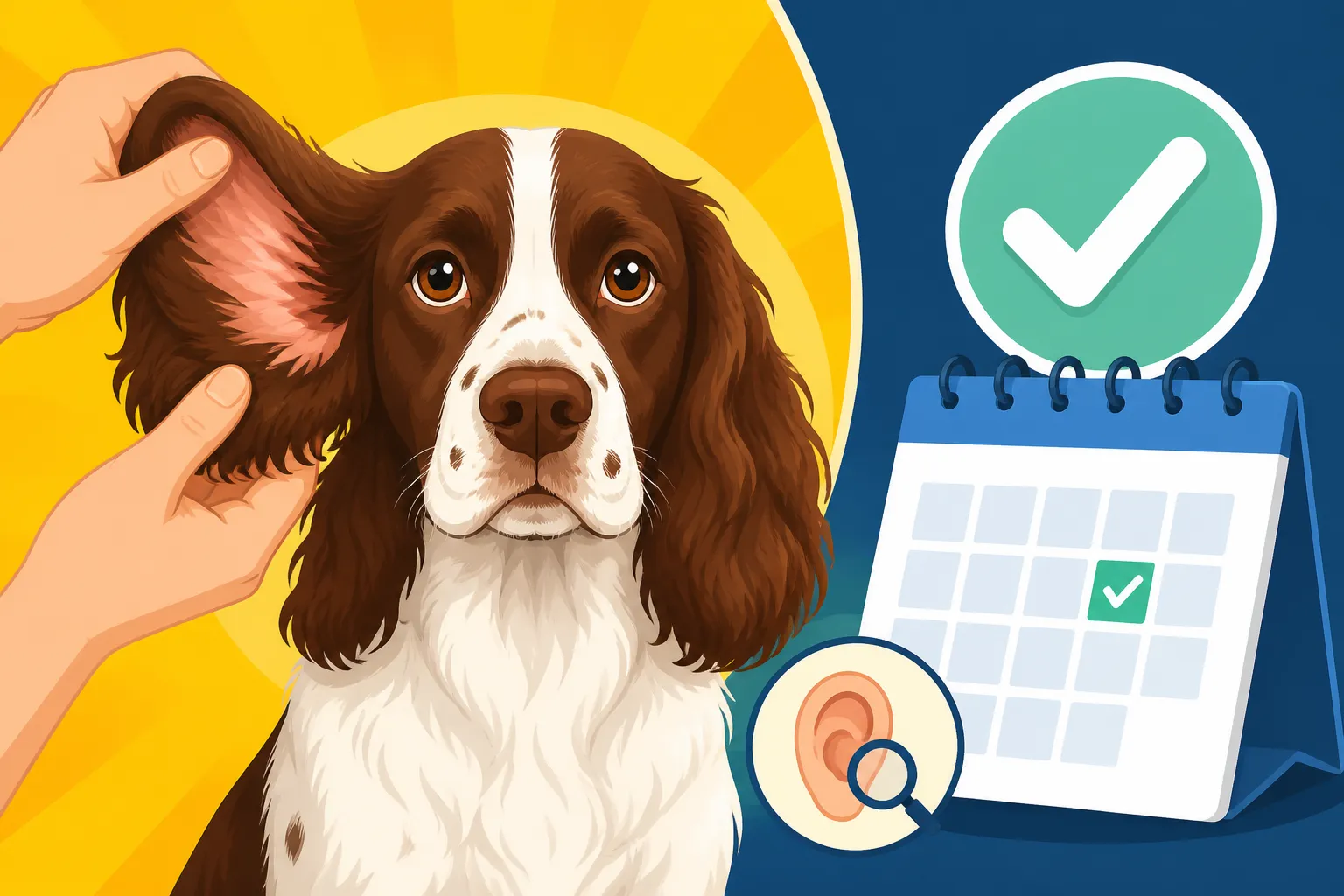
A consistent weekly ear check isn't just about identifying problems; it's about understanding what a healthy ear looks and feels like for your individual dog. Every dog is different, and what's normal for one Springer might be a red flag for another. By performing these checks regularly, you build a baseline knowledge of your dog's ear health. You'll recognize the normal amount of light, pale earwax, the healthy pink color of the ear flap, and the absence of any strong odors. This familiarity makes it much easier to spot deviations.
Think of it like brushing your teeth. You do it regularly not just to fix problems, but to maintain overall health and prevent issues from developing. A weekly ear check should become an integral part of your dog's grooming routine, right alongside brushing their coat or checking their nails. It only takes a few minutes, especially if your dog is accustomed to it from a young age. This routine builds trust and makes the process less stressful for your Springer Spaniel, and for you. If you incorporate it, you'll find that managing their ear health becomes far less daunting.
Practical Steps for Your Weekly Ear Health Check
Okay, so we've established why weekly checks are important. Now, let's talk about how to actually do them. It doesn't need to be an intimidating ordeal. With a calm approach and a few simple steps, you can make ear checks a positive and routine experience for both you and your Springer Spaniel.
The 'Look, Smell, Touch' Method
This three-pronged approach makes checking your Springer's ears systematic and thorough, ensuring you don't miss any early warning signs.
-
Look: Start by gently lifting your Springer's ear flap. Look at the inside of the flap and the visible part of the ear canal. What color is it? Healthy ear skin is typically a pale, clean pink, much like the skin on their belly. Are there any signs of redness, swelling, or crusting? Do you see any unusual discharge? It could be dark brown and waxy, yellow and pus-like, or black and crumbly (often indicative of ear mites). Is there a normal amount of light, pale earwax, or is there an excessive build-up? Compare both ears – often, an infection will start in one ear, and comparing it to the healthy ear can highlight subtle differences.
- Scenario: You gently lift your dog's left ear and notice a slight pinkish tinge where it's usually very pale, and there's a tiny bit more dark, crumbly discharge than usual. The right ear looks perfectly fine. This subtle change, caught early, gives you a chance to act before it becomes a full-blown infection.
-
Smell: This might sound odd, but your nose is a powerful diagnostic tool when it comes to dog ears. Gently sniff the opening of your dog's ear canal. A healthy ear should have a very faint, almost neutral smell, or perhaps a slightly earthy "dog" smell. Any strong odor – particularly a yeasty, sweet, or foul, pungent smell – is a significant red flag. Yeast infections often have a distinctive bread-like or cheesy odor, while bacterial infections can smell quite putrid.
- Scenario: As you lift your Springer's ear, a distinct, sweet-yet-sour smell hits you. It's not overwhelming yet, but it's definitely not the usual neutral scent. This is your cue that something is amiss and likely a yeast overgrowth is starting.
-
Touch: Gently feel the base of your dog's ear. Is it unusually warm to the touch compared to the other ear or the surrounding skin? Is there any swelling or tenderness? Does your dog flinch, pull away, or show any signs of pain when you touch the ear or open the flap? Pay attention to their reactions. If they suddenly become head-shy, start whimpering, or try to snap, it’s a clear indication of discomfort.
- Scenario: Your Springer usually loves ear rubs, but today, when you go to lift their ear, they subtly pull back, and when you gently touch the base, they let out a small whine. You also notice the ear base feels a little warmer. This tenderness is a strong indicator of inflammation or pain within the ear.
Tools and Techniques for Effective Cleaning (When Needed)
If your weekly check reveals a bit of excess wax or a slightly dirty ear, and there are no signs of pain, redness, swelling, or discharge, a gentle cleaning might be all that's needed. But a word of caution: if you suspect an infection, do not clean the ear before seeing your vet. Cleaning an infected ear can push debris further down, irritate an already inflamed canal, and make it harder for your vet to get a diagnostic sample.
For routine cleaning, you'll need a good quality, vet-approved ear cleaner. Many excellent options are available from online retailers like Chewy or Amazon. Look for solutions specifically designed for dogs that are non-irritating and help break down wax. You'll also need some cotton balls or soft gauze pads – avoid cotton swabs, as they can push debris deeper into the ear canal or damage the eardrum.
Here's a step-by-step for a gentle cleaning:
- Gather your supplies: Ear cleaner, cotton balls/gauze, and a towel. Have some treats ready for positive reinforcement!
- Position your dog: Have them sit or lie down comfortably. A calm environment helps.
- Apply cleaner: Hold the ear flap up and carefully squirt the recommended amount of ear cleaner directly into the ear canal. Don't be shy; you need enough to fill the canal slightly.
- Massage the base: Gently massage the base of your dog's ear for about 30 seconds. You should hear a squishing sound, indicating the cleaner is working its way down and loosening debris.
- Allow head shaking: Let your dog shake their head. This helps to dislodge wax and bring it to the surface. Have that towel ready!
- Wipe the outer ear: Use a fresh cotton ball or gauze pad to gently wipe away any visible cleaner, wax, and debris from the inner surface of the ear flap and the entrance of the ear canal. Never go deeper than your finger can comfortably reach.
- Repeat if necessary: If the ear is still quite dirty, you can repeat the process with a fresh cotton ball.
- Praise and reward: Always end on a positive note with plenty of praise and treats.
Remember, the goal is to clean visible parts of the ear and the entrance of the canal, not to probe deep inside. The cleaner does the work of loosening debris deeper down. For those active Springers who love water, consider using a drying solution after swims, as discussed in Drying a Springer Spaniel's Ears After Swimming.
Here's a quick comparison of what to look for:
| Feature | Healthy Springer Spaniel Ear | Unhealthy Springer Spaniel Ear |
|---|---|---|
| Color | Pale, clean pink | Red, inflamed, dark purple |
| Smell | Faint, neutral "dog" smell | Strong, yeasty, sweet, foul, or putrid odor |
| Discharge | Minimal, light, pale yellow wax | Excessive, dark brown, black, yellow, green, watery, or pus-like |
| Swelling | None | Swollen ear flap or canal opening |
| Pain/Tenderness | No reaction to touch or manipulation | Flinching, pulling away, whimpering, head shyness, crying out |
| Behavior | Normal, no excessive scratching or head shaking | Persistent head shaking, ear scratching, rubbing ear on surfaces |
When to Seek Professional Help (Beyond the Weekly Check)
While weekly checks empower you to be proactive, there will absolutely be times when a professional intervention is necessary. Knowing when to stop your at-home care and pick up the phone to call your veterinarian is crucial for your Springer Spaniel's well-being. Delaying professional care can turn a treatable condition into a chronic problem or even lead to hearing loss.
Recognizing Red Flags That Demand a Vet Visit
It’s important to trust your gut instincts. If something just doesn't seem right with your dog's ear, even if it's not on a textbook list of symptoms, a vet visit is warranted. However, there are some very clear red flags that should send you straight to the clinic without hesitation. These include:
- Persistent Head Shaking or Ear Rubbing: While an occasional shake is normal, if your Springer is constantly shaking their head, pawing at their ears, or rubbing them on furniture, they are clearly uncomfortable. This is a common sign of pain or irritation inside the ear. Learn more about Whether a Springer Spaniel Shakes Its Head Constantly.
- Strong, Unpleasant Odor: A healthy ear has a very mild scent. Any distinctly yeasty, sweet, or foul smell indicates an active infection.
- Excessive Discharge: Any discharge that is dark brown, black and crumbly (like coffee grounds, often indicating mites), yellow, green, or looks like pus is abnormal and needs veterinary attention.
- Redness and Swelling: If the inside of the ear flap or the visible part of the ear canal appears red, inflamed, or swollen, this points to significant irritation or infection. The ear canal can even swell completely shut in severe cases.
- Pain or Tenderness: If your dog vocalizes (whimpers, yelps, growls) or reacts defensively (flinching, pulling away, snapping) when you try to examine or touch their ear, they are in pain.
- Head Tilt: A persistent head tilt to one side can be a sign of a deep ear infection, a foreign body, or even a more serious neurological issue related to the inner ear.
- Loss of Balance or Coordination: This is a more severe symptom, potentially indicating an inner ear infection affecting their vestibular system. Seek immediate veterinary care if you observe this.
- Hearing Loss: If you notice your dog isn't responding to commands or sounds as they normally would, especially if combined with other ear symptoms, it could indicate severe infection or damage.
Remember, delaying a vet visit for these symptoms doesn't make them go away; it usually makes them worse and harder to treat. You don't want to reach the point where you're asking What Treating a Springer Spaniel's Ear Infection Costs after it's become a chronic, painful issue.
Preventing Recurrence and Managing Chronic Issues
For many Springer Spaniels, ear issues can become a recurring nightmare. If your dog seems to get one ear infection after another, it's time to dig deeper than just treating the symptoms. Preventing recurrence often involves a multi-faceted approach.
One significant factor can be allergies. Many chronic ear infections are secondary to underlying environmental or food allergies. Your vet might suggest an allergy workup, which could involve diet trials with novel proteins or limited ingredient diets. Brands like Ollie offer fresh, limited-ingredient options that some owners find beneficial for dogs with sensitivities, but it's important to discuss any dietary changes with your vet, particularly in the context of allergy management, as mentioned in Whether Diet Changes a Springer Spaniel's Ear Infections. Identifying and managing these allergies, whether through diet, medication (like antihistamines or targeted allergy drugs), or immunotherapy, can drastically reduce ear flare-ups.
Grooming also plays a critical role. Keeping the hair around the ear canal trimmed short can improve air circulation. While some owners and groomers advocate for plucking hair from inside the ear canal, this is a debated topic. For some dogs, plucking can cause micro-trauma and inflammation, actually worsening ear issues. For others, it can be beneficial. It's best to discuss this with your vet or a professional groomer experienced with Springer Spaniels to determine what's right for your specific dog. You can read more about this in Whether Ear Hair Should Be Plucked on a Springer Spaniel. Regular cleaning with an appropriate ear cleaner, perhaps even more frequently than weekly for dogs prone to issues, can also help keep the ear environment healthy. Products readily available on Chewy and Amazon can be good for this.
Finally, consistent preventative care is paramount. If your Springer loves to swim, religiously use a canine ear drying solution after every water exposure. Always dry their ears thoroughly after baths. Stick to your weekly checks like clockwork. By being diligent and working closely with your veterinarian to address any underlying causes, you can significantly improve your Springer Spaniel's ear health and reduce the frequency and severity of infections. It takes effort, but seeing your happy, comfortable dog makes it all worthwhile.
Disclaimer
This article is for general informational purposes only and does not constitute professional advice. Laws, prices and regulations vary by location and change over time. Consult a qualified professional for guidance on your specific situation.