How Much a Working Springer Spaniel Should Eat
It's easy to look at your vibrant, driven English Springer Spaniel and assume they need to eat all the food, all the time. After all, they’re practically vibrating with energy, always ready for the next adventure, whether it’s a full day in the field or a marathon session of fetch. But figuring out exactly how much to feed a working Springer isn't as simple as glancing at the back of a kibble bag. You're balancing peak performance with preventing weight gain, especially when their activity levels swing wildly between hunting season and the quiet off-season. This guide will walk you through the nuances of fueling your active Springer, from understanding their unique energy demands to making practical adjustments to their diet.
Understanding the Energy Demands of a Working Springer Spaniel
Your working Springer Spaniel isn't just a pet; they're an athlete. Their genetic blueprint is etched with centuries of working alongside humans, flushing game, and retrieving in dense cover. This means their metabolism and energy requirements are inherently different from a Springer who enjoys a more leisurely lifestyle as a cherished couch companion. Getting their diet right is crucial for their performance, recovery, and long-term health.
What "Working" Truly Means for a Springer
When we talk about a "working" Springer Spaniel, it encompasses a wide spectrum of activities, all demanding significant physical and mental exertion. This isn't just about a casual walk in the park; it's about sustained, high-intensity effort. For some, "working" means regularly participating in hunt tests or field trials, where they're quartering open ground for hours, making blind retrieves, and pushing through thick brush. These dogs are covering miles, often at a high speed, using both their physical prowess and their keen intelligence to locate and retrieve game.
For others, a working Springer might be a trusted companion during actual hunting seasons, enduring long days in challenging terrain, navigating through brambles, swamps, and icy waters. They're constantly scenting, moving, and reacting, which burns an incredible amount of calories. Even an "active pet" Springer who spends several hours a day on intense off-leash hikes, swimming, or high-energy dog sports like agility or flyball, is considered a working dog in terms of their caloric output. Their bodies are built for this kind of rigorous activity, but it means their fuel needs are far greater and more specific than a dog whose main exercise is a stroll around the block.
Metabolism and Calorie Burn
The sheer drive and enthusiasm of an English Springer Spaniel translate directly into a higher metabolic rate and significant calorie expenditure. They don't just "do" something; they attack it with every fiber of their being. This means their baseline energy needs are often higher than many other breeds of a similar size, even at rest. During periods of intense activity, this calorie burn skyrockets. Imagine your Springer quartering a field, nose to the ground, tail wagging furiously as they work scent. Every muscle is engaged, every sense is heightened. This isn't just a burst of energy; it's sustained output over minutes, sometimes hours, punctuated by explosive sprints and quick turns.
This consistent, high-intensity effort requires a steady supply of fuel. If their diet doesn't meet these demands, you'll quickly see a dip in performance, fatigue, and over time, potential weight loss and muscle wastage. Think of them like a high-performance sports car – they need premium fuel, and plenty of it, to run optimally. A working Springer needs a diet that supports not only their immediate energy needs but also muscle repair and recovery, ensuring they're ready to go again tomorrow.
Factors Influencing a Working Springer's Food Intake
Determining the right amount of food for your working Springer Spaniel isn't a "set it and forget it" task. Their needs are dynamic, constantly shifting based on a variety of factors. What might be enough during the off-season will certainly fall short during peak activity, and even individual dogs within the breed can have vastly different metabolic rates.
Activity Level and Intensity
This is arguably the most significant factor in a working Springer's diet. There's a world of difference between a dog that gets a couple of hour-long walks each day and one that's putting in full days of training or hunting.
- Light Activity: This might be during the off-season, recovery from a minor injury, or just a few days where intense exercise isn't possible. On these days, your Springer might still get regular walks, but without the sustained, high-intensity work like long retrieves, vigorous swimming, or demanding quartering sessions. During these times, their caloric needs will drop considerably. Overfeeding during light activity leads to unwanted weight gain, which can negatively impact their joints and overall health when the busy season rolls around.
- Moderate Activity: This could involve regular, vigorous daily exercise, such as an hour or two of intense fetch, long hikes on varied terrain, or weekly training sessions that involve significant running and scent work. Their body is actively burning through calories, but perhaps not at the extreme levels of competition. You'll likely feed them more than during light activity, but still less than peak season.
- Heavy Activity/Peak Season: This is when your Springer is truly earning their keep. Think multiple days a week of actual hunting, field trials, advanced gundog training, or competing in dog sports. These days involve hours of continuous, high-octane work, often in challenging conditions. Their energy expenditure is astronomical. On such days, their caloric needs can be 1.5 to 2.5 times higher than their maintenance requirement. It’s during these periods that you might need to increase portion sizes, feed more frequently, or switch to a more energy-dense food formula. This extreme output requires not just more food, but food specifically formulated to sustain such activity, often higher in fat and protein. We'll delve into Whether a Working Springer Spaniel Needs a Performance Formula later.
Age, Weight, and Body Condition
Beyond activity, your Springer's age, current weight, and overall body condition play a pivotal role. A growing puppy, for instance, has incredibly high energy needs for development, but we're focusing on the adult working dog here. An older Springer, even if still working, might have a slightly slower metabolism, or their working intensity might naturally decrease.
For adult Springers, maintaining an ideal weight is paramount. A lean, athletic build is essential for their agility, endurance, and to minimize strain on their joints. You should be able to easily feel their ribs without seeing them prominently. When viewed from above, they should have a discernible waist, and from the side, a clear abdominal tuck. If your Springer is looking a bit too thin, with ribs visibly prominent, they need more food. Conversely, if you're struggling to feel their ribs, or they've lost that athletic waistline, it's time to cut back. This is where knowing The Weight a Male Springer Spaniel Should Hold and The Weight a Female Springer Spaniel Should Hold becomes really helpful. These aren't strict numbers, but rather a healthy range to aim for, always prioritizing their individual body condition.
It’s a fine balance: you want them fueled, not fat. Excess weight is incredibly detrimental to a working dog, increasing the risk of joint problems like hip and elbow dysplasia, reducing their stamina, and making them more prone to overheating. Regularly assess your dog's body condition score to make informed adjustments.
Environmental Factors and Health Considerations
The environment your Springer is working in, as well as their underlying health, can also impact their dietary needs.
- Temperature: Working in cold weather requires more calories simply to maintain body temperature. Your Springer's body has to expend extra energy to stay warm, especially if they're also getting wet from snow or icy water. Conversely, extreme heat can sometimes suppress appetite, but dogs still need adequate hydration and careful management to prevent overheating during work.
- Stress: High-stress situations, such as traveling to new locations for trials, being around unfamiliar dogs, or the general excitement of a hunt, can subtly increase energy expenditure or affect digestion. Some dogs might eat less when stressed, while others might burn through calories faster.
- Health: Any underlying health issues, even seemingly minor ones, can affect metabolism and nutrient absorption. For example, a dog with a compromised digestive system might need a more easily digestible diet or supplements to ensure they're getting all the necessary nutrients from their food. Always consult your veterinarian if you notice significant changes in your Springer's weight or appetite, as it could be a sign of an underlying medical condition. Even seemingly minor issues like chronic ear infections, if linked to allergies, might impact overall well-being and energy levels indirectly.
Decoding Dog Food: Macronutrients for the Active Springer
Not all dog food is created equal, especially when it comes to fueling a working Springer Spaniel. The balance of macronutrients – protein, fat, and carbohydrates – in their diet is critical. These aren't just buzzwords; they represent the core components that provide energy, build and repair tissues, and keep your dog thriving.
The Role of Protein in Muscle Maintenance and Repair
For a working Springer, protein is absolutely paramount. It's the building block of muscles, tendons, ligaments, and skin – all tissues that undergo significant stress and breakdown during intense physical activity. High-quality protein sources, such as chicken, beef, lamb, fish, or eggs, provide the essential amino acids your dog needs to not only maintain their existing muscle mass but also to repair the micro-traumas that occur during strenuous exercise.
During a long day in the field, your Springer's muscles are working constantly. This intense use leads to minor damage at a cellular level. Without sufficient, easily digestible protein, their bodies cannot efficiently repair this damage, leading to prolonged recovery times, muscle fatigue, and over time, potentially even muscle loss. Look for dog foods where a named meat source is the first ingredient, indicating a good quality and quantity of protein. Performance formulas designed for active dogs typically have higher protein percentages than maintenance formulas, often in the range of 25-30% or even higher for very demanding work. This ensures a steady supply of amino acids for continuous tissue repair and regeneration, keeping your Springer strong and agile.
Fats for Sustained Energy and Coat Health
While protein rebuilds, fat provides the powerhouse energy source for endurance. Gram for gram, fat contains more than twice the calories of protein or carbohydrates, making it an incredibly efficient fuel for working dogs. For Springers engaged in long, sustained periods of activity, fat is crucial because their bodies learn to utilize it as a primary energy source, sparing glycogen stores and delaying fatigue. This is why performance dog foods often have a higher fat content, typically ranging from 15-25% or more, depending on the intensity of the formula.
The right kind of fats also play a vital role in overall health beyond just energy. Omega-3 and Omega-6 fatty acids are essential for healthy skin and a shiny, resilient coat. A working Springer's coat acts as a protective barrier against the elements – water, briars, mud – so maintaining its health is non-negotiable. These fats help reduce inflammation, support joint health, and contribute to cognitive function. Sources like chicken fat, salmon oil, flaxseed, and other animal fats are excellent for providing this sustained energy and supporting skin and coat integrity, which is especially important for a breed prone to skin issues and whose coat is constantly exposed to challenging outdoor conditions.
Carbohydrates for Quick Energy and Glycogen Stores
Carbohydrates often get a bad rap in some pet nutrition circles, but for a working Springer, they are an important part of the equation. While fats provide sustained energy, carbohydrates offer quick, readily available energy and are crucial for replenishing glycogen stores in muscles and the liver. Glycogen is a stored form of glucose, and it's what your dog's body taps into for those bursts of speed, sudden turns, and explosive flushes that Springers are famous for.
After an intense period of work, these glycogen reserves are depleted. A diet with appropriate complex carbohydrates, such as whole grains (e.g., brown rice, oats, barley) or certain vegetables (e.g., sweet potatoes, peas), allows the body to replenish these stores efficiently. This is vital for recovery and ensuring your Springer has the fuel for their next activity. While high-fat, high-protein diets are key, skipping carbohydrates entirely can leave a working dog unable to perform at their peak when rapid energy is needed, and can also hinder efficient recovery. The balance is key; you want complex carbohydrates that provide a steady release of energy, avoiding overly processed simple sugars that can lead to energy spikes and crashes. Many high-quality fresh food companies, like Ollie, focus on balanced nutrition that includes digestible carbs alongside quality proteins and fats.
Practical Feeding Guidelines and Adjustments
Once you understand the nutritional components, the next step is translating that knowledge into practical feeding routines. This involves more than just following the bag's instructions; it requires keen observation and a willingness to adapt your Springer's diet based on their individual needs and changing circumstances.
Starting Points: Manufacturer Guidelines vs. Real World
Every bag of dog food comes with a feeding chart, usually based on your dog's weight. These guidelines are a decent starting point, but they are rarely the definitive answer for a working Springer Spaniel. They are typically calculated for the "average" pet dog with a "moderate" activity level, which often doesn't encompass the energy output of a true working dog. If you follow these guidelines rigidly for a highly active Springer, you'll likely find them losing condition and appearing too thin. Conversely, if your working dog is in their off-season with reduced activity, following those same guidelines might lead to unwanted weight gain.
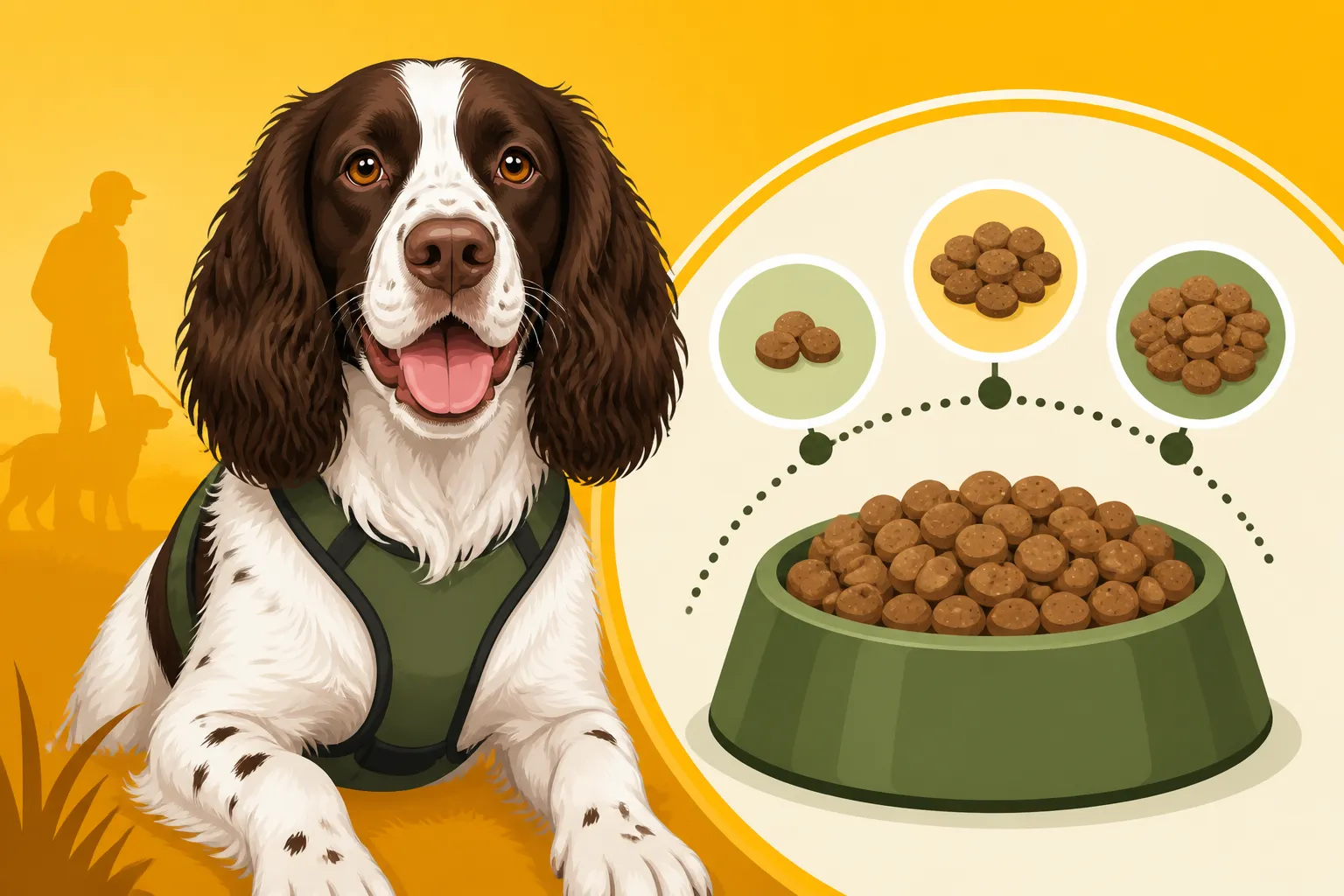
Consider the manufacturer's recommendation as a baseline, perhaps for a lightly active Springer. For a moderately active dog, you might need to increase that by 10-20%. For a dog in heavy training or hunting season, you could be looking at a 30-50% increase, or even more, depending on the intensity and duration of their work. It's not uncommon for a working Springer to eat a significantly larger quantity of food than a pet Springer of the same size. For example, How Many Cups a Day a Working Springer Spaniel Eats can fluctuate wildly, from perhaps 2.5-3 cups daily during light activity to 4-5+ cups during peak performance, even for dogs of similar build.
The key is to use the label as a rough guide, but be prepared to deviate significantly based on your dog's actual performance and body condition.
Monitoring Body Condition and Stool Quality
Your Springer's body is the most honest indicator of whether you're feeding them correctly. As mentioned earlier, regularly assess their body condition.
- Rib Check: Gently run your hands along their sides. You should be able to feel their ribs easily, like feeling the back of your hand. If they're visible without feeling, they're too thin. If you have to press hard to feel them, they're carrying too much weight.
- Waistline and Abdominal Tuck: Look at your Springer from above and from the side. They should have a distinct waist and an upward slope from their rib cage to their hips (the abdominal tuck). If they look straight or saggy along their belly, they're likely overweight.
Stool quality is another powerful indicator. Well-formed, firm, small stools indicate good digestion and nutrient absorption. Loose, watery, or excessively large stools can suggest overfeeding, that the food isn't agreeing with them, or even an underlying digestive issue. If your dog is consistently producing poor quality stools, it’s worth reviewing their diet, checking for hidden ingredients they might be sensitive to, or consulting with your vet. A sudden change in stool can also be a sign of parasites or illness, so always be vigilant.
Making incremental adjustments is key. Don't drastically change their food amount overnight. Increase or decrease by about 10-15% for a few days, then reassess their body condition and energy levels. It takes time for their body to respond. You’ll be surprised how quickly the amount it eats (How Many Cups a Day a Working Springer Spaniel Eats) can change based on their activity!
Adjusting for Peak Season vs. Off-Season
The life of a working Springer often involves distinct periods of intense work followed by quieter times. This seasonal fluctuation must be reflected in their diet.
-
Peak Season: This is when your Springer is at their busiest, whether it's hunting season, field trial season, or sustained intense training. During these times, their caloric needs are at their highest. You'll likely increase their food intake, potentially splitting it into two or even three meals a day to help with digestion and provide sustained energy. Some owners opt for a higher calorie performance formula during this time. Remember, you're not just feeding for today's work, but for tomorrow's recovery and sustained effort. Ensuring they have sufficient nutrients after a demanding day is vital for muscle repair and replenishing energy stores.
-
Off-Season: When the intense work winds down, so should their food intake. It's incredibly common for Springers to Whether a Springer Spaniel Gains Weight Easily if their diet isn't adjusted during these less active periods. Maintaining their working weight year-round is crucial for their joint health and readiness for the next season. You'll need to gradually reduce their food portions back to maintenance levels. This might mean switching back to a standard adult dog food formula if you were using a high-performance one, or simply feeding less of the same food. Regular checks of their body condition score are particularly important during the off-season to catch any creeping weight gain early.
This cyclical adjustment is one of the most important aspects of feeding a working Springer. It demands diligence and a close eye on your dog's physical state, but it's essential for their long-term health and career.
| Activity Level | Daily Calorie Needs (Rough Estimate for 45lb Springer) | General Food Amount (Cups Dry Kibble)* | Key Dietary Focus |
|---|---|---|---|
| Light/Off-Season | 1200-1400 kcal | 2.5 – 3 cups | Maintenance, prevent weight gain |
| Moderate Activity | 1500-1800 kcal | 3 – 3.5 cups | Balanced energy, muscle support |
| Heavy Work/Peak | 1900-2500+ kcal (can be much higher on extreme days) | 4 – 5+ cups | High fat for endurance, high protein for repair |
Note: These are very rough estimates. Actual food amounts depend entirely on the specific food's caloric density, your dog's individual metabolism, and the exact nature of their work. Always use body condition as your primary guide.
Hydration and Supplements for the Working Dog
Food is only one part of the equation for a thriving working Springer. Water is perhaps even more critical, and certain supplements can provide an edge in supporting their active lifestyle. Overlooking these aspects can quickly undermine even the best feeding regimen.
The Critical Importance of Water Intake
If your working Springer isn't adequately hydrated, their performance will suffer, and their health could be at risk. Dehydration can lead to fatigue, reduced stamina, muscle cramps, and in severe cases, heatstroke – a particular danger for enthusiastic dogs working hard in warm weather. Remember, a Springer's thick coat and constant activity make them prone to overheating.
Ensuring constant access to fresh water is non-negotiable. At home, this means multiple water bowls always available. In the field or during training, you need to be proactive. Portable water bowls and bottles are essential. Offer water breaks frequently, even if your dog doesn't seem thirsty. Some Springers are so focused on their work that they'll ignore their thirst. Encouraging them to drink by offering water directly or adding a small amount of low-sodium broth to their water can help. It's also wise to carry enough water not just for your dog, but for yourself, as you'll be exerting effort too. Keeping your dog well-hydrated before, during, and after activity is crucial for regulating body temperature, maintaining joint lubrication, and supporting vital organ function. You might be surprised to see how much a Springer drinks in a day, especially after a long retrieve session in hot weather.
When to Consider Supplements
The need for supplements can be a debated topic, but for a working Springer, certain additions can provide tangible benefits, especially given the stress placed on their bodies.
- Joint Support: A lifetime of vigorous activity, jumping, and running can take a toll on a Springer's joints. Many working dog owners proactively use Joint Supplements for a Springer Spaniel containing ingredients like glucosamine, chondroitin, and MSM. These aim to support cartilage health, reduce inflammation, and maintain joint lubrication. Starting these before signs of wear and tear appear can be beneficial, typically in middle age, or even earlier for very intensely working dogs. Products available on platforms like Chewy or Amazon offer a wide range of options to consider.
- Electrolytes: For dogs engaged in prolonged, high-intensity work, especially in warm conditions, electrolyte loss through sweating (yes, dogs sweat through their paw pads and pant to cool down, which involves fluid and electrolyte loss) can be an issue. Whether a Springer Spaniel Needs Electrolytes After Work is a question many ask, and the answer is often yes, especially after several hours of strenuous exercise. Electrolyte supplements can help replenish vital minerals, maintain fluid balance, and aid in faster recovery. These usually come as powders or liquids to add to water, but should only be used as directed and in moderation.
- Omega Fatty Acids: While good quality dog food should contain essential fatty acids, supplementing with additional Omega-3s (from fish oil, for instance) can further enhance skin and coat health, reduce inflammation, and support cognitive function. This is particularly beneficial for a Springer whose coat is constantly exposed to environmental stressors and whose body is working hard. Always discuss any supplement regimen with your veterinarian to ensure it's appropriate for your individual dog and doesn't interfere with any existing health conditions or medications.
Feeding Routines and Best Practices
Establishing a consistent and thoughtful feeding routine is just as important as the quality and quantity of food itself. How and when you feed your working Springer can significantly impact their digestion, energy levels, and overall well-being during intense activity.
Meal Timing Around Workouts and Hunts
Timing is crucial, especially for preventing digestive upset or more serious issues like bloat. While Springers are not typically a breed prone to bloat (Gastric Dilatation-Volvulus) compared to deep-chested breeds, it's always wise to err on the side of caution with any active dog.
- Before Activity: Avoid feeding a large meal immediately before strenuous exercise. A full stomach, especially one full of dry kibble that expands with water, can cause discomfort, stomach upset, or potentially increase the risk of bloat or aspiration. Ideally, feed your Springer at least 2-3 hours before any intense workout, training session, or hunt. This gives their body time to digest the food and absorb nutrients, providing a steady release of energy without the burden of a full stomach during activity. Some handlers will offer a very small, easily digestible snack (like a few pieces of cooked chicken or a high-energy bar) about an hour before work for a quick energy boost, but this should be minimal. This is critical to remember if you're wondering Whether a Springer Spaniel Should Be Fed Before Hunting.
- After Activity: Post-exercise is when your Springer's body needs to recover and replenish energy stores. However, don't rush to feed them the moment they stop working. Allow them to cool down, rehydrate, and relax for at least an hour before offering their main meal. Feeding too soon after intense exercise, when their body is still in a heightened state, can also lead to digestive issues. Splitting their daily food into two meals, one in the morning (well before work) and one in the evening (after cooldown), is often the best approach for working Springers. This distributes their caloric intake more evenly and aids digestion.
Slow Feeders and Mealtime Management
Working Springers, with their incredible drive and enthusiasm, often approach their food bowl with the same gusto they apply to finding a downed bird. This often means they're The Springer Spaniel That Inhales Its Dinner in mere seconds. While it's funny to watch, eating too quickly can lead to several problems: indigestion, gas, vomiting, and potentially increasing the risk of bloat (though again, less common in Springers).
This is where a good quality slow feeder bowl comes in. These bowls have various ridges, mazes, or obstacles that force your dog to eat around them, slowing down their ingestion significantly. There are many designs available on platforms like Chewy or Amazon, ranging from simple plastic inserts to more complex puzzle bowls. A slow feeder can turn mealtime from a gulping contest into a mindful eating experience, improving digestion and making meals last longer. Which Slow Feeder Works for a Springer Spaniel often depends on trial and error, but any bowl that prevents rapid consumption is a good start. For Springers who are extra enthusiastic eaters, you can also spread their kibble on a large baking sheet, making them "hunt" for each piece, or use a puzzle toy that dispenses food slowly.
Treats and Training Rewards
Treats are an indispensable tool for training, especially with a biddable and food-motivated breed like the Springer Spaniel. However, it's easy to inadvertently overfeed your working dog if you're not mindful of the calories in those training rewards.
When your Springer is in active training or working sessions, they might receive a significant number of treats. These calories add up! Opt for small, low-calorie, high-value treats that are easy to carry and quick for your dog to consume. Cooked chicken breast, bits of cheese, or small commercial training treats work well. Remember to factor these calories into their daily intake, especially if you're battling Whether a Springer Spaniel Gains Weight Easily during the off-season. You might need to slightly reduce their main meal portions on heavy training days to compensate for the treat calories. For field work, where frequent small rewards might not be practical, your praise and enthusiasm can often be just as motivating as a treat. Consistency in reward strategy – whether it's food, praise, or a quick game – is key to maintaining focus and drive without overfeeding.
Disclaimer
This article is for general informational purposes only and does not constitute professional advice. Laws, prices and regulations vary by location and change over time. Consult a qualified professional for guidance on your specific situation.