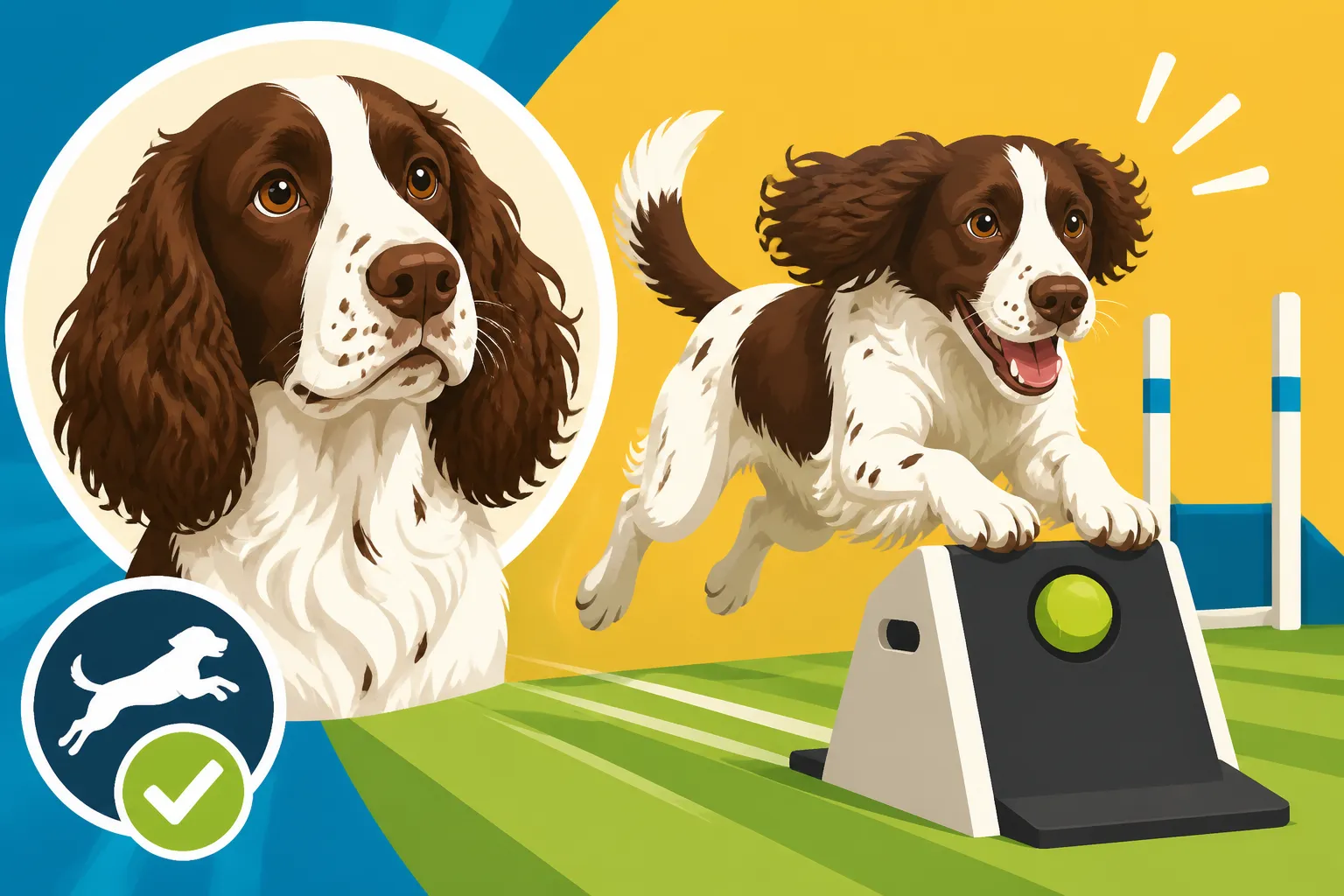
Whether a Springer Spaniel Suits Flyball
One of the biggest challenges for any Springer Spaniel owner is finding constructive outlets for their dog's boundless energy and intelligence. These aren't just pretty faces; they are dogs bred for intense work, and if that drive isn't channeled, you often end up with a frustrated, mischievous, and sometimes destructive companion. If you've ever wondered if your high-octane Springer could excel at a fast-paced, exciting activity, you've likely considered dog sports. Today, we're diving deep into Flyball and whether your energetic Springer Spaniel is a prime candidate for this thrilling team sport.
Understanding the Springer Spaniel's Drive for Performance Sports
Springers are magnificent dogs, full of zest and a seemingly endless well of enthusiasm. But that same boundless energy that makes them such joyful companions can also be a handful if not properly managed. This isn't a breed content to be a couch potato; they thrive on activity and mental engagement.
The Innate Energy and Enthusiasm of a Springer Spaniel
Let's face it, a Springer Spaniel is not for the faint of heart when it comes to activity levels. These dogs were quite literally bred to "spring" game from cover for hunters. Their historical role demanded speed, stamina, and an unwavering focus on the task at hand. This means that even the most laid-back pet Springer you might encounter still carries generations of intense working drive in its DNA. Many owners find themselves struggling to provide enough exercise, leading to unwanted behaviors like excessive barking, digging, or even chewing on furniture.
This inherent drive means they often need more than just a casual walk around the block. They crave purpose, a job to do, and activities that challenge both their bodies and their minds. It's why so many Springer owners turn to dog sports, not just for fun, but out of necessity to keep their dogs happy and healthy. Understanding How a Field Bred Springer Spaniel Differs in Drive can shed even more light on the deep-seated instincts that make these dogs such powerful athletes. Without a suitable outlet, all that pent-up energy becomes problematic, leading to a dog that's constantly seeking its own entertainment, often in ways you won't appreciate.
Key Traits That Make a Springer Spaniel a Natural Athlete
When you look at a Springer Spaniel in motion, you see grace, power, and incredible agility. These aren't just pretty dogs; they are finely tuned athletes. Their medium build, powerful legs, and deep chests are perfectly suited for bursts of speed and sustained effort. They possess an inherent athleticism that makes them adaptable to a variety of physical challenges. Think about their original job: covering ground quickly, navigating dense underbrush, and retrieving fallen game. These tasks require quick reflexes, excellent coordination, and a resilient spirit.
Beyond their physical attributes, Springers also boast a keen intelligence and a strong desire to please their handlers. This biddability, when coupled with positive reinforcement, makes them highly trainable. They often pick up new commands and routines with impressive speed, especially when there's a reward involved, like a favorite toy or a tasty treat. Their natural retrieve drive, which is foundational to their working heritage, is a massive advantage in sports that involve bringing an object back. Knowing What a Springer Spaniel Retrieves is often the first step in understanding their core motivations in any game. They live for that moment of fetching and bringing it back to you, making sports like Flyball incredibly appealing to their natural instincts.
What is Flyball and How Does It Challenge a Dog?
Flyball is an exciting, fast-paced team sport that combines elements of obstacle racing, retrieval, and relay. It's a fantastic way to burn off energy, build a stronger bond with your dog, and engage both their physical and mental capacities.
The Dynamics of a Flyball Race
Imagine four dogs on a team, each with their handler, lined up at a start/finish line. A race begins with the first dog rocketing over a series of four jumps, usually low hurdles, approximately 6-8 feet apart. At the end of the jump lane is a "Flyball box," a spring-loaded device that shoots out a tennis ball when the dog presses a pedal on the front. The dog catches the ball and then races back over the same four jumps to the start/finish line. As the first dog crosses the line, the next dog on the team begins its run, ideally with a perfect nose-to-tail pass to avoid penalties. This continues until all four dogs have successfully completed their legs of the race, all aiming for the fastest possible time.
The noise and excitement are intense – dogs barking, handlers cheering, balls flying, and spectators on their feet. It’s a sensory overload, and for a dog to excel, it needs to be able to focus amidst all that energy. Each team competes against another, adding a competitive edge that really gets the adrenaline pumping. The precision of the passes, the speed over the jumps, and the quick turn at the box are all critical components that demand athleticism and training from every dog and handler.
The Physical and Mental Demands of Flyball
Flyball is a full-body workout for a dog. It requires bursts of explosive speed, the agility to clear jumps cleanly, and the coordination for quick turns, especially at the Flyball box. The repeated jumping can build incredible muscle, particularly in the hindquarters. But it's not just about raw physical power. Flyball demands significant mental engagement too. Dogs need to understand the sequence of events, remember to hit the box correctly, and perform a clean retrieve.
Furthermore, the "pass" element requires excellent impulse control. Dogs must learn to wait for their turn, not break early, and then burst forward with full commitment. It's a challenging environment that tests a dog's ability to focus under pressure and ignore distractions, including other dogs racing nearby. For a dog that loves to run and retrieve, it's a dream come true, but it's far from a simple game of fetch. Many of the skills developed in Flyball are also beneficial for other canine sports, as highlighted in discussions around Whether a Springer Spaniel Can Do Agility. The rapid changes in direction, the precise jumps, and the overall body awareness are all transferable.
Is a Springer Spaniel a Good Fit for Flyball?
Absolutely! Springer Spaniels possess many qualities that make them excellent candidates for Flyball. While every dog is an individual, the breed as a whole aligns remarkably well with the demands of the sport.
Advantages of Springer Spaniels in Flyball
Let's break down why your Springer Spaniel might just be a Flyball superstar. First and foremost, their speed is a huge asset. Springers are notoriously fast, capable of incredible bursts of acceleration, which is crucial for shaving seconds off a team's time. Secondly, their powerful retrieve drive means they live for the opportunity to fetch that ball. For many Springers, retrieving is a deeply ingrained instinct, making the "catch the ball and bring it back" element of Flyball feel like second nature. They often develop a very soft mouth, too, which is great for carrying the ball without damaging it.
Their biddability and desire to please also play a significant role. Springers thrive on working closely with their human partners and respond well to positive reinforcement training. They love having a "job" to do, and the structured, repetitive nature of Flyball can be incredibly satisfying for them. As we often discuss, Whether a Springer Spaniel Needs a Job isn't a question of 'if' but 'what.' Flyball provides that purpose. Moreover, their size is often ideal – large enough to clear the hurdles easily and generate power, but not so large that they are unwieldy or slow.
Here’s a quick comparison of how Springer Spaniel traits stack up against Flyball requirements:
| Springer Spaniel Trait | Flyball Requirement | Advantage in Flyball |
|---|---|---|
| High Energy / Stamina | Sustained bursts of speed; multiple runs per event | Excels in speed and endurance; rarely tires out |
| Strong Retrieve Drive | Fetching ball from box, returning it over jumps | Highly motivated by the ball; natural inclination |
| Biddability / Trainability | Learning commands, passes, box turn; focus | Eager to learn; responsive to handler cues; quick study |
| Agility / Coordination | Clearing jumps, precise turns at box | Graceful and nimble over obstacles; low injury risk |
| Medium Build (35-50 lbs) | Maneuverability over jumps and box | Optimal size for speed and agility; not too bulky |
| Enthusiastic / Playful | Team sport atmosphere; fun for dog and handler | Brings infectious energy to the team; loves the game |
Potential Challenges and Considerations
While Springers have many advantages, it's also important to be realistic about potential challenges. The breed's intense prey drive, which makes them excellent retrievers, can sometimes translate into a tendency to get distracted by other dogs or the general commotion of a Flyball event. Learning to focus intently on the task at hand, even with other dogs charging past, requires consistent training and impulse control. This is particularly relevant if your Springer tends to ignore you on a scent (Why a Springer Spaniel Ignores You on a Scent) in favor of following its nose.
Another consideration is their vocal nature. Many Springers are enthusiastic barkers, and in the high-energy environment of a Flyball lane, this can sometimes be amplified. While some barking is tolerated, excessive barking can be distracting for the team. Early socialization and exposure to noisy environments can help, along with specific training to channel that excitement. Finally, their exuberance can sometimes lead to an overly enthusiastic approach to the box or jumps, requiring careful guidance to ensure safe and efficient execution. However, with their natural intelligence, knowing How Fast a Springer Spaniel Learns, most Springers can overcome these challenges with dedicated, patient training.
Getting Started with Flyball and Your Springer
So, you're convinced your Springer Spaniel might be a future Flyball champion? That's fantastic! Getting started is an exciting journey that will deepen your bond and provide immense satisfaction for both of you.
Finding a Local Flyball Club and Training
The very first step is to find a local Flyball club. Flyball is a team sport, so you can't really train effectively in isolation. A club provides the equipment (the jumps, the box), experienced instructors, and, most importantly, the other dogs and handlers you'll need for practice. A quick online search for "Flyball clubs near me" or checking with local kennel clubs or dog training facilities is a great starting point. When you find a club, most offer beginner classes or introductory sessions where you and your dog can get a feel for the sport. Don't worry if your Springer isn't perfect on day one; the focus at first is on building foundational skills and getting your dog comfortable with the equipment and the environment.
Training for Flyball is highly reliant on positive reinforcement. Springers respond incredibly well to reward-based methods, whether it's treats, praise, or their absolute favorite toy. Shouting or harsh corrections can often be counterproductive, potentially making a sensitive Springer shut down. As we've learned, The Soft Springer Spaniel That Shuts Down If You Shout, so a gentle but firm approach is key. Many clubs will also help you work on critical skills like a strong recall, impulse control, and focusing amidst distractions, all of which are vital for Flyball. Resources like BAXTER & Bella, an online puppy school and training program, can provide excellent foundational skills before you even step foot into a Flyball club, ensuring your dog has a solid understanding of basic obedience and good manners, which are paramount in any dog sport.
Essential Gear for Flyball Enthusiasts
You won't need a huge amount of specialized gear to start Flyball, but a few basics are essential. First, you'll need a good, sturdy leash and a comfortable, well-fitting collar or harness. For the safety of your dog and others, a secure way to control your dog between runs is non-negotiable. Many Flyball handlers prefer a slip lead or martingale collar for quick on-and-off.
Next, you'll need a variety of high-value treats and your dog's absolute favorite toy. Flyball is driven by motivation, and that often comes down to what your dog loves most. Having a special "Flyball toy" that only comes out during training sessions can really amp up their excitement. Think squeaky balls, tug toys, or soft plush items. You might find a great selection of durable and exciting toys, along with high-quality training treats, on platforms like Amazon, making it easy to stock up on all your Flyball essentials. Lastly, don't forget water and a portable bowl to keep your energetic Springer hydrated during practice and competitions. Especially for a breed with such high exercise needs, ensuring they stay hydrated is crucial, particularly if you're training for extended periods, as discussed in How Much Exercise a Field Bred Springer Spaniel Needs.
Disclaimer
This article is for general informational purposes only and does not constitute professional advice. Laws, prices and regulations vary by location and change over time. Consult a qualified professional for guidance on your specific situation.